

‘No-Code’ Brings the Power of A.I. to the Masses

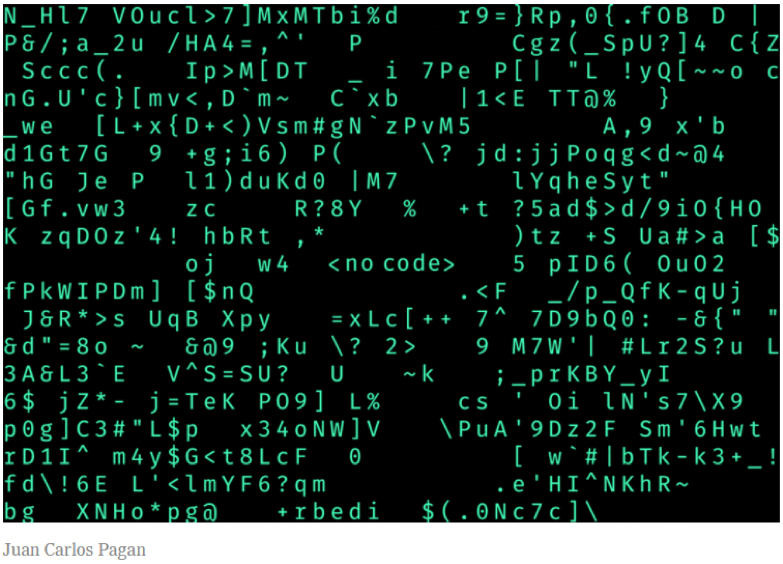
A growing number of new products allow anyone to apply artificial intelligence without having to write a line of computer code. Proponents believe the “no-code” movement will change the world.

Still, it’s early days. “No-code A.I. tools are still on the fringes of the larger no-code movement, because not many people understand machine learning enough to dream up what’s possible,” said Josh Tiernan, who runs No Code Founders, a community of nontechnical entrepreneurs who use no-code tools such as WordPress or Bubble. But he expects no-code A.I. to grow as more people understand its potential.

Another force in no-code’s favor: Advances in A.I. itself are making no-code platforms more powerful. OpenAI, the company co-founded by Elon Musk, has a vast A.I. system, GPT-3, that can write code when prompted with simple English. It can even create websites and do other basic programming tasks. OpenAI has used the system to create GitHub Copilot, a tool that acts as an autocomplete function for coders, speeding up their work. DeepMind, a subsidiary of Alphabet, Google’s parent company, has gone a step further with an A.I. tool capable of writing complete code to solve complex problems posed to it with normal speech or text.

Already, users of Microsoft’s Power Platform, which includes a family of no-code products, can generate simple applications by just describing them.

The article was originally posted at the New York Times.

The Boston Global Forum (BGF), in collaboration with the United Nations Centennial Initiative, released a major work entitled Remaking the World – Toward an Age of Global Enlightenment.   More than twenty distinguished leaders, scholars, analysts, and thinkers put forth unprecedented approaches to the challenges before us. These include President of the European Commission Ursula von der Leyen, Governor Michael Dukakis, Father of Internet Vint Cerf, Former Secretary of Defense Ash Carter, Harvard University Professors Joseph Nye and Thomas Patterson, MIT Professors Nazli Choucri and Alex ‘Sandy’ Pentland, and Vice President of European Parliament Eva Kaili.  The BGF introduced core concepts shaping pathbreaking international initiatives, notably, the Social Contract for the AI Age, an AI International Accord, the Global Alliance for Digital Governance, the AI World Society (AIWS) Ecosystem, and AIWS City.

A.I. is on the front lines of the war in Ukraine

War is terrible. But it has often played a pivotal role in advancing technology. And Russia’s invasion of Ukraine is shaping up to be a key proving ground for artificial intelligence, for ill and, perhaps in a few instances, for good, too.

Civil society groups and A.I. researchers have been increasingly alarmed in recent years about the advent of lethal autonomous weapons systems—A.I.-enabled weapons with the ability to select targets and kill people without human oversight. This has led to a concerted effort at the United Nations to try to ban or at least restrict the use of such systems. But those talks have so far not resulted in much progress.

Meanwhile, the development of autonomous weapons has continued at a quickening pace. Right now, those weapons are still in their infancy. We won’t see humanitarian groups’ worst nightmares about swarms of “slaughterbot” drones realized in the Ukraine conflict. But weapons with some degree of autonomy are likely to be deployed by both sides.

Already, Ukraine has been using the Turkish-made TB2 drone, which can take off, land, and cruise autonomously, although it still relies on a human operator to decide when to drop the laser-guided bombs it carries. (The drone can also use lasers to guide artillery strikes.) Russia meanwhile has a “kamikaze” drone with some autonomous capabilities called the Lantset, which it reportedly used in Syria and could use in Ukraine. The Lantset is technically a “loitering munition” designed to attack tanks, vehicle columns, or troop concentrations. Once launched, it circles a predesignated geographic area until detecting a preselected target type. It then crashes itself into the target, detonating the warhead it carries.

Russia has made A.I. a strategic priority. Vladimir Putin, the country’s president, said in 2017 that whoever becomes the leader in A.I. “will become the ruler of the world.” But at least one recent assessment, from researchers at the U.S. government–funded Center for Naval Analyses, says Russia lags the U.S. and China in developing A.I. defense capabilities.

A.I. might also play a vital role in the information war. Many fear that A.I. techniques such as deepfakes—highly realistic video fakes created using an A.I. technique—will supercharge Russian disinformation campaigns, although so far there is no evidence of deepfakes being used. Machine learning can also be used to help detect disinformation. The large social media platforms already deploy these systems, although their track record in accurately identifying and removing disinformation is spotty at best.

The original article was posted at Fortune.

The Boston Global Forum (BGF), in collaboration with the United Nations Centennial Initiative, released a major work entitled Remaking the World – Toward an Age of Global Enlightenment.   More than twenty distinguished leaders, scholars, analysts, and thinkers put forth unprecedented approaches to the challenges before us. These include President of the European Commission Ursula von der Leyen, Governor Michael Dukakis, Father of Internet Vint Cerf, Former Secretary of Defense Ash Carter, Harvard University Professors Joseph Nye and Thomas Patterson, MIT Professors Nazli Choucri and Alex ‘Sandy’ Pentland, and Vice President of European Parliament Eva Kaili.  The BGF introduced core concepts shaping pathbreaking international initiatives, notably, the Social Contract for the AI Age, an AI International Accord, the Global Alliance for Digital Governance, the AI World Society (AIWS) Ecosystem, and AIWS City.
AI, Robotics And Ethics: Harnessing The Power Of Intelligent Machines To Benefit Humans

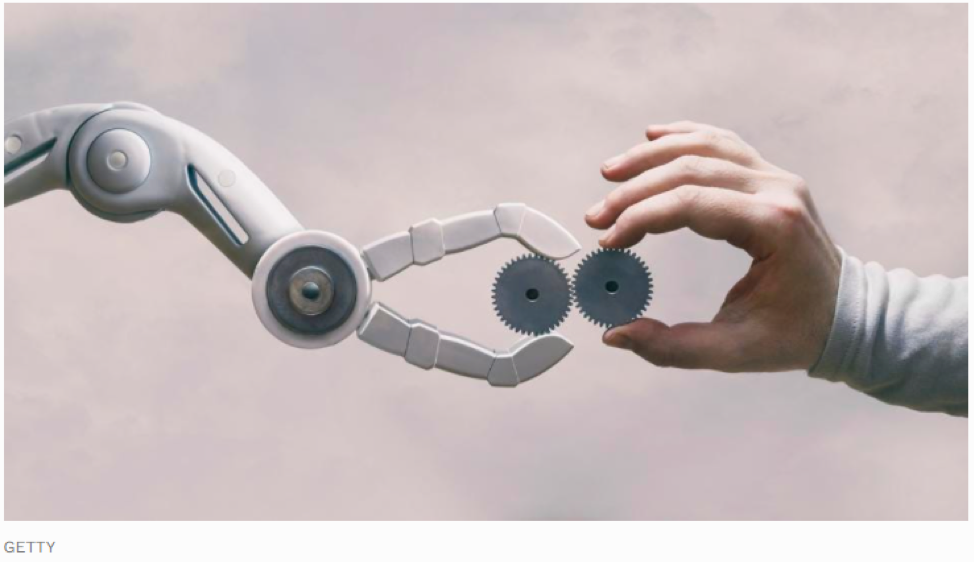
The importance of ethics in artificial intelligence stems from the power of what can be accomplished with AI, especially when combined with machines: self-driving cars, robots co-working with humans in factories, remote surgery robots that allow doctors to operate on a patient across the globe, intelligent software systems that help pilots navigate, and so forth.

However, like other transformative technologies that came before, AI arouses a fair amount of skepticism and even fear, giving birth to regulations and policies constraining the scope of its application. What’s being done to promote the ethical application of one of today’s most empowering technologies?

As with other disruptive technologies that preceded AI, the formulation of laws and regulations to manage this area is playing catch-up. There are significant technical efforts to detect and remove bias from AI systems, but they are in early stages. In addition, technological fixes have their limits in that they need to develop a mathematical notion of fairness, which is hard to come by.

Though very little actual policy has been produced, there have been some notable beginnings. A 2019 EU policy document from the Center for Data Innovation posited that “Trustworthy AI” should be lawful, ethical and technically resilient, and spelled out the requirements to meet those objectives: human oversight, technical robustness, privacy and data governance, transparency, fairness, well-being, and accountability. This has since been codified into proposed legislation.

Also, in the fall of 2021, top science advisers to President Joe Biden started calling for a new “bill of rights” to guard against powerful new artificial intelligence technology, according to the Associated Press.

AI can deliver substantial benefits to companies that successfully leverage its power, but if implemented without ethical safeguards, it can also damage a company’s reputation and future performance. Developing standards or drafting legislation is not easily accomplished. That’s because AI covers a broad, amorphous territory—everything from battlefield robots to self-driving cars to legal assistants used for reviewing contracts. Indeed, just about anything related to machine learning and data science is now considered a form of AI.

The original article was posted at Forbes.

The Boston Global Forum (BGF), in collaboration with the United Nations Centennial Initiative, released a major work entitled Remaking the World – Toward an Age of Global Enlightenment.   More than twenty distinguished leaders, scholars, analysts, and thinkers put forth unprecedented approaches to the challenges before us. These include President of the European Commission Ursula von der Leyen, Governor Michael Dukakis, Father of Internet Vint Cerf, Former Secretary of Defense Ash Carter, Harvard University Professors Joseph Nye and Thomas Patterson, MIT Professors Nazli Choucri and Alex ‘Sandy’ Pentland, and Vice President of European Parliament Eva Kaili.  The BGF introduced core concepts shaping pathbreaking international initiatives, notably, the Social Contract for the AI Age, an AI International Accord, the Global Alliance for Digital Governance, the AI World Society (AIWS) Ecosystem, and AIWS City.

The EU and U.S. are starting to align on AI regulation

A range of regulatory changes and new hires from the Biden administration signals a more proactive stance by the federal government towards artificial intelligence (AI) regulation, which brings the U.S. closer to that of the European Union (EU). These developments are promising, as is the inclusion of AI issues in the new EU-U.S. Trade and Technology Council (TTC). But there are other steps that these leading democracies can take to build alignment on curtailing AI harms.

Since 2017, at least 60 countries have adopted some form of artificial intelligence policy, a torrent of activity that nearly matches the pace of modern AI adoption. The expansion of AI governance raises concerns about looming challenges for international cooperation. That is, the increasing ubiquity of AI in online services and physical devices means that any new regulations will have important ramifications for global markets. The variety of different ways that AI can be trained and deployed also complicates this picture. For example, AI systems may be hosted in the cloud and accessed remotely from anywhere with an internet connection. Retraining and transfer learning enable different teams to jointly develop an AI model with many datasets while working out of multiple countries. Edge and federated machine learning techniques enable physical products around the world to share data that affects the function of their AI models.

These considerations complicate AI governance, although they should not be used as an excuse to eschew necessary protections—the many arguments for which I will not repeat here. An ideal outcome would be the implementation of meaningful governmental oversight of AI, while also enabling these global AI supply chains. Further, a more unified international approach to AI governance could strengthen common oversight, guide research to shared challenges, and promote the sharing of best practices, code, and data.

It is perhaps with this in mind that the September 2021 TTC meeting prominently included a discussion of AI policy. This was by no means guaranteed, as other issues deliberated in the inaugural TTC convening in Pittsburgh have far longer histories as bilateral policy issues, including semiconductors, investment screening, and export controls. Further, government officials who participated in the meeting expressed optimism about shared intentions around AI governance, specifically citing the consensus on both a risk-based approach and over prohibiting extreme cases of governmental social scoring.

The original article was published at the Brookings Institute.

The Boston Global Forum (BGF), in collaboration with the United Nations Centennial Initiative, released a major work entitled Remaking the World – Toward an Age of Global Enlightenment.   More than twenty distinguished leaders, scholars, analysts, and thinkers put forth unprecedented approaches to the challenges before us. These include President of the European Commission Ursula von der Leyen, Governor Michael Dukakis, Father of Internet Vint Cerf, Former Secretary of Defense Ash Carter, Harvard University Professors Joseph Nye and Thomas Patterson, MIT Professors Nazli Choucri and Alex ‘Sandy’ Pentland, and Vice President of European Parliament Eva Kaili.  The BGF introduced core concepts shaping pathbreaking international initiatives, notably, the Social Contract for the AI Age, an AI International Accord, the Global Alliance for Digital Governance, the AI World Society (AIWS) Ecosystem, and AIWS City.

“Laurel for Peace and Security in Ukraine” Initiative

March 4, 2022

Boston, MA – The Boston Global Forum (BGF), Michael Dukakis Institute (MDI), and Global Alliance for Digital Governance (GADG) stand by the autonomy, peace, and security of Ukraine, and condemn Russia’s senseless and destructive assault on Ukraine’s territory.

In early 2022, we created the “Laurel for Peace and Security in Ukraine” Initiative, with the mission of developing binding new international rules and instruments to safeguard the rights, interests, and integrity of countries that are too weak on their own to withstand aggressive hostile actions by more powerful countries. We call on you, as leaders and persons of influence in our international community, to support this Initiative.

The goals of our campaign “Laurel for Peace and Security in Ukraine” are as follows:

  • Contribute ideas, solutions from distinguished thinkers, leaders for The New International Rules and Instruments for Peace and Security.
  • Following the ideas and recommendations of BGF World Leaders for Peace and Security President Ursula von de Leyen, President Sauli Niinisto, Riksdag Speaker Andreas Norlen, Prime Minister Shinzo Abe, President Vaira Vike-Freiberga, Chancellor Angela Merkel, President Toomas Hendrik Ilves, UN General Secretary Ban Ki-moon.
  • Collect and recognize governments, organizations, companies, influencers contribute by voices, actions to support for peace and security in Ukraine.
  • Synthesize powers from governments, organizations, companies, influencers for Peace and Security in Ukraine

One major initiative by the Boston Global Forum is a Social Contract for the AI Age. We would like to create a new alliance based on the values and standards of the Social Contract we adhere to: equality of opportunity and the right to study Global Enlightenment Education for every citizen, as well as transparency, openness, and social responsibility. Countries that join this alliance will support and protect each other, countries in this alliance will contribute to the qualities of economy, defense, innovations, education and society of all members.

In accordance with this initiative, we humbly request that you, as businesses which share the mission of creating goods and values for society, stand with us and take action to aid Ukraine, accelerate the cessation of war, and restore stability for Europe and the world. We request that organizations stop conducting business with totalitarian, dictatorial regimes in large countries which threaten global peace and security, such as Russia.

Additionally, we are calling for Russia to be expelled from the United Nations Security Council. Learn more about our initiative here: Laurel for Peace and Security in Ukraine

Sincerely,
Leaders of the Boston Global Forum and Michael Dukakis Institute

Futuristic Technology At The Olympics: AI, IoT, And Robots

The Olympics are all about emotion – the drama of world-class competition, the pageantry of medal ceremonies, and the moment-to-moment celebrations of the human spirit in action.

The 2022 Winter Games kicked off on February 4th in Beijing, China. Despite the fact that the Games feel a little different because of COVID restrictions, nearly 3,000 athletes from 91 countries are competing in 109 events across events like alpine skiing, figure skating, ice hockey, luge, bobsled, snowboarding, and speed skating.

And behind the scenes, there are huge technological advances helping athletes become better, faster, and stronger.

Let’s take a look at how artificial intelligence, the IoT, and intelligent devices are being used at the Olympic Games.

Artificial intelligence tools like computer-vision cameras give the Olympic audience the ultimate viewing experience.

AI-powered 3D Athlete Tracking (3DAT) uses cameras with computer vision and artificial intelligence to give fans near-real-time data during races and events. AI provides biomechanical analysis of athlete speed, distance traveled, and time remaining to display on screen and use in overlays during replays.

The original article was posted on Forbes.

The Boston Global Forum (BGF), in collaboration with the United Nations Centennial Initiative, released a major work entitled Remaking the World – Toward an Age of Global Enlightenment.   More than twenty distinguished leaders, scholars, analysts, and thinkers put forth unprecedented approaches to the challenges before us. These include President of the European Commission Ursula von der Leyen, Governor Michael Dukakis, Father of Internet Vint Cerf, Former Secretary of Defense Ash Carter, Harvard University Professors Joseph Nye and Thomas Patterson, MIT Professors Nazli Choucri and Alex ‘Sandy’ Pentland, and Vice President of European Parliament Eva Kaili.  The BGF introduced core concepts shaping pathbreaking international initiatives, notably, the Social Contract for the AI Age, an AI International Accord, the Global Alliance for Digital Governance, the AI World Society (AIWS) Ecosystem, and AIWS City.

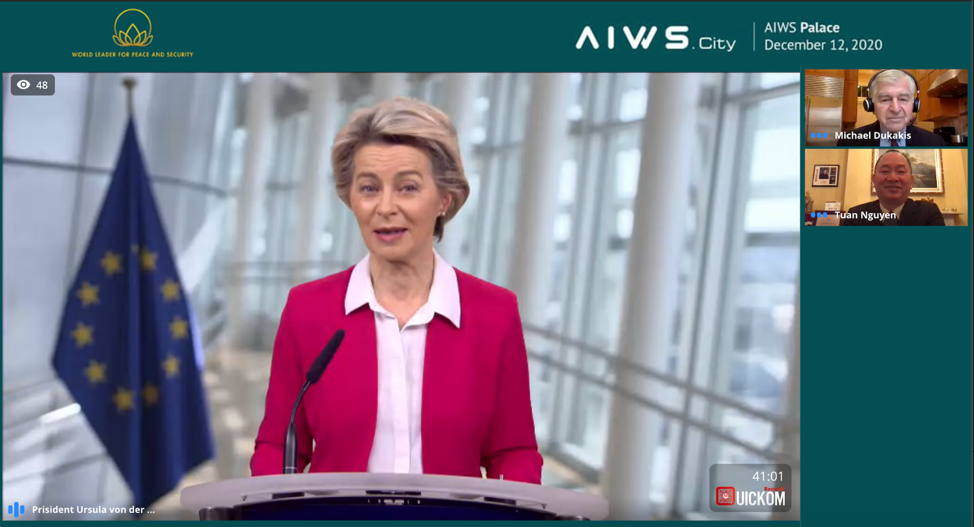
Press statement by World Leader for Peace and Security Award 2020 recipient, President von der Leyen, on Russia’s aggression against Ukraine

24 February 2022


Early this morning, Russian troops invaded Ukraine, a free and sovereign country. Once again, in the centre of Europe, innocent women, men and children are dying or fear for their lives. We condemn this barbaric attack, and the cynical arguments to justify it.

It is President Putin, who is bringing war back to Europe. In these dark hours, the European Union and its people stand by Ukraine and its people. We are facing an unprecedented act of aggression by the Russian leadership against a sovereign, independent country. Russia’s target is not only Donbas, the target is not only Ukraine, the target is the stability in Europe and the whole of the international peace order. And we will hold President Putin accountable for that.

Later today, we will present a package of massive and targeted sanctions, to European Leaders for approval. With this package, we will target strategic sectors of the Russian economy by blocking their access to technologies and markets that are key for Russia. We will weaken Russia’s economic base and its capacity to modernise. And in addition, we will freeze Russian assets in the European Union and stop the access of Russian banks to European financial markets. Like with the first package of sanctions, we are closely aligned with our partners and allies – the United States, the United Kingdom, Canada, but also, for example, Japan and Australia. These sanctions are designed to take a heavy toll on the Kremlin’s interests and their ability to finance war.

And we know that millions of Russians do not want war. President Putin is trying to turn back the clock to the times of the Russian empire. But in doing so, he is putting at risk the future of the Russian people. I call on Russia to immediately stop the violence and to withdraw its troops from Ukraine’s territory. We will not let President Putin tear down the security architecture that has given Europe peace and stability over many decades. We will not allow President Putin to replace the rule of law by the rule of force and ruthlessness. He should not underestimate the resolve and strength of our democracies.

History has proven that societies and alliances built on trust and freedom are resilient and successful. And that is exactly what the autocrats fear. The European Union stands with Ukraine and its people. We will continue to support them. Ukraine will prevail.


https://ec.europa.eu/commission/presscorner/detail/en/STATEMENT_22_1322

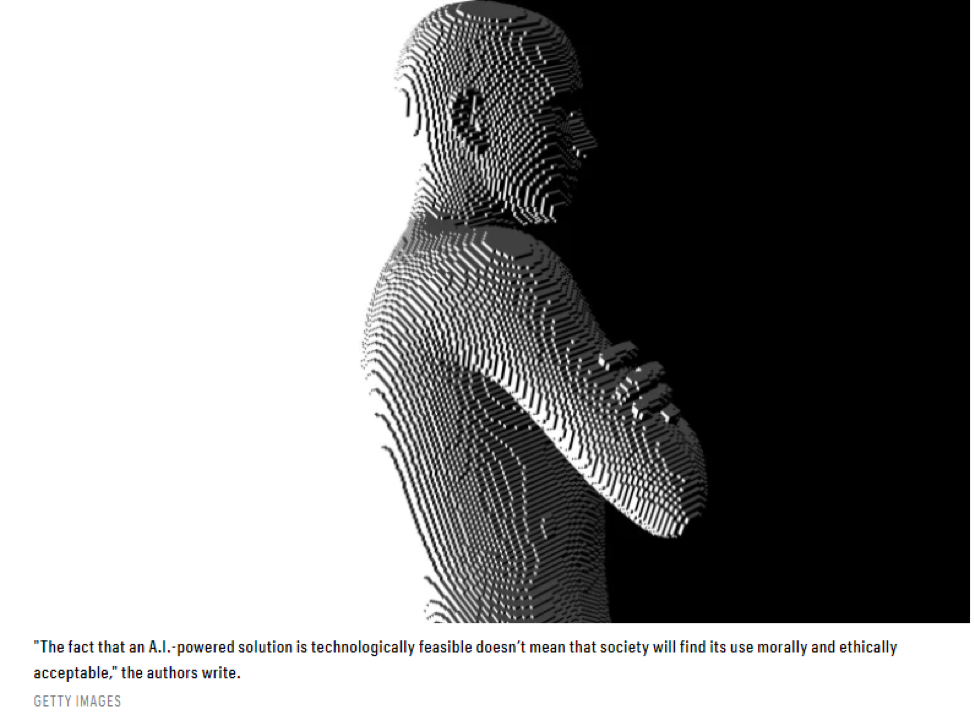
Society won’t trust A.I. until business earns that trust

In the spring of 2020, when the COVID-19 pandemic erupted, policymakers hailed contact-tracing apps as one of the most promising ways that digital technologies could help control its spread. Governments could monitor people’s diagnoses and, later, their test results and locations partly through self-reporting; alert those infected as well as others with whom they had come in contact; and develop disease-spread scenarios to support decision-making by using apps and A.I.-powered platforms. Apple and Google even announced a historic joint effort to develop technology that health authorities could use to build the apps “with user privacy and security central to the design.”

However, contact tracing apps have enjoyed, at best, mixed success worldwide, and have been a failure in the U.S. They haven’t helped much for one key reason: People don’t trust companies and governments to collect, store, and analyze personal data, especially about their health and movements. Although the world’s digital giants developed them responsibly, and the technology works as it is meant to, the apps didn’t catch on because society wasn’t convinced that the benefits of using them were greater than the costs, even in pandemic times.

The concept of a social license—which was born when the mining industry, and other resource extractors, faced opposition to projects worldwide—differs from the other rules governing A.I.’s use. Academics such as Leeora Black and John Morrison, in the book The Social License: How to Keep Your Organization Legitimate, define the social license as “the negotiation of equitable impacts and benefits in relation to its stakeholders over the near and longer term. It can range from the informal, such as an implicit contract, to the formal, like a community benefit agreement.”

Fairness and transparency. If business is to be answerable for its use of A.I., it must be able to justify the manner in which its algorithms work, and be able to explain the resulting outcomes to prove its A.I. algorithms are fair and transparent. An A.I.-based recruitment system, for instance, should be able to demonstrate that all the candidates that provided the same, or similar, responses to a question posed by the machine on different days received the same rating or score.

Benefit. Companies must ensure that stakeholders share their perception that the advantages of using A.I. are greater than the costs of doing so. They can measure the trade-offs at the individual, company, and societal levels, comparing the benefits of better health, convenience, and comfort in health care, for instance, with the potential downsides such as security, privacy, and safety. Society may not always sanction A.I.’s use, and business should be ready for that. For instance, at the starts of the pandemic, the idea of merging all the European Union members’ health care databases was mooted. It wasn’t obvious that the benefits would be greater than the costs of doing so, though, so the idea was quietly killed.

Trust. Society must be convinced that companies that plan to use A.I. can be trusted with data acquisition, and will be accountable for their algorithms’ decisions. Trust is critical for social acceptance, especially when the A.I. can work without human supervision. That’s one reason society has been slow to endorse self-driving automobiles. People believe that the industry incumbents can create reliable mechanical vehicles, but they’re not convinced of the former’s ability to develop digital self-driving technologies yet.

The  article was originally posted at Fortune.

The Boston Global Forum (BGF), in collaboration with the United Nations Centennial Initiative, released a major work entitled Remaking the World – Toward an Age of Global Enlightenment.   More than twenty distinguished leaders, scholars, analysts, and thinkers put forth unprecedented approaches to the challenges before us. These include President of the European Commission Ursula von der Leyen, Governor Michael Dukakis, Father of Internet Vint Cerf, Former Secretary of Defense Ash Carter, Harvard University Professors Joseph Nye and Thomas Patterson, MIT Professors Nazli Choucri and Alex ‘Sandy’ Pentland, and Vice President of European Parliament Eva Kaili. The BGF introduced core concepts shaping pathbreaking international initiatives, notably, the Social Contract for the AI Age, an AI International Accord, the Global Alliance for Digital Governance, the AI World Society (AIWS) Ecosystem, and AIWS City.
Artificial intelligence creeps on to the African battlefield

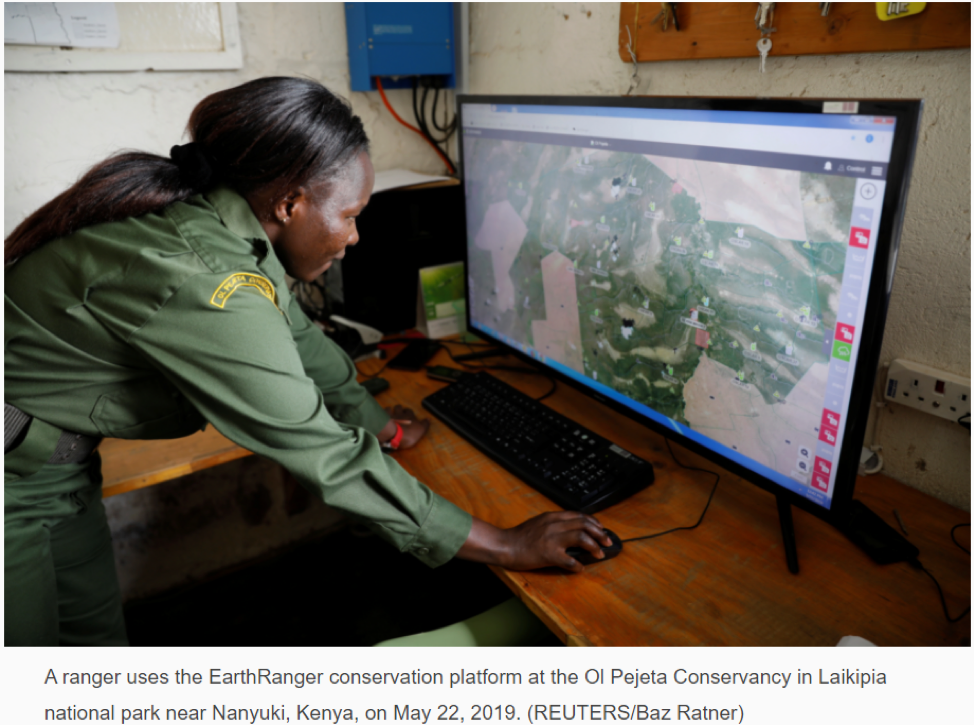
Even as the world’s leading militaries race to adopt artificial intelligence in anticipation of future great power war, security forces in one of the world’s most conflict-prone regions are opting for a more measured approach. In Africa, AI is gradually making its way into technologies such as advanced surveillance systems and combat drones, which are being deployed to fight organized crime, extremist groups, and violent insurgencies. Though the long-term potential for AI to impact military operations in Africa is undeniable, AI’s impact on organized violence has so far been limited. These limits reflect both the novelty and constraints of existing AI-enabled technology.

Artificial intelligence (AI), at its most basic, leverages computing power “to simulate the behavior of humans that requires intelligence.” Artificial intelligence is not a military technology like a gun or a tank. It is rather, as the University of Pennsylvania’s Mark Horowitz argues, “a general-purpose technology with a multitude of applications,” like the internal combustion engine, electricity, or the internet. And as AI applications proliferate to military uses, it threatens to change the nature of warfare. According to the ICRC, “AI and machine-learning systems could have profound implications for the role of humans in armed conflict, especially in relation to: increasing autonomy of weapon systems and other unmanned systems; new forms of cyber and information warfare; and, more broadly, the nature of decision-making.”

In at least two respects, AI is already affecting the dynamics of armed conflict and violence in Africa. First, AI-driven surveillance and “smart” policing platforms are being used to respond to attacks by violent extremist groups and organized criminal networks. Second, the development of AI-powered drones is beginning to influence combat operations and battlefield tactics.

The original article was posted at Brookings Institute.

The Boston Global Forum (BGF), in collaboration with the United Nations Centennial Initiative, released a major work entitled Remaking the World – Toward an Age of Global Enlightenment.   More than twenty distinguished leaders, scholars, analysts, and thinkers put forth unprecedented approaches to the challenges before us. These include President of the European Commission Ursula von der Leyen, Governor Michael Dukakis, Father of Internet Vint Cerf, Former Secretary of Defense Ash Carter, Harvard University Professors Joseph Nye and Thomas Patterson, MIT Professors Nazli Choucri and Alex ‘Sandy’ Pentland, and European Parliament Vice President Eva Kaili.  The BGF introduced core concepts shaping pathbreaking international initiatives, notably, the Social Contract for the AI Age, an AI International Accord, the Global Alliance for Digital Governance, the AI World Society (AIWS) Ecosystem, and AIWS City.