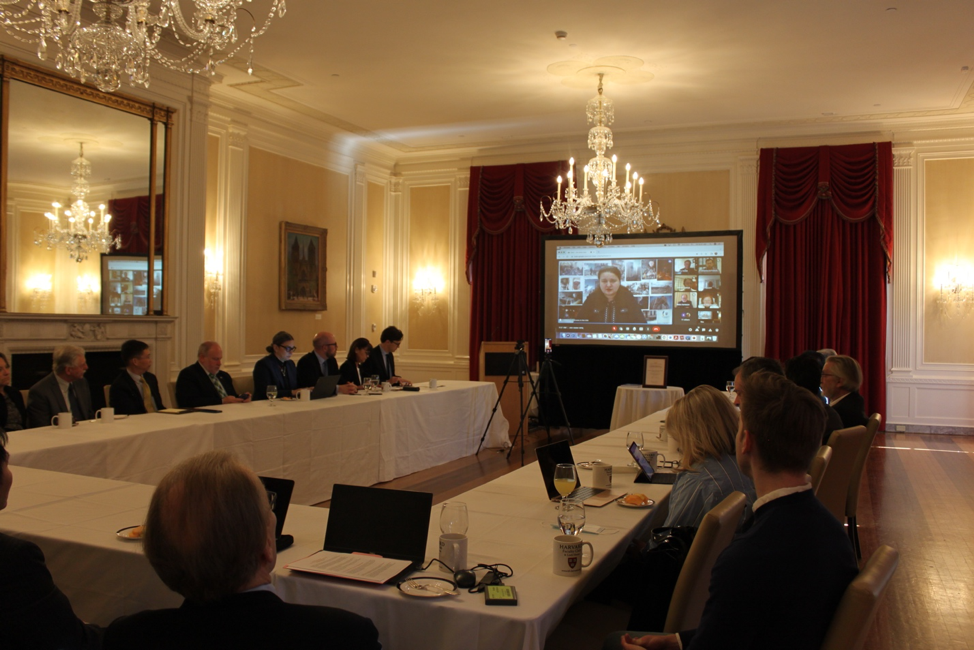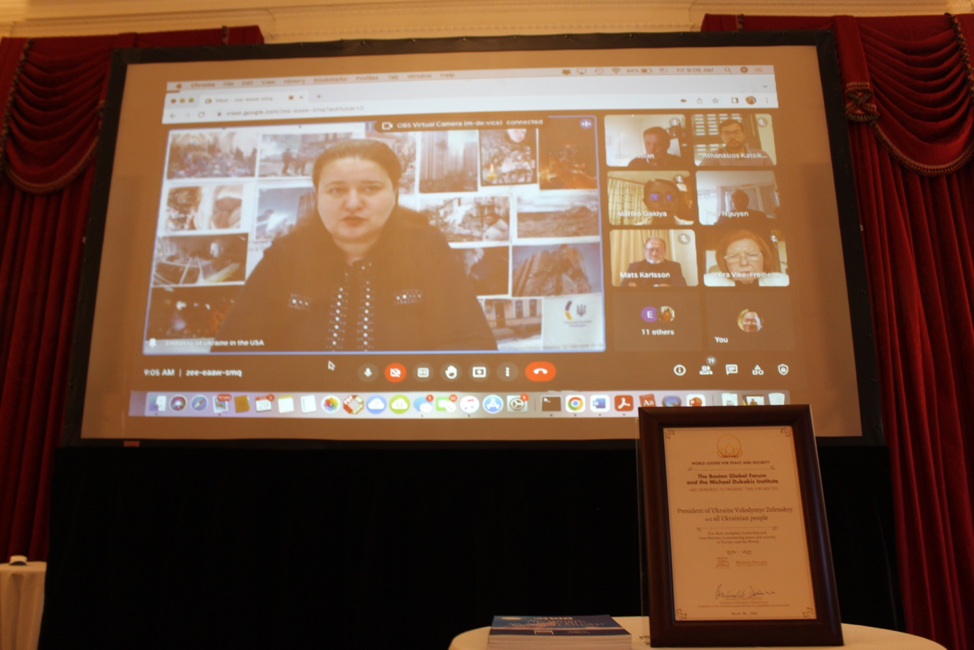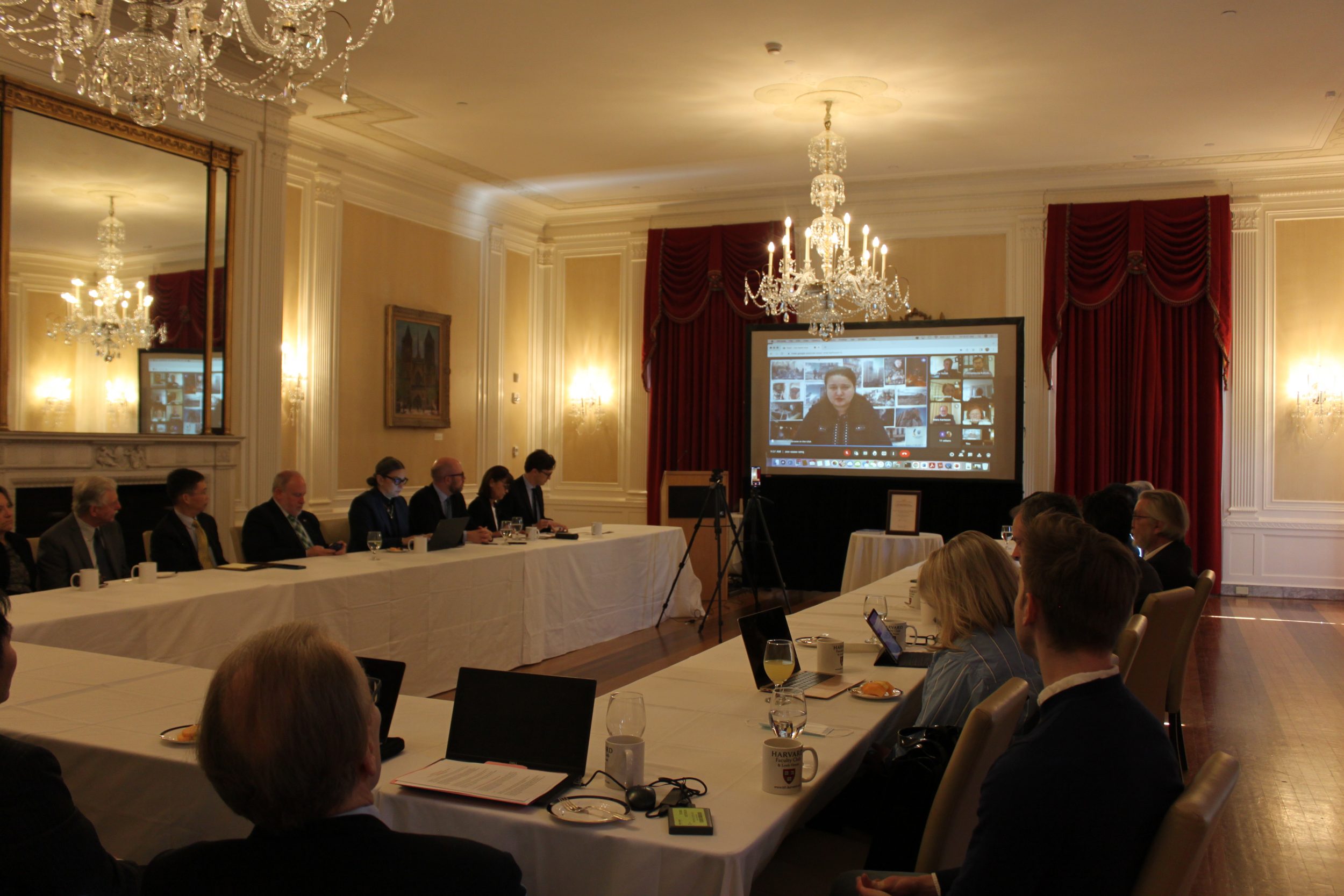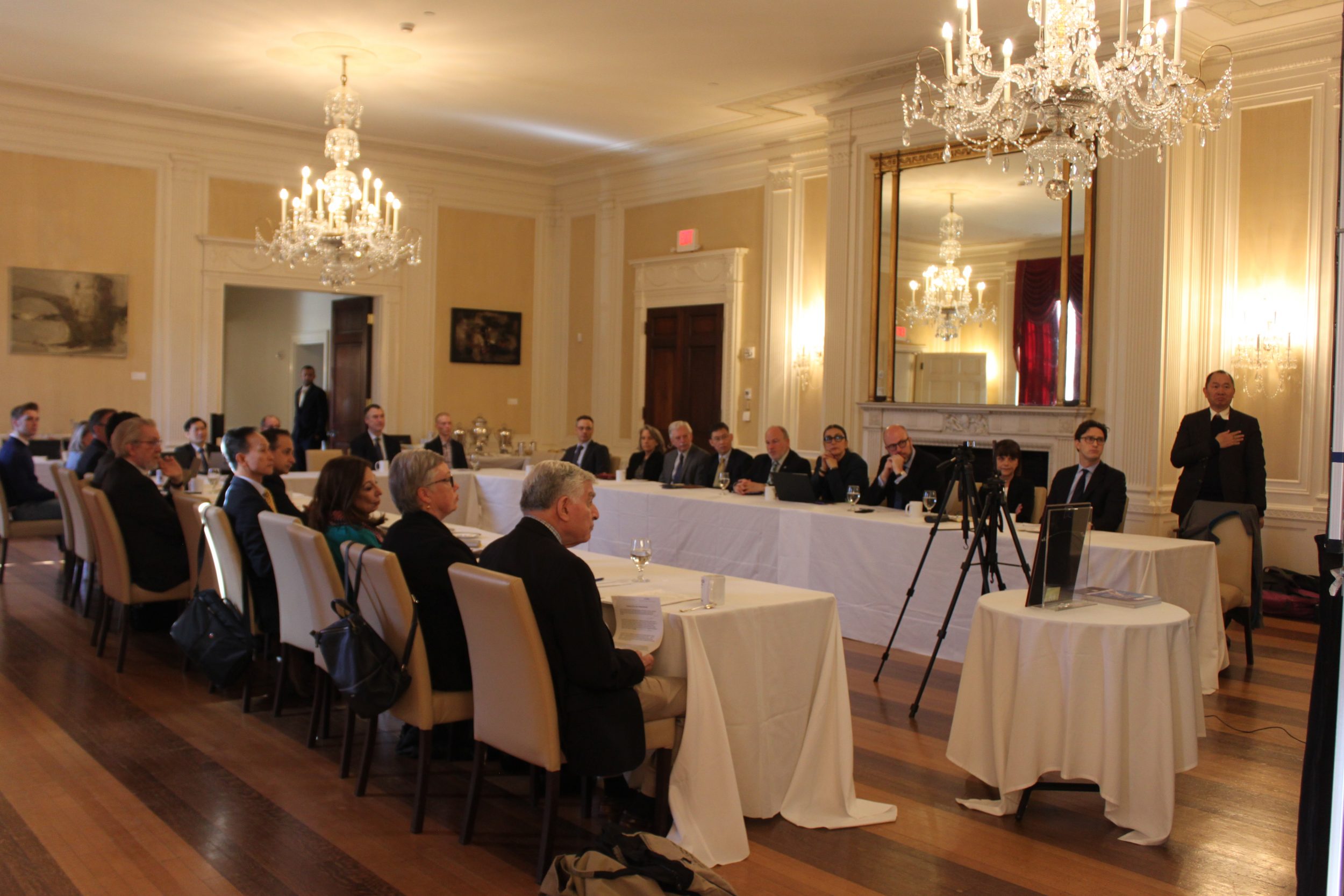
Keynote Speech of Ambassador of Ukraine to USA Oksana Markarova at Ceremony Honoring President Zelensky and all Ukraine people with the World Leader for Peace and Security Award

April 29, 2022

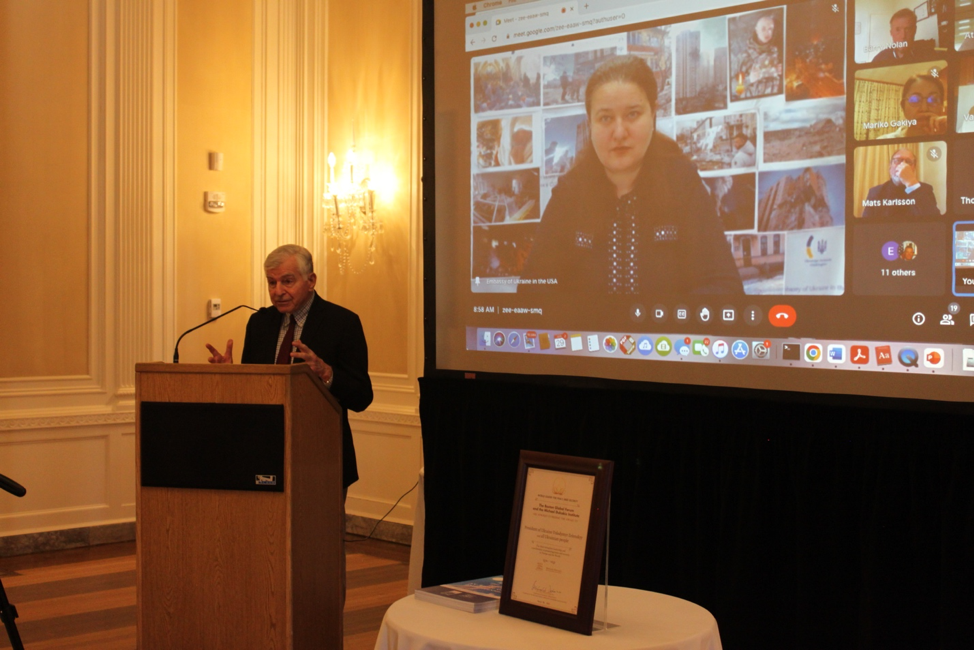
Dear Governor Dukakis, dear President Levits, dear Speaker Norlen, and all the distinguished guests. I’m so honored and happy to be here today, and to address to the Boston Global Forum. For 65 days, you see how Ukraine is defending itself from a brutal enemy. For 65 days Ukraine fights for our houses, for our homes, for our people, for our lands, but also for freedom and democracy. We fight for their rights to be who we are, to live peacefully in our country, and to decide how we want to live in our country.

For 65 days, we have seen unbelievable destruction of our country. We have seen ceaseless attacks from the sky, from east, north, and from south. We have seen some of the cities like Mariupol and Kharkiv and Tserkva destroyed to the ground. We have seen attacks on civilian orchards and hospitals and schools. We have seen destruction of universities which were there, some of them for more than 200 years, and even the World War II did not destroy them. We experience unimaginable losses. More than 4.5 million people had to flee Ukraine, and many are women and children, to save their lives. More than 7 million people are internally displaced in Ukraine. More than 10 million people, as we speak today, live under brutal conditions under occupation, without water, without food, without the basic needs for medical supplies.

But also for the 65 days, we have shown to the world an example of bravery, starting with our unbelievably great president, Volodymyr Zelensky, not only when this phase of the war started, and I want to remind you that this war is in Ukraine for the past eight years. Russia attacked us in 2014. But during the first 65 days, as soon as Russia started its full-fledged attack and invasion in this phase of the war, President Zelenskyy came out, and he said, “The president is here. I’m here, and stay in Kyiv. We will not surrender. We will not give up. We will defend what we love and what we believe in. And this is what we are doing. And this is the whole nation fighting: Our brave armed forces, our National Guard, our rescuers. But every Ukrainian center is doing what our president has said we would do, and we will not give up. Ukrainians love [to] build things. We love [to] grow wheat. We love to initiate startups. But today we all had to postpone what we were doing in our ordinary lives, and we all have to defend our country. And we’re very grateful to all of our strategic friends and allies and especially to the United States for all the support, with weapon, with sanctions, with financial and energy support to Ukraine. Because this fight is so much more than you think. This fight is about the global situation. This fight is about whether Europe and in general the democratic world can feel safe, whether you can make the civilisational choice to be democratic, to be free, to be sovereign and not be attacked by the brutal enemy.

On behalf of my president and all Ukrainians, firstly, great thank you. And our deepest gratitude for this act of support and for the World Leaders Award for Peace and Security. I agree with you that nobody deserves it better than our president, who has shown an outstanding example of leadership under the dire circumstances. I would like to also thank you for this event and for the efforts that all of your professors and all of the distinguished guests have taken in order to help us to already brainstorm and say, how are we going to deal with things? Because for us, the number one goal, of course, is to win in this war. And as we are certain not to surrender, we are certain that with the help of all of our friends and allies, we will win this war, and peace will return to Ukraine, and then we will build back Ukraine better. We will build a new innovative Ukraine 2022.0., which will be the most efficient, the most democratic, the most innovative. And we would be able to see all of our friends and allies to participate in this new endeavor. So with that, let me again thank you for this award. Thank you for inviting me to speak at the beginning of this conference. I wish you very fruitful discussions today. And we need all the prayers and all the weapons that anyone can provide to us and present all of us, democratic people. People who love freedom and who are ready to fight for it will win.


Thank you very much, and you all have a good day.
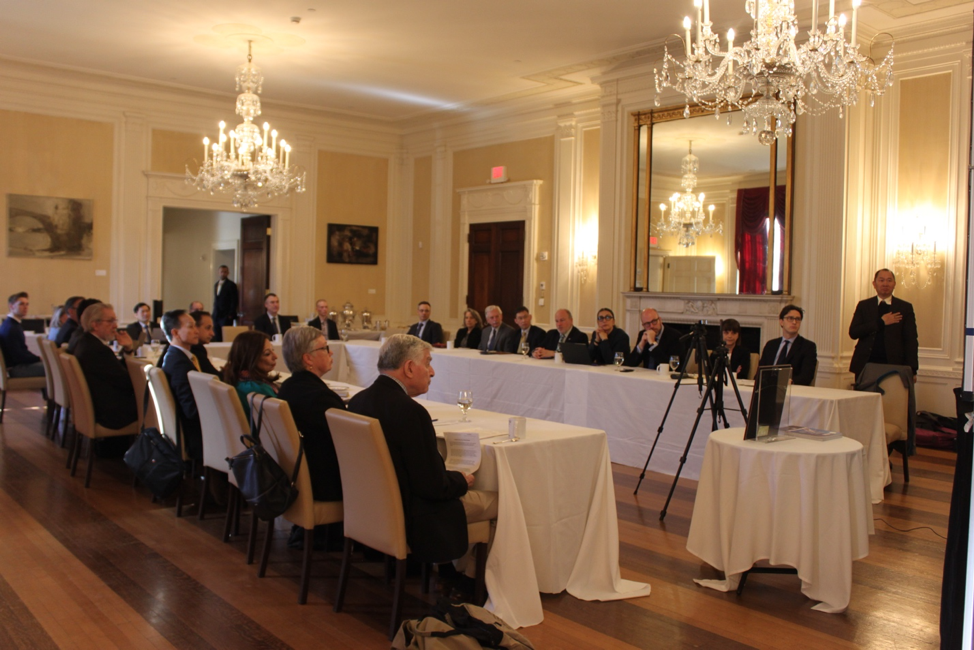
Strategies for Peace, Security and Territory Integrity of Ukraine

Governor Michael Dukakis, Nguyen Anh Tuan, Zaneta Ozolina

Thomas Patterson, Nazli Choucri, Alex Sandy Pentland, David Silbersweig, Mats Karlsson, Jim McManus


As Russia’s war against Ukraine continues, global leaders and diplomatic observers have turned their attention to two distinct agendas to help resolve the conflict. The first is to provide immediate support for Ukraine as it endures unprecedented attacks by Russia conducted with modern weapons and massive military power. The second involves planning for the prevention of unprovoked aggression through the adoption of values and standards that will ensure peaceful relations worldwide.

Short Term Strategies to Support Ukraine

Most immediate are the actions to support Ukraine and demonstrate the extent of global opposition to such aggression with indiscriminate violence. Bombing of urban civilian areas — apartment buildings, hospitals, schools and farms — violates international law and norms of warfare agreed upon by the international community.

Participants in the Boston Global Forum Conference April 29, 2022 proposed the follow steps to assist Ukraine at this critical time of immense need:

  • Provide humanitarian and other support to address the war-related health crisis in Ukrainian cities and towns. This includes medical supplies, health care providers, equipment, temporary hospitals and all related assistance;
  • Deliver advanced weapons, offensive and defensive, to compensate for uneven scales in the war;
  • Share all intelligence information with the Ukrainian Government — including contributions by NATO and European nations– pertaining to Russian troop movements, tactical weapons locations and battle plans;
  • Sustain existing economic sanctions and impose sanctions to energy resources, which at the present moment is the main financial source supporting Russia’s war machinery
  • Support and engage in the debate on limitation and exclusion of Russia from the UN Security Council, as a country which does not respect the UN Charter and its founding principles.
  • Provide strategic military advice to help in the fight against Russian air, ground and naval forces;
  • Assist Ukrainian students and children, in the country who face shortages of basic needs such as food, shelter and medical care. Assist in sustaining, where possible, educational institutions. Call on Ukrainian students outside the country to find ways of helping and rebuilding Ukraine.
  • Call for organizing a High-Level International Conference on Peace, Security and Territorial Integrity for Ukraine, with participation of leaders from Russia, Ukraine, United States, and the European Union, to be held in Paris, Riga, or Stockholm.


Future Strategies to Support Ukraine

The Ukraine invasion is a painful lesson for the world that compromise with dictators and authoritarian regimes only feeds aggression. In response, speakers at the Boston Global Forum focused on the advantages of promoting development of a competitive economy, in conjunction with a flourishing democratic political system.

Above all, the war on Ukraine has highlighted ways in which the leaders of Russia deceive the public through their messages and actions, and the use of their propaganda systems.  They promised to create “humanitarian corridors” to allow civilian non-combatants to leave areas under attack, only to renege on those promises. Russia has not made any serious attempt to engage in peace talks.  All evidence so far is of hollow commitments.

Speakers at the conference underscored the need to address Russia’s aggression and its unprecedented disinformation by adopting specific steps:

  • Promote shared democratic values through multilateral organizations, NGOs, universities, business entities, and academic centers; Comprehensive multinational and new form of Marshall plan is needed for Ukraine ensuring fast reconstruction and recovery from the war. It will serve as a coordinated and efficient platform for economic development, social assistance and human empowerment.
  • Develop legal and humanitarian standards as foundation for 21st century international relations. For example, the Social Contract for the AI Age and the book Remaking the World – Toward an Age of Global Enlightenment provide invaluable guidance for rational rule-making in the Age of Digital and AI.
  • Encourage the formation of a New Alliance to protect rational standards and the security of countries that support them.

Rebuilding Ukraine: From Devastation by War to Developing an Exemplary Nation With Remaking the World – Toward an Age of Global Enlightenment

Discussion Leaders: Governor Michael Dukakis and Nguyen Anh Tuan

Advisor: Jason Furman, Chairman of the Council of Economic Advisers to President Obama, Harvard professor

Contributors: Professors Alex Sandy Pentland, Thomas Patterson, Nazli Choucri, David Silbersweig, Francesco Lapenta, former Vice President of the World Bank Mats Karlsson, former Prime Minister of Bosnia and Herzegovina Zlatko Lagumdzija, former President of Latvia Vaira Vike-Freiberga, father of Internet Vint Cerf, Assistant Secretary of Massachusetts Government Nam Pham, EY Global Tax Innovation Leader Jeff Saviano


The Ukrainian people are currently enduring an unprovoked war that has resulted in tens of thousands of combatant and civilian deaths. Many cities and towns have been utterly destroyed by indiscriminate Russian bombing. The free, Democratic nations of the world have rallied around Ukraine to provide military and humanitarian assistance.

The focus of the Boston Global Forum is to help coordinate and call on world leaders, distinguished thinkers, innovators, governments, companies, organizations is on helping to end the war and provide for the basic needs of the Ukrainian people who remain in the country and those who have fled the fighting. When the war ends, there is an opportunity for Ukraine and its allies to rebuild the nation as a model of peace, stability and prosperity. The Boston Global Forum is starting to build strategies and programs for Rebuilding Ukraine.


Strategies for Rebuilding Ukraine

Following hostilities, as Ukraine turns its attention to rebuilding the nation and society, it is imperative to apply standards, norms and common values outlined in the Social Contract for the AI Age and pioneering ideas and concepts contained in the book “Remaking the World – Toward an Age of Global Enlightenment,” with contributions by distinguished leaders and thinkers.

The book “Remaking the World” advances pioneering ideas that could help reshape the world as the United Nations progresses toward its centennial in 2045, and addresses the standards that should govern the development and use of AI and digital technology.

These ideas and standards have been the subject of several recent conferences, including the World Leadership Alliance-Club de Madrid Policy Labs on September 16-18, 2020 and September 7-9, 2021, as well as the Riga Conferences in 2020 and 2021.


Goals

Building a smart democracy, smart cities with high-quality smart schools, where citizens are directly involved in the political decisions of the country. A nation where institutions and structures promote kind, humane, civilized, creative, innovative policies and practices. Where the rule of law protects equality of opportunities for all people, openness, transparency, and engagement with civic institutions. And, the system of taxation is transparent, equitable, and provides sufficient certainty to citizen taxpayers to aid in Ukraine’s recovery.


To apply these concepts to rebuild Ukraine, strategies discussed at the recent conferences include:


Rebuilding cities and infrastructure


Building AI World Society (AIWS) City for Ukraine:

  • Apply model concepts of AIWS City to rebuild Ukrainian cities as smart cities.
  • AIWS City is a smart digital city with distinguished communities.
  • Connect historical, traditional cities as Boston, New York, Washington DC, San Francisco, LA, Chicago, Berlin, Munich, Frankfurt, Stockholm, Rome, Athens, Vienna, Paris, London, Madrid, Barcelona, Copenhagen, Edinburg, Amsterdam, Brussels, Prague, Dubrovnik, Zurich, Geneva, Jerusalem, Tokyo etc. to the AIWS City for Ukraine.
  • Build a digital platform and components of AIWS City for Ukraine: Digital Home, Art and Cultural Institutions, Smart Digital and AI University, Innovation Ecosystem, Smart Healthcare Centers, Markets.

Infrastructure:

  • Solutions to reconstruct infrastructures of Ukrainian cities:
    • Combine rebuilding cities to optimal and maximize resources, costs.
    • BGF connects and calls cities, governments, companies, foundations to support Ukrainian government and cities to reconstruct cities and transportation system of Ukraine.

Projects and Programs for Rebuilding Ukraine:

Phase 1: Civic and Social Engagement

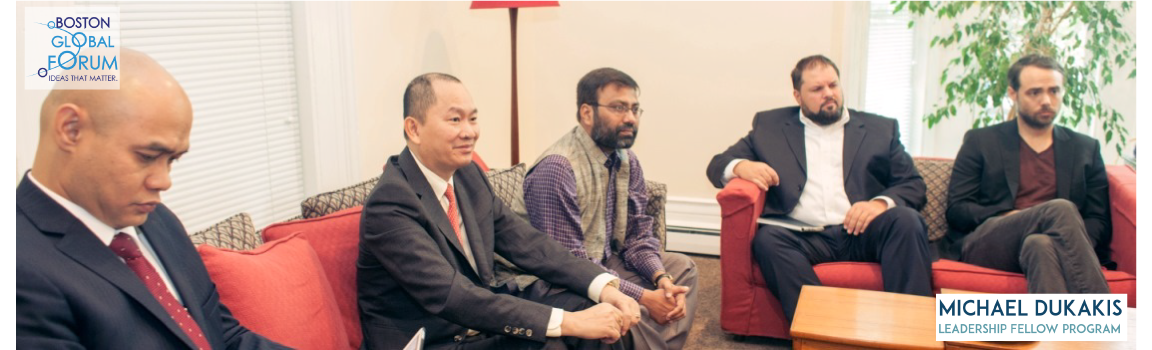
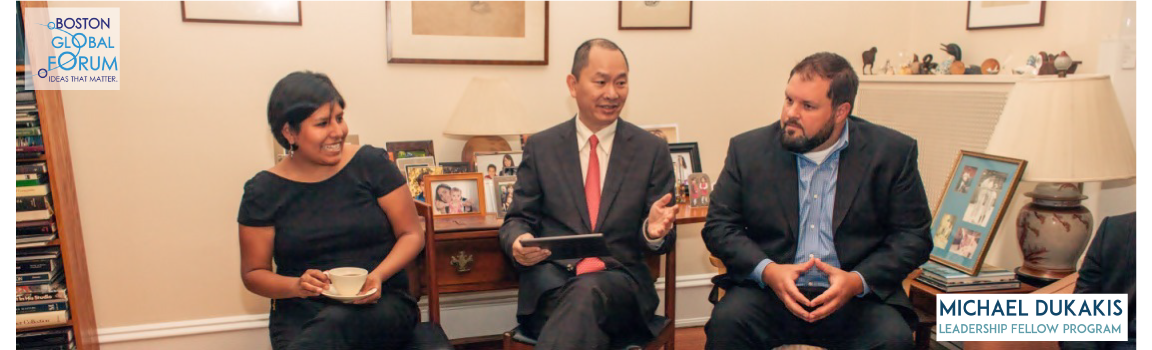
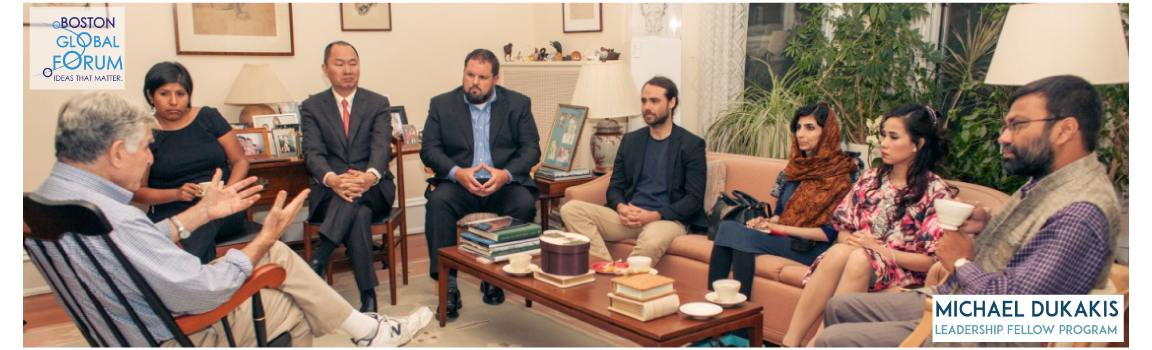
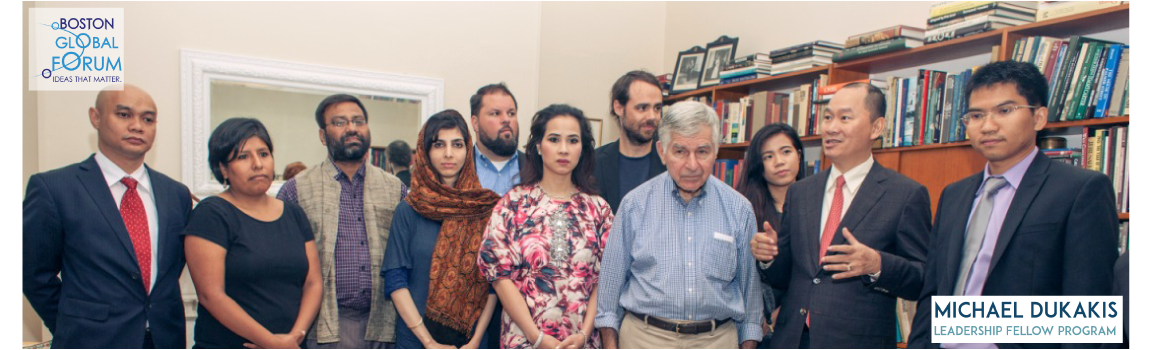
  1. Michael Dukakis Leadership Fellows for Ukraine

Michael Dukakis Institute for Leadership and Innovation

Develop and support young Ukrainian leaders

  1. AIWS Leadership for Ukraine

Michael Dukakis Institute for Leadership and Innovation

Educate leaders to lead and rebuild Ukraine

  1. AIWS University for Ukraine: support Ukrainian students and universities
  • Build “Online Center of Knowledge for Innovation” to support Ukraine, build online resources to help connect and guide Ukrainian refugees so that they can quickly rebuild their lives
  • Applying AIWS Rewards to recognize contributions of students and scholars to Ukrainian students and universities

Led by Harvard Professor Thomas Patterson, Professor Francesco Lapenta, Former Japanese State Minister Yasuhide Nakayama, Bui Thanh Nhon, Coordinators

  1. Creating and building global brand names for Ukraine

Advise and help promote PR high quality products and services of Ukraine become global brand names.

Professor John Quelch and Nguyen Anh Tuan, Coordinators

  1. Building a Digital and AI Platform for Ukrainian cities (AIWS City for Ukraine)
  • Every citizen has one digital home, bring gem cities of the world to Ukraine
  • Bringing solutions to reconstruct infrastructure of Ukrainian cities
  • BGF connects and calls cities, governments, companies, foundations to support
  • Ukrainian government and cities to reconstruct cities and transportation system of Ukraine

Led by Governor Michael Dukakis, Prime Minister Zlatko Lagumdzija and BGF CEO Nguyen Anh Tuan, Coordinators


Phase 2: AIWS Government for Ukraine

  • Build a “smart” government aided by AI and Digital technologies, guided by concepts of AIWS Government
  • Develop the next generation digital public infrastructure, modeled after Estonia and other leading digital government nations
  • AIWS Citizen and Information Ecosystem for Ukraine
  • Ukraine Community Innovation Ecosystem, including new distributed systems for greater national resilience
  • AIWS Financial System, with a reimagined set of tax policies that encourage future growth and prosperity for Ukraine

Led by Jason Furman, Mats Karlsson, Alex Sandy Pentland, Jeff Saviano


Resources for Support of Ukraine

  • AIWS Network of distinguished leaders, thinkers, innovators (AIWS.net), AIWS.city and call on companies, universities, foundations, for support
  • Connect and invite top universities from across the globe
  • Coordinate private companies: Google, Microsoft, Amazon, IBM, Apple, EY.
  • Encourage Ukrainian students, professors in the US to join to rebuild Ukraine.
  • Cooperate with Harvard Shorenstein Center, Niemann Foundation, Berkman Center and MIT Media Lab
  • Connect governments to help and support Ukraine to build AIWS Government and AIWS Citizen system.


Send this Report to G7 Summit and call Governments to support Rebuilding Ukraine Program, through German Consul General in Boston

Remarks of Governor Michael Dukakis honoring President Zelensky and all Ukraine people with the World Leader for Peace and Security Award

Honoring President Zelensky and all Ukraine people with the World Leader for Peace and Security Award


Conference “Laurel for Peace and Security in Ukraine”

Loeb House, Harvard University, April 29, 2022


Good morning and welcome, distinguished guests and speakers who have gathered today here at Harvard University, and online from around the world, for this important forum to discuss current events and potential future pathways for Ukraine.

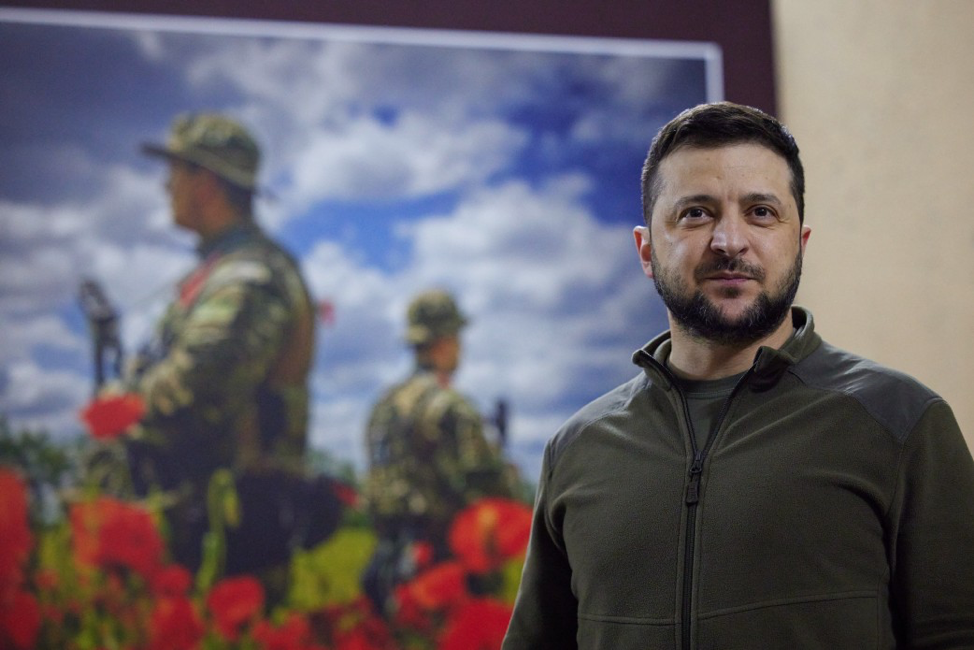
I am pleased to announce that this year’s recipient of the Boston Global Forum’s World Leader for Peace and Security Award is Volodymyr Zelensky, President of Ukraine and all Ukrainian people. This prestigious Award is given to honor individuals who demonstrate a fierce commitment to peace and justice.  In that spirit, we present the award to the Ukraine people who are courageously fighting to preserve their country’s sovereignty.

Trained as a lawyer, though he never practiced law, President Zelensky entered politics from a career in television, winning the presidency in 2019 with 73 percent of the vote. He ran on an anti-corruption platform and promised to bring a negotiated end to the conflict in eastern Ukraine resulting from the Russian takeover of the region in 2014.

He persuaded the Ukrainian parliament to enact laws stripping members of Parliament of legal immunity and banning oligarchs from contributing funds to political candidates. His efforts to get Russia to agree to a just settlement of the conflict in eastern Ukraine did not succeed, but he brokered a ceasefire in 2019 that sharply reduced the violence and tension in the region.

President Zelensky’s finest hour began with the full-scale Russian invasion of Ukraine two months ago. Using the power of the presidency and through the brilliant use of social media, he has with his words and personal courage inspired Ukrainians against all odds to resist the invasion. No leader in recent times has spoken more powerfully than when President Zelensky, upon being offered safe passage out of the country, said, “The fight is here. I need ammunition, not a ride.”

President Zelensky has been a tireless defender of Ukraine’s territorial integrity, petitioning nation after nation to provide the humanitarian and military assistance that Ukrainians need to save their country.

He has inspired Ukrainians, and people around the world, with his proud defense of his country against tyranny.

He does not come to oversee for his safe, he stands in his country. He inspires Ukrainian people and the world.

Russia claims that it invaded Ukraine to root out its “neo-Nazis.” Ironically, the man who, above all others, has stood in its way is Jewish, with close relatives who perished in the Holocaust. President Zelensky is not only Ukraine’s first Jewish president, he’s the first elected Jewish head of state and head of government of any country, save for Israel.

President Zelensky and the Ukrainian people have made momentous contributions to peace and security in the world in their opposition to the ambitions of Russia’s Putin. Their courageous stand against imperialism and extremist nationalism will give pause to authoritarian leaders in the future.

President Zelensky embodies the desire for peace and security that resides within the heart of so many, and yet would be denied by authoritarian leaders. It gives me great pleasure to be honoring him and all Ukrainian people today with the Boston Global Forum’s World Leader for Peace and Security Award. Honoring President Zelensky and Ukrainian people, BGF has conceived and coordinated today’s program with distinguished leaders, thinkers, innovators to contribute ideas and counsel for the rebuilding of Ukraine.

MIT’s FutureMakers programs help kids get their minds around — and hands on — AI

The programs are designed to foster an understanding of how artificial intelligence technologies work, including their social implications.

FutureMakers is part of the MIT-wide Responsible AI for Social Empowerment and Education (RAISE) initiative launched earlier this year. RAISE is headquartered in the MIT Media Lab and run in collaboration with MIT Schwarzman College of Computing and MIT Open Learning.

MIT piloted FutureMakers to students from all over the United States last year in two formats.

During one-week, themed FutureMakers Workshops organized around key topics related to AI, students learn how AI technologies work, including social implications, then build something that uses AI.

And during six-week summer Create-a-Thons, middle school and high school students do a deep dive into AI and coding for four weeks, then take two weeks to design an app for social good. The Create-a-Thon culminates in a competition where teams present their ideas and prototypes to an expert panel of judges.

“We want to remove as many barriers as we possibly can to support diverse students and teachers,” says Cynthia Breazeal, a professor of media arts and sciences at MIT who founded the Media Lab’s Personal Robots Group and also heads up the RAISE initiative. All RAISE programs are free for educators and students. The courses are designed to meet students and teachers where they are in terms of resources, comfort with technology, and interests.

But it’s not all about learning to code.

“AI is shaping our behaviors, it’s shaping the way we think, it’s shaping the way we learn, and a lot of people aren’t even aware of that,” says Breazeal. “People now need to be AI literate given how AI is rapidly changing digital literacy and digital citizenship.”

The article was originally posted at MIT News.

The Boston Global Forum (BGF), in collaboration with the United Nations Centennial Initiative, released a major work entitled Remaking the World – Toward an Age of Global Enlightenment.   More than twenty distinguished leaders, scholars, analysts, and thinkers put forth unprecedented approaches to the challenges before us. These include President of the European Commission Ursula von der Leyen, Governor Michael Dukakis, Father of Internet Vint Cerf, Former Secretary of Defense Ash Carter, Harvard University Professors Joseph Nye and Thomas Patterson, MIT Professors Nazli Choucri and Alex ‘Sandy’ Pentland, and Vice President of European Parliament Eva Kaili.  The BGF introduced core concepts shaping pathbreaking international initiatives, notably, the Social Contract for the AI Age, an AI International Accord, the Global Alliance for Digital Governance, the AI World Society (AIWS) Ecosystem, and AIWS City.

Why CMU launched the Responsible AI initiative

Amid local and national discussion — and concern — about the same topic, Carnegie Mellon University is launching a new program focused on ethical and responsible use of artificial intelligence.

Responsible AI, as it’s called, is an initiative out of the Oakland-based university’s Block Center for Technology and Society with support from faculty in the School of Computer Science and members of the Dean’s Office staff. Its goal is to convene experts across areas of expertise such as computer science, engineering, public policy and business to further the initiative’s missions. Those include translating research into policy and social impact; building community and serving local and global communities; providing new education and training; and establishing partnership beyond the university to promote the responsible use of AI.

It’s one of many recent efforts locally to ensure that technologists out of the AI hub are learning how to use it responsibly. Elsewhere in Pittsburgh, the Partnership to Advance Responsible Technology issued an inaugural report earlier this year on the topic, and a recent study from the University of Pittsburgh’s Institute for Cyber Law, Policy and Security reviewed local use of public algorithms.

The initiative launched this week with a panel discussion of experts in AI use and policy, including representatives from the White House, the Patrick J. McGovern Foundation, Salesforce and CMU’s School of Computer Science. The hour-long discussion centered on the vision for the new initiative, as well as the common problems identified around AI across academia and the public and private sectors and was moderated by Rayid Ghani, a distinguished career professor in the CMU Machine Learning Department and Heinz College of Information Systems and Public Policy.

The original article was posted here.

The Boston Global Forum (BGF), in collaboration with the United Nations Centennial Initiative, released a major work entitled Remaking the World – Toward an Age of Global Enlightenment.   More than twenty distinguished leaders, scholars, analysts, and thinkers put forth unprecedented approaches to the challenges before us. These include President of the European Commission Ursula von der Leyen, Governor Michael Dukakis, Father of Internet Vint Cerf, Former Secretary of Defense Ash Carter, Harvard University Professors Joseph Nye and Thomas Patterson, MIT Professors Nazli Choucri and Alex ‘Sandy’ Pentland, and Vice President of European Parliament Eva Kaili.  The BGF introduced core concepts shaping pathbreaking international initiatives, notably, the Social Contract for the AI Age, an AI International Accord, the Global Alliance for Digital Governance, the AI World Society (AIWS) Ecosystem, and AIWS City.

Six Steps to Responsible AI in the Federal Government

There is widespread agreement that responsible artificial intelligence requires principles such as fairness, transparency, privacy, human safety, and explainability. Nearly all ethicists and tech policy advocates stress these factors and push for algorithms that are fair, transparent, safe, and understandable.

But it is not always clear how to operationalize these broad principles or how to handle situations where there are conflicts between competing goals. It is not easy to move from the abstract to the concrete in developing algorithms and sometimes a focus on one goal comes at the detriment of alternative objectives.

In this paper, I discuss ways to operationalize responsible AI in the federal government. I argue there are six steps to responsible implementation:

  1. Having concrete codes of conduct
  2. Appropriate operational tools for promoting major ethical principles and fighting bias
  3. Developing clear evaluation benchmarks and metrics
  4. Relying upon technical standards to help with common problems
  5. Experimenting via pilot projects and organizational sandboxes
  6. Having a mix of technical nontechnical skills in the workforce

This report was originally posted at the Brookings Institute.

The Boston Global Forum (BGF), in collaboration with the United Nations Centennial Initiative, released a major work entitled Remaking the World – Toward an Age of Global Enlightenment.   More than twenty distinguished leaders, scholars, analysts, and thinkers put forth unprecedented approaches to the challenges before us. These include President of the European Commission Ursula von der Leyen, Governor Michael Dukakis, Father of Internet Vint Cerf, Former Secretary of Defense Ash Carter, Harvard University Professors Joseph Nye and Thomas Patterson, MIT Professors Nazli Choucri and Alex ‘Sandy’ Pentland, and Vice President of European Parliament Eva Kaili.  The BGF introduced core concepts shaping pathbreaking international initiatives, notably, the Social Contract for the AI Age, an AI International Accord, the Global Alliance for Digital Governance, the AI World Society (AIWS) Ecosystem, and AIWS City.

What ethics should AI application have in businesses?

The evolution of artificial intelligence is a perpetual stream of wonder, optimism, and terror. AI, like any other technology, may be utilized for good or harm. The same algorithm may be used to enhance healthcare as well as create false news videos. Based on how it is employed, today’s AI may be both a huge advantage to society and a threat to democracy.

The tough thing with machine learning is that it may go horribly wrong even if the designers have the best of intentions and want to do well.

Chatbots that become racist, for example, or image recognition algorithms that are trained on non-representative data ­­- none of it was intended to harm anyone, but they did.

Today, corporate trust is at an all-time low. Unintentional repercussions of technology are a danger that might result in public shame and controversies. This can jeopardize people’s privacy, health, or lives, as well as harm a company’s brand and shareholder profit.

Taking a strong stance has the potential to set one’s firm apart from the competitors and increase client satisfaction.

The original article was posted at Analytics Insight.

The Boston Global Forum (BGF), in collaboration with the United Nations Centennial Initiative, released a major work entitled Remaking the World – Toward an Age of Global Enlightenment.   More than twenty distinguished leaders, scholars, analysts, and thinkers put forth unprecedented approaches to the challenges before us. These include President of the European Commission Ursula von der Leyen, Governor Michael Dukakis, Father of Internet Vint Cerf, Former Secretary of Defense Ash Carter, Harvard University Professors Joseph Nye and Thomas Patterson, MIT Professors Nazli Choucri and Alex ‘Sandy’ Pentland, and Vice President of European Parliament Eva Kaili.  The BGF introduced core concepts shaping pathbreaking international initiatives, notably, the Social Contract for the AI Age, an AI International Accord, the Global Alliance for Digital Governance, the AI World Society (AIWS) Ecosystem, and AIWS City.

President of Ukraine Zelenskyy and all Ukrainian People to be Honored as World Leaders for Peace and Security 2022

Boston, March 30, 2022


On April 29, 2022, at Loeb House, Harvard University, Governor Michael Dukakis will present Volodymyr Oleksandrovyc Zelenskyy, President of Ukraine and the Ukrainian people, with the Boston Global Forum (BGF) and Michael Dukakis Institute’s Annual Award “World Leader for Peace and Security” at “Laurel for Peace and Security in Ukraine” Conference, co-organized by BGF and the Latvian Transatlantic Organization, with participation of presidents, prime ministers and distinguished thinkers from Harvard University and MIT.


Governor Dukakis stated, “Boston Global Forum and Michael Dukakis Institute honor President Zelenskyy and all Ukrainian people as the recipients of the World Leader for Peace and Security Award for 2022 for their courage and sacrifice for freedom and independence.”

Zelenskyy is brave against the Russian forces, even in the face of assassination threats, has been an integral part of the resistance. His leadership, loyalty, and confidence in Ukraine has made courage contagious throughout the country.

The people of Ukraine have been brave and courageous in the face of a totalitarian regime, in spite of a dictator who wants to control their way of life. The Ukrainian people have stood before tanks, mobbed Russian vehicles, and have held their ground in the country to take up arms and defend their independence.

President Zelenskyy and the Ukrainian people have had an impact across the globe – uniting the EU and other countries in their fight. They have shown their bravery and courage in the fight for freedom and independence, while maintaining peace and security for all human beings. They are teaching dictators and totalitarian regimes lessons about dignity.

Along with honoring them, BGF calls on our community members to help and support the Ukrainian people in rebuilding their country.  The first step in this incredible undertaking is to help Ukrainian students, as they are our hope for the future.


Ambassador of Ukraine to the United States Oksana Markarova: “We sincerely thank BGF Board for honoring President Zelensky and all Ukrainian people the 2022 World Leaders for Peace and Security Award. We take it as acknowledgement of outstanding bravery and exemplary leadership, demonstrated by our Head of State, his government and military personnel under the challenging and daring times of Russia’s unprovoked attack on our sovereign nation. We deeply appreciate the decision of the BGF Board to support and help Ukrainian students and see it as an important contribution into Ukraine’s future as a prosperous European democracy.”

Previous years, World Leader for Peace and Security Award recipients were Prime Minister Shinzo Abe, Chancellor Angela Merkel, UN General Secretary Ban Ki-moon, President Toomas Hendrik Ilves, President Sauli Niinisto, President Vaira Vike-Freiberga, President Ursula von der Leyen, and Riksdag Speaker Andreas Norlen.


About the Boston Global Forum:

The Boston Global Forum (BGF) offers a venue for leaders, strategists, thinkers and innovators to contribute to Remaking the World – Toward an Age of Global Enlightenment.

In 2019, the Boston Global Forum, in collaboration with the United Nations Academic Impact, launched the United Nations Centennial Initiative. It began with the release of a major work titled “Remaking the World – Toward an Age of Global Enlightenment”. More than twenty distinguished leaders, thinkers, strategists, and innovators put forth unprecedented approaches to the challenges that lay before the world. These contributors include President of the European Commission Ursula von der Leyen, Governor Michael Dukakis, Father of Internet Vint Cerf, Former US Secretary of Defense Ash Carter, Harvard University Professors Joseph Nye and Thomas Patterson, MIT Professors Nazli Choucri and Alex ‘Sandy’ Pentland, and Vice-President of the European Parliament Eva Kaili.


CONTACT:

Further details of BGF and Michael Dukakis Isntitute are available by contacting Tuan Anh Nguyen, Co-founder and Chief Executive Officer of The Boston Global Forum, and Director of The Michael Dukakis Institute for Leadership and Innovation: [email protected]