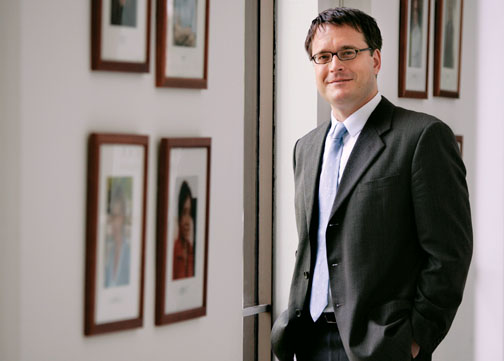
Japanese Prime Minister to be honored

Japanese Prime Minister Shinzo Abe has made a speech expressing his honor to be selected as the winner of the Boston Global Forum’s (BGF) World Leader for Cybersecurity Award.

He was one of three leaders honored this year by the BGF. The two others are German Chancellor Angela Merkel and Prime Minister of Vietnam Nguyen Tan Dung, who was presented with the “World Leader for Peace, Security and Development” Award.

According to BGF, the award is presented to individuals who have outstanding contributions to peace and security in their country and in the world.

The winners are selected by a council of well-known academics and officials, from the candidates who are political, media, civil leaders and scholars.

Below is the full text of the speech by Prime Minister Shinzo Abe:

“Welcome to everyone attending the conference. I’m PM Shinzo Abe. This year marks the third anniversary of the launch of the Boston Global Forum. I offer my heartfelt congratulations seeing this conference convene today at such grand scale. I very much appreciate having been chosen to receive the World Leader in Cybersecurity Award. I consider it a great honor. We are now at the advent of an era in which everything will connect to the Internet and information and communication technology will link into and permeate goods and services. Ensuring security in cyberspace – “cybersecurity” – is the indispensable foundation for advancing our utilization of IT and realizing our growth strategy.

It is at the same time a gravely important issue for national security and crisis management. Japan is now preparing for the Ise-Shima Summit in 2016 and the Tokyo Olympic and Paralympic Games in 2020. It is imperative that we take all possible means to ensure cybersecurity so that we can be certain to lead both of these to a successful conclusion.

In light of this, we are now engaged as a nation in all-out effort to reinforce cybersecurity. These include the government’s enactment of the Basic Act on Cybersecurity in November 2014 and a cabinet decision taken in September this year on our new “Cybersecurity Strategy”.

Cyber attacks have been on the  increase year after year. We have also begun to see organized, advanced attack techniques that lead to suspicion of state actor involvement. In the future, the threat to the international community are expected to escalate further.

Japan will closely continue to cooperate with the US and other partners in the international community, reliably safeguarding our nation’s important information and property while playing a leading role in achieving the peace and stability of the international community.

It is greatly reassuring to me that the members of the Boston Global Forum are promoting cyber security-related awareness raising activities and fostering discussions in various countries around the world. Today, on Cybersecurity Day, your representatives from all around the world will hold various discussions. I wish to close my remarks with my sincere hope that efforts to build security in cyberspace progress still further, with these discussions as a turning point.”

Apply the Ethical Code of Conduct for Cyber Space Is Needed Now More Than Ever

By Tuan Anh Nguyen, Director of The Michael Dukakis Institute for Leadership and Innovation, and Co-Founder, Editor-in-Chief, and Chief Executive Officer of The Boston Global Forum.

The recent hack of Equifax, one of the three major credit reporting bureaus, that resulted in the theft of some 160 million personal records, Federal investigation of Russia’s meddling in our Presidential election, and the ability of North Korea to censor the US motion picture industry after that nation hacked Sony’s computers, raise a key question: Is a framework for ethical behavior on the internet even possible and if it is, will anyone work within that ethical framework?

Jubin Pejman, managing director and founder of FCM360, a cybersecurity company that provides ‘round the clock protection, put It this way, “The first question one must ask is if records cannot be secured, such as with the credit reporting bureau situation, is it ethical for that company to collect the information in the first place. There will always be intruders, and knowing this, the responsibility rests with Equifax and others who possess personal data to protect the consumer. When problems occur they must right the wrong.”

The challenge for the typical cyberspace user, which is all of us, is daunting adds Pejman, “Hacks do not have to be so big that they make international news. Foreign governments often piece together bits and pieces of information from several executives from the same company or government agency to create a composite picture that will provide competitors with intellectual property, state secrets, customer lists, passwords and more. Who the bad actors are is no surprise with Russia, China and Iran heading the list,” says Pejman an Iranian native who left the country when the Shah was deposed in 1979.

The often quoted, Prof. Sung-Yoon Lee, the Kim Koo-Korea Foundation Professor of Korean Studies, at Tufts Fletcher School of Diplomacy spoke to Boston Global Forum members at a recent World Reconciliation Day symposium about the cyber threat North Korea poses. In addition to nuclear fears, North Korea proved its ability to threaten our way of life by successfully using the Internet to intimidate Hollywood from screening “The Interview,” a spoof on leader Kim Jun Un. Lee told the delegates at Boston Global Forum-organized proceedings, that one of the world’s most restrictive governments, one that monitors and controls all communication, has effectively censored communication in another sovereign nation that prides itself on free speech through cyber intimidation.

While the road to safer cyberspace may seem filled with potholes, Boston Global Forum is beginning to look at the problem from an ethical vantage point by advancing solutions to educate people on cyber ethics for global citizens. Much of the focus is on social media—where a recent poll showed that half the respondents got all of their political news and information from Facebook—a medium that came under scrutiny for publishing ads from sources that have been traced back to Russia. In addition to hacking, younger social media users are creating a kind of information tumult by writing anything they please regardless of taste, accuracy, and whether criticism of people, both public and private, is with sufficient evidence—including cyber bullying.

Disinformation and fake news from sources who are not who they say they are pollutes our cyber environment and threatens global stability and democracy in the digital age. Harvard University Professor Thomas Patterson observed that even though the idea of “fake news,” was popularized by President Donald Trump, it has been around for some time. During the 2016 presidential election, fake news circulated on Facebook, exceeded real news coverage of the election.

According to Patterson fake news has become such a phenomenon because it is rooted in our deeply divided partisan political culture in this country in which people look for information to support their own biases and beliefs, rather than being open to opposing opinions. The unconscious engagement in selective perception allows members of both political parties to solidify their own worldview and maintain sometimes-blind partisan loyalty by voters who do not bother to check the facts.

Fake news is flourishing due to diminishing source credibility, Patterson points out. Fewer people subscribe to legitimate newspapers, while more people are getting information from online posts on social media that are both true and false. This increased reliance on the Internet contributes to public distrust of traditional media outlets. “When the voters do not trust the media, they are more willing to trust alternative sources.”

Repetition enhances the impact of fake news as well. The more individuals are exposed to a story, true or false, the more likely they will believe it to be true. When fake news goes viral—often achieved by “like farms,” where people are paid to “like” fake news stories on Facebook to get them trending—those exposed to the same link repeatedly are more inclined to believe it.

Fake news is spread by professional social influencers backed by their own political motives working every day to intentionally mislead the public and therefore influence voting and opinion polling outcomes. Patterson underscored the importance of nipping fake news at the source. Most fake news is generated by small, illegitimate websites, that are driven by online robots or “bots” that permeate the Web with the falsehoods. Patterson suggested that, as a society, we must strengthen the voices of reliable, sophisticated, news media, while encouraging bipartisan voices because fake news flourishes best in a polarized political environment.

In addition to out-and-out theft of data, DDOS attacks are on the rise. DDoS or Distributed Denial of Service attacks are crude assaults. Simply put, the hacker initiates a DDoS attack by overwhelming the target’s servers—sending so much data so quickly that customers can no longer gain access to services. According to Pejman, of FCM360 (www.fcm360.com), “Hackers do not have to destroy the victim’s servers and Internet operations. All they have to do is deny service for periods of time. Companies victimized by these attacks can range from major banks to retailers to information providers such as International Movie Database (IMDB). Imagine, for example, the cost to HSBC when it was unable to serve its customers due to massive DDoS attacks that resulted in multiple outages. The attacks were not long lived, but the cost in lost revenue could have easily reached millions of dollars per attack—this is to say nothing of the reputational loss and depreciation of brand equity.”

Mikko Hypponen, Chief Research Officer at Finnish computer security company F-Secure sees five types of computer hackers who commit Internet crimes. They are:

White hat hackers who help corporations and government agencies identify and eliminate vulnerabilities,

Hactivists who break into computer systems as a form of protest,

Organized crime, which is motivated by greed and responsible for some 400,000 daily attacks,

Governments that engage in espionage, considered acceptable Internet behavior while hacking foreign corporations to steal intellectual property is frowned upon, and

Extremists, such as ISIS, the use the internet to cause harm as well as to recruit sympathizers.

Ethical Solutions

Not only are the threats in cyberspace mounting, but reliance on a safe and secure cyberspace is increasing markedly. To cite just one example, cryptocurrency, such as Bitcoin, relies on blockchain as a public ledger to eliminate double spending of the same currency thus protecting its value. Though the distributed nature of blockchain processing is ironclad it does illustrate a big expansion in the need for a safe cyber environment.

To be sure, the bad actors such as Russia, North Korea and hackers motivated by greed or ideology get all the attention. Federal and international laws standards and law enforcement provide limited comfort and security—but law enforcement can bring bad actors to justice only AFTER a crime is committed. Something must be done at the root, and I believe cyber ethics needs to be part of every citizen’s ethical development. Educators need to focus how ethical behavior on the internet will assure a peaceful, secure and safe environment for all citizens of the world. The vast majority of thinking folks who depend on cyberspace for their work, finances, entertainment and socializing would, agree that something must be done to encourage ethical behavior down to the individual level. An approach, now being developed and advanced by The Boston Global Forum, a think tank focused on peaceful solutions to global tensions, is a worldwide program aimed at establishing and encouraging acceptable cyber conduct. Such an effort, I believe, holds the key to our future safety and security in cyberspace.

Toward that aim, Boston Global forum introduced an Ethical Code of Conduct for Cyber Peace and Security or ECCC, which has been updated and revised several times to the current version. ECCC provides a framework of acceptable behaviors for individuals, policymakers, technical experts and governments. Boston Global Forum is urging educators starting in public schools and continuing at the university level to embrace the ECCC framework. Additionally, these ethical standards need to be part of the training for mainstream journalists and corporate executives need to make ethical behavior part of their Corporate Social Responsibility or CSR programs. Likewise, governments need to adopt the code both domestically and internationally. One cannot argue that one type of government hacking is ethically sound while another is not.

We are already seeing public campaigns against cyberbullying gain public acceptance. I envision a time when users of Facebook, Twitter, LinkedIn and other social media outlets will make adherence to ethical standards part of their image and their brand. Perhaps individuals and other social media users will adopt the tenets of the ECCC and display the letters “ECCC” as assurance to the public and a benefit to stakeholders that this is a site you can visit safely and an entity that can be trusted.

Specific Steps

To advance the ECCC and its goal of creating a safe and secure cyber environment for all citizens of the world, The Boston Global Forum has brought together several leading thinkers on the subject. Among them are Governor Michael Dukakis, cofounder of The Boston Global Forum, Allan Cytryn, Risk Masters International, Prof. Nazli Choucri, MIT, Thomas Patterson, Harvard University, Prof. Derek Reveron, Naval War College and Prof. John E. Savage, Brown University and myself.

Their specific recommendations for maintaining the security, stability and integrity of cyberspace addresses several levels starting with the user level.

The group of thinkers urges Net Citizens to:

  • engage in responsible behavior on the Internet, that includes the same thoughtfulness, consideration and respect for others that one would expect from others, both online and offline.
  • not visit suspicious websites.
  • not share news or content from sources that are not trustworthy.
  • learn and apply security best practices, by updating software when notified, run virus protection, and use strong, frequently changed passwords.
  • not transmit personally identifiable information to unknown sites.
  • maintain a healthy suspicion of email from unknown sources.
  • on web communication use HTTPS instead of HTTP when possible.

Policy Makers Should

  • endorse and implement recommendations made by the 2015 UN Group of (G20), summarized below are the important norms concerning information and communication technologies (ICTs).
  • states should help limit harmful uses of ICTs, especially those that threaten international peace and security.
  • a state should not conduct or permit ICT use that damages the critical infrastructure of another state or impairs its operations.
  • no state should conduct or support ICT-enabled theft of intellectual property, trade secrets or other confidential business information for commercial gain.
  • not create nor tolerate the dissemination of fake news and the governmental level.

IT Engineers Should

  • apply best practices in the design, implementation and testing of hardware and software products so as to avoid ICT vulnerabilities, and protect user privacy and data.
  • use NIST “Framework for Improving Critical Infrastructure Cybersecurity” as a guide for improving the security of critical applications.
  • not create nor use technology to create or disseminate fake news.

Corporations and Corporate Leaders Should

  • create employment criteria to ensure that employees are qualified to design and implement products and services that meet high security standards.
  • ensure that IT engineers are kept abreast of the latest ICT security threats and best cybersecurity practices
  • implement effective Cyber Resilience internally.
  • engage in information sharing of ICT hazards with companies in similar business sectors, subject to reasonable safeguards.

Educators, Influencers and Not-for-Profit Institutions Should

  • teach the responsibilities of net citizens described in this article, including fostering good behavior and avoidance of malicious activity.
  • help global citizens acquire the critical thinking needed to identify and avoid fake news and discourage its dissemination.
  • ensure that IT engineers are taught the skills necessary to produce safe, reliable and secure ICT products and services.
  • educate and lead global citizens to support and implement the ECCC.
  • create honors and awards to recognize outstanding individuals who contribute greatly to a secure and safe cyberspace environment.

Global Cybersecurity Day

Indeed, fostering worldwide ethical standards and implementing a broad spectrum of ethical education and best practices is a big challenge. On December 12, 2017, which marks the third, Global Cyber Security Day, industry leaders and thinkers will gather at Harvard University to examine the current state of affairs in cyberspace and offer recommendations to further refine ECCC ethical standards and implementation. A safe and secure cyber environment can be achieved through determination and diligence and, it is my hope that the standards set for by The Boston Global Forum’s ECCC will be adopted as mainstream behavior for all citizens of the world.

President Kaljulaid at the Tallinn Digital Summit

By Arno Mikkor, President.ee

September 29, 2017

Presidents, prime ministers, ladies and gentlemen,

The first naturally digital generation will be almost middle-aged by 2025. Yet, most digital states they are still to be born. How long do people in otherwise developed countries have to manage the cyber world without the support of their states? For how long must people of Europe live without universal, time-stamped, digital signatures accepted all over our Europe? We do provide passports, they are a safe means for identification, to our citizens in analogue world. We recognize these passports cross-border and globally.

What about the cyber world? Are our citizens protected by our states? Do they have the means to identify each other online, securely, safely and in real time? I think not yet. And this is why you have gathered here in Tallinn today to seek urgent solution to this situation where our people and our business – they are online, but our states have left them alone there.

We often deplore the power of the internet giants, yet give our citizens no other option than to rely on those same giants for safe identification and therefore safe communication and transacting online. Even those who provide at home the digital ID, even those are not able to help their citizens to transact and communicate safely cross-border. There are even a few states where digital signatures are mutually recognized by law, but unfortunately not practically – they are not practically applicable online, these agreements. This must change.

Digital society could do so much to help those living in rural areas – they face the heaviest burden to travel to government offices and businesses. Digital services would also help those with lower incomes – digital services are cheaper to use, much cheaper than those on paper. They are a big equalizer. Big businesses, rich people – they have their means of managing big bureaucracies, but simple people suffer in the hands of heavy bureaucracies. Digital services mean also that people with irregular working hours or high family care burden – they are also usually vulnerable groups of the society – they can also access government services 24/7. It will remove lots of stress from their life of having to take time off to administer their lives.

I am President to digital society which has fully come digital and has done this with the support of its government. This support is delivered in four elements, every single one of them is important:

– we have a law base to make transactions in analogue world and in digital world legally equal;

– we have digital identification for safe exchange of information on universal platform;

– we have digital government services using the same universal platform as our businesses are using;

– we have possibility to create private digital services through the same platform as the government does.

We built our system of e-government so that it would meet people’s expectations and at the same time be affordable for a middle-income country. It also made government accessible from abroad, making state somewhat portable because our citizens are freely moving, they have the state in their pocket.

Going digital – this was also an opportunity of radical rethink and simplification because simply making an existing paper process digital is not such a good idea. In some ways, the current public processes, paper processes, they are like fossil fuel – they have formed over generations of people and lawmakers, getting more and more complex over time, and more and more political compromises weave their way into these regulations. This way bureaucracy grows and if you now simply digitalise your big bureaucracy, you have a machine of heavy bureaucracy. So digitalising actually is also an option to simplify radically.

Our society here has undergone a disruption so that Estonian people and businesses now are fully in digital environment in dealings with the state and with their private partners. The disruptive innovation from Estonians – this is not technology. The innovation actually lies elsewhere – the process of bringing business, people and government together, this has guaranteed our society that all people, everyone, benefit from digital services.

It took quite some effort to get everyone across all generations and social groups to use it. But we eventually did manage, even for the older people, who soon realized the advantage of using a PC to communicate with their pension office or their bank, rather than taking a bus. And private sector services also have to be cheaper online, than they are on the paper or in the offices. Banks offer their services free.

Digital ID is part of every regular ID-card in Estonia already for last 16 years. Digital identity is automatically created at the birth, a doctor enters the details of a birth into the system, and without the doctor herself recognising this in the background, the system is creating digital identity for a baby. Parents later add the name, of course, without going to any office. And the digital citizen is born.

So digital services can offer seamless coming into this world, seamless life in Europe for all our citizens if we take it in our hands to guarantee for them. But this is not the only thing which we need to do, of course. One thing is identity, one thing is digital services. There is the other side, there is the question of security. Our people need to be protected in the cyber world. The way they can be protected will never be technology, only technology. Yes, it will be technology, but it will also always be training and teaching. There is never getting away from that. I call it cyber hygiene. We have taught centuries ago our citizens to wash hands to stay safe, it´s exactly the same today, in digital world, in digital services.

If you want to try, some of our e-services are also open to e-residents – people from elsewhere, from your countries as well. These citizens are called e-residents. They can try how it feels never to worry about who will be talking to you in internet.

There is no obligation to go digital, every service can also be delivered here in Estonia on paper. But it is simple, it is available. Our people are lazy, I am quite sure your people are relatively lazy if afforded, as well. Everybody uses these services and get very angry when they are down.

We must go for inclusiveness, not high end. And we must go for reliability, not complex. And we must aspire for scope and scale, make digital government so attractive for everybody that businesses will have mass market because we call it inclusiveness, but they call it mass market. It´s mutually very useful and appetising. This means, of course, that you need your digital states always to be scalable. It must be built like a star – there is in the nucleus something common happening and there are rays around it. Every ray represents a person or a business and they only come together in the nucleus only for one need – to make sure they know who the other side is.

You cannot build digital societies like a train. In a train you enter the first wagon and then walk through it to the wagon you happen to need. The services in a star are scalable, endlessly. The services in a train are not at all scalable. We must not make these errors.

The initiatives which are contained in the European Union’s Digital Single Market Strategy can help to progress towards cross-border digital services on an EU-wide basis, based on the principles of once-only or digital by default. The government action plan aims to get rid of complex, paper-based and duplicated processes to make Europe’s single reality in the digital age. We need initiatives to give people clear digital advantage, we need innovation, growth and jobs through a strong single market. The joint call to have this by 2018 is extremely important, because we absolutely have to maintain the pressure for final agreement on all the proposals.

These sorts of benefits would not be possible if people did not trust in the digital environment. They have to be sure that their data does not get lost, stolen or manipulated. And that is why ensuring privacy and cybersecurity has been a pre-requisite for building our digital government. I speak from heart and I know your people will also need to build this trust gradually into digital markets.

In Estonia’s view and experience, the commitment to privacy and cyber security make the progress into digital society possible. And we always work hard because we as a country, we want to stay online – not go back offline because people would not trust digital state anymore.

In the Estonian system every citizen has a complete overview of who has accessed their data. The data is in the state servers, but belongs to people. And snooping in the state servers is criminal offense. Guaranteeing and safeguarding trust is not an easy task. It requires investment, it requires time and constant effort. We know there are risks in technology but there are also always advancements which help us to counteract these risks. We can say that Estonian cybersecurity know-how and arrangements are really battle-tested.

We continue every day to face cyber incidents, I don´t want to hide that at all. We deal every day with cyber criminals. All this experience has simply shown us how to mitigate these risks and threats. This can only be done in cooperation of private actors. It´s not possible that governments do it alone, it´s not possible that business do it alone. Cyber hygiene teaching is a common effort to everybody.

It is not without similarities to regular street space – there are risks, and we handle them, we keep our citizens safe on the street, but we do not abandon neither citizens nor the streets because there are risks there may be crooks out there.

Having explained how digitally disrupted society works and called upon you to give the same opportunities in cyber world to all our European citizens and do this in a cross-border format, I need to talk also honestly about adaptation to such a disruption. We must immediately start to think about how as a society in a digital world we will function.

We must not take technology simply as better industrial processes and therefore job losses. In fact, remarkable amount of jobs created by technology development is surprisingly neutral to the occupations or education levels of the citizens. You might call egalitarian opportunities even – the opportunities what the digital world is offering. They are not reserved to wise, well-educated and tech-savvy. Think of youtuber, or someone selling handicraft online, or renting their property via Airbnb. It´s an enabler for all and the new jobs are created every day.

We see our people offering their services or selling their goods globally, residing in no particular country. Such a world would require a safe dock for educational, health care, social services. Our people want these services, they want to consume them, but they do not want them under the current industrial model what we have to offer them. 12 months a year in one country, in one job, maybe two at the maximum, digital nomads are ready to pay taxes, but they want the services everywhere globally. This is the challenge we need to somehow make sure that they stay connected because otherwise they opt out.

Younger people already now when they want to travel and work and do not fit into our industrially designed social benefits models, they opt out. We need to think how to keep them in because they want to stay in, but the effort to stay in one place, one job permanently or with certain aloud gaps in order not to lose benefits – this simply does not work for them and they are not ready to give up on technology, they rather give up on our current models.

We must find the ways already now of thinking of this next social disruption and tackle it as quickly as we can to make states portable, to make sure that services will be offered as a safe dock, not against the demand to stay in one country in one town, have the legal address in one place only, to work in one or two countries only. This is the next disruption, this is the disruption we must already now start working with. I know we are still grabbling with the last one, removing digital borders and getting our governments online to be there together with our people and businesses. But we see already that the next disruption is there. Right now what we try to do is we try to understand who, which enterprise should pay taxes where, global enterprises. Our citizens will be global soon. The tax river from the jobs in industry will not be there anymore, we have to fly like bees from flower to flower to gather those taxes from citizens working in the morning in France, in the evening in UK, living half a year in Estonia and then going to Australia. I believe that we in Europe have a competitive advantage to do so over other regions of the world, because we already have at least some understanding, some thinking of portable social systems, free movement of labour. We are used to our people moving. All we need to do is agree among ourselves how we put our states into their pocket.

I am quite sure that by this evening after having talked through all those issues our people and businesses will feel far less alone in cyberspace than they did yesterday. They will see that their governments are coming with them to support them, also in the cybersphere to keep them safe and secure there and to accept that in the future their lives will be different and their states are adapting to make sure that these different lives are similarly supported.

I wish you a wonderful Digital Summit here in Tallinn!

The BGF-G7 Summit Inititative report: Cyber Conflict and Fake News

Proposals for Consideration at G-7 Summit, Taormina, Italy, May 26-27, 2017

The Boston Global Forum herein submits policy proposals in two areas—cyber conflict and disinformation (fake news)—for consideration at the 2017 G-7 Summit in Taormina, Italy.

Contributors to this document are Nazli Choucri, Anders Corr, Michael Dukakis, Ryan Maness, Tuan Nguyen, Thomas Patterson, Derek S. Reveron, John E. Savage, and David Silbersweig.

Download the report BGF-G7-Sumit-2017-April-30 here.

The Ethics Code of Conduct for Cyber Peace and Security (ECCC) version 3.0

Governor Michael Dukakis, Mr. Nguyen Anh Tuan, Mr. Allan Cytryn, Prof. Nazli Choucri, Prof. Thomas Patterson, Prof. Derek Reveron, Prof. John E. Savage, Prof. John Quelch, Prof. Carlos Torres.

The Boston Global Forum’s Ethics Code of Conduct for Cyber Peace and Security (ECCC) makes the following recommendations for maintaining the security, stability and integrity of cyberspace.

Net Citizens Should

• Engage in responsible behavior on the Internet, e.g.

o Conduct oneself online with the same thoughtfulness, consideration and respect for others that you expect from them, both online and offline

o Do not visit suspicious websites

o Do not share news or content from sources that are not trustworthy

• Learn and apply security best practices, e.g.

o Update software when notified by vendors.

o Ensure your PC has virus protection software installed and running.

o Use strong passwords, change them periodically, and do not share them.

o Do not transmit personally identifiable information to unknown sites.

o Maintain a healthy suspicion of email from unknown sources.

o For web communication use HTTPS instead of HTTP when possible.

Policy Makers Should

• Endorse and implement recommendations made by the 2015 UN Group of (G20). Below we summarize the important norms concerning information and communication technologies (ICTs).

1. [GGE] International law, including the UN Charter, applies online.

2. [GGE] States should help limit harmful uses of ICTs, especially those that threaten international peace and security.

3. [GGE] States should recognize that good attribution in cyberspace is difficult to obtain, which means miscalculation in response to cyber incidents is possible.

4. [GGE] States should not knowingly allow their territory to be used for malicious ICT activity.

5. [GGE] States should assist other states victimized by an ICT attack.

6. [GGE] States, in managing ICT activities, should respect the Human Rights Council and UN General Assembly resolutions on privacy and freedom of expression.

7. [GGE] States should protect their critical infrastructure from ICT threats.

8. [GGE] A state should not conduct or permit ICT use that damages the critical infrastructure of another state or impairs its operations.

9. [GGE] States should work to ensure the integrity of the supply chain so as to maintain confidence in the security of ICT products.

10. [GGE] States should prevent the proliferation of malicious ICT tools and techniques and the use of harmful hidden functions.

11. [GGE] States should encourage reporting of ICT vulnerabilities and the sharing of remedies for them.

12. [GGE] States should not knowingly attempt to harm the operations of a computer emergency  response team. Nor should it use such a team for malicious international activity.

13. [G7] No state should conduct or support ICT-enabled theft of intellectual property, trade secrets or other confidential business information for commercial gain.

14. [G7] If ICT activity amounts to the use of force (an armed attack), states can invoke Article 51 of the UN Charter in response.

15. [G7] States should collaborate on research and development on security, privacy and resilience.

16. [G7] States are encouraged to join the Budapest Convention.

• States should not create nor tolerate the dissemination of fake news.


IT Engineers Should

• Apply best practices in the design, implementation and testing of hardware and software products so as to

o Avoid ICT vulnerabilities,

o Protect user privacy and data

• Make use of the NIST “Framework for Improving Critical Infrastructure Cybersecurity” as a guide for improving the security of critical applications.

• Should not create nor use technology to create or disseminate fake news.

Business Firms and Business Leaders Should

• Take responsibility for handling sensitive corporate data stored electronically.

• Create employment criteria to ensure that employees are qualified to design and implement products and services that meet high security standards.

• Ensure that IT engineers are kept abreast of the latest ICT security threats.

• Implement effective Cyber Resilience in your business.

• Engage in information sharing of ICT hazards, subject to reasonable safeguards, with other companies in similar businesses.

Educators, Influencers/Institutions Should

• Teach the responsibilities of net citizens described above, including fostering good behavior and avoidance of malicious activity.

• Help global citizens to acquire the critical thinking skills needed to identify and avoid fake news and discourage its dissemination.

• Ensure that IT engineers are taught the skills necessary to produce safe, reliable and secure ICT products and services.

• Educate and lead global citizens to support and implement the ECCC.

• Create honors and awards to recognize outstanding individuals who contribute greatly to a secure and safe cyberspace.

Download ECCC-official-version-3.0-April-25-2017- for the full report.

While President Trump’s Tweets increase tensions with North Korea, diplomats and scholars sought peaceful solutions at a recent Boston Global Forum symposium

By Nguyen Anh Tuan, Co-founder and CEO of the Boston Global Forum

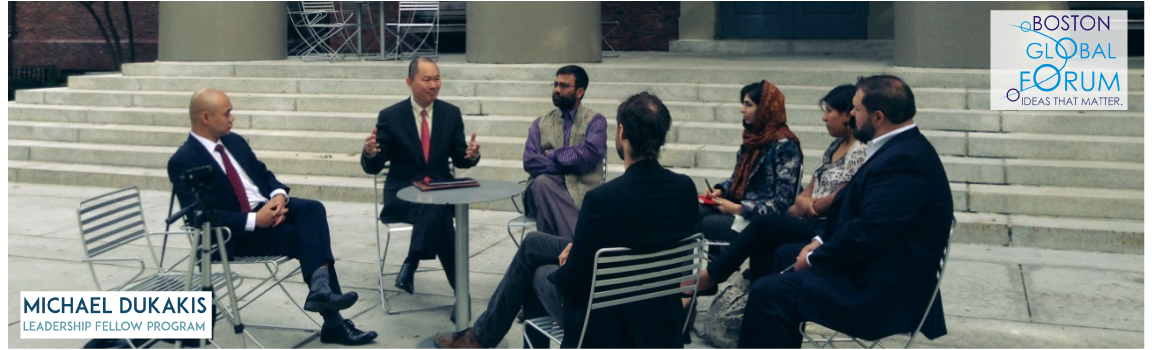
Leading scholars and international relations authorities gathered at Harvard University recently to urge a diplomatic solution to the US-North Korean conflict and an end to the maelstrom of threats and personal insults. The symposium, organized by the Boston Global Forum (BGF) and the Michael Dukakis Institute for Leadership and Innovation as part of its annual World Reconciliation Day events here and in Japan, was moderated by former Massachusetts governor Michael Dukakis, who cofounded the BGF think tank in 2012.

Among the international relations scholars were Prof.  Joseph Nye, Asst. Secretary of Defense during the Clinton Administration, who called for employing soft power diplomacy to reduce tensions with North Korea, and Professor Sung-Yoon Lee of the Fletcher School of Diplomacy, Tufts University, who offered his analysis of North Korea.

Gov. Michael Dukakis told the delegates, when rhetoric overshadows reason, “a single misstep can turn political brinksmanship into a global conflagration. Nowhere is there a greater risk today than with North Korea.”

In keeping with the reconciliation theme, Nye told 20 delegates and journalists, “Reconciliation with friends means one thing, but in the case of North Korea, there is similar second level of reconciliation possible that means reduction of enmity, which is extraordinarily difficult when the President talks about tuning North Korea into a sea of fire and fire and fury.”

Nye added, “We must be careful not to mistake reality for rhetoric. The North Koreans are not suicidal. North Korea is extremely rational — and has chosen a set of means to get to an objective of preserving the current regime.” He emphasized that while there is a low probability of nuclear war one must then ask. “is there a probability of conventional war?”

Historically, Nye added, “The temptation of escalation is always there. If you ask whether the Russian Tsar and German Kaiser intended a war in 1914 in which they would lose their thrones and their see their monarchies dismembered the answer is no. They expected a third Balkan war lasting for three weeks and never expected four years of armed conflict. Moreover, Japan did not act irrationally,” when it bombed Pearl Harbor. “If Japan had done nothing, the nation would have been strangled by a US oil embargo, so they hoped for short war believing it would be better than certain strangulation because of the embargo.”

While political hawks may be tempted, a decapitating strike against North Korea that seizes the nuclear weapons or kills Kim Jong Un does not seem realistic observed Nye, “Hospitality between North Korea and the US goes back to Kim Ill Sung who, in June of 1950, crossed the 38th parallel,” invading South Korea. Though hostilities ended 1953 with an armistice, both North and South Korea are technically still at war. “There have been seven decades of enmity with 100,000 North Korea troops remaining on the border,” and a highly militaristic society.

The hostilities over nuclear weapons began in 1993 when North Korea violated a treaty by reprocessing plutonium, which they at first denied and tried to cover up. When their deception was discovered, the country withdrew from the proliferation treaty rather than abide by its terms because North Korea believes nuclear weapons are the only way to preserve its existence. The North Koreans don’t believe America will treat them normally if they don’t have such destructive power. “So North Korea continues its tests, which included a thermonuclear bomb five-times more powerful than previous devices, and has a stated goal of miniaturizing the bomb so that, in a few years, they can credibly say they can hit the US.”

Is reconciliation possible?

 Cultural commonality and exchanges can contribute to enemies becoming friends, or at minimum a reduction of enmity.  North and South Koreans, for example, compete on the same soccer teams, and Kim Jong Un is enamored of American movies and presumably American popular culture.

Nye looked to other historical lessons, pointing to international security communities that have evolved to a point where there is no likelihood of war among, say, the Scandinavian nations or, in Western Europe, where war between Germany and France would be unthinkable today. “There are few examples of democracies, especially liberal democracies going to war. However, there is also no likelihood of North Korea developing into a liberal democracy.”

“In 1895 the US and Britain almost came to war,” says Nye adding that, “Britain accommodated the US because, with the rise of Germany and Russia, it could not accommodate instability in Europe and also police the Western Hemisphere. So the Brits swallowed their pride and accommodated the United States.”

Similarly, the US and China fought against each other in Korea in 1950 when China crossed the Yalu River and we demonized Red China. In 1964, the US, under Linden Johnsen, contemplated preemptive nuclear strikes against China, but finally by “1971 with Nixon’s visit to China, the US accommodated China to stem Russian influence and maintain the balance of power.”

Is it like the Cuban missile crisis?

“When The US and Soviet Union came close to war during Cuban missile crisis – the positive outcome was to demonstrate that the path we were on could potentially lead to disaster.” John F. Kennedy responded by delivering a speech in which he said we cannot continue on the path of extreme hostility with the Soviet Union and this resulted in the eventual signing of a treaty to reduce underground testing of nuclear weapons, followed by nuclear nonproliferation pacts with the Soviets such as the SALT and START talks. “While this led to a set of agreements that lowered tensions with Mikhail Gorbachev and Boris Yeltsin, tensions have reversed with current Russian leader Vladimir Putin.”

To negotiate effectively with North Korea, the US needs a reduction of enmity to assess what is realistic. “Appeasement is not a bad thing per se and there is nothing wrong with appeasement if you have assessed your opponent’s objectives and found they are willing to accept the status quo rather the being a revisionist nation that wants to kick over the table.”

What are the goals of North Korea — status quo or revisionist? If we miss-assess the goals, we lay out greater problems for the future. We did not understand Hitler’s goals but with China we can compete and have strong differences by largely accepting the framework of the current order, Nye points out.

“Now if North Korea is interested in the status quo— if they really want weapons to prevent an overthrow of the regime, a peace treaty will let the country grow economically, the nature of their society will change and the matter is relatively easily resolved,” according to Nye, who is quick to point out, “If they really are revisionist, then given the nature of the region, a family dynasty of three generations and a belief that they are the heart of the Korean people and want to unify the Korean people under the North,” then appeasement is not possible.

Unfortunately, US knowledge and its ability to assess the situation in North Korea is limited. Nye, said President Bill Clinton believed a North Korean regime that was presiding over starvation while a nation across the border was prospering would last only a decade. “We were wrong and should admit we do not know much about what goes on inside North Korea. Additionally, we have a record of failure and of US presidents drawing redlines and Americans accepting the unacceptable.” Nye said, adding, “North Korea exploits the power of weakness and uses it to bluff and take risks.”

Nye said, “I don’t see much prospect in the use of force and we can’t wait and let them have a nuclear weapon. In 1994 we contemplated a strike, but the South Koreans said no. Sanctions may have some effect but not get to the core” of changing the behavior of a government willing to see ten-percent of its population starve.

Add that to the fact that China’s ability to solve the problem is limited because President Xi Jinping does not want to cause chaos on its border with North Korea, so the options are not impressive. “However, a China centric approach with gradual reduction of tensions over time could work,” says Nye. The US would assure China of our limited interest in deposing Kim Jong Un, and China would use its leverage to prevent escalating the North Korean nuclear threat. “The US would then gradually relax sanctions and expect North Korea to integrate with the world.”

As part of the agreement, the US would offer a peace treaty calling for North Korea to stop testing or exporting of nuclear weapons and for their eventual elimination from the peninsula. At the same time, US would retain its deterrence capacity if North Korea doesn’t live up to the agreement. The best argument, says Nye, “The current policy has failed for 30 years so we could take some risks to get a recession of enmity. I propose this as a way to go this but the administration is not likely to follow.”

Tufts University Prof. Sung-Yoon Lee of the Fletcher School of Diplomacy and an authority on the Korean Peninsula stated that he is not so sure Kim Jong Un will be satisfied with the status quo. “North Korea is a revisionist state whose greatest threat is the fact that across the border we have a legitimate, pleasant alternate Korea that serves as a magnet for 30,000 North Koreans who have escaped to the South. This enormous wealth disparity between two countries sharing a border is the challenge North Korea cannot overcome.”

Lee, who is the Kim Koo-Korea Foundation Professor of Korean Studies at Tufts, added this trajectory does not favor North Korea becoming the legitimate sole government for a unified Korean state and “calls into question why North Korea’s continuing existence is necessary,” in an environment that has fostered South Korean economic development during seven decades of freedom and prosperity. “Most regrettable is the extreme suffering of the North Korean people and crimes against humanity committed by the Kim Jong Un regime, which according to a UN study, have no parallel in the world.” If these conditions are acceptable, then the status quo is extremely better than increasing the risk of war by a US preemptive strike. Will the status quo hold for the next decade and will more Americans reconcile to a nuclear North Korean state across the border of South Korea?

Lee said he expects North Korea to continue to menace South Korea, kill South Koreans, murder Americans from time-to-time such as it did with two officers they hacked to death when they went to trim a tree in the demilitarized zone or when, in 1969, North Korean jets shot down a US spy plane killing all 30 airmen aboard. We did not respond militarily at the time and then four months later the North Koreans shot down an American helicopter, killing three American military people.

Said Lee, “We have spoiled and conditioned North Korea to feel it can get away with murder. We have not put pressure on the regime sufficient to reduce its aggression.” The regime even managed to hold the US hostage by effectively censoring a satirical movie about the assassination of its leader. Sony, producer of the film The Interview, gave into North Korean demands after the regime hacked its computers by pulling the movie from theatrical distribution. In so doing North Korea was able to censor a nation that prides itself on free speech.

Post 9/11, the US Treasury found alternate ways to choke off the money supply to Iran by targeting the banks it dealt with in a bid to get their leaders to the bargaining table. The strategy worked and Lee suggested employing the same treatment with banks doing business with North Korea. Simply put, the US gives the bank a choice, continue doing business with North Korea or face the prospect of not being able to business in US dollars. The banks invariably agree to cooperate and those that cheat, face crushing fines.

Both the banks and North Korea favor the US dollar over other currencies giving the US tremendous leverage on this score and we have seen some progress on the financial front. Lee also believes China is likely to support these measures.  “Awareness that this will work is no guarantor of sustained financial pressure.  There is always the risk that Trump will accept political expedience over sanctions that will take at least three years to be effective.”

Though solutions to the crisis are not easy, discussions such as those being held by Boston Global Forum, in which cooler heads gather to develop and propose reasoned and peaceful solutions is a step in the right direction.

About The Boston Global Forum

Established in 2012, The Boston Global Forum brings together, in an open and accessible public forum, an eclectic and engaging spectrum of highly regarded academic leaders, real-world experts, thought leaders, media experts and promising young leaders.

BGF’s mission is to identify emerging threats to peace and stability around the globe, suggest realistic solutions, and identify possible actions that can be taken to avert armed conflict. The Forum’s ultimate goal is to lessen tensions, promote peace and security, and foster conditions that lead to greater social justice and broader economic prosperity.

Delegates are available for media interviews and comment by contacting the Boston Global Forum press office at 617-959-4613 or [email protected]

Gov. Michael Dukakis, Chairman of the Boston Global Forum; Prof. Joseph Nye, Distinguished Professor of Harvard University; Prof. Thomas Patterson, Harvard Kennedy School; Prof. David Silbersweig, Harvard; Prof.  Nazli Choucri; MIT, Prof. Ezra Vogel; Harvard, Prof.  Richard Rosecrance, Harvard Kennedy School; Prof.  John Savage, Brown; Mr. Llewellyn King, White House Chronicle Producer and Host; Prof. Sung-Yoon Lee, Tufts University Fletcher School of Diplomacy; Mr. Allan Cytryn, Former CTO, Goldman Sachs; Prof. Derek Reveron, Naval War College; Mr. Dick Pirozzolo, Media Liaison; Member BGF Editorial Board; Rokuichiro Michii, Consul-General of Japan in Boston, and Michael Pizziferri, Delegate of the Quebec Government Office in Boston.

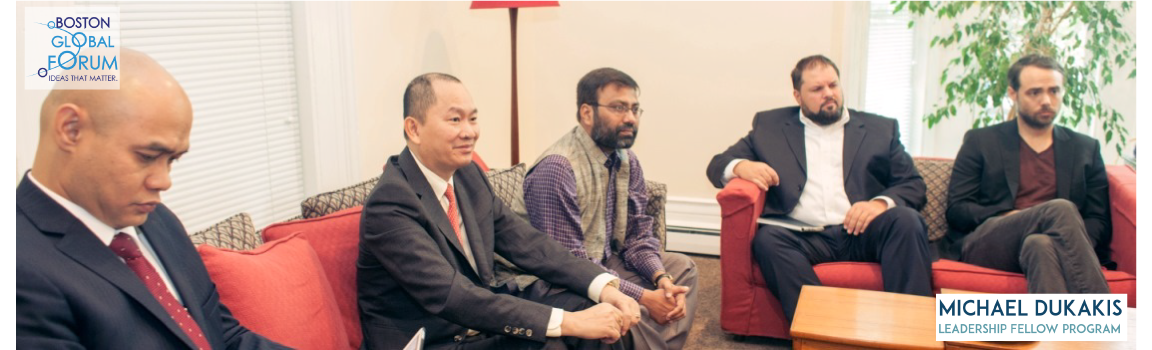
Michael Dukakis and his leadership legacy

As being the three-term Massachusetts governor, Michael Dukakis has left his own impressive political leadership legacy. Under his leadership, the unemployment in Massachusetts was cut from more than 11% to 3.4%, helped create more than 400,000 jobs in 5 years. Massachusetts also cut crime 13% from 1983 to 1988 while crime increased nationally. He created the Home Ownership Opportunity Program, providing more than $200 million for 2,500 privately built units at 30 to 40% below market prices for first time buyers, helped private developers build 8,000 new housing units and bonded almost a billion dollars for programs to produce public housing, increased funding for the homeless from $9 million in 1983 to $160 million in 1988. He also enacted one of the most effective state Superfund laws in the nation, protecting the children from deadly toxic wastes. He was the first Governor to pass a universal health care bill, requiring employers to provide health insurance to all their employees and the state to provide for the unemployed. He balanced 10 state budgets in 10 years, and cut taxes 5 times in 5 years, etc.

After ending his political career, Michael Dukakis began training and mentoring the youth for the next generation of leadership. Through his speech and lectures, sharing the stories from past decision makers, he helped potential managers to develop the skills that they need to be extremely effective as a leaders.

In 1999, The Kitty and Michael Dukakis Center for Urban and Regional Policy was established to providing Northeastern University with the capacity to carry out state-of-the-art applied research on a broad range of urban issues from affordable housing and local economic development to workforce training, state and local finance, and transportation planning.

In 2012, The Boston Global Forum was founded by Michael Dukakis and Mr. Nguyen Anh Tuan, the Founder and former Chairman of the VietNamNet Media Group and the Founder and Editor-in-Chief of VietNamNet Online Newspaper in Vietnam, to bring together thought leaders across the globe onto an open forum to address the issues that affect the world at large. BGF’s mission is to facilitate collaboration to identify, discuss, and propose meaningful, creative, and practical solutions to profound and pressing issues of societal concern.

Besides, through the generous support of Marilyn and Calvin Gross (Harvard College 1956), the Michael S. Dukakis Governors’ Summer Fellowship exposes talented Harvard Kennedy School students, aspiring to leadership roles in state government, to the unique challenges of statelevel public service. Dukakis Fellows serve in the executive offices of governors across the country during the summer between their first and second year of graduate study. Students get an up-close look at the challenges and opportunities that define the highest levels of state government and have first-hand involvement in addressing those challenges, particularly in the areas of policy and budget.

Global Cybersecurity Day 2016 Welcome New Speakers and Discussants to Joint Our Event

For this 2016 Global Cybersecurity Day, our speakers and discussants includes:

  • Governor Michael Dukakis
  • Professor Carlos Torres
  • Nguyen Anh Tuan, Chair
  • Professor Thomas Patterson
  • Professor John Savage
  • Professor David Silbersweig
  • Professor Nazli Choucri
  • Allan Cytryn
  • Llewellyn King
  • Ryan Maness
  • Barry Nolan

Apart from these familiar faces, we also welcome some new speakers and discussants to joint this year conference:

SG Records Video Messages in Studo H

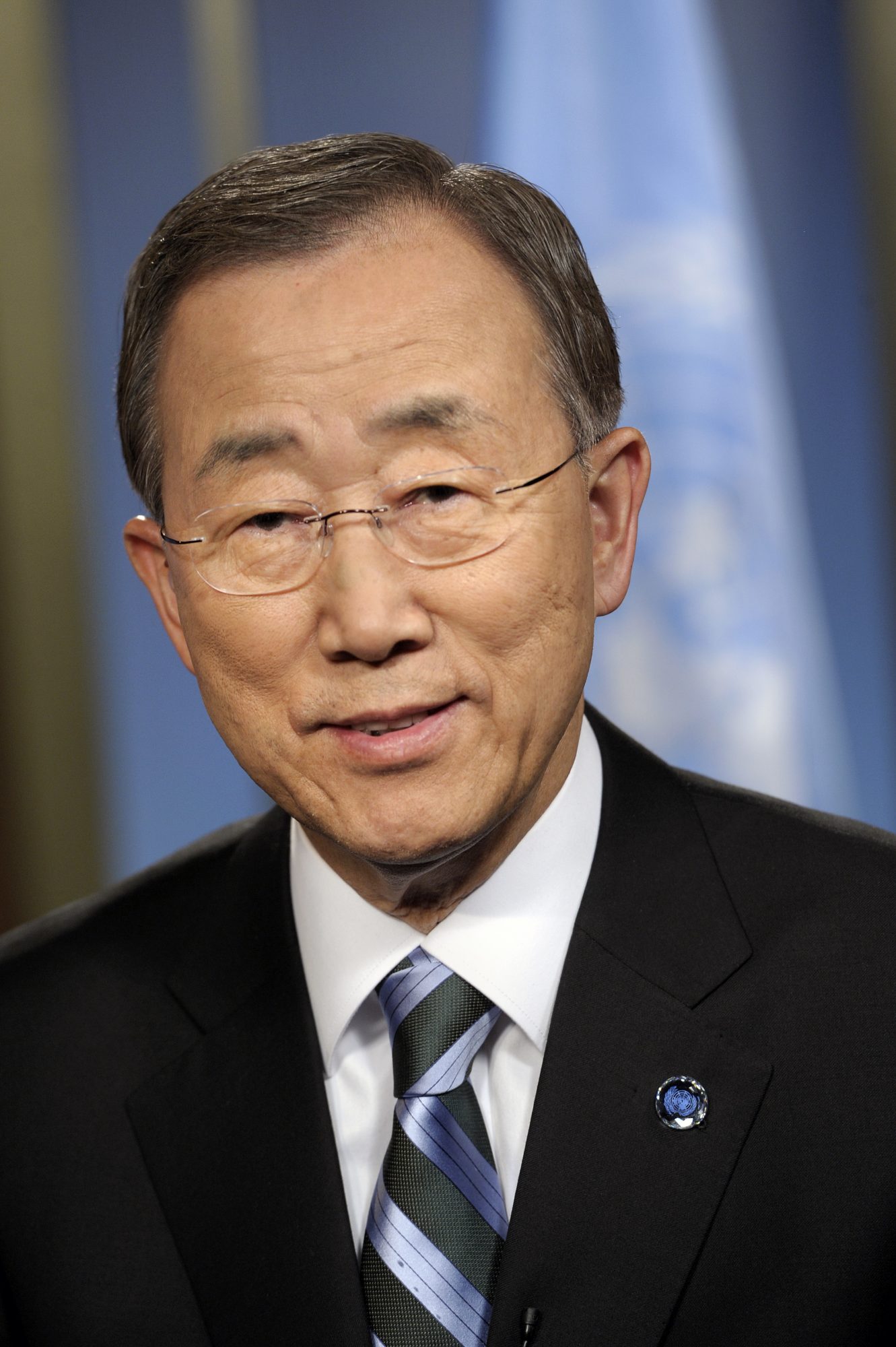
Secretary-General Ban Ki-moon

Ban Ki-moon is the eighth Secretary-General of the United Nations. He was born June 13, 1944 in Eumseong County, South Korea. Ban served his country’s foreign ministry for about three decades; his postings included India, the United States, and Austria. He began his career with the U.N. in 1975, as a member of its South Korean home office. Ban, while South Korea’s ambassador to Austria, was chairman of the preparatory commission for the Comprehensive Nuclear Test Ban Treaty Organization in 1999. Ban was elected secretary-general of the UN in 2006, succeeding Kofi Annan.

christopher-painter-2016-speakers

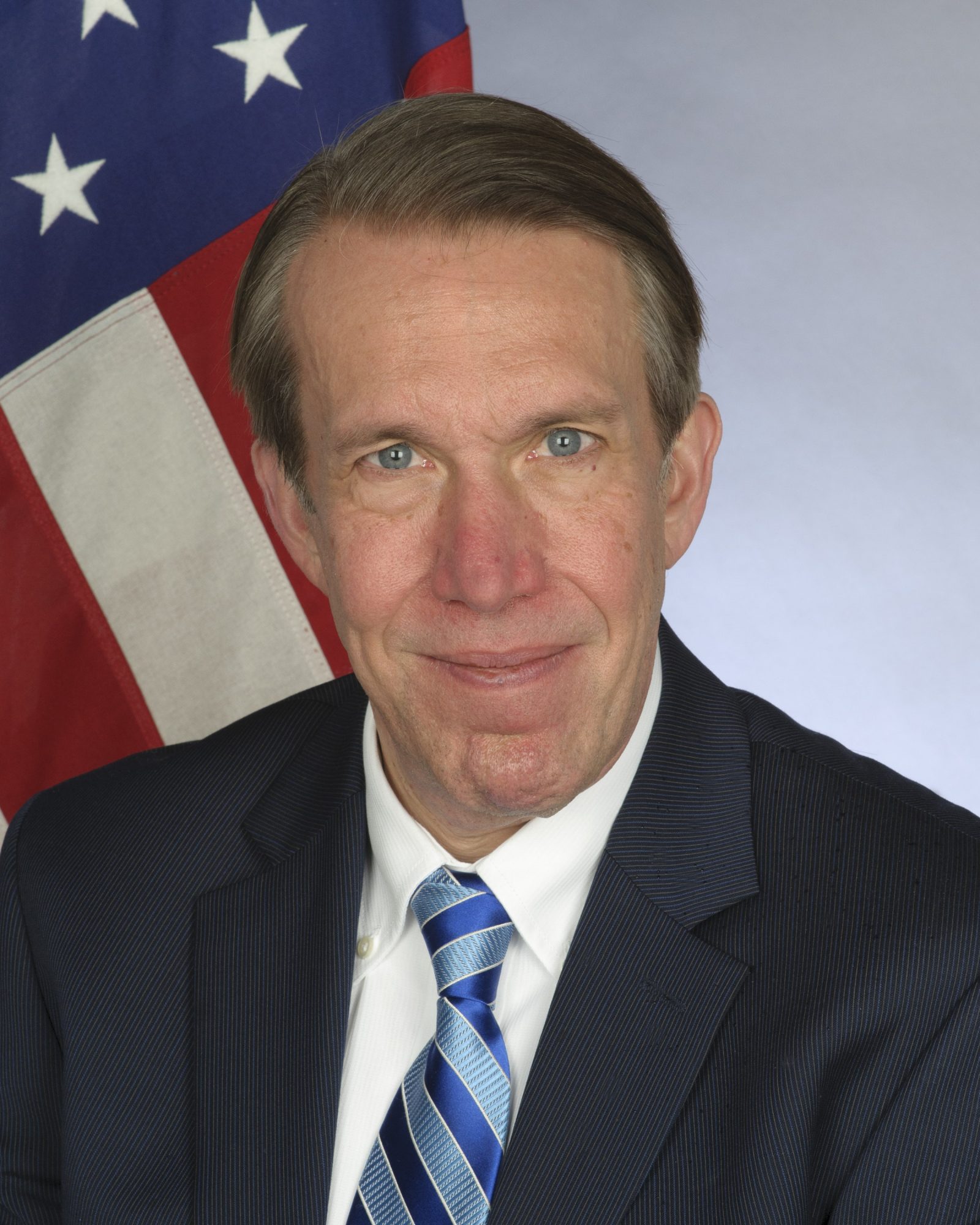
Christopher Painter

Mr. Painter has been on the vanguard of cyber issues for over twenty five years. In his current role as the Coordinator for Cyber Issues, Mr. Painter coordinates and leads the United States’ diplomatic efforts to advance an open, interoperable, secure and reliable Internet and information infrastructure. He works closely with components across the Department, other agencies, the White House, the private sector and civil society to implement the U.S. International Strategy for Cyberspace and ensures that U.S. foreign policy positions on cross-cutting cyber issues are fully synchronized.

Prior to joining the State Department, Mr. Painter served in the White House as Senior Director for Cyber Policy and Acting Cyber Coordinator in the National Security Council. During his two years at the White House, Mr. Painter was a senior member of the team that conducted the President’s Cyberspace Policy Review and coordinated the development of the U.S. 2011 International Strategy for Cyberspace.

caroline_kennedy-2016-gcd-speakers

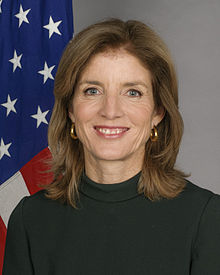
Caroline Kennedy

Caroline Kennedy is the United States Ambassador to Japan from October 16, 2013. She an attorney and the editor of nine New York Times best-selling books on constitutional law, American history, politics and poetry.

She is Honorary President of the John F. Kennedy Library Foundation and a member of the John F. Kennedy Profile in Courage Award Committee. A graduate of Harvard University and Columbia Law School, she is also Honorary Chair of the Senior Advisory Committee of the Institute of Politics at Harvard University.

From 2002 – 2011, she was Vice Chair of the Fund for Public Schools, which raised over $280 million to support public school reform and engaged a record number of New Yorkers to volunteer in New York City schools.

kim_taipale-2016-gcd-speakers

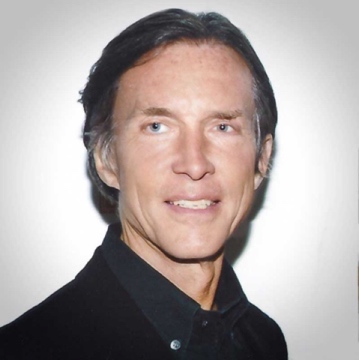
Kim Taipale

Kim Taipale is the founder and executive director of the Stilwell Center, a private research and advisory organization focused on information, technology and national security policy.  He is also the managing partner of Stilwell Holding LLC and a director of the Stilwell Charitable Fund.

Mr. Taipale currently serves on the advisory board of the World Policy Institute and The Common Good, as a member of the Markle Task Force on National Security in the Information Age, and on the board or advisory board of several companies and other non-profit organizations.  He was previously a senior fellow at Columbia University, an investment banker at Lazard Freres & Co., and a lawyer at Davis Polk & Wardwell.

Mr. Taipale is a frequent invited speaker, has appeared before U.S. Congressional and other national committees, and is the author of numerous academic papers, journal articles, and book chapters on information, technology, and national security issues.

Mr. Taipale received his B.A. and J.D. from New York University and his M.A., Ed.M., and LL.M. from Columbia University.

sean-2016-gcd-speakers

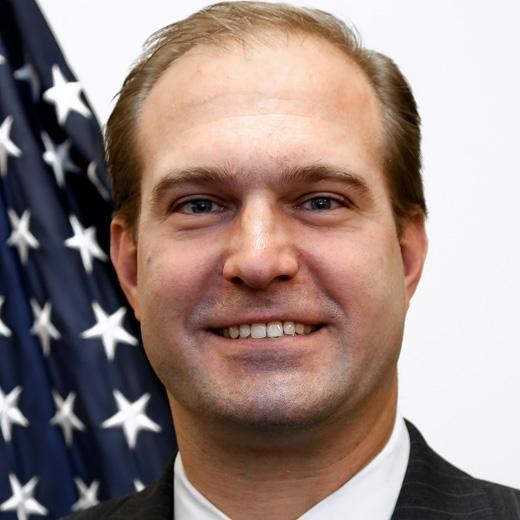
Sean Kannuck

Sean Kanuck was appointed as the first National Intelligence Officer (NIO) for Cyber Issues in May 2011. The NIO leads the US Intelligence Community (IC) in cyber analysis, directs the production of National Intelligence Estimates, and represents the IC on cyber issues when briefing the White House and testifying before Congress. Kanuck previously served in CIA’s Information Operations Center, as an Intelligence Fellow with the National Security Council, and on the US delegation to the UN Group of Governmental Experts on international information security. He is a professional attorney whose academic publications focus on information warfare and international law. He holds degrees from Harvard (A.B., J.D.), the London School of Economics (M.Sc.), and the University of Oslo (LL.M.).

seny-2016-gcd-speakers

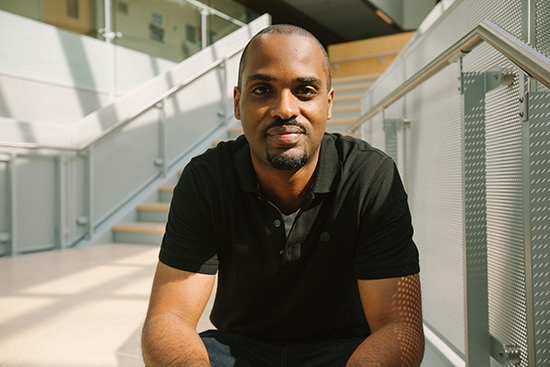
 Professor Seny Kamara

Seny Kamara currently served as Associate Professor of Computer Science at Brown University. From 2008 to 2016, he was a researcher at Microsoft Research (Redmond Lab). His work focuses on designing and analyzing cryptographic algorithms, protocols and systems; often motivated by privacy issues in cloud computing, surveillance and databases.

John Mallery

John Mallery is a research scientist at the MIT Computer Science & Artificial Intelligence Laboratory.  He is concerned with cyber policy and has been developing advanced architectural concepts for cyber security and transformational computing for the past decade.Since 2006, he organized a series of national workshops  on technical and policy aspects of cyber.

deborah_hurley-2016-gcd-speakers

Professor Deborah Hurley

Deborah Hurley is the Principal of the consulting firm she founded in 1996, which advises governments, international organizations, companies, non-governmental organizations, and foundations on advanced science and technology policy.  She is a Fellow of the Institute for Quantitative Social Science at Harvard University and directed the Harvard University Information Infrastructure Project. Hurley is Chair, Board of Directors, Electronic Privacy Information Center, and has served on many other governmental and non-governmental boards and committees, including for the International Federation for Human Rights (FIDH), U.S. State Department, American Association for the Advancement of Science, and National Academy of Sciences Research Council.  She carried out a Fulbright study of intellectual property protection and technology transfer in Korea.

virgilio_almeida-2016-gcd-speakers

Virgilio Almeida

Virgilio Almeida is currently a Visiting Professor at the School of Engineering and Applied Sciences at Harvard University and a Faculty Associate at the Berkman Klein Center for Internet and Society at Harvard University.  He is a full professor of the Computer Science Department at the Federal University of Minas Gerais (UFMG), Brazil.

He is a former National Secretary for Information Technology Policies of the Ministry of Science, Technology and Innovation of Brazil (2011 to 2015). He was the chair of the Brazilian Internet  Steering Committee (CGI.br) and was the chair of NETmundial, Global Multistakeholder Conference on the Future of Internet Governance, that was held in Sao Paulo in 2014.

andrew-lewman-2016-gcd-speakers

Andrew Lewman

Andrew Lewman is best know for his work as Chief Executive of the TOR Project, a non-profit technology organization which provides online anonymity software tools used by over 2 million Internet users daily in 200+ countries. His work at TOR on behalf of democracy activists and whistleblowers around the world required him to manage relationships with US Dept of State, US Dept of Defense, Defense Advanced Research Projects Agency (DARPA), Stanford Research Institute (SRI), Broadcasting Board of Governors, Radio Free Asia, Swedish International Development Agency (SIDA), US National Science Foundation (NSF) among others. He is currently President of Laxdaela Technology. They provide consultation on cyber security to clients that include law enforcement agencies, intelligence agencies, and a variety of Internet intelligence companies.He has worked in Stockholm, Reykjavik, Berlin, Paris, Hong Kong, Manila, and Tokyo.

His is also co-chair of Interpol’s ongoing effort to help develop the next generation of Interpol’s Internet Child Sexual Exploitation Database (ICSE DB).

richard-rosecrance-2016-gcd-speakers

Professor Richard Rosecrance

Richard Rosecrance is an Adjunct Professor at Harvard’s John F. Kennedy School of Government, a Research Professor of Political Science at the University of California, Los Angeles. He was formerly a Professor at the University of California, Berkeley, and the Walter S. Carpenter, Jr., Professor of International and Comparative Politics at Cornell University. He served in the Policy Planning Council of the Department of State. He has written or edited more than a dozen books and many scholarly articles.

markus-2016-gcd-speakers

Markus Prior

Markus Prior is Associate Professor of Politics and Public Affairs in the Woodrow Wilson School and the Department of Politics at Princeton University.

Prior received his Ph.D. from Stanford`s Department of Communication in 2004. He won the 2008 Emerging Scholar Award from the American Political Science Association’s Elections, Public Opinion, and Voting Behavior Section. Prior is the author of Post-Broadcast Democracy (Cambridge University Press, 2007), which won the 2009 Goldsmith Book Prize, awarded by Harvard`s Joan Shorenstein Center, and the 2010 Doris Graber Award for the “best book on political communication in the last 10 years” given by APSA’s Political Communication Section.

MIKKO HYPPONEN

Mikko Hypponen is the Chief Research Officer of F-Secure. He’s been with the company since 1991.

Mr. Hypponen has written on his research for the New York Times, Wired and Scientific America and he appears frequently on international TV. He has lectured at the universities of Stanford, Oxford and Cambridge and he has delivered the most watched computer security talk on the internet.

Mr. Hypponen has been the subject of hundreds of interviews in global media, including a 9-page profile in Vanity Fair.

Mr. Hypponen, born in 1969, was selected among the 50 most important people on the web by the PC World magazine and was included in the FP Global 100 Thinkers list.

Mr. Hypponen is a member of the board of the Nordic Business Forum and a member of the advisory board of T2.