The first AIWS Leadership Master Program begins

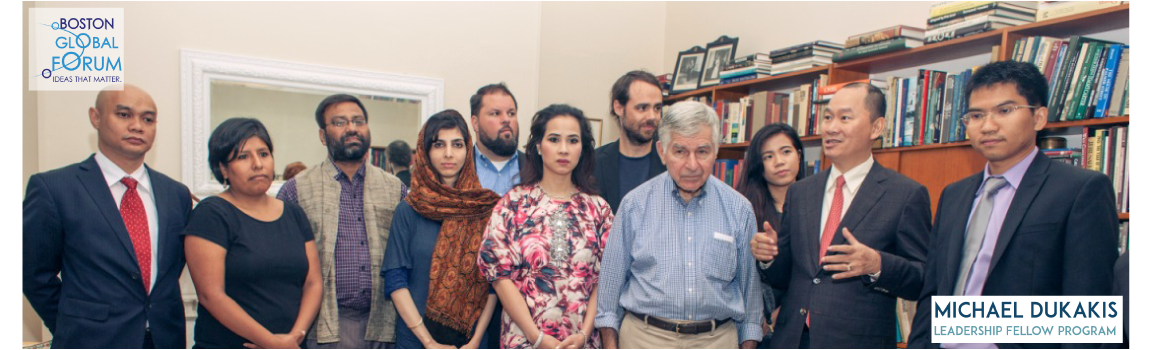
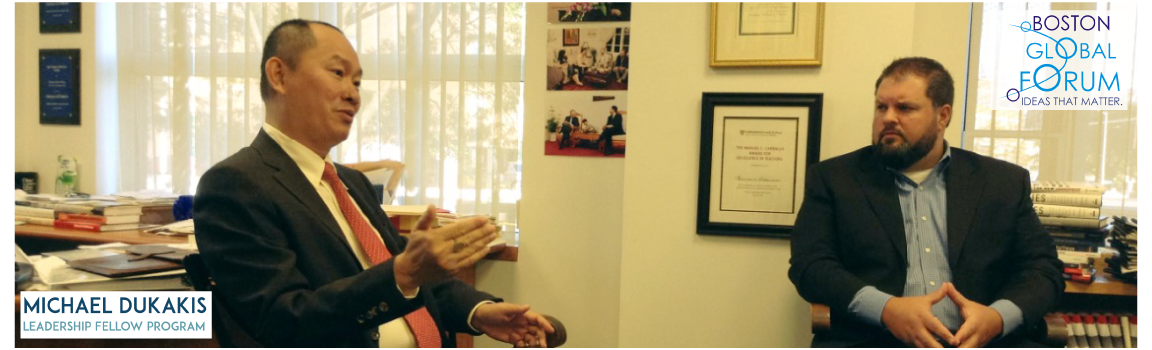
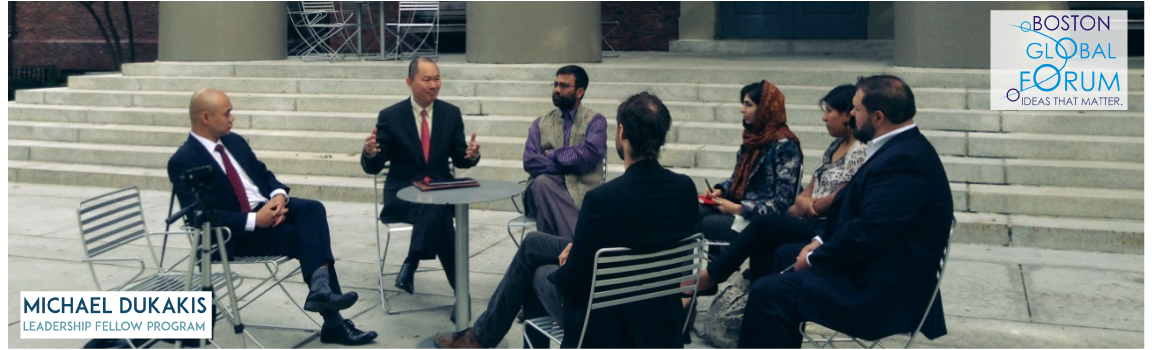
Excellent computer science graduate students of LETI “ETU” started studying the AI World Society Leadership Master Program. They will study by innovative concepts: learning by practicality, practicing leadership through projects. They will be assigned readings from professors who are Board Members of Michael Dukakis Institute and Members of AIWS.net. They will attend projects and practice as young leaders at the AIWS City.

Professors of LETI will teach them AI technology. Leaders and professors of Michael Dukakis Institute for Leadership and Innovation will teach and develop leadership. After graduation the AIWS Leadership Master Degree, leaders and professors continue to advise them in their careers. All students of the AIWS Leadership Master Degree program in turn have to respect and commit applying the Social Contract for the AI Age and AI Ethics of Michael Dukakis Institute and bring them to communities.

Professors Mikhail Kupriyanov, First Vice-Rector, D.Sc., Professor, Head of the Department of Computer Science and Engineering, Kirill Krinkin of LETI ”ETU”, Saint Petersburg, Russia Governor Michael Dukakis, Chairman, and  Mr. Nguyen Anh Tuan, Director of Michael Dukakis Institute, are the leaders of this program.

CAIDP – European Privacy Board Sets Out New Rules for Data Transfers, Implications for AI

This week the European Data Protection Board (EDPB) adopted new measures concerning the transfer of personal data to countries outside of Europe. The EDPB is the lead agency in the European Union on data protection, and was established by the General Data Protection Regulation (GDPR). The EDPB is composed of representatives of the national data protection authorities, and the European Data Protection Supervisor. The EDPB Recommendations follow the Schrems II decision earlier this year and could significantly influence the development of AI systems.

In announcing the Recommendations, EDPB Chair Andrea Jelinek said: “Our goal is to enable lawful transfers of personal data to third countries while guaranteeing that the data transferred is afforded a level of protection essentially equivalent to that guaranteed within the European Economic Area.” Dr. Jelinek added: “The implications of the Schrems II judgment extend to all transfers to third countries. Therefore, there are no quick fixes, nor a one-size-fits-all solution for all transfers, as this would be ignoring the wide diversity of situations data exporters face.”

The EDPB Recommendations require data controllers and data processors to adopt additional data protection measures to ensure “an essentially equivalent level of protection” to the data they transfer to third countries. The EDPB advises that “data exporters must proceed with due diligence and document their process thoroughly, as they will be held accountable to the decisions they take on that basis, in line with the GDPR principle of accountability.” And the EDPB warns that “data exporters should know that it may not be possible to implement sufficient supplementary measures in every case.”

In the first issue of the CAIDP Update, we reported on the Schrems II judgement and said that the privacy decision will have global consequences. In a subsequent article for the European Law Journal, we urged the United States Congress to update federal privacy law, to establish a data protection agency, and to ratify the Council of Europe Privacy Convention.

The key point is this: in the realm of privacy and AI there is significant difference between systems that rely on the collection and use of personal data and those that do not. For example, AI systems that track climate change or progress toward sustainable development goals do not generally require personal data, whereas AI systems for criminal justice assessments, hiring determinations, and facial surveillance do implicate data protection and privacy. This dichotomy is reflected also in “Data Free Flows with Trust (DFFT),” the proposal of former Japanese Prime Minister Shinzo Abu, backed by the OECD, to enable the free flow of anonymized data, aggregate data, and industrial data, but to ensure strong controls and safeguards for personal data. This distinction is critical to understand the relationship between AI and privacy.

And the Recommendation of the European Data Protection Board is a further indication that “trustworthy AI,” “human-centric AI,” and AI that advances social benefits will be based on strong data protection rules.


Marc Rotenberg, Director

Center for AI and Digital Policy at Michael Dukakis Institute

The Center for AI and Digital Policy, founded in 2020, advises governments on technology policy

This could lead to the next big breakthrough in common sense AI

You’ve probably heard us say this countless times: GPT-3, the gargantuan AI that spews uncannily human-like language, is a marvel. It’s also largely a mirage. You can tell with a simple trick: Ask it the color of sheep, and it will suggest “black” as often as “white”—reflecting the phrase “black sheep” in our vernacular.

That’s the problem with language models: because they’re only trained on text, they lack common sense. Now researchers from the University of North Carolina, Chapel Hill, have designed a new technique to change that. They call it “vokenization,” and it gives language models like GPT-3 the ability to “see.”

It’s not the first time people have sought to combine language models with computer vision. This is actually a rapidly growing area of AI research. The idea is that both types of AI have different strengths. Language models like GPT-3 are trained through unsupervised learning, which requires no manual data labeling, making them easy to scale. Image models like object recognition systems, by contrast, learn more directly from reality. In other words, their understanding doesn’t rely on the kind of abstraction of the world that text provides. They can “see” from pictures of sheep that they are in fact white.

AI models that can parse both language and visual input also have very practical uses. If we want to build robotic assistants, for example, they need computer vision to navigate the world and language to communicate about it to humans.

The original article can be found here.

To support for AI technology and development for social impact, Michael Dukakis Institute for Leadership and Innovation (MDI) and Artificial Intelligence World Society (AIWS.net) has developed AIWS Ethics and Practice Index to measure the ethical values and help people achieve well-being and happiness, as well as solve important issues, such as SDGs. In this effort, Michael Dukakis Institute for Leadership and Innovation (MDI) invites participation and collaboration with think tanks, universities, non-profits, firms, and other entities that share its commitment to the constructive and development of full-scale AI for world society.

Chairman of Novaland and Governor Michael Dukakis will discuss connecting NovaWorld Phan Thiet to the AIWS City

On November 11, 2020, at 07:45 ICT (19:45 EST), Chairman of the Novaland Group Bui Thanh Nhon will meet Governor Michael Dukakis, co-founder and Chairman of Michael Dukakis Institute for Leadership and Innovation, to discuss building AIWS Square, the History of AI House, Michael Dukakis House, Vint Cerf House, and AIWS Leadership Education Program at NovaWorld Phan Thiet, and plan to connect NovaWorld Phan Thiet to the AIWS City in 2021.

Novaland Group has built a World’s Beach City for Wellness, an attractive destination for vacation called NovaWorld Phan Thiet. NovaWorld Phan Thiet is a gem, an urban coastal city, a vacation land and a modern working city with all the requirements to become an ideal destination for world leaders, creators, innovators, and scholars.

Chairman Bui Thanh Nhon said, “We are proud to cooperate with the AIWS City to create NovaWorld Phan Thiet, a city of history, intelligence, and humanity, connecting with other intellectual, cultural and innovative centers around the world, with the standards of the Social Contract in the AI Age, adhering to AIWS City”.

Phan Thiet is a well-known city with blue ocean, white sands, bright sunshine, and modern infrastructure, connecting the region to cities around the world with an international airport, seaports, and highways. Phan Thiet city is also famous for the unique culture and history of the Champa people. Phan Thiet is only 160 km from Ho Chi Minh city, Vietnam. Phan Thiet provides all the conditions to be a world destination. With the available advantages of this city, Novaland Group has built a World’s Beach City for Wellness, an attractive destination for vacation called NovaWorld Phan Thiet.

India Pursues Public Input on AI Policy

The government of India has pursued several public consultations on AI policy. In July 2020, the NITI Aayog (policy commission) published a “Working Document: Towards Responsible #AIforAll” and requested public comment by August. In September, the Ministry of Communications invited comments on the “development of Indian Artificial Intelligence Stack.” Comments were due in early October. The Ministry of Electronics and Information Technology previously published several reports on AI initiatives and policy frameworks for India

The public consultations follow a 2018 discussion paper from the NITI Aayog which states that “India, being the fastest growing economy with the second largest population in the world, has a significant stake in the AI revolution.” The draft National Strategy for Artificial Intelligence identifies key issues including bias, ethics and privacy. The report highlights agriculture, health, and education. The NITI Aayog proposed a three parts strategy to move forward AI policy: promoting pilot projects, promoting a vibrant AI ecosystem, and collaborating with experts and stakeholders. A summary from the independent Centre for Internet and Society on Ethics and AI in India explores ethics issues in more detail.

As a member of the G20, India endorsed the OECD/G20 AI Principles in 2019. On the national security front, India has expressed interest in joining with Japan, the United States, and Australia in support of AI policies that favor democratic nations. That policy initiative is reflected also in a recent recommendation from the US National Security Commission on AI which calls for a “Digital Coalition of democratic states and the private sector to coordinate efforts and strategy around AI and emerging technologies, beginning with a Digital Summit.”


Marc Rotenberg, Director

Center for AI and Digital Policy at Michael Dukakis Institute

The Center for AI and Digital Policy, founded in 2020, advises governments on technology policy

DeepMind Research Introduces Algorithms for Causal Reasoning in Probability Trees

For cutting-edge AI researchers looking for clean semantics models to represent the context-specific causal dependencies essential for causal induction, this DeepMind’s algorithm encourages you to look at good old-fashioned probability trees.

The probability tree diagram is used to represent a probability space. Tree diagrams illustrate a series of independent events or conditional probabilities.

Humans naturally learn reasoning to a great extent through inducing causal relationships from observations, and according to cognitive scientists, we do it quite well. Even with sparse and limited data, humans can quickly learn causal structures (such as observations of the co-occurrence frequencies between causes and effects, interactions between physical objects, etc.).

Causal induction is a classic problem in ML and statistics. Models, such as causal Bayesian networks (CBNs), can describe the causal dependencies for causal induction. But CBNs are not capable of representing context-specific independencies. According to the DeepMind team, the algorithms cover the whole causal hierarchy and operate on random propositional and causal events, expanding the causal reasoning to “a very general class of discrete stochastic processes.”

In the field of AI and Causal Reasoning, Professor Judea Pearl is a pioneer for developing a theory of causal and counterfactual inference based on structural models. In 2011, Professor Pearl won the Turing Award, computer science’s highest honor. In 2020, Michael Dukakis Institute also awarded Professor Pearl as World Leader in AI World Society (AIWS.net) for Leadership and Innovation (MDI) and Boston Global Forum (BGF). At this moment, Professor Judea also contributes to Causal Inference for AI transparency, which is one of important AIWS.net topics on AI Ethics.

COE Parliamentarians Call for Democratic Governance of Artificial Intelligence

The Parliament Assembly of the Council of Europe has adopted a new resolution on the Need for Democratic Governance of Artificial Intelligence.  The Assembly called for “strong and swift action” by the Council of Europe. The parliamentarians warned that “soft-law instruments and self-regulation have proven so far not sufficient in addressing these challenges and in protecting human rights, democracy and rule of law.”

“AI can bring about economic and social progress, and improve government transparency and democratic participation, but it can also be used to disrupt democracy through interference in electoral processes, or manipulating public opinion,” the parliamentarians stressed, adopting unanimously a resolution based on the report of Deborah Bergamini (Italy, EPP/CD). She warned that filtering information and mass surveillance, enabled by AI, “risk undermining civil rights and political freedoms and the emergence of digital authoritarianism.”

The Council of Europe resolution also follows extensive work by the COE Ad Hoc Committee on Artificial Intelligence (CAHAI). In September 2020 the COE Committee of Ministers approved the CAHAI progress report, which concluded that the “Council of Europe has a crucial role to play today to ensure that AI applications are in line with human rights protections.” The Ministers asked the CAHAI to draft a feasibility study on a legal instrument that could “regulate the design, development and application of AI that have a significant impact on human rights, democracy and the rule of law.” The COE Ministers also proposed that the CAHAI should examine “human rights impact assessments” and  “certification of algorithms and AI systems.”

The COE is a leader in the realm of international legal instruments and human rights. All Council of Europe member states have signed up to the European Convention on Human Rights, a treaty designed to protect human rights, democracy and the rule of law. And Article 8 of that Convention has done much to shape modern privacy law. There are 47 member states, including the 27 members of the European Union. COE Conventions are also open for ratification by non-member state. The original COE Convention on Privacy (Convention 108) was ratified by 56 countries.

Parliamentarians with both the Council of Europe and the European Union have now made clear the need to adopt legislation for the democratic governance of Artificial Intelligence. And the Social Contract for the Age of AI, developed in collaboration with the Boston Global Forum and the Club of Madrid, also urges governments to pass laws to ensure that AI respects fundamental rights and benefits society. The Boston Global Forum and the Club be Madrid now propose a new Democratic Alliance for Digital Governance to promote and to enforce the Social Contract.


Marc Rotenberg, Director

Center for AI and Digital Policy at Michael Dukakis Institute

The Center for AI and Digital Policy, founded in 2020, advises governments on technology policy

AI security: This project aims to spot attacks against critical systems before they happen

Microsoft has unveiled a new open-source “matrix” that hopes to identify all the existing attacks that threaten the security of machine-learning applications.

Microsoft and non-profit research organization MITRE have joined forces to accelerate the development of cybersecurity’s next chapter: to protect applications that are based on machine learning and are at risk of new adversarial threats.

The two organizations, in collaboration with academic institutions and other big tech players such as IBM and Nvidia, have released a new open-source tool called the Adversarial Machine Learning Threat Matrix. The framework is designed to organize and catalogue known techniques for attacks against machine-learning systems, to inform security analysts and provide them with strategies to detect, respond and remediate against threats.

The matrix classifies attacks based on criteria related to various aspects of the threat, such as execution and exfiltration, but also initial access and impact. To curate the framework, Microsoft and MITRE’s teams analyzed real-world attacks carried out on existing applications, which they vetted to be effective against AI systems.

MITRE’s researchers are hoping to gather more information from ethical hackers, thanks to a well-established cybersecurity method known as red teaming. The idea is to have teams of benevolent security experts finding ways to crack vulnerabilities ahead of bad actors, to feed into the existing database of attacks and expand overall knowledge of the possible threats.

Microsoft and MITRE both have their own Red Teams, and they have already demonstrated some of the attacks that were used to feed into the matrix as it is. They include, for example, evasion attacks on machine-learning models, which can modify the input data to induce targeted misclassification.

The original article can be found here.

To support for AI technology and development for social impact, Michael Dukakis Institute for Leadership and Innovation (MDI) and Artificial Intelligence World Society (AIWS.net) has developed AIWS Ethics and Practice Index to measure the ethical values and help people achieve well-being and happiness, as well as solve important issues, such as SDGs. Regarding to AI Ethics, AI World Society (AIWS.net) initiated and promoted to design AIWS Ethics framework within four components including transparency, regulation, promotion and implementation for constructive use of AI. In this effort, Michael Dukakis Institute for Leadership and Innovation (MDI) invites participation and collaboration with think tanks, universities, non-profits, firms, and other entities that share its commitment to the constructive and development of full-scale AI for world society.

‘UN Insider: On Way to A Transatlantic Alliance on Digital Governance A New Social Contract in the Age of Artificial Intelligence’ by Ramesh Jaura

This is a reprint of an article originally published here.

BERLIN | NEW YORK (IDN) – People around the world are realizing that capitalism driven by Artificial Intelligence (AI) requires crafting a new sort of Social Contract, based on “stakeholder capitalism”, that is, capitalism that benefits everyone.

“Such capitalism cannot measure itself by money alone, but instead must encompass all aspects of human life, using metrics such as those developed to quantify the UN’s Sustainable Development Goals (SDGs),” says Alex Pentland, director of MIT Connection Science, an MIT-wide initiative. He previously helped create and direct the MIT Media Lab and the Media Lab Asia in India.

“Perhaps the greatest achievement of the SDGs that sustainability, as well as access to opportunity, education, and health now have quantitative metrics, agreed to by every nation on earth, that can be used to guide both enterprises and nations to a more sustainable, inclusive, fair, and lower risk future,” he writes in a contribution for the UN Academic Compact (UNAI).

“We cooperate with the United Nations Academic Impact through the United Nations 2045 Initiative,” said Nguyen Anh Tuan, CEO of the Boston Global Forum (BGF), Director of the Michael Dukakis Institute for Leadership and Innovation (MDI) and Co-Founder of the AI World Society Innovation Network (AIWS.net).

The United Nations 2045 initiative includes roundtables, ideas, concepts, solutions, essays, and reflections looking ahead to the global landscape in 2045, when the UN completes its first centenary, in areas of these technologies, including artificial intelligence, cybersecurity and weapons systems, among others.

“Such a compilation which looks both to the horizon ahead and the role of the United Nations in making it beneficial and secure would be timely,” Mr Tuan told IDN in an email interview.

He was speaking about the Virtual Policy Lab ‘Transatlantic Approaches on Digital Governance: A New Social Contract in the Age of Artificial Intelligence’ from September 16-18.

The World Leadership Alliance – Club de Madrid (WLA-CdM) in partnership with the Boston Global Forum (BGF) organised the Transatlantic and multi-stakeholder dialogue on global challenges and policy solutions in the context of the need to create a new Social Contract on digital technologies and AI.

“By comparing American and European approaches in the creation of a new Social Contract on AI and digital governance, under the critical eye of former democratic Heads of State or Government, this policy dialogue stimulated new thinking and brought out ideas from representatives of governments, academic institutions and think tanks, tech companies, and civil society, from both regions,” Mr Tuan said.

At the same time, he added, the discussion generated a space to encourage and strengthen Transatlantic cooperation on the new Social Contract of digital governance in the framework of needed reforms of the multilateral system and needed global responses to common problems such as the global health crisis of COVID-19. The dialogue also served as a platform to establish a Transatlantic Alliance for Digital Governance (DADG).

One of the panels was moderated by Mr Ramu Damodaran, Chief of the UN Academic Impact. Explaining the views of the panellists, Mr Tuan said the panellists agreed that DADG will use standards of the Social Contract for the AI Age to: support fundamental rights, the rule of law, and democratic institutions, especially in the aftermath of COVID-19; and maintain peace and security (including AI and cyberspace) in Alliance members, and around the world.

They also agreed to address challenges, threats, and perils from any countries in the world, including climate change, pandemics, cyberattack, harmful AI, extreme nationalism, totalitarianism, dictators, destruction natural resources, or others that violate the Social Contract for the AI Age, and create new models, methodologies, concepts, and initiatives to make a better and smarter world.

“This smarter world is a democratic one with deep-applied AI,” said Mr Tuan.

The Transatlantic Alliance on Digital Governance includes 1. Democratic governments; 2. Companies in democratic countries; and 3. Intellectual Societies.

Mr Tuan said they also talked about the Activities of Transatlantic Alliance on Digital Governance:

– Unite Inter-Parliamentary Alliance on China, Global Partnership on AI, World Leadership Alliance-Club de Madrid, OECD, Boston Global Forum, AIWS Innovation Network (AIWS.net) and top universities into an alliance

– “Democratic Alliance on Digital Governance”

– Discuss and decide strategies for a peaceful, safe, effective, and smart world.

– Maintain peace and security for the world.

– Maintain standards of the Social Contract for the AI Age in global business such as setting up and maintaining the Supply Chain 2020.

– Create international laws and accords based on standards of the Social Contract for the AI Age.

– Enforce international laws and accords.

– Create systems for Global Monitoring and Judging such as Global Courts and Global AI Citizen.

Below two further questions IDN asked Mr Tuan and his answers:

Question: Have the discussions paved the road to the creation of an initiative to monitor governments as well as companies in using AI and generate an AI Ethics Index at all levels?

Mr Tuan: Yes. We spoke about solutions to monitor AI developments and uses by governments, corporations, and to assess whether they comply with the norms and standards codified in the Social Contract for the AI Age. Noncompliant actors will be identified and publicized through fact-based reports.

We named the AI Ethics Index as the AI Social Contract Index, which is linked to the standards of Social Contract for the AI Age.

The AI Social Contract Index is a global survey that will allow policymakers and the public to assess progress toward trustworthy AI based on normative goals.

The AI Ethics Index has these objectives:
(1) to evaluate a country’s AI policies and practices in 2020,
(2) to compare the AI policies and practices of various countries in 2020, and
(3) to evaluate a country’s AI policies and practices over time.

The AI Ethics Index will focus on human rights, rule of law, and democratic governance metrics. Endorsement and implementation of the OECD AI Principles will be among the primary metrics.

Opportunities for the public to participate in the formation of national AI policy, as well as the creation of an independent, national commission to address AI challenges, will be included among the metrics. Patents, publications, and investment are important metrics for AI policies, but they will not be considered here. The AI Ethics Index will be published on an annual basis and will evolve as country practices change and new issues emerge.

The first edition of the AI Social Contract Index will examine policies and practices in the Top 25 countries by GDP and other high impact countries. These countries, ranked in order, are US, China, Japan, Germany, India, France, UK, Italy, Brazil, Canada, Russia, Korea, Spain, Australia, Mexico, Indonesia, Netherlands, Turkey, Saudi Arabia, Switzerland, Poland, Taiwan, Thailand, Sweden, Belgium. (Source: Statistics Times. “High impact” countries include Israel and Estonia.)

Question: How do American and European approaches compare with each other in the creation of a new Social Contract on AI and digital governance?

Mr Tuan: The Boston Global Forum integrates both sides of the Atlantic. We call for the maintenance and protection of democratic values. The Social Contract for the AI Age is a new Social Contract on AI and digital governance. It is not only AI and Digital, but also involves politics, economy and society. The Social Contract for the AI Age seeks to build a multi-stakeholder, inclusive society in all aspects of life across politics, government, economics, business, and industry.

The Social Contract for the AI Age values creation, innovation, philanthropy, and mutual respect. It seeks the right of freedom on, and access to, the Internet worldwide. The Social Contract for the AI Age seeks to make the world a locus of responsible interaction—a place where every person’s contribution is recognized and everyone has a right to knowledge and access to information, where no one is above the law, where money cannot be used to subvert political process, and where integrity, knowledge, creativity, honesty, and tolerance shape decisions and guide policy. In short, the Social Contract for the AI Age seeks to build a world where all are recognized and valued, and all forms of governance adhere to a set of values and are accountable and transparent. It is a world where global challenges are met by collective action and responsibility. [IDN-InDepthNews – 11 October 2020]