The Wall Street Journal’s October 21 profile of Demis Hassabis explores his ambition to accelerate scientific discovery and drug development through AI. It raises an equally consequential question: who will benefit? (wsj.com)
AlphaFold offers an encouraging example. Google DeepMind and EMBL-EBI have made more than 200 million protein structure predictions freely available, enabling researchers worldwide to build on a shared scientific resource. (alphafold.ebi.ac.uk)
For the Boston Global Forum, the responsibility of AI pioneers extends to opening opportunities for others. Scientists in countries with fewer resources need tools, training, and meaningful research partnerships. Communities should help shape research priorities and gain access to the resulting benefits.
This is central to Human–AI Co-Creation: expanding people’s capacity to understand, discover, and contribute. An AI pioneer’s legacy will also be measured by whose possibilities expand—and whose lives improve.
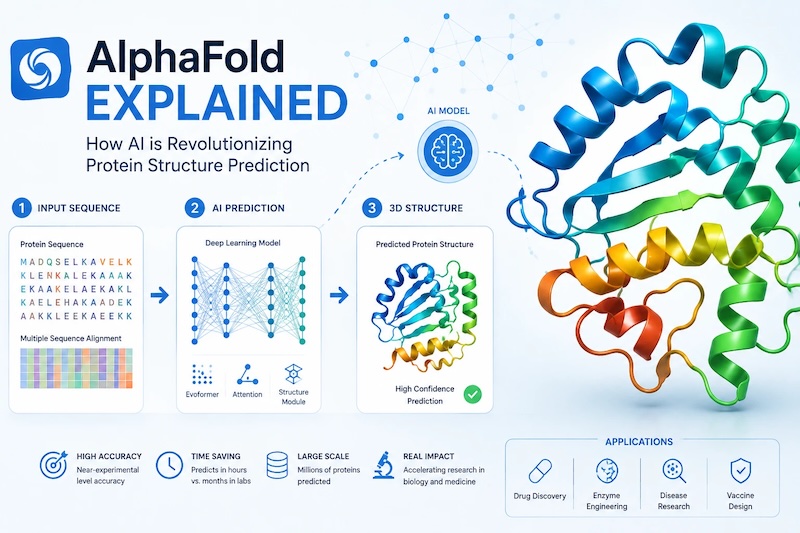
AlphaFold Protein Structure Database, Google DeepMind and EMBL-EBI (CC BY 4.0). Source: alphafold.ebi.ac.uk