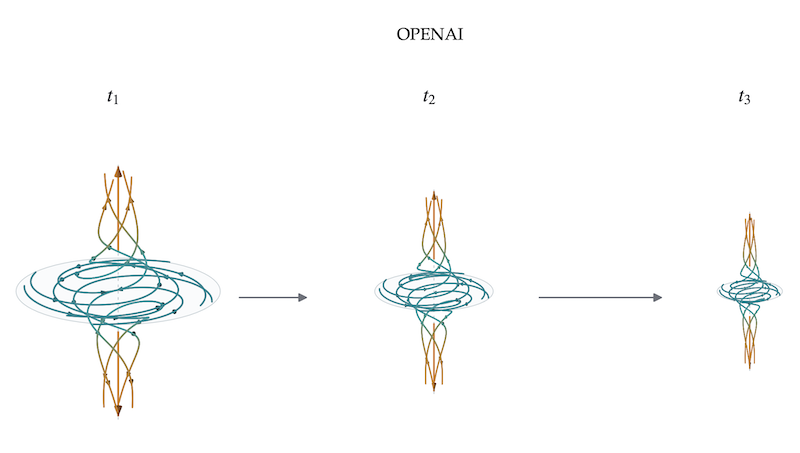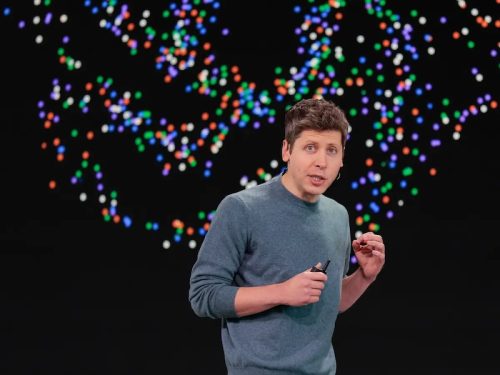



On September 8, OpenAI announced that an unreleased internal model, running roughly 10,000 concurrent agents, produced a proposed resolution of the Navier–Stokes Millennium Prize Problem in about 88 hours. GPT-6 Astra then formalized and verified the proof in Lean over a further 17 hours. The company published a 166-page proof together with its Lean formalization, and the result now awaits sustained independent scrutiny by the mathematical community.
One detail deserves more attention than the headline. OpenAI reports that it began the effort on September 1, after a rumor it later connected to two mathematicians working on the same problem — while stating that it saw none of their work. The machine did not outrun humanity from a standing start. It started running because human beings were getting close.
Terence Tao offered the sharpest caution. An automated route to a result, he observed, is like a guide who finds one path to a waterfall. It has value. But once a path exists, people take it and stop looking for others.
That is the question this moment puts to civilization. AI’s achievement is not yet humanity’s advancement. Humanity advances only when a breakthrough enlarges human understanding, judgment, creativity and responsibility — and it does not advance if a generation stops searching because a machine has already found one way through.
The result also opens questions science must now answer. Who is the author of work produced by ten thousand agents? How are provenance, influence and priority to be traced? Who receives recognition, and who answers for the result? Human–AI Co-Creation in science requires that AI’s expanding power be joined to human interpretation, transparent provenance, independent verification and accountable responsibility.
AI Is Beginning to Design the Silicon That Powers AI
OpenAI reports that its own models carried the Jalapeño inference chip from initial design to tape-out in nine months, and that AI-generated implementations of selected attention and mixture-of-experts blocks ran 1.5 to 1.8 times faster than versions written by its own engineers.
AI is no longer only running on the silicon. It is beginning to write it. Constitutional Silicon is therefore no longer a forward-looking proposal: where in the design chain, and under whose authority, are human command and verifiable safeguards embedded — when part of that chain is written by AI?