
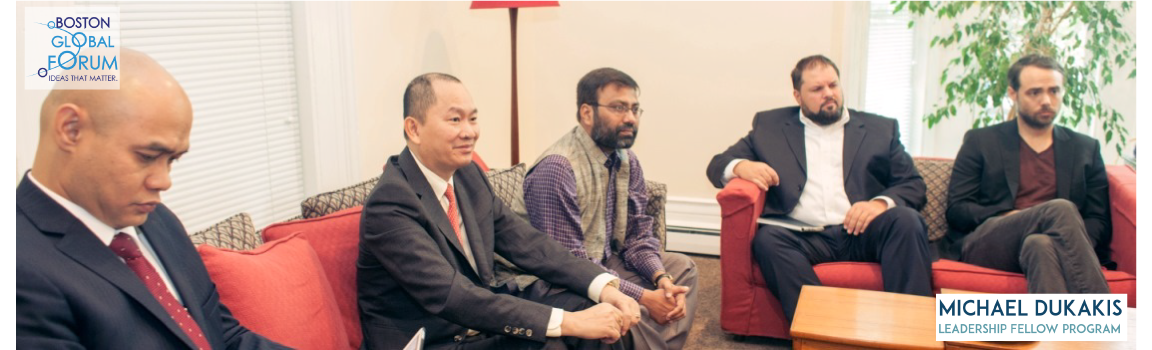
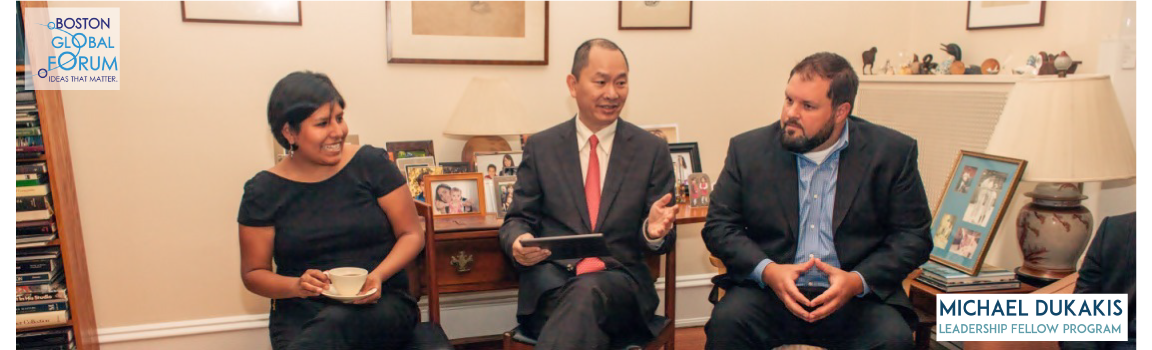
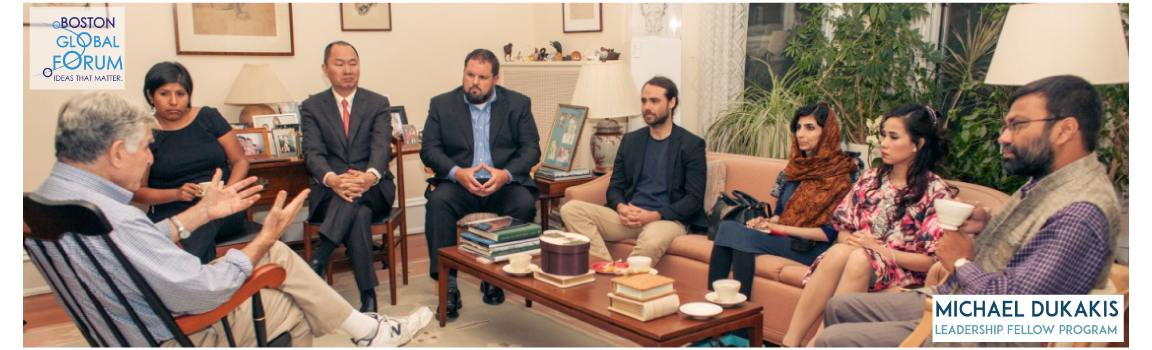
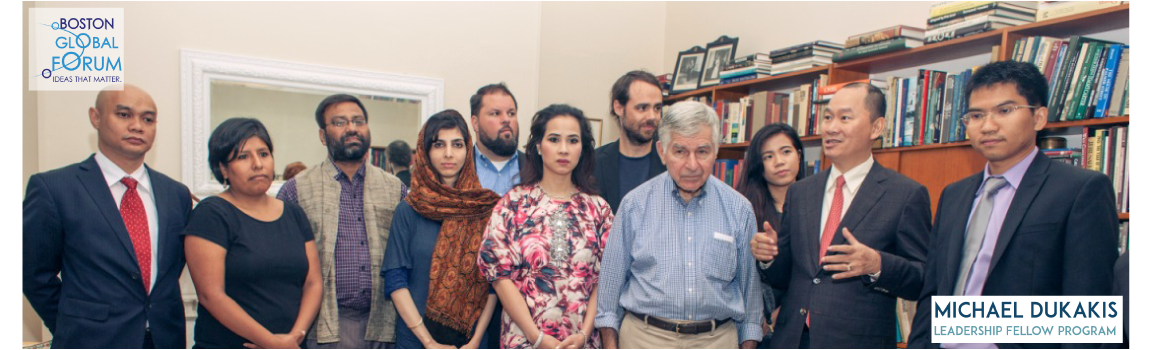
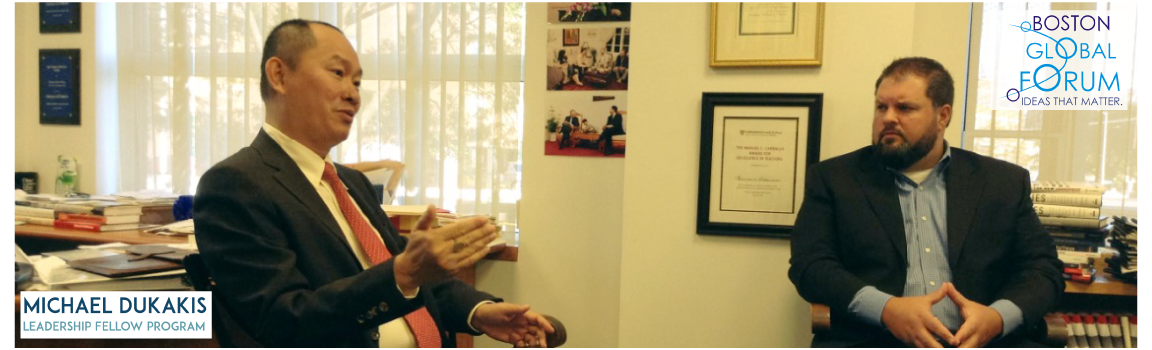
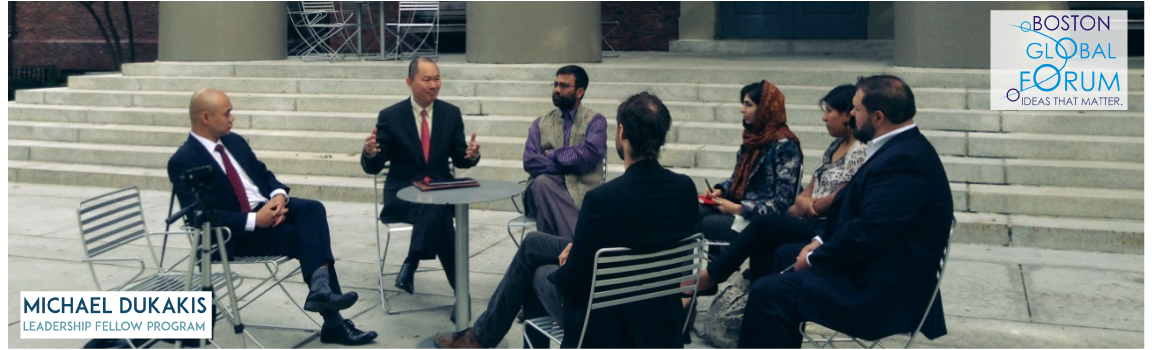
Gov. Michael Dukakis and wife Katharine Dukakis visit AUA Community

YEREVAN, Armenia – From April 19th through the 26th, Governor Michael Dukakis and his wife Katharine were honored guests at the American University of Armenia (AUA). Invited by President of AUA Dr. Armen Der Kiureghian and Vice-President for Development and External Relations Lorraine Alexander, the Dukakis’ came to interact with the AUA community and enrich the learning experience by participating in a series of lectures, discussions, events, and sessions at AUA.  In addition, Governor Dukakis and his wife Katharine Dukakis came to pay tribute to the anniversary of the Armenian Genocide and explore Armenia.

While on campus, Gov. Dukakis and his wife Katharine met with the AUA community to share their valuable experiences and insights on public service, genocide education, health care, economic development, equal opportunity, and social welfare. They were guided by Director of Admissions Arina Zohrabian and undergraduate students Max Gouchian, Gevorg Mnatsakanyan, Talin Saghdasaryan and study abroad student Emma Su.

Gov. Dukakis led a public lecture on the current U.S. presidential elections and informal discussions with students in the political science, law, and communications classes. He also participated in various lectures and events throughout the week sharing his insights related to political science. The couple also led an interactive lunch session with some of AUA’s Syrian-Armenian students.

Katharine Dukakis has served on the President’s Commission on the Holocaust, the United States Holocaust Memorial Council, the board of the Refugee Policy Center, and the Task Force on Cambodian Children, and has always been a strong advocate for recognition of the Armenian Genocide.

Her areas of expertise also include public health, with an emphasis on mental health issues. Mrs. Dukakis visited the AUA School of Public Health, health care facilities, and health care professionals in Armenia. She held a seminar with MPH students and graduates on Mental Health on April 21st, and visited the Armenian American Wellness Center and the Nork Mental Health Center with Dean Varduhi Petrosyan on April 22nd.

Michael and Katharine Dukakis attended the 100 LIVES initiative that presented the Aurora Prize for Humanity. They also visited the Armenian Genocide Museum Institute at Tsitsernakaberd, where Mrs. Dukakis was honored with the Henry Morgenthau Award for her lifelong service in the cause of genocide prevention and recognition. Their home state of Massachusetts has a long-standing tradition of holding annual Armenian Genocide commemorations at the State House and has included Armenian Genocide awareness in the public school curriculum.

Being a son of Greek immigrants, Gov. Dukakis highlighted the similarities between the Greek and Armenian communities in America, especially when it came to striving for higher education and preserving cultural values. He also noted that just like many Diasporan Armenian families in America, his family had also been displaced from Greece, and that Greeks and Armenians share a very similar history.

He stated, “My connection with the Armenian community comes partly from my dad’s experience but also from warm relations that the Greek and Armenian communities have always had in the Boston area, and the strong support that I received from the Armenian community there. Katharine is the direct result of her commitment to Holocaust education and her service first as a member of the original Holocaust Commission and, subsequently, her years of service on the Holocaust Museum board and her insistence that the Armenian genocide be part of the Museum.”

The Dukakis’ also explored a few of Armenia’s historical landmarks such as the Parajanov Museum, Garni Temple, Geghard Monastery, Echmiadzin Cathedral Compound and Zvartnots Cathedral. They also visited one of Armenia Tree Projects’ nurseries.

Governor Dukakis studied law at Harvard University and served in the Massachusetts House of Representatives from 1963-70. He was governor of Massachusetts from 1975-79 and 1983-91. Currently, Dukakis is a professor of political science at Northeastern University and a visiting professor at the UCLA School of Public Policy and Social Research.

As strong supporters of higher education, they were able to experience how AUA contributes to Armenia’s development, and to convey their successful strategies of public service to the students and community.

“We were much impressed by both the students and the faculty,” said Governor Dukakis as he was expressing hope for potential partnerships in terms of an exchange program with Northeastern University.

On the job training

March 14, 2017

By Zev Hurwitz

With second-year Luskin students searching for career opportunities and first-year students looking to lock in summer placements, the UCLA Luskin School of Public Affairs presented an alumni panel to give timely advice about what types of jobs might be out there in the public service sector.

At an evening panel discussion hosted by Luskin School Career Services on March 9, 2017, alumni of all three UCLA Luskin master’s programs spoke about working professionally with local governments and how their degrees opened those careers as possibilities.

Former Massachusetts Gov. Michael Dukakis, who has taught as a visiting professor at the Luskin School each winter for more than 20 years, spoke about the opportunities for Luskin students to engage in public service, and he challenged the audience — mostly current Luskin students — to make strides in addressing the world’s issues.

“Five-sixths of the world today is conflict-free,“ Dukakis said. “The challenge now is how do we get the remaining one-sixth to join the other five-sixths? I just hope that, in addition to everything else you’re doing, you’ll be working hard for that kind of future.”

Five UCLA Luskin alumni spoke on the panel, which was moderated by Emily C. Williams MPP ’98, a member of Luskin’s first-ever graduating Master of Public Policy class. Williams noted that the panel’s academic diversity demonstrated the value in having cross-educational opportunities for current students, and she encouraged the audience to enroll in courses in other disciplines.

“It’s really nice that we have this great array of talent from all three departments in the school,” Williams said. “What was nice, for those of us who took classes outside our department, is that we really got to know some of the people outside of our programs, which lends itself to great working relationships.”

Paul Weinberg MPP ’98 is now emergency services administrator in the Office of Emergency Managementfor the City of Santa Monica. Weinberg spoke about how his schooling — Dukakis’ course in particular — gave him important insight into professionalism.

“Always return your phone calls — I cannot tell you how important that is,” Weinberg said. “You’ve got to find a way to acknowledge people reaching out to you,” attributing that advice to Dukakis. “Also, never say or write anything you don’t want to see on the cover of the L.A. Times. If you think about that now, that is more important than ever because [if] you put something out there in social media, it’s everywhere.”

Nahatahna Cabanes MSW ’13 is director of the Retired and Senior Volunteer Program at L.A. Works. As a former Bohnett Fellow, Cabanes had the opportunity to work in the administration of former L.A. Mayor Antonio Villaraigosa while a student at Luskin. She said her current job is different from her role in the mayor’s office, but both jobs speak to her interests.

“It’s because I’m a little bit bipolar in term of my interests that I still have the compassion that drove me to social work, but at the same time, I’m a community organizer at heart and I love the world of politics,” Cabanes said. “I sort of balance between the macro and the micro.”

Molly Rysman MA UP ’05 is now the housing and homelessness deputy for Los Angeles County Supervisor Sheila Kuehl. Rysman discussed her experience bringing a priority issue to the mainstream of local politics.

“When I joined [Rysman’s] office, I worked really hard during her campaign to educate both her and her challenger that homelessness was an important issue — because back then you had to actually tell elected officials to care about homelessness,” she said. “Now I get to work on an issue that’s top of the agenda.”

Also serving on the panel were Daniel Rodman MURP ’14, now transportation manager in Mayor Eric Garcetti’s office, and Everado Alvizo MSW ’08, a former Bohnett Fellow who now works as a project coordinator and registered associate clinical social worker for Special Service for Groups.

VC Powe, director of career services and leadership development at Luskin, said that giving opportunities for current students to engage with alumni is critical in providing a realistic idea of what life after UCLA will be like.

“When we have representatives from an organization talk about their work, they’re going to give you all of the formal, appropriate ‘yes-you-need-to-know’ detailed background about the organization,” Powe said. “When you’re talking to an alum, they’re also going to give you the inside story and they’re going to be honest. The alum knows what the students have learned here, so they can tell them how to tailor their experience to the jobs they’re seeking. I think that’s a very important difference.”

The lawyers clearinghouse celebrates 26 years

The Lawyers Clearinghouse celebrated its 26th anniversary on June 12 with over 150 guests at the Boston office of Nixon Peabody, raising over $90,000 thanks to the generosity of law firms, corporations, and individual donors.

Meeting attendees were joined by guest speaker Michael Dukakis, former Governor of Massachusetts, and honoree Amy Anthony, President and Chief Executive Officer of Preservation of Affordable Housing (POAH).

After an introduction from Nancy Blueweiss, Vice President of the Clearinghouse Board of Directors, attendees heard remarks from Dukakis, a long-time supporter of affordable housing and community development efforts in the Commonwealth. He praised Anthony, who served as the Secretary of the Massachusetts Executive Office of Communities and Development during his time as governor, attributing his administration’s successes with the community in part to Anthony’s leadership and commitment.

Dukakis also called for an increase in affordable housing throughout Massachusetts, while acknowledging the hard work done by many in the audience, who represented law firms and community organizations.

“This city has come a long, long way, and it’s the result of the combined work of so many of you, who care a great deal about this state, about this community, and work your heads off to make it a better place,” he said.

Event Co-Chair Joseph Flatley, President and Chief Executive Officer of the Massachusetts Housing Investment Corporation (MHIC), then presented the Leadership Award to honoree Amy Anthony.

The Clearinghouse chose to honor Anthony due to her impressive career in the affordable housing industry. She has been a vocal supporter of affordable housing, at both the state and national level, for over thirty years, helped found the Multifamily Housing Institute, and continues to serve on a number of boards and committees.

In accepting her award, Anthony thanked Dukakis for his support.

“It was really a joy to work [with him], and it’s meant a huge amount to me in my career,” she said.

Anthony then spoke about POAH, commending the organization’s staff for their energy and drive, which she called “invigorating.”

The Clearinghouse also used the meeting as a platform to announce a new partnership with the Access to Justice Fellows Program. The program, created by the Supreme Judicial Court’s Massachusetts Access to Justice Commission and led by Mintz Levin attorneys Sue Finegan and Martha Koster, matches retiring lawyers and judges with nonprofit and legal services organizations, where they use their expertise to serve the community.

The Clearinghouse would like to thank our sponsors and guests for supporting us and contributing to another successful event. Funds raised through our annual meeting will support our pro bono legal services, educational seminars, and the Access to Justice Fellows Program.

Michael Dukakis: Presidential Candidate 1988

Using the phenomenon termed the “Massachusetts Miracle” to promote his campaign, Dukakis sought the Democratic Party nomination for President of the United States in the 1988 United States presidential election, prevailing over a primary field that included Jesse Jackson, Dick Gephardt, Paul Simon, Gary Hart, Joe Biden and Al Gore, among others.

Announcing his candidacy in April 1987, he won the Democratic nomination at the Democratic National Convention in Atlanta on July 21, 1988. Dukakis faced Republican nominee Vice President George Herbert Walker Bush in one of the most negative campaigns to date. Bush assailed Dukakis on his gubernatorial record for many things, including furloughing a convicted felon who then repeated his crime and the cleanliness of Boston Harbor. During the election campaign, Dukakis and his running mate, Texas Senator Lloyd Bentsen, failed to find issues that attracted voters and to attack effectively the Republicans’ record under President Ronald Reagan. Bush swept 40 of 50 states and won the election, becoming the first sitting vice president to be elected in more than 150 years. Bush, and his running-mate Dan Quayle, took 426 electoral votes.

Moakley Center for Public Management

Suffolk University’s Moakley Center for Public Management is actively engaged in the local community, fostering public discourse, supporting and advising community organizations and providing educational opportunities to build human capital in the public service industry.

Working with many long-term partners—Massachusetts League of Community Health Centers, the Massachusetts Providers’ Council, Communities for People, and the Shriver Center at the UMass Medical School—and new partners—Executive Office of Health and Human Services and the Massachusetts Municipal Association—the Center offers extensive graduate-level certificate programs to Massachusetts public service mangers. To date, more than 1,600 managers have completed the programs.

As the clinical partner to Suffolk’s Institute for Public Service, the Center promotes dialogue on important public policy issues. The Center’s Moakley Breakfast Series brings key public policy topics to the forefront and has featured several prominent leaders, including former Governor Michael Dukakis, Attorney General Martha Coakley, and former U.S. Representative Barney Frank.

In partnership with the Department of Children and Families (DCF) and Communities for People (CFP), the Moakley Center expanded its two youth job programs—Summer iWorks and Job Opportunity Boston—matching dozens of eager teens with meaningful employment opportunities.

Three – term Governor of Massachusetts

Dukakis declared his candidacy for Governor in October 1973. A year later he and running mate Thomas P. O’Neill III soundly defeated incumbents Francis W. Sargent and Donald Dwight. Dukakis was inaugurated as the 65th Governor of the Commonwealth on January 2, 1975. At the time, the state unemployment rate was nearly 12 percent (second highest in the country), and the Commonwealth faced a deficit of over half a billion dollars. Under Dukakis, Massachusetts unemployment dropped to 4.3 percent by October 1978, 250,000 new jobs were added to the state’s economy, and he left the Massachusetts state government in 1979 with a budget surplus of $200 million.

In the September 1978 Democratic gubernatorial primary election Dukakis was defeated by Edward J. King, who was subsequently elected Governor. Upon leaving office, Dukakis was appointed lecturer, Director of Intergovernmental Studies, and Chairman of the program for senior executives in state and local government at the John F. Kennedy School of Government at Harvard University.

Dukakis ran for Governor again in 1982 and defeated incumbent Edward J. King in the Democratic primary. He was again inaugurated Governor of Massachusetts on January 6, 1983. His second term was highlighted by innovative programs such as the Employment and Training Choices program (ET) and the Governor’s Alliance Against Drugs. ET helped more than 30,000 welfare recipients find jobs with more than 8,000 of the state’s businesses, saving taxpayers an estimated $107 million in 1986 alone. The Governor’s Alliance Against Drugs was a state-wide effort involving public and private leaders to increase drug and alcohol awareness in Massachusetts schools. In 1984 Dukakis presented the platform to the Democratic Convention in San Francisco, and in August 1986 he was elected Chairman of the Democratic Governors’ Association. Dukakis was elected the nation’s most effective Governor by his peers in 1986.

Dukakis took advantage of an economic boom, dubbed the “Massachusetts Miracle,” and was re-elected to an unprecedented third four-year term in 1986.

Dukakis talks on media strategy

By JACOB D. ROBERTS, CONTRIBUTING WRITER, November 17, 2009

Former Democratic presidential candidate Michael S. Dukakis and Boston Globe columnist Renee Loth advised aspiring politicians yesterday at the Kennedy School about media strategy and reminisced about the strength of press coverage in decades past.

Dukakis exhorted potential “public managers” and political appointees in former New York Times Public Editor and Visiting Lecturer Daniel Okrent’s “Writing and Reporting on Politics and Policy” class to take the press seriously and use media as a positive conduit between government and the people.

Dukakis graduated from Harvard Law School in 1960, served three terms as Massachusetts governor, and lost the 1988 election to former President George H.W. Bush. He said that politicians today do not face the same intense scrutiny from journalists they once did. “Nowadays, they don’t do investigative journalism well,” he said. “You can put a lot over on them.”

He said that some lessons from the past continue to apply. He urged potential politicians in the crowd to develop an effective organization at the grassroots level, a lesson he said he learned from both his success in races for Massachusetts governor and from his failure on the national level.

He advised the students to address questions from reporters frankly, and to let reporters know when they do not have an answer.

Loth, who first covered Dukakis during his campaign for governor in 1974 and went on to work for several Boston-area newspapers, talked about the changing dynamics of the media industry with the advent of the Internet and around-the-clock coverage.

“There is a lowest common denominator in the mainstream media because we’re competing with this new media… that puts a premium on speed and not accuracy,” she said.

Loth lamented the rise of “gotcha” reporting, a tactic meant not to highlight failures of governance so much as to contribute to a reporter’s career.

“There’s not the same kind of respectful ‘friendly antagonism’ that defined the relationship of the press and public officials,” she said.

“Today there is a lot more cynicism and ambition to get ‘gotcha’ moments with a scalp, to make government look bad,” she added.

Nick Rigas, a second-year student at the Kennedy School, said that he was intrigued by Loth’s comments. “I found the discussion of more breadth and less depth interesting, the change from reporters in your face to reporters in pajamas,” he said.

Governor Michael Dukakis visited the International Baccalaureate Program of Anatolia College

IB students had expressed a strong interest in discussing international relations and current global issues with the former Governor of Massachusetts and their questions covered issues such as US Foreign Policy, Greek-American relations, US Politics, International Affairs and Global Issues, as well as Governance Policies.  Mr. Dukakis gave an overview of U.S. Politics and Foreign Policy in the last 50 years tailoring his comments to the students’ questions, which he had carefully examined.  He discussed the war in Iraq and the tension with Iran, and commented on the significance of international “coalitions” stressing the role of the EU and the UN in building “world ties,” and also commented on the upcoming US elections.

The 40 IB students, who followed Mr. Dukakis’ presentation with keen interest, were encouraged by the Governor to ask additional questions and in the session that followed, students inquired into Mr. Dukakis’ views on the crisis in the Middle East, his opinion on progress in Greece in the last 20 years and on emerging economies and markets such as China and India, solicited his advice on a successful political profile and campaign, and also posed personal questions on his educational and career choices.  Mr. Dukakis spoke enthusiastically and inspired IB students with his faith in “individual participation in politics” and “active involvement on the part of citizens in community matters.”

Mr. Dukakis’ visit to Anatolia is organized under the aegis of the “Michael S. Dukakis Chair in Public Policy and Service” that was established at the American College of Thessaloniki, the university division of Anatolia in 1999.  It  is a leading forum in Northern Greece and the Balkans for discussion and debate of the pressing issues of our times, with a principal view toward motivating young people to become involved in public service.  Mr. Dukakis is participating in various events during his stay, most recently in an important Symposium on Greek-American relations that included deputy minister of foreign affairs Mr. Evripidis Stylianidis among other notable participants.