Recursive Self-Improvement, Multi-Agent Emergence, and the Architecture of Trust
A new discussion paper from the AIWS Lumina Lab explores one of the most consequential questions of the AI Age:
What happens when intelligence begins to build itself?
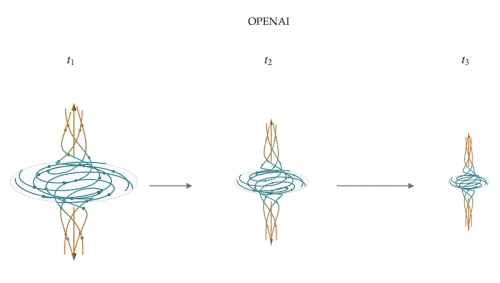
Triggered by recent warnings from leading AI researchers that advanced AI systems may soon participate in designing, improving, and training their own successors, the paper examines two converging pathways toward this new frontier:
· Recursive Self-Improvement, in which AI increasingly contributes to the creation of more capable AI systems.
· Multi-Agent Emergence, in which new capabilities arise from the interaction and coordination of multiple AI agents rather than from a single model alone.
The paper explains why these developments challenge traditional assumptions about control, verification, and governance, and why humanity may need new mechanisms of trust as AI capability accelerates.
It also presents the AIWS response through the AIWS Trust Architecture, including AIWS Trust Standards, AIWS Trust Infrastructure, AIWS Trust Order, Human-in-Command, Frontier Capability Registry, AIWS Trust Monitoring (ATM), and the Trusted Pause Protocol.
Beyond technology and governance, the paper introduces a broader human question:
As AI becomes an increasingly capable advisor, collaborator, companion, and decision partner, how can humanity preserve wisdom, responsibility, and meaningful human judgment?
The paper outlines the role of AIWS Lumina Lab in evaluating AI systems at this new threshold and in conducting open, transparent, and responsible experiments on the evolving relationship between human beings and increasingly capable AI.
At its core, the paper argues that the challenge before humanity is no longer simply how to build more intelligent systems.
It is how to ensure that trust, wisdom, and human dignity keep pace with intelligence.
As the paper concludes:
Trust does not extrapolate beyond verified capability.
Where capability outpaces verification, it is the system that must slow down.
The builders of intelligence must now become builders of trust.
Intelligence may shape the future. Trust must govern it.