Special Side Event “Quad Roundtable” at the Riga Conference 2020

Session the Quad Group, AIWS Social Contract and solutions for world peace and security

Speakers:

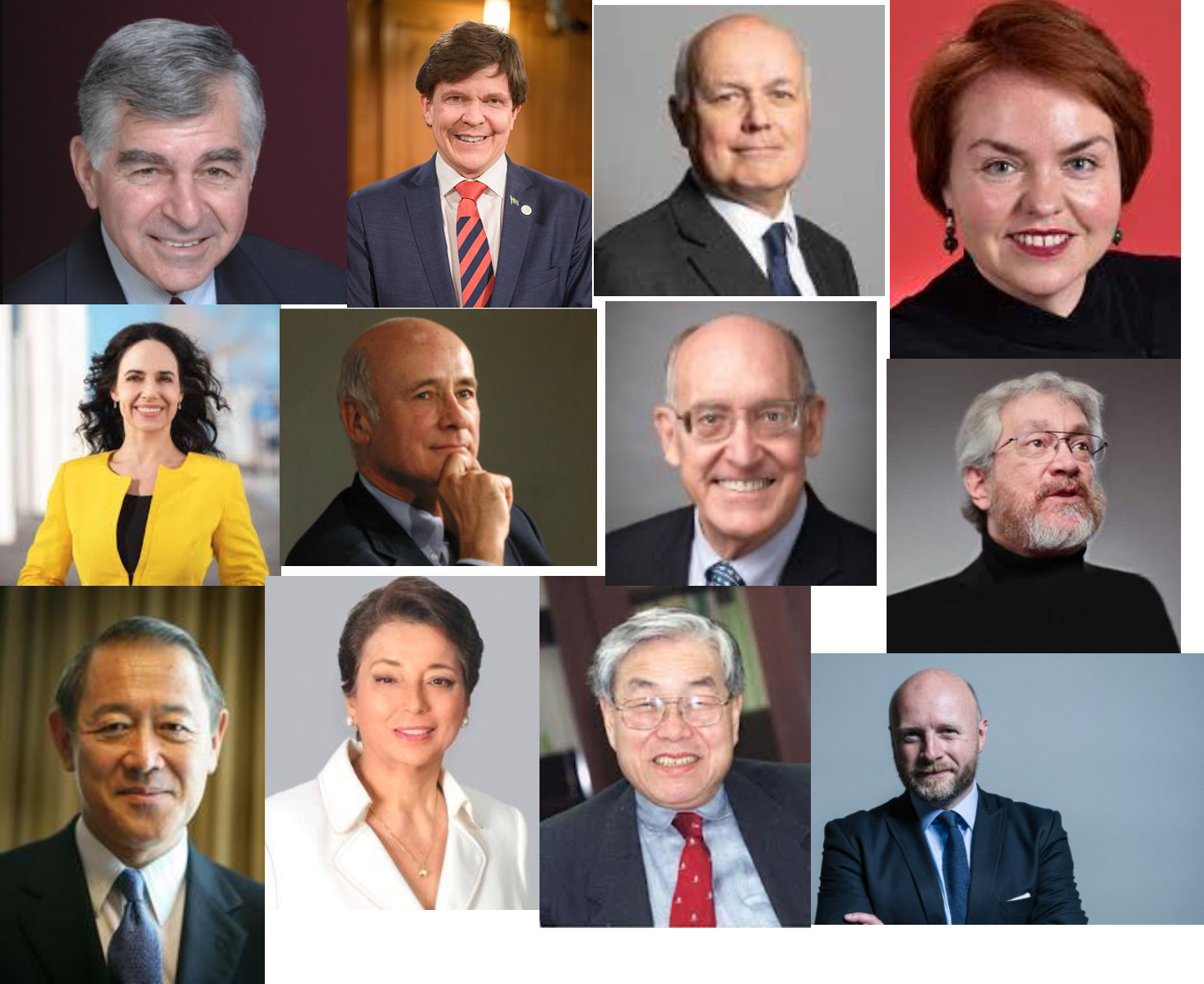
Governor Michael Dukakis, Chairman of the Boston Global Forum (US),

Defense State Minister Yasuhide Nakayama (Japan),

Senator Kimberley Kitching, Chair of Foreign Affairs, Defence and Trade Reference Committee (Australia),

Ambassador P.S Raghavan, Chairman of the National Security Advisory Board (India)

Moderator: Mr Sandis Šrāders, LATO’s Board Member

Theme: The Quad Group, AIWS Social Contract and solutions for world peace and security

The Quad Roundtable is a special side event of the Riga Conference 2020, Session Quad Roundtable” the Quad Group, AIWS Social Contract and solutions for world peace and security”, co-organized by the Latvian Transatlantic Organisation (LATO) and the Boston Global Forum.

Time and date: 2:30 pm – 4:00 pm (Riga time), November 12, 2020 , Virtual Roundtable.

Concept notes:

The Quadrilateral Initiative – informally named the Quad – first began in May 2007 with a meeting between the US, Japan, India and Australia in the Philippine capital Manila.

The informal grouping, championed by Japan’s then prime minister Shinzo Abe, was viewed by analysts as an attempt to step up co-operation in the face of a rapidly rising China.

Prime Minister Suga told reporters he would seek to “promote a free and open Indo-Pacific” and also “build stable relations with neighbouring countries including China and Russia”.

So when Prime Minister Yoshihide Suga and Secretary of State Mike Pompeo greeted each other in front of a bank of American and Japanese flags on October 6, 2020 in Tokyo, they exchanged what was surely the longest fist bump in their nations’ seven-decade alliance, a nearly 15-second joining of knuckles.

US State Secretary Pompeo’s remarks on October 6 evening, he said that the Quad’s members needed to protect their people from China’s “exploitation, corruption and coercion,” and he blamed China for a cover-up of the initial coronavirus outbreak in Wuhan. A statement about Mr. Pompeo’s meeting with the Australian foreign minister, Marise Payne, described their discussions of “China’s malign activity in the region.”

On 16-18, September, the World Leadership Alliance-Club de Madrid and the Boston Global Forum co-organized the Policy Lab “Transatlantic Approaches on Digital Governance: A New Social Contract in the Age of AI”, in which presidents, prime ministers, distinguished thinkers, and scholars discussed the Social Contract for the AI Age, and saw it as significant standards for world politics and economy in the 21st century.

How can the Quad Group support and maintain peace and security? What is the role of each member?

How can the Quad contribute to peace and security in the European, Atlantic, and Baltic regions?

How can democratic governments support and use the Social Contract for the AI Age as standards for international relations and for peace and security?

How can democratic governments recognize and implement the Social Contract for the AI Age?

                                   Agenda

14:30   Opening Remarks, Mr Sandis Šrāders, LATO’s Board Member

14:35   Presenter, Professor Nazli Choucri

14:40   Keynote Speech of Governor Michael Dukakis

15:00   Keynote Speech of State Minister Yasuhide Nakayama

15:20   Keynote Speech of Senator Kimberley Kitching

15:40   Keynote Speech of Ambassador P.S Raghavan

16:00   Q&A, Moderator by Mr Sandis Šrāders,

16:25   Concluding, Mr Sandis Šrāders

16:30   Thank you and next steps, Mr. Nguyen Anh Tuan

Riga Time

Bios of Keynote Speakers:

Michael Stanley Dukakis
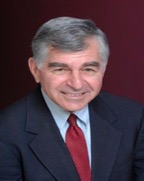
Chairman of The Michael Dukakis Institute for Leadership and Innovation;

Co-Founder and Chairman of The Boston Global Forum;

Co-founder of AIWS.net and the AIWS City

Co-Author of Social Contract for the AI Age

The three-term Governor of Massachusetts and the 1988 Democratic nominee for President of the United States, Distinguished Professor of Northeastern University and UCLA 

Michael Stanley Dukakis culminates a half-century career dedicated to public service, political leadership, fostering the careers of young leaders, and scholarly achievement.

Together with Nguyen Anh Tuan, this former Massachusetts governor, has established The Boston Global Forum as a globally recognized think tank noted for developing peaceful solutions to some of the world’s most contentious issues.

Kimberley Kitching

  • Senator for Victoria
  • Parliament of Australia, Co-chair of Inter-Parliamentary Alliance on China (IPAC),
  • Shadow Assistant Minister for Government Accountability
    Deputy Manager of Opposition Business in the Senate
  • Chair, Senate Foreign Affairs, Defence and Trade References Committee

Before being sworn in as a Senator in November 2016, Kimberley practised as a lawyer, worked as a manager in several private companies in information technology and human resources, was a senior adviser to the Treasurer of Victoria and the Victorian Minister for Industry, Trade, Major Projects and Information Technology, was a Melbourne City Councillor and the General Manager of the Health Workers Union in Victoria where she helped restore good governance and financial strength.

Yasuhide Nakayama
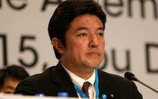
  • State Minister of Defense, Japan
  • Mentor of AIWS.net

Yasuhide Nakayama is a Japanese politician representing the Liberal Democratic Party, elected in December 2012 as a member of the House of Representatives of Japan and was re-elected in the December 2015 and 2017 elections. Mr Nakayama is the current State Minister for Defense in the Japanese cabinet.

Career

  • Secretary to the Minister of Construction
  • Advertising Agency Employee
  • State Minister for Foreign Affairs
  • Parliamentary Vice-Minister for Foreign Affairs
  • Director, Committee on Economy, Trade and Industry, HR
  • Chief Director, Special Committee on North Korean Abduction and Other Issues, HR
  • Director, Committee on Security, HR
  • Director, Public Speeches Division, LDP
  • Director-General, Information Bureau, LDP
  • Chief Secretary, Research Commission on Security, LDP

Ambassador P.S. Raghavan
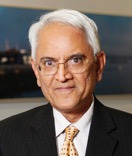
Ambassador Raghavan is Chairman of the National Security Advisory Board, which advises India’s National Security Council on strategic and security issues.

As a career diplomat, he has served as India’s Ambassador to Russia, Czech Republic and Ireland. He had other diplomatic assignments in USSR, Poland, UK, Vietnam and South Africa.

He was an advisor to the Prime Minister of India (2000-2004) on foreign affairs, defence, national security, nuclear energy and space.

He founded, and was the first head of, the Development Partnership Administration, which coordinates India’s economic partnership programmes abroad, with an annual budget of over US$ 1.5 billion.

He was Chief Coordinator of the BRICS Summit in New Delhi (2012). From 2012 to January 2014, he was Special Envoy of Government of India to Sudan and South Sudan.

Bio of the Moderator:

Mr Sandis Šrāders
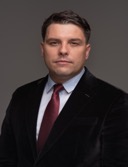
Board Member of the Latvian Transatlantic Organisation

Dr. Sandis Šrāders is a Fellow and Lecturer in Russian Military and Strategic Studies at the Baltic Defence College (Tartu, Estonia). His research interests cover such areas as American foreign policy, small states and international political economy, and transatlantic relations. Dr. Šrāders has assumed a variety of different roles. He has
served as Secretary-General and now holds the position of the member of the board of the Latvian Transatlantic Organisation. Until 2014 and further assumed the role of Board Member of LATO since 2014. He has been a project coordinator for the German Marshall Fund of the United States in the Baltic States (2013-2015). In this capacity he
was responsible for the accumulation of intellectual capital for the Latvian Presidency at the Council of the EU in 2015 by selecting experts, organising meetings and leading the final publication that addresses the EU’s Eastern Partnership. One of his more recent positions was Director of Strategic Projects, Sales and Advertising at Latvijas
Radio (2018-2020). He is the author of the recent (2020) book “Small Baltic States and the Euro-Atlantic Security Community”.

Bio of the Presenter:

Nazli Choucri
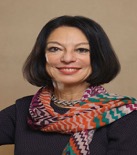
Board Member of the Boston Global Forum
Professor of Political Science at the Massachusetts Institute of Technology (MIT)

Nazli Choucri is a Boston Global Forum board member and Professor of Political Science at the Massachusetts Institute of Technology (MIT). Her work is in the area of international relations, most notably on sources and consequences of international conflict and violence. Professor Choucri is the architect and Director of the Global System for Sustainable Development (GSSD), a multi-lingual web-based knowledge networking system focusing on the multi-dimensionality of sustainability. As Principal Investigator of an MIT-Harvard multi-year project on Explorations in Cyber International Relations, she directed a multi-disciplinary and multi-method research initiative. She is Editor of the MIT Press Series on Global Environmental Accord and, formerly, General Editor of the International Political Science Review. She also previously served as the Associate Director of MIT’s Technology and Development Program.

The author of eleven books and over 120 articles, Dr. Choucri is a member of the European Academy of Sciences. She has been involved in research or advisory work for national and international agencies, and for a number of countries, notably Algeria, Canada, Colombia, Egypt, France, Germany, Greece, Honduras, Japan, Kuwait, Mexico, Pakistan, Qatar, Sudan, Switzerland, Syria, Tunisia, Turkey, United Arab Emirates and Yemen. She served two terms as President of the Scientific Advisory Committee of UNESCO’s Management of Social Transformation (MOST) Program.
Father of the Internet Vint Cerf talks at UN Roundtable 2045


“All people can create value for each other. A good economy has an ecosystem of organizations that lets that happen, in the most meaningful and fulfilling ways.”

How can we make this idea happen through using AI and the Internet?

How can we apply and practice this idea?


The Internet plays a significant role in data science and AI, so the History of AI Initiative at Michael Dukakis Institute considers Vint Cerf as a historical figure in AI. At this United Nations 2045 Roundtable, Vint Cerf will talk about historical moments in the birth of the Internet and how to use the Internet and AI to shape bright futures and to create an ecosystem for work and life with the philosophy of the People Centered Economy. With concepts from the New Social Contract in the Age of AI, Intellectual Society-Thoughtful Civil Society, and the People Centered Economy, AI World Society (AIWS) conceives concepts of the AIWS City as applying and practicing the thoughts and ideas of Vint Cerf.


The People Centered Economy: The New AI and Internet Ecosystem for Work and Life 

Time: 9:30 am – 10:45 am EDT, August 21, 2020

This is a UN 2045 Roundtable and an event of the History of AI

Keynote speaker: Vint Cerf, Father of the Internet

Speakers: Governor Michael Dukakis, Co-founder and Chairman of the Boston Global Forum, Nguyen Anh Tuan, CEO of the Boston Global Forum

Moderator: Ramu Damodaran, Chief of the United Nations Academic Impact

Discussants: Professor Nazli Choucri, MIT, Professor Hiroshi Esaki, University of Tokyo, Professor Mikhail Kupriyanov, Vice Rector, Saint Petersburg Electrotechnology University, Former Prime Minister Bosnia & Herzegovina Zlatko Lagumdžija, Dr. Chien Minh Le, President of Dalat University,Professor Jun Murai, Keio University, Father of the Internet Japan, Professor David Silbersweig, Harvard University


Agenda:

  • 9:30 am: Opening Remarks, Governor Michael Dukakis
  • Remarks on United Nations 2045 Initiative, Keynote Speaker Vint Cerf, and discussants; Ramu Damodaran
  • Keynote speech: “The People Centered Economy: The New AI and Internet Ecosystem for Work and Life”, Vint Cerf
  • Introduce AIWS City, a model that applies the concept “The People Centered Economy: The New AI and Internet Ecosystem for Work and Life”, Nguyen Anh Tuan
  • Discussion: Zlatko Lagumdžija, Jun Murai, NazliChoucri, Hiroshi Esaki, David Silbersweig, Mikhail Kupriyanov, Le Minh Chien. Moderator: Ramu Damodaran
  • 10:40 am:  Conclude, Ramu Damodaran

The United Nations 2045 Initiative:

The United Nations 2045 is an initiative of the United Nations Academic Impact with collaboration by the Boston Global Forum.

The United Nations 2045 include roundtables, ideas, concepts, solutions, essays, and reflections looking ahead to the global landscape in 2045, when the United Nations completes its first centenary, in areas of these technologies, including artificial intelligence, cyber security and weapons systems, among others. Such a compilation which looks both to the horizon ahead and the role of the United Nations in making it beneficial and secure, would be timely.

The History of AI Initiative:

The History of AI research and explore historical achievements, events, and figures in AI.

The HAI Board is chaired by Governor Michael Dukakis, with Professor Nazli Choucri (MIT), Historian Le Minh Chien, President of Dalat University, Professor Caroline Jones, MIT, Professor Ole Molvig (Vanderbilt University), Tuan Anh Nguyen (Michael Dukakis Institute), Professor Thomas Patterson (Harvard University), Professor Judea Pearl (UCLA), Professor Alex Pentland (MIT), Professor David Silbersweig (Harvard University), Professor Caroline Jones, MIT, and President Vaira Vike-Freiberga, Latvia as members.

The “The History of AI” Board will review and identify historical events, figures, and achievements in AI. After the HAI Board approve them, they will be made official historical events, figures, achievements in AI and posted on the AI Chronicle at AIWS.net. The HAI Board will review and select contents for books and papers of the History of AI.

Following Keynote Speaker Vint Cerf, Mr. Nguyen Anh Tuan introduced the AIWS City. Here are some key messages from Mr. Nguyen Anh Tuan’s talk.

Live Session: Digital Technologies, Elections and Democracy in times of COVID-19

A video of the session can be found here.

Politics has now caught up with digitalization, but policy is still lagging behind. How can we improve electoral governance in the COVID-19 era? How can we hold electoral processes in the COVID-19 era while maintaining political and electoral rights? Join us in this Online AIWS Roundtable and Club de Madrid Live Session in collaboration with the Boston Global Forum. 

‘Digital Technologies, Elections and Democracy in times of COVID-19’ is an online AIWS Roundtable and Club de Madrid Live Session in collaboration with the Boston Global Forum.

COVID-19 is pushing us into digital democracy. But are we prepared for the digital transformation of political processes and elections? 

Politics are undergoing a process of digital transformation spurred by COVID-19. Cabinet meetings and even parliamentary sessions via videoconference are not a rare sight since the pandemic’s outbreak. Politics has now caught up with digitalization, but policy is still lagging behind.

The pandemic has dealt a blow to our economic and political systems: Elections are no exception. While some administrations have chosen to postpone elections, others have held these under extraordinary circumstances, altering timelines and voting procedures while ensuring free, fair and transparent votings.

How can we streamline electoral processes during COVID-19 without affecting political and electoral rights? How can we improve electoral governance in such a context? Is there a danger in election manipulation and hacking, particularly in countries with poor digital infrastructure?

The Session will be moderated by Milburn Line, Senior Advisor for Policy and Content at the Shared Societies Project of the World Leadership Alliance – Club de Madrid

Join us in this Club de Madrid and AIWS Live Session in collaboration with the Boston Global Forum on ‘Digital Technologies, Elections and Democracy in the times of COVID-19’ on 13 August at 9:00 EST / 15:00 CET to discuss the digitalization of democracy.

This event is a continuation of the event on August 5, 2020, which was stopped after 35 minutes due to technical problems during Live Session with speakers below:

UN2045: Building a Trustworthy Economy

Today’s financial systems are not trusted by citizens because they are inherently unstable and winner-take-all, so for most people the system offers only failure.  Today, new digital technologies allow the fine-grain feedback needed to build systems that are dramatically more stable, which reward everyone’s contribution to society, and provide everyone with a realistic opportunity to build a good life.

Professor Alex Pentland, Faculty Founding Director of MIT Connection Science, Mentor of AI World Society Innovation Network (AIWS.net), and a co-author of the Social Contract 2020, has conceived the “Trustworthy Economy”, based on data science, digital technologies and AI. This is very meaningful for the UN 2045 Initiative.

The United Nations Academic Impact and the Boston Global Forum co-organize the UN 2045 Roundtable “Building a Trustworthy Economy” at 10:00 AM EDT, July 24. The keynote speaker is Professor Alex Pentland, MIT, and the moderator is Ramu Damodaran, Chief of Academic Impact of the United Nations, and Editor-in-Chief of UN Chronicle Magazine. AIWS.net hosts this event as an AIWS Roundtable.

The History of AI Initiative considers Trustworthy Economy a History of AI event also.

Democratic Alliance on Digital Governance Conference – Protecting and Strengthening Democracy in the Aftermath of COVID-19

Co-chairs of the Inter-Parliamentary Alliance on China (IPAC) – eg. Sir Iain Duncan Smith, Senator Kimberley Kitching, MEP Miriam Lexmann – will speak and dialog with political leaders and distinguished thinkers to build new alliances and new global economic strategies after the pandemic COVID-19.  

On May 12, 2020, the World Leadership Alliance-Club de Madrid and the Boston Global Forum held a roundtable to discuss the Social Contract 2020, A New Social Contract in the Age of AI and risks to human rights stemming from governments’ response to COVID-19. On June 5, 2020, a new group, The Inter-Parliamentary Alliance on China (IPAC), was formed to assess the challenge posed by China’s ascendancy. It consists of 18 lawmakers from the U.S, Australia, Canada, Germany, Japan, Norway, Sweden, the U.K. and the European Parliament. The July 1st conference is a follow-up to these efforts, focusing on creative responses to the threats to democracies posed by COVID-19 and China, and building Democratic Alliance on Digital Governance.


Organizers: Boston Global Forum, Sponsor: Government of Massachusetts

Moderator: Governor Michael Dukakis

Date and Time:  8:30 am – 11:50 am (EST), July 1, 2020

Format: Online conference

Participants:

Political Leaders:  Liam Byrne, UK Member of Parliament, the Chair of the Parliamentary Network on the World Bank & IMF,  Governor Michael Dukakis, Co-founder and Chair of the Boston Global Forum (BGF), Ichiro Fujisaki, former Japanese Ambassador to US, Senator Kimberley Kitching, Parliament of Australia, Co-chair of Inter-Parliamentary Alliance on China (IPAC), Miriam Lexmann, Member of European Parliament, Co-chair of IPAC, Jamil Mahuad, former President of Ecuador, Beatriz Merino, former Prime Minister of Peru, Yasuhide Nakayama, Member of the House of Representatives of Japan, the State Minister for Foreign Affairs, Andreas Norlén, Speaker of the Swedish Parliament , Nam Pham, Asistant Secretary, Massachusetts, Sir Iain Duncan Smith, UK Member of Parliament, Co-chair of (IPAC).

Scholars and Thinkers: Professor Nazli Choucri (MIT), Prof. Koichi Hamada (Yale), Prof. Joseph Nye (Harvard Kennedy School), Prof. Thomas Patterson (Harvard Kennedy School), Prof. Alex Pentland (MIT), Marc Rotenberg (Director of the Center on AI and Digital Policy (CAIDP), Michael Dukakis Institute, former President of EPIC), Prof. David Silbersweig (Harvard), Nguyen Anh Tuan (CEO of the Boston Global Forum (BGF)), Prof. Dick Vietor (Harvard Business School)


Agenda

8:30 am – Opening Remarks, Governor Michael Dukakis, Co-founder and Chair of the BGF

8:35 am – Topic 1: New Alliance, New Order, New Democracy

Speakers: Sir Iain Duncan Smith, UK MP, Co-chair of the Inter-Parliamentary Alliance on China (IPAC), Miriam Lexmann, MEP, Co-chair of IPAC, Professor Joseph Nye, Harvard Kennedy School

Moderator: Governor Michael Dukakis

Panelists: Marc Rotenberg, Director of the Center on AI and Digital Policy (CAIDP), Michael Dukakis Institute, Ambassador Ichiro Fujisaki, Professor Nazli Choucri, MIT, Beatriz Merino, former Prime Minister of Peru, Professor Thomas Patterson, Harvard Kennedy School, Nguyen Anh Tuan, Speaker of the Swedish Parliament Andreas Norlén, Vaira Vike-Freiberga, former President of Latvia.


10:25 am – Topic 2: New Supply Chain, New Economy, New Democracy 

Speakers: Senator Kimberley Kitching, Parliament of Australia, Co-Chair of the Inter-Parliamentary Alliance on China (IPAC), Professor Dick Vietor, Harvard Business School, Professor Alex Sandy Pentland, MIT

Moderator: Governor Michael Dukakis

Panelists: MP Liam Byrne, Professor Koichi Hamada, Yale, and Special Adviser to Prime Minister Shinzo Abe, Yasuhide Nakayama, State Minister of Japan, Nam Pham, Assistant Secretary of Massachusetts, Jamil Mahuad, former President of Ecuador, Professor David Silberweig, Harvard


11:40 am – Announce the Center on Artificial Intelligence and Digital Policy (CAIDP), Marc Rotenberg, Director of CAIDP, Michael Dukakis Institute


11:45 am – Concluding Remarks: Governor Michael Dukakis.

United Nations Charter Day Roundtable: The Social Contract 2020, A New Social Contract in the Age of AI, and Intellectual Society

The livestream can be found here.

Ramu Damodaran, Chief of United Nations Academic Impact: “We prepare to observe the 75th anniversary of the United Nations, we in the Academic Impact are particularly mindful of the opportunities, challenges and dangers inherent in new and emerging technologies which were unforeseen at the time the Organization was founded.

We look ahead to the global landscape in 2045, when the United Nations completes its first centenary, in areas of these technologies, including artificial intelligence, cyber security and weapons systems, among others. Such a compilation which looks both to the horizon ahead and the role of the United Nations in making it beneficial and secure, would be timely.”

On United Nations Charter Day June 26, 2020, the Boston Global Forum and the United Nations Academic Impact organize a UN Charter Day Roundtable to talk about A New Social Contract in the Age of AI and Intellectual Society.

The UN Charter Day Roundtable will discuss the world in 2045 with deeply applied AI, how to upgrade civil society to Intellectual Society, a knowledge-based global society, and how the Social Contract 2020 will happen in 2045.


The UN Charter Day Roundtable is a part of the United Nations 2045 Initiative.

Panelists: Governor Michael Dukakis, Professors Thomas Patterson, Nazli Choucri, Alex Pentland, David Silbersweig; Nguyen Anh Tuan

Moderator: Ramu Damodaran, Chief of Academic Impact, United Nations, and Editor-in-Chief of the UN Chronicle Magazine.


Agenda

June 26, 2020

11:30 am: Opening Remarks, Ramu Damodaran, Chief of Academic Impact, United Nations and Editor in Chief of the UN Chronicle Magazine

11:50 am: The Social Contract 2020, A New Social Contract in the Age of AI and Intellectual Society, Governor Michael Dukakis, Professors Thomas Patterson, Nazli Choucri, Alex Pentland, David Silbersweig; Nguyen Anh Tuan

12:40 pm: Q&A, Moderator Ramu Damodaran

Llewellyn King, Pham Trong Nghia, Barry Nolan, Ta Bich Loan, Mariko Gakiya, Mikhail Kupriyanov and Allan Cytryn contribute questions and dialog

1: 30 pm: Concluding remarks, Ramu Damodaran.

The History of AI: Stories about Frank Ramsey

“Frank Ramsey—a philosopher, economist, and mathematician—was one of the greatest minds of the last century. Have we caught up with him yet?” By Anthony Gottlieb
Professor Judea Pearl, Mentor of AIWS.net, said: “Ramsey was definitely one of the clearest forerunners of subjective probabilities and the revival of Bayes statistics in the 20th century, which influenced the 1970-90 debate on how to represent uncertainty in AI systems.”

The History of AI at AIWS.net sees Frank Ramsey as an AI figure in history, who has indirect influence on AI, especially in causal inference.

In late April, 2020, the book “Frank Ramsey: A Sheer Excess of Powers” by Professor Cheryl Misak was published. She will talk about this new book at the History of AI, AIWS.net:
“Stories of Frank Ramsey, A Sheer Excess of Powers”

Time: 10;00 am – 11:00 am, EDT, June 6, 2020

Livestream here

This talk is an event of AIWS House, the History of AI.

AIWS House will host at least one talk a month to discuss historical figures, events, and achievements in AI through online or offline. This is a part of the History of AI at AIWS.net. Moderators will be thought leaders and media leaders. The content of talk belongs to and is recognized as the content of the History of AI at AIWS.net.

Cheryl Misak is University Professor and Professor of Philosophy at the University of Toronto. She works on American pragmatism, the history of analytic philosophy, ethics and political philosophy, and the philosophy of medicine.

Her books include Frank Ramsey: A Sheer Excess of Powers, Cambridge Pragmatism, The American Pragmatists, Truth and the End of Inquiry, and Truth, Politics, Morality.

She has had visiting fellowships or positions at the Goethe University in Frankfurt, the Free University in Berlin, Trinity College Cambridge, St. John’s College Cambridge, and New York University.

In 2013 she completed a long run in academic administration at the University of Toronto, culminating as Vice-President and Provost.

Professor Judea Pearl, UCLA, Member of the History of AI Board, Professor Nazli Choucri, MIT, Member of the History of AI Board, Professor David Silbersweig, Harvard, Member of the History of AI Board, Mr. Nguyen Anh Tuan, Director of Michael Dukakis Institute, Member of the History of AI Board, Professor Mikhail Kupriyanov, Vice President of ETU”LETI”, Russia, Professor Kirill Krinkin, Director of Popov Institute, ETU”LETI”, Mr. Barry Nolan, six times Emmy Award, Professor Tran Van Nhung, Former Vice Minister of the Ministry of Education, Vietnam Institute for Advanced Study in Mathematics, Ms. Ta Bich Loan, Chief of VTV3, will discuss with Professor Cheryl Misak about “ Frank Ramsey, A Sheer Excess of Powers”.

Agenda:
10:00 am: Professor Nazli Choucri introduces the History of AI at AIWS.net
Ms. Ta Bich Loan introduces Professor Cheryl Misak
10:08 am: Professor Cheryl Misak talks about Frank Ramsey
10:30 am: Q&A, Moderated by Ms. Ta Bich Loan
10:50 am: Professor Kirill Krinkin introduces the AIWS Leadership Master Program
11:00 am: Conclusion.

AIWS Summit 2020: Speech by Andreas Norlén, Speaker of the Swedish Parliament


AIWS Summit 2020: Speech by Andreas Norlén, Speaker of the Swedish Parliament

April 28, 2020

Anf. Andreas Norlén, AI World Society Summit 2020, the Boston Global Forum and World Leadership Alliance-Club de Madrid

———————–

Governor Dukakis,

Excellencies,

Ladies and gentlemen

As the Speaker of the Swedish Parliament I want to thank you for giving me the opportunity to address you today. I can only regret that I cannot be with you in person, but given the current circumstances, that is obviously not an option. And let me on behalf of the Swedish Parliament express my sympathy to the people of the United States and to all other countries represented at the conference for all the hardship and the suffering that this corona crisis has caused.

Today, some 3 billion people use social media. That is in itself a good thing; the advantages of more and more people going online, learning new things, exchanging ideas, criticizing political policies or interacting is something the world as a whole will greatly benefit from.

The problem of course is that everyone online is not honest and everyone is not our friend. There are many attempts to hack our systems and also to hack people’s minds. Thera are strong players who are very interested in what we do on the internet, and algorithms can track people’s actions online and then offer tailor made news that they think you want and provide you with either fake news or very biased news in order to make you think or vote or act in a certain way. Often the aim is to question our common values such as democracy, rule of law or personal freedom.

We have all heard about how elections in democratic countries have been exposed to this. For this reason, the awareness was quite high in Sweden when we had our last parliamentary elections in 2018.

Much to our surprise, no significant external organized hostile influence operations were detected. Maybe the most important advice on how to protect oneself from cyber-attacks, disinformation and organized hostile influence is: public awareness. As long as the public is aware that they run the risk of falling victim to those kinds of attacks, I think much has been won.

Do some news items seem too good to be true? Or maybe too bad to be true? Think again before you share them on social media. That is a very good advice.

I know it isn’t always easy to apply these virtues, but slowly but surely, I think the Swedes are getting better at this. Since 2016, it is mandatory for government agencies to report serious IT incidents. There are also many different agencies closely cooperating to detect cyber-attacks and hostile disinformation campaigns.

The role the parliament can play in this respect would be to facilitate the cooperation as much as possible, to stay alert and to also engage the public on how to behave on social media and on how to handle hostile disinformation campaigns.  Even weak signals that something is going on are important. We must stay vigilante so that we can counter and handle hostile attacks.

There is also the strictly technological part – and I may not be the right person to elaborate on that in detail – but there are systems based on artificial intelligence that can expose influence operations. They include the use of algorithms to detect automated behaviour and hijacked user accounts. With this technology, you can detect potential deceptions in the large amount of data that is produced in social media every day.

It is hard to find a subject that is of greater importance to our democracies than safeguarding elections and making them legitimate, including safeguarding the public discourse and trying to keep it sound and balanced.

I think that the greatest challenge to any election is public trust. As politicians in democracies, we are all in the so-called confidence business. If the voter confidence is lost or even weakened, we are on a slippery slope. As we all know, confidence is something that takes quite a while to build, but it can be lost very easily.

In Sweden we have traditionally taken pride in having a society with comparatively high confidence between people and for the institutions. According to a recent survey, the Swedish Parliament enjoys higher confidence than many other actors and organizations in the Swedish society and I think that is a very good thing for our democracy. We also have a high voter turnout, 87 percent voted in the last parliamentary elections in 2018. That also indicates that people trust the institutions. Thanks to this trust, it is easier to have meaningful conversations also online and I believe it is harder to manipulate people’s minds.

By raising awareness both among the public and among civil servants, we managed to conduct our last elections in relative peace and protect our democracy and our common values, such as free and fair elections, human rights and the rule of law.

Increased awareness demands education. The more educated we are, the better we can, hopefully, detect fake news and biased information.

Education also applies to the new social contract in the age of artificial intelligence. New technology means automation in the workplace and that workers risk losing their jobs. Again, education and retraining are key. In Sweden, we talk more and more about “lifelong learning” – meaning that you are never really fully trained. In a society dependent on high technology you just have to accept that technology develops so fast, you will always lag behind – if you are not offered the proper training. For this reason, I believe that education must play a vital role for us to handle the new challenges in the new era.

Ladies and gentlemen,

For me as the Speaker of the Swedish Parliament it is a priority to follow developments in the scientific field. That task is probably more crucial today than ever before. For this reason, I am looking forward to your World Society Summit and the conclusions that will be drawn. I am also looking forward also to following the discussion that will take place after this summit.

Let us all engage in this important dialogue about how best to handle technology in this new world.

Please, ladies and gentlemen, your excellencies, stay safe and I hope we will meet in person in the future.

Thank you very much!