
Agenda of AI World Society – G7 Summit Conference

The forthcoming AI World Society – G7 Summit Initiative will focus on

the AI-Government Model for democracy in the age of Artificial Intelligence.

This is a new and evolutionary political development.

                         AI-Standards and Government Concepts

  • Time:        8:30 am – 12:00 pm, April 25, 2019
  • Venue:      Loeb House, Harvard University, 17 Quincy Street, Cambridge, Massachusetts 02138


AGENDA of AIWS-G7 Summit Conference

  • Governor Michael DukakisOpening Remarks
  • Nam Pham、the Assistant Secretary of Business Development and International Trade, Governmentof Massachusetts: Congratulations
  • Arnaud Mentré, Consul General of France in Boston: The French Perspective on Artificial Intelligence and the G7 Summit
  • Professor Thomas PattersonAI World Society – G7 Summit Initiative
  • Governor Michael Dukakis: Presents the AI World Society – G7 Summit Initiative to the Government of France
  • Vint Cerf, the Father of the Internet: Honored as World Leader in AI World Society (AIWS)
  • Vint Cerf: Artificial Intelligence and the Future of the Internet
  • Paul Nemitz: Legal Concepts for AI – Layer 4 of AI World Society
  • Conference Delegates: Open Discussion
  • Governor Michael Dukakis: Closing Remarks

Download Agenda AIWS-G7 Summit 2019
AGENDA OF AI WORLD SOCIETY DISTINGUISHED LECTURE

Theme: AI World Society Standards
Time: 4:30pm – 6:30pm, March 26, 2019
Venue: Hitachi Central Laboratory in Kokubunji, Tokyo

AI World Society Distinguished Lecturer:
Dr.Kazuo Yano, PhD, Fellow, Corporate Officer, Hitachi, Ltd., Member of AI World
Society Standards and Practice Committee

Agenda:

  • 4:30 pm: Introduction, Ms. Nobue Mita, Representative of the Boston Global Forum
    in Japan
  • Opening Remarks, Mr. Nguyen Anh Tuan, Co-Founder and CEO of the Boston Global
    Forum, Director of Michael Dukakis Institute for Leadership and Innovation.
  • 4:40 pm: AI World Society Standards, Mr. Kazuo Yano, PhD, Fellow, Corporate
    Officer, Hitachi, Ltd., Member of AI World Society Standards and Practice
    Committee.
  • 5:40 pm: Discussion: Dr.Kazuo Yano, Ph.D., fellow, cooperate officer from Hitachi, Mr.Yuichi Iwata, senior researcher from Nakasone Peace Institute, Mr.Kei Yamamoto, the president of D-Ocean and Mr.Yuji Ukai, the president of FFRI.
  • 6:25 pm: Present Certificate of AI World Society Distinguished Lecturer to Dr.Kazuo Yano by Mr. Nguyen Anh Tuan
  • 6:30 pm: Closing Remarks.

Full agenda and our speakers and discussants, please download Agenda of AIWS Distinguished Lecture

AI RESEARCHERS ARE WARNING OF THE EVIL USE OF AI IN THE FUTURE

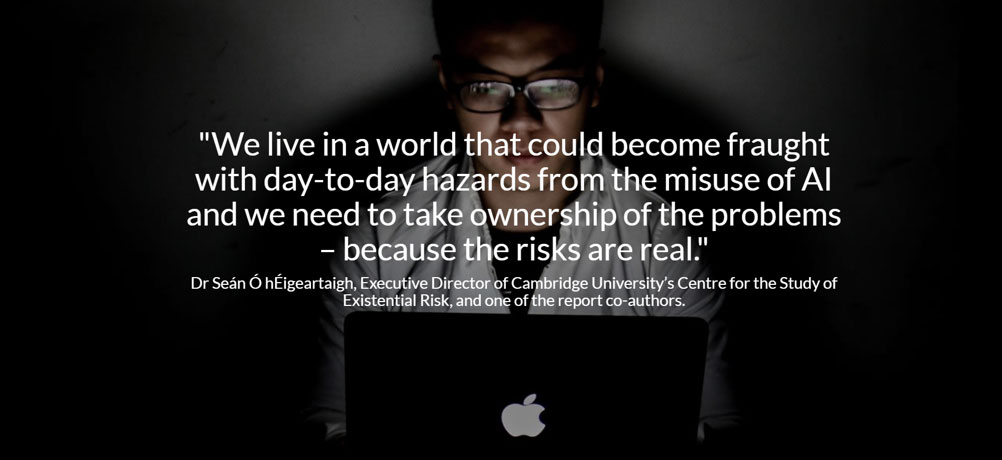
The report was written by leading researchers whose specialties varied in many fields such as civil societies and industries including Oxford University’s Future of Humanity Institute; Cambridge University’s Centre for the Study of Existential Risk; OpenAI, a leading non-profit AI research company; the Electronic Frontier Foundation, an international non-profit digital rights group; the Center for a New American Security, a US-based bipartisan national security think-tank; and other organizations. According to the University of Cambridge, their research anticipates rapid development in cyber-crime and malicious use of emerging technologies as a result of unprecedented pace of advancement. The report is considered a clarion call for governments and corporations worldwide to jointly address the present danger inherent in a variety of AI applications.

Measures to intervene the threat of these manipulations recommended in the report are:

  • Policy-makers and technical researchers need to work together now to understand and prepare for the malicious use of AI.
  • AI has many positive applications but is a dual-use technology and AI researchers and engineers should be mindful of and proactive about the potential for its misuse.
  • Best practices can and should be learned from disciplines with a longer history of handling dual use risks, such as computer security.
  • The range of stakeholders engaging with preventing and mitigating the risks of malicious use of AI should be actively expanded.

Dr. Seán Ó hÉigeartaigh – Executive Director of Cambridge’s Centre for the Study of Existential Risk (CSER) – commented: “For many decades hype outstripped fact in terms of AI and machine learning. No longer. This report looks at the practices that just don’t work anymore.”

Concerned with the potential risks of AI and Cybersecurity is also the main theme of Global Cybersecurity Day Conference hosted by Boston Global Forum this year. The conference, scheduled on December 12, 2018 is hoped to inspire the shared responsibility of the world’s citizens to protect the safety and transparency in the use of AI and Cybersecurity.

BREAKTHROUGHS IN ARTIFICIAL INTELLIGENCE COULD BE MADE BY MIMICKING KID’S MIND

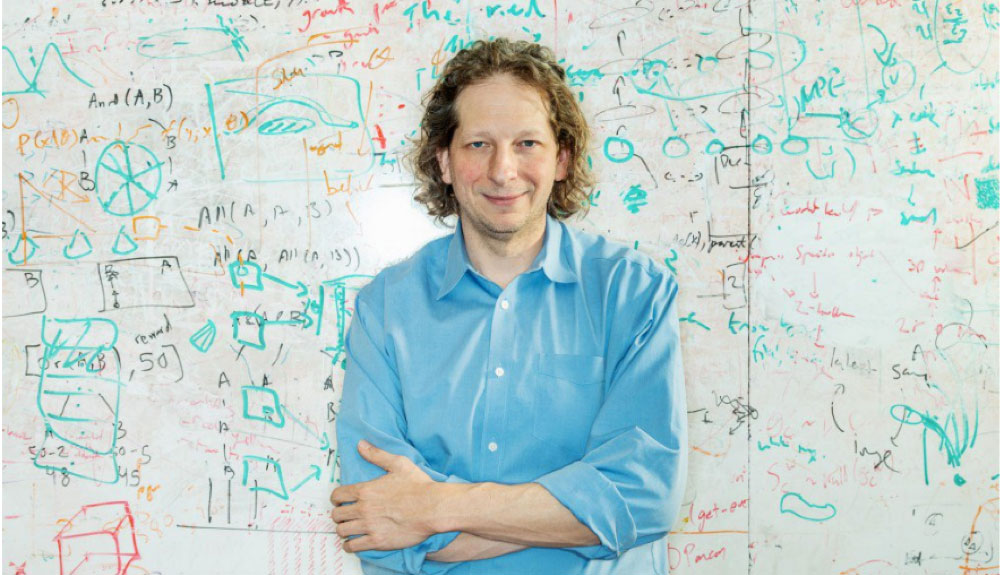
Tenenbaum’s idea is to build “a machine that starts off like a baby and that learns like a child”. He claimed all of the advances made in AI are not truly intelligent because they do not possess the flexibility, common sense, and general intelligence that a one-year-old baby has.

His team seeks deeper understanding of human intelligence, to acquire the unique learning process of humans – the thing “that makes humans the smartest learners in the known universe,” said Josh Tenenbaum. In February, he started his AI project called the MIT Quest for Intelligence. With the hope to innovate the AI industry, the project calls for life scientists, computer scientists, and engineers to join forces in discovering our own intelligence.

This project can bring about major changes for AI development all over the world, especially regarding the fact that machines can learn and acquire understanding of its surroundings in the same way humans do. On the other hand, AI will be able to learn negative things such as violence, extremism, etc. In this situation, it will be essential to develop ethical standards for AI – a set of standards for AI to follow to not cause any harm to humans. This is what MDI is trying to do in its effort to develop the AIWS initiative.

SUMMIT – THE WORLD’S MOST POWERFUL SUPERCOMPUTER WILL BE THE “PEDAL” FOR THE MAJOR LEAPS IN EVERYTHING

The new machine crafted by the U.S has the capability to perform 200 million billion calculations a second which is eight time faster than a machine called Titan, the last computer to hold U.S supercomputing speed record before the arrival of Summit.

As supercomputers are being used for everything from designing aircraft to generating materials and other research, Summit will be the first supercomputer to be running AI applications such as machine learning and neural networks. Among the programs running on the new supercomputer, there is one involved with processing a great amount of data on written records and medical images to identify the linkage between genes and cancer as well as between genes and opioid addiction, and other afflictions. In term of climate, Summit can be a helpful instrument to reproduce the weather – modeling the behavior of clouds.

It is said that it is a stepping stone for the next achievement in computing – exaflop computing (performing a billion billion calculations a second), an international competition between U.S and China to this milestone. But it is not just a national pride that’s at stake here, it should be kept in mind that it is how the machine is used and what it can contribute to the good of mankind. With the fact that the supercomputer is running on the platform of AI, with the application of machine and neuroscience, unwanted consequences can occur if we do not take the AI moral seriously. According to the first layer of AIWS 7-layer Model, the first principle for developers to follow is that all AI is created for a better world and ensures the peace, security and prosperity of human.

TESLA FOUNDER SOUNDS THE ALARM ABOUT AI BEING OUT OF CONTROL

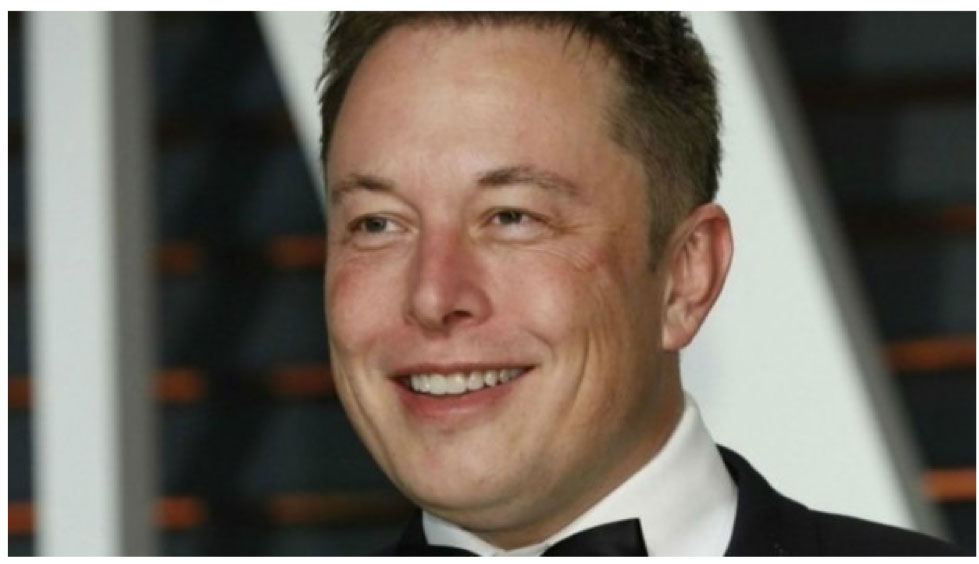
As AI is growing in an unprecedented speed and becoming more and more influential to human life, many experts and leaders have expressed their points of views on the development of AI. Elon Musk is one of those who fear for the future of our legacy.

It could take a long period to regulate AI, even while AI is rapidly developing and is already starting to change the world. It might be too late by the time AI is regulated. Musk’s point of view towards AI is not all negative. In the interview, he also mentioned a company he co-founded to create human-AI interface with the hope to effectively merge with AI and make AI serve humans well.

“I tried to convince people to slow down […] to regulate the AI. This was futile. I tried for years. Nobody listened”, said Musk to Alphr. He worries of a future when AI can become more dangerous.

In time like this, AI development needs adjustment so it won’t get out of hand; rules and principles need to be followed. This is the focus of BGF- MDI’s development of the AIWS initiative to come up with a set of moral values and norms for AI so it can become more transparent.

JAPANESE PRIME MINISTER CALLED FOR ENHANCING JAPAN’S SECURITY CAPABILITIES IN CYBERSPACE AND OUTER SPACE

Prior to the government meeting, the threat of nuclear and missile programs from North Korea was addressed in the Defense Ministry’s annual paper. In the context of the information era, technologies are emerging day by day. “It is impossible to protect our country from every threat if our thinking is limited to conventional categories of land, sea and air”, said PM. Abe.

  1. Abe’s intention is to adjust the National Defense Program Guidelines which was last approved in 2013 with a higher defense capability. In addition, he asked Defense Minister Itsunori Onodera to review the guidelines on North Korea’s nuclear weapon development and China’s military force.

Apparently, problems in cybersecurity remains one of his major interests. In 2015, the Prime Minister was named the World Leader in Cybersecurity by BGF- MDI.

THE FIRST REGIONAL LEADERSHIP SEMINAR IN THE FRAMEWORK OF ITS FLAGSHIP “YOUNG MEDITERRANEAN VOICES” PROGRAMME

On January 14th-19th, 2019, the first regional leadership seminar in the framework of its flagship “Young Mediterranean Voices” programme will be launched with the participation of top countries’ leaders of this programme. The aim is to create an exciting method for attendees to take part in the discussion on common social challenges encountered in the Mediterranean.

The seminar will give participants a chance to act as leaders or ambassadors. Then, they will present their approaches to advocacy and communication. In addition, the program’s trainees will be given direct exposure to world leaders and policy makers who are Club de Madrid’s members.