
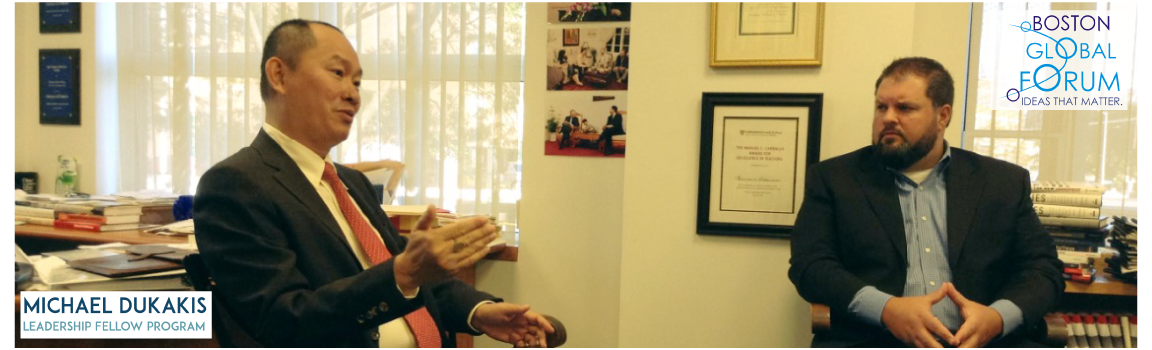
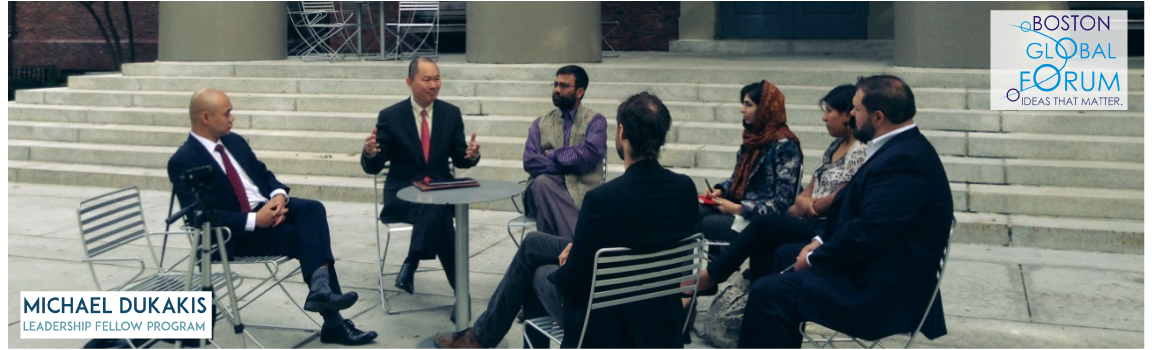
President Vaira Vike Freiberga, President of the Club de Madrid and former President of Latvia, spoke at the BGF-G7 Summit Conference on April 25, 2018 at Harvard University Faculty Club.
BGF
Vietnamese Prime Minister Vo Van Kiet in the early years of renovation
Hanoi, June 2018
By Vu Quoc Tuan
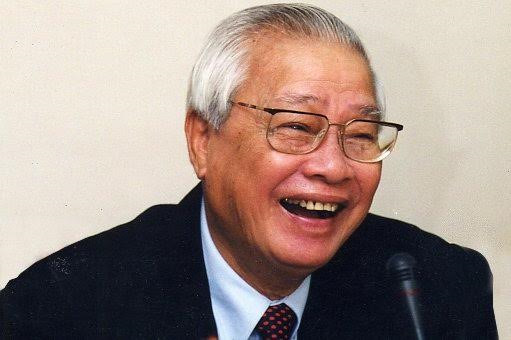
Former Vietnamese Prime Minister Vo Van Kiet
Source: Bui Tuan
I was fortunate to be the assistant of the late Prime Minister Vo Van Kiet from 1985 to 1994. He was a leader of strategic vision, determined to think and act in the cause of the country’s renovation and for the well-being of the people. He was realistic, close to the people, and kind to those around him. I write to share and record memories from when I worked with him.
A strategic vision
1. People still remember that after April 30, 1975, when the South was liberated and the country united, Vo Van Kiet was assigned to be the Chairman of the People’s Committee and then the Secretary of the Party Committee in Ho Chi Minh City. The city faced a lot of difficulties, including stagnate industrial production due to the lack of raw materials and poor agricultural production due to the unsuitable management mechanism. The State could not buy paddies, the people had to eat rice mixed with maize, potato, sweet potato, cassava, etc. Mr. Vo Van Kiet devised many measures to deal with the problems. For example, SOEs were allowed to borrow foreign currencies to buy raw materials, buy paddies from farmers at reasonable prices, etc., which was called “fence breaking.” It was contrary to the regulations of the State but solved practical issues and helped the people. The measures that he initiated in Ho Chi Minh City guided the entire country during the next few years.
Mr. Vo Van Kiet was appointed as Deputy Chairman of the Council of Ministers in 1982, assumed the role of Acting Prime Minister from March to June 1988, took the role of First Vice Premier from June 1988 to August 1991 and then was elected as Prime Minister from 1991 to 1997. These were extremely difficult years. The country had to fight against the invasion in the Southwestern border conducted by the Khmer Rouge regime (1977-1989), followed by the war to protect the northern border against the Chinese invaders (1979-1989). This was the period of an economic embargo, exhausted raw materials, stagnate production, galloping inflation. People lived extremely difficult lives, as the economic and social crisis lasted for many years. Meanwhile, the country had just started the Renovation (Doi Moi). Innovative thinking was not common in the leadership, which was mired in bureaucratic central planning thinking. Given the complex situation of the country, the new vision and decisive character of Mr. Vo Van Kiet stood out. He was a strategic thinker, always looking to find breakthroughs that could promote the country’s development. He was not stuck in old ways of thinking.
Under the direction and participation of Mr. Kiet, even in these difficult years, there were many breakthrough policies of “untying” thinking, granting the business rights to citizens and businesses. That was the abolition of the system of ordinance norms, granting business autonomy to state-owned enterprises; allowing big state-owned enterprises to import and export directly; abolishing goods circulation control stations on traffic routes, paving the way for free goods exchange throughout the country; allowing overseas Vietnamese to send and bring money to their home country, etc. Let’s talk more about two important laws: the Law on Private Enterprises and the Law on Joint Stock Companies (passed by the National Assembly in December 1990), which he directed. These two laws laid the foundations for the new private sector regulations in the 1992 Constitution (passed by the National Assembly in April 1992). At the same time, the State decided to abolish the food and foodstuff allowance for workers, civil servants, armed forces and urban population. Since 1989, prices have been set by the market. For farmers, the State removed the purchase of agricultural products at low set prices and bought agricultural products at negotiated rates. From 1990 to 1991, disorder in pricing and the distribution and circulation of goods ended, galloping inflation was reversed, and the economy gradually stabilized.
I still remember the heated discussions at West Lake (Hanoi) in mid-1989 when he organized a banking reform research team including Professor Phan Van Tiem, Lam Vo Hoang, Huynh Buu Son, etc., that drafted two ordinances, transferring from one-level banks to two-level banks (Ordinance on the State Bank, the Central Bank and Ordinance on Banks, Credit Cooperatives and Financial Companies). This was a key innovation. It separated the function of regulating monetary policy of the Central Bank and the business function of commercial banks.
Mr. Vo Van Kiet also advocated a number of other important projects such as the program of exploitation of Dong Thap Muoi and Long Xuyen Quadrangle; building a 500kV North-South Transmission Line, contributing to regulating the power volume throughout the country; building Bac Thang Long – Noi Bai route, expanding the gateway of Hanoi capital, etc.
Let’s talk about his direction to exploit Dong Thap Muoi (including three provinces: Long An, Dong Thap and Tien Giang). This was a heavily saline alkaline-stricken area with annual flooding while the irrigation system there was almost zero. Rice was annually cultivated in Dong Thap Muoi in only one crop and in certain localities, rice yield was less than 1 ton/ha. He directly met farmers, came to each field, wading through the mud to ask farmers what should be done to improve production and then he made a breakthrough decision to build the irrigation system. At that time, there were dozens of meetings to get the opinions of scientists and managers, such as Prof. Vo Tong Xuan, an agricultural scientist of the Mekong River Delta, Mr. Nguyen Gioi and Mr. HO Chin, irrigation specialists, and local leaders such as Mr. Tu Than, Sau Binh, Tu Thanh, Muoi Nhe, Bay Phong, Chin Can, etc. As a result, paddy production in the Mekong River Delta was raised from 4.6 million tons in 1976 to 16.7 million tons in 2000; and the Mekong River Delta became the largest granary in Vietnam.
The construction of the 500kV North-South Transmission Line is a testament to his strategic vision and assertiveness. In the face of objections, he wondered how to industrialize and modernize the country if power was not brought to the South. Once again, he gathered prestigious scientists to get their ideas of the best approach. They proposed “the guerrilla method”: divide the span into several sections, set the poles simultaneously, and then assemble the sections together. The 500 kV North-South Transmission Line was expected to take 4 years to build, but it was completed for two years.
Other works such as building Bac Thang Long – Noi Bai route, expanding the gateway of Hanoi, building Yen Phu dike, etc. were also directed by Mr. Kiet. For a period after the Sixth National Congress of the Communist Party (December 1986), there was tension between the renovation and the old regime. Many feared that renovation would result in the loss of socialism. Mr. Vo Van Kiet made a great contribution to the persistence of the renovation policy, not only in the theory but through concrete activities based on practical evidence and expert advice, which “untied” the people to do business, thereby overcoming in part some of the shortcomings of the bureaucratic central planning regime.
2. Mr. Vo Van Kiet was dedicated to building a truly clean and strong Party that is worthy of the love and the trust of the people.
He said that in the face of new situations and tasks, the Party could enhance its leadership by taking a pioneering role in advancing the interests of the nation. The political system, he believed, must be built on maximizing all resources of the nation for the purpose of developing and protecting the country. The Party needed to accept its historical responsibility, grasp the opportunity to unite the nation, and promote the strength of the nation to take advantage of opportunities. He believed special attention should be paid to the promotion of democracy within the Party. Democracy within the Party was, in his view, a prerequisite for drawing wisdom from the people, a “subsidy” that could propel the country forward.
An event illustrates the strategic vision of Mr. Vo Van Kiet on the the issue of building the Party. In January 1994, the 7th mid-term National Party Conference of the Communist Party of Vietnam addressed four dangers: (i) being left behind economically by regional countries, (ii) breakdown of social order and security, (iii) corruption, (iv) peaceful evolution against socialism, particularly the danger of a breakdown of social order and security. This was a period in which the Party leaders had different views on major issues such as development strategies, international integration, normalization of relations with the United States, negotiations on WTO accession, etc. Mr. Vo Van Kiet wrote an important letter on August 9, 1995 to contribute his ideas in preparation for the 8th National Party Congress (July 1996). The letter outlined four important issues for the Politburo to consider: (i) A need to understand and be integrated into the world in which we are living, (ii) Concern about breakdown of social order and security, (iii) Improving the state management capacity, and (iv) Party reform.
He saw as the biggest danger the possibility of being left behind (tut hau) economically by regional and other countries. Regarding the issue of “Breakdown of social order and security” in the administration of the country, the letter states: “It is necessary to insist on a market economy with the equal participation of all economic sectors, creating an impetus for accelerating the process of industrialization, can not only emphasize the state-owned economy as the mainstay. The danger of the breakdown of social order and security lies in illegal business practices and corruption, in the underground economy, in the mafia, etc. despite the grassroot organizations of the Party every where; the breakdown of social order and security is not elsewhere.”
In his letter, he emphasized that in order to renovate the Party, the State must select the path of democracy to maximize the strength of the whole Vietnamese people. Special attention should be paid to raising the people’s knowledge, education, promotion and protection of citizens’ rights in order to promote the nation’s strength. Regarding the Party, he saw it necessary to reform the Party’s organizations and activities to overcome serious shortcomings. The principle of “centralized democracy,” he said, should be removed because it restricts Party members’ ability to speak out against abuses. Democracy needed to be promoted in the Party to ensure freedom of thought.
For the work related to cadres, what he often wondered was how to identify talented individuals and place them in important positions of the Party and the Government. He argued that talent could only rise through democratic selection, even within the Party. If a ruling party did not reward talent, “the Party’s intellectual standards” would be lower than the people’s intellectual standards.” The Party would then be tempted to govern arbitrarily and corruption would almost certainly follow. And the Party would forfeit its chance to be a pioneering leader on behalf of the people.
Mr. Vo Van Kiet emphasized the personal responsibility of the head of organizations as a way to overcome bureaucratic deficiencies. Responsible managers would not only limit the damage caused by corruption and waste but also increase the effectiveness of the law and the effectiveness of the Party’s efforts. At the first session of the 9th National Assembly (October 1992), after the list of new cabinet members was approved by the National Assembly, in his speech as Prime Minister, he emphasized personal responsibility, affirming that any member of the Government must resign or be dismissed if he/she failed to fulfill his/her duties or was involved in corruption, smuggling or other serious violation. Exchanging with the press later, he continued to say that a failure to demand personal responsibility was a major problem. Without a uniform demand of personal responsibility, people making serious mistakes will not be disciplined and will remain safe in office. Without an insistence on personal responsibility, the Government will not elevate the most talented and disciplined to positions of leadership.
Mr. Vo Van Kiet repeatedly stressed that the strength of national unity, freedom, and democracy was the biggest and most valuable lesson in his revolutionary life. This was the source of the country’s successes from the earlies times. It was the way to win over the people’s’ heart for the cause of national reconstruction, the endless source of creative strength of the nation in the cause of industrialization and modernization. This idea was prominently displayed in his famous speech at the first overseas meeting during the New Year of Chicken (February 1993): “National consciousness and patriotism, unity, mobilization of all Vietnamese towards the goal meeting aspirations of the entire people which is to realize the prosperous people, the wealthy country, to advance to a modern society that is truly democratic, benevolent with culture and discipline, to abolish oppression and injustice, faciliating the people to have a good life, freedom and happiness. That goal harmoniously combines the interests of each person with the common interests of all people. Patriotism, solidarity, national harmony are the same heart, working together to achieve that goal, overcoming differences, including differences in the political view.” He emphasized that “even differences in the political view” by overseas Vietnamese were welcome. His thinking about national harmony and national reconciliation was very clear. In an interview with the press, he said: “The motherland is ours, the nation is ours, the country is ours; the motherland of Vietnam doesn’t belong to one person, one party or one group only”.
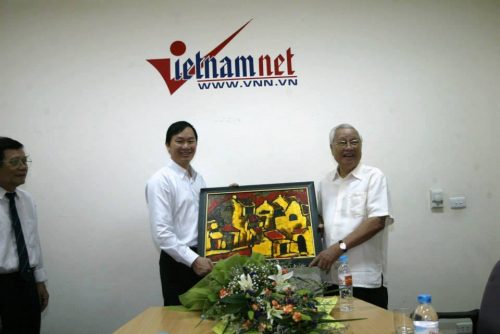
Former Prime Minister Vo Van Kiet and Mr. Nguyen Anh Tuan, Director of Michael Dukakis Institute.
Source: MDI
Closely follow the evidence and listen to experts
Mr. Vo Van Kiet was a leader who sought new ways of doing things and did not depend on dogmatic theories. He did not speak or write by substituting “slogans” for thought. The policies he initiated and directed were rooted in research combined with experts’ advice.
At the time, northern researchers used the words of Marx or Lenin to prove their argument. I also had that habit. He told me that he liked theories but they must be based on the reality. Marx and Lenin lived years ago in the West, so their theories might not fit the reality of our country. He studied our country’s reality, so that the policies he adopted applied to the reality of our lives. At the same time, he told us to always monitor, observe the situation of countries in the region, especially those who share the same situation with our country, try to learn from what works for them. Perhaps because of this reason, while visiting and working abroad, with modest attitude, humility, and a desire to learn, Mr. Kiet was honored by foreign leaders, even though our country had not yet opened itself fully to other countires.
Given his respect for evidence, when he was appointed as the Chairman of the State Planning Commission in 1982, he spent a year traveling to provinces, districts, even communes and cooperatives in the North and the Central to learn from their ideas and experiences. His work was assigned to the Standing Vice Chairman. He then spent a day introducing to the key ministries of the State Planning Commission the results of his survey. He pointed out the shortcomings of the bureaucratic central planning regime, where norms were imposed by higher levels, forcing subordinates to perform mechanically, resulting in fake achievements. More importantly, the regime eliminate initiative and creativity from the people. He proposed a number of measures to reform the planning process, for example, the use of evidence and respect for the creativity of the people.
A virtue of Mr. Vo Van Kiet was “listening.” He was one of those rare leaders who are close to the people and beloved by them. This was because he was a resilient soldier, always struggling for the renovation for the sake of the country and the people. As well, during his life, he was always close to the people, listening to the voice of many classes with the kindness that they saw in him and that he saw in them. He understood the difficulties of the people, listening to their opinions, “living in the heart of the people.” The policies he pursued were developed with people’s interests in mind, and they loved him as a result.
Mr. Vo Van Kiet respected intellectuals and sought out their views. He said that the greatest of all resources was the human resource. If human power was gathered, all other resources could be gathered; if human power was not gathered, all other resources would pale. He said that in today’s world intellectuals are society’s leading resource. In seeking to develop a country, it is impossible to rely solely on enthusiasm and will. No leader can understand every economic, cultural, scientific and technical issue. They must rely on experts, which requires involving them in tasks where what they know is invaluable. A leader is not just someone who can win over the people. A leader must also be able to recognize intellectual talent and how to use it effectively.
For that reason, Mr. Vo Van Kiet established consulting organizations. During his tenure as a leader in Ho Chi Minh City, he and the City’s Party Committee established in 1980 a Club of Directors, consisting of several directors, party secretaries, and secretaries of trade unions of state-owned enterprises chaired by Mr. Vo Thanh Cong, a member of the Standing Committee of the City. This club contributed many recommendations, everythng from the practices of the establishment to the formation of policies on management innovation in the city’s state-owned enterprises. Then, in 1976, while being the Secretary of the Party Committee in Ho Chi Minh City, he established the Economic Office of the Secretary of the City’s Party Committee, consisting of economists trained in the socialist regime and experts who worked in the former Saigon administration, led by Dr. Nguyen Xuan Oanh, who was a former Governor of the Bank, Deputy Prime Minister and Acting Prime Minister of the Republic of Vietnam. This office provided many recommendations on the city’s economic, industrial, financial and monetary strategy in the early years of liberation. In 1985, in Ho Chi Minh City, the “Friday Group” was formed (this group was named because the group often met every Friday), including economists such as Phan Chanh Duong, Lam Vo Hoang, Phan Tuong Van, Tran Ba Tuoc, Huynh Buu Son, etc. who were enthusiastic and qualified and had held high positions in the Republic of Vietnam. This group was commissioned to study many subjects, including price-wage-money reform. From the time he left Ho Chi Minh to come to the Central (in 1982), he continued to meet and exchange ideas with the above-mentioned organizations whenever he worked in Ho Chi Minh City; he also sent me as an Assistant to meetings to convey his requests and report back to him the findings and recommendations of these organizations.
Let me discuss the “Consultative Group for Economic Reform and Public Administration Reform” (referred to as the Consultative Group for Reform) that was established in 1993 by Prime Minister Vo Van Kiet. It was a direct consulting organization that assisted the Prime Minister in planning reform programs for each period, in recommending policies and guidelines in the spirit of renovation, and participating in drafting or reviewing legal documents on reform. The Consultative Group for Reform was chaired by Minister Le Xuan Trinh, Chairman of the Office of the Government, along with many experts, mostly intellectuals in economics and law, including economic professors and doctors living and working abroad, namely United Nations statistical expert Vu Quang Viet in the United States, banking expert Tran Quoc Hung in Germany and economic Prof. Tran Van Tho in Japan. After three years of operation, in 1996, the Consultative Group for Reform was reformulated as the “Research Group for Economic, Social and Administrative Reform” in order to streamline the organization and improve its operational efficiency. At this time, the group was also given the task of editing documents at the request of the Prime Minister, mainly the reports and proposals presented by the Prime Minister to the National Assembly, the Central Committee of the Party, and the Politburo. Two years later (1998), the organization was upgraded to be “the Research Board of the Prime Minister” by Prime Minister Phan Van Khai with the right to be more active in terms of personnel, funding and cooperation with domestic research organizations and experts or foreign agencies and experts. In July 2006, the Research Board was dissolved.
At many meetings with the above-mentioned consulting organizations that I attended, Mr. Vo Van Kiet listened to them closely and took detailed notes. He asked for explanations of things he did not know or understand, questioned opintions he found unsatisfactory, and instructed those who lacked information. He liked to work with people who offered opposing opinions. His openness appealed to intellectuals, not just those in the state apparatus but those who had high positions in the Republic of Vietnam or worked outside the country. They trusted him and therefore gave him their heartfelt views rather than saying what they thought he might want to hear.
Mr. Vo Van Kiet was also very open with artists, writers and journalists. I attended some of the meetings, talking intimately with writer Nguyen Quang Sang, poet Nguyen Duy, musician Trinh Cong Son, journalist Thai Duy, etc. They were a channel through which he could hear about the concerns of artists and the people. They also met over drinks with him and his close friends. He inspired their art during difficult years of crisis. I listened to a poem that the poet Nguyen Duy “boldly read” for him in which there were quite heavy criticisms. He was very moved, saying this is the truth, faults of our regime that we must admit. He often reminded me to keep close relations with the press, inform reporters about the activities of the Government, and provide reporters timely feedback on public opinion. He often said that the press must be the voice of the people, especially the attitude of the people towards the policies and guidelines of the the Party and the State.
Mr. Vo Van Kiet also made me deeply aware of his special trust in the young. In 1977 when Ho Chi Minh City was just liberated, his insightful statement, “No one can select their parents” helped the younger generation of the city to realize their future because many young people suffered from stigma or discrimination owing to family involvement in the Republic Vietnam. His statement prompted thousands of young people to plunge into rebuilding the city. Many brothers in Ho Chi Minh City told me the passionate atmosphere of the youth of the City when the Secretary of the Party Committee Vo Van Kiet launched the movement “the Youth volunteers to overcome the consequences of the war, building the wealthy country” in March 1976. They volunteered to go to the irrigation works and new economic zones such as Le Minh Xuan, Pham Van Hai, and Pham Van Coi. At that time, he encouraged them very practically and also very emotionally: “No young people can’t be moved by the song’s sentence “If you are human, I will die for the country.” Today’s hometown, he said, does not require every young person to die for it. Rather it requires him or her to live and live meaningfully. That sentence should be corrected as “If I am a man, I have to live for the homeland.” Living is not parasitic, living is to work”.
At the time of constructing the 500kV North-South Transmission Line, Mr. Vo Van Kiet put his trust in the youth. Not only on the whole line, the young people were the main force in the construction of electric poles, pulling wire, etc. Many sections were assigned to the Ho Chi Minh Communist Youth Union or the Da Nang Youth Volunteers Association. I remembered very well the days when he and I climbed to the high mountain peaks to inspect the construction of electric poles and pulling of the wires. The young people gathered around “uncle Sau” like a family member. During a visit to the people constructing the Line on occasion of the Lunar New Year, he kindly talked with every person, asking them about their family, about the food and drinking water, reminding them of the cakes on Tet holiday. They cheered him.
He regularly assigned me to contact the Central Committee of the Ho Chi Minh Communist Youth Union and hold meetings with the Ho Chi Minh Communist Youth Union for him. I was there to advance his ideas, especially those relating to the ideal education of the young. In those years, he officially assigned the Central Committee of the Ho Chi Minh Communist Youth Union to implement the Rural Water Supply and Sanitation Program. He also applauded the establishment of the Young Talent Fund, which was proposed by the Central Committee of the Ho Chi Minh Communist Youth Union. He accepted the position of Honorary President.
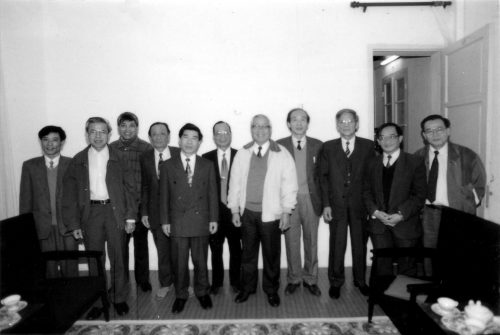
Prime Minister Vo Van Kiet and his advisers, including Mr. Vu Quoc Tuan (standing on the right).
Source: Vu Quoc Tuan
After the end of his tenure of the Prime Minister, Mr. Vo Van Kiet was invited to be an Advisor to the Central Committee of the Communist Party of Vietnam from December 1997 until April 2001. From then until the end of his life, he continued to visit localities, conduct surveys, meet experts (including experts in the Prime Minister’s Research Board), and contribute ideas to the Party and the Government in the fields of economy, society, foreign affairs, and especially on the adjustment and renovation of the Party. He fell ill and died (June 11, 2008) while preparing to go to the Netherlands to learn how flood control measures could be applied to the Mekong River Delta.
Mr. Vo Van Kiet was one of the outstanding contributors to the cause of renovation in Vietnam. Let’s look at the assessment of the late Prime Minister Pham Van Dong – who served as Prime Minister for 32 years, from 1955 to 1987: “Among the Prime Ministers of our country, Uncle Ho served as Prime Minister for the first 10 years of the new regime, no one is as good as Uncle Ho. The remaining 5 Prime Ministers, including me, Mr. Pham Hung, Mr. Do Muoi, Mr. Vo Van Kiet and Mr. Phan Van Khai, Mr. Vo Van Kiet is the one doing most for the nation.”
There is a need today for outstanding leaders like the late Prime Minister Vo Van Kiet. Vietnam is at a fundamental turning point in its economic development and economic integration. The country needs strategic leaders like Vo Van Kiet who dare to speak honestly and act assertively, not to promote themselves but to promote the prosperity of the nation and the happiness of the people.
Remarks by Governor Michael Dukakis during the presentation of the: World Leader in AIWS Award to Angel Gurria


Agenda of BGF-G7 Summit Conference 2018
Watch live streaming
TIME: 8:30 am – 12:00 pm, Wednesday, April 25, 2018
VENUE: Harvard University Faculty Club, 20 Quincy Street, Cambridge, MA
AGENDA:
- Opening Remarks by Governor Michael Dukakis, Chairman of Boston Global Forum and Michael Dukakis Institute for Leadership and Innovation
- G7 Summit 2018 in Canada by David Alward, Consul General of Canada
- Announce AIWS Standards and Practice Committee and Present the BGF-G7 Summit Report to G7 Summit 2018 by Governer Michael Dukakis
- Ethical Frameworks – View from Leders by President Vaira Vike Freiberga, President of the World Leadership Alliance – Club de Madrid and former President of Latvia
- Ethical Frameworks in AIWS by Prof. Max Tagmark, MIT, and Prof. John Savage, Brown University
- SAM, the First AI Politician by Walter Langelaar, Co-founder of SAM
- The BGF-G7 Summit Report: 7 – layer of AI World Society for AI Governance by Prof. David Silbersweig, Harvard University and Ramu Damodaran, Chief Academic Impact, United Nations
- Discussion: Moderator – Governer Michael Dukakis
- Announce and Honor Secretary General of OECD Angel Gurria as World Leader in AIWS Award by Governor Michael Dukakis
- Secretary General of OECD Angel Gurria’s Speech
- Announce: Program “Distinguished Innovation Leaders” by Governor Michael Dukakis
- Closing Remarks by Governor Michael Dukakis.
—–
Full agenda and our speakers and discussants, please download HERE
The BGF-G7 Summit Report
The AIWS 7-Layer Model to Build Next Generation Democracy
The Artificial Intelligence World Society (AIWS) is a set of values, ideas, concepts and protocols for standards and norms whose goal is to advance the peaceful development of AI to improve the quality of life for all humanity. It was conceived by the Michael Dukakis Institute for Leadership and Innovation (MDI) and established on November 22, 2017. The World Leadership Alliance – Club de Madrid (WLA-CdM) and the Boston Global Forum (BGF) are partnered with the MDI to collaborate and develop the AIWS initiative. The President of WLA-CdM, Vaira Vike-Freiberga, serves as co-chair of AIWS activities and conferences along with Governor Michael Dukakis.
Contributors to this document are Michael Dukakis, Nazli Choucri, Allan Cytryn, Thomas Patterson, Tuan Anh Nguyen, Derek Reveron, and David Silbersweig.
Download the BGF-G7 Summit Report here
Global Cybersecurity Day 2017: Principles for a Cyber Defense Strategy
Derek S. Reveron, Jacquelyn Schneider, Michael Miner, John Savage, Allan Cytryn, and Tuan Anh Nguyen.

Threat Landscape
The past two years were a watershed for cyber-attacks. From the Russian-led hacking campaigns in the European and American elections, to the spread of ransomware WannaCry and Petya, to the massive data breaches against credit agency Equifax—never before have cyber-attacks had such a significant effect on national security, economies and cultures. Although attacks in developed countries often occupy the headlines, developing countries are also suffering attacks.
In addition to the political and economic implications of cyber-attacks, major infrastructures — electric grids, dams, wastewater, and critical manufacturing — are vulnerable to physical damage from cyber-attack. The U.S. Department of Homeland Security’s Industrial Control Systems Cyber Emergency Response Team says it has never seen so many successful exploitation attempts on the control system layer of industrial systems. Hackers are increasingly infiltrating the networks of major industrial operations all the way down to the sensors and systems that manage our digitized worlds.
And the actors that conduct these attacks are just as prolific and varied as their targets:
- Transnational organized criminal groups harness the power of the internet to steal identities and conduct financial crimes. They have also been tied to nationalist and state hacker groups.
- Terrorist organizations use cyberspace to recruit fighters and promote physical acts of terror. They are increasingly prolific criminals as well, using financial attacks to buttress their funding.
- Nation states employ cyber tools for espionage to lay the groundwork for significant military operations in cyberspace and launch campaigns to steal intellectual property. North Korea— a major conventional adversary—has used cyberspace operations to steal money from banks, to threaten a private film company, and to disrupt South Korean news organizations.
The pace of cyber-attacks and the increasingly large-scale effects created by them suggest that these cyber actors are getting stronger and bolder and that the entry barriers to perpetrate cyber-attacks continue to lower. Even non-technical adversaries can hire ―hacking as a service.
If the trends continue, we can expect significant disruptions to critical infrastructure, severe financial impacts, and potential loss of life. With the proliferation of smart technology and the Internet of Things, the attack surface for cyber operations only expands. At risk from these cyber threats are not just individuals or military units, but the increasingly digitized critical infrastructure that undergird modern states’ economies and societies. A recent estimate from the private insurer Lloyd’s of London estimates a major cyber-attack could cost over $50 billion.
Perhaps because of the diverse nature of threats and the constant barrage of cyber-attacks, governments have struggled to create the strategies and tools needed to successfully deter and defend against cyber operations. Governments have been taking steps either bilaterally like the 2015 agreement between the PRC and US limiting intellectual property theft or multilaterally through the UN, G20, and G7 that produced the 2001 Budapest Convention on Cyber Crime and the UN Group of Governmental Experts to study information security.
Overall, international law and norms are developing slowly, but have proven to be insufficient to safeguard these necessities that citizens universally require. Developed countries are better positioned than developing countries. Cyber-insecurity cuts across many dimensions and simultaneously crosses from technology into political, economic, and social realms. More than ever, citizens, regardless of nationality, are exposed to risks created by cyber insecurity. Both public opinion polling and global intelligence agencies’ assessments place cyber security as a leading national security challenge and a pressing concern for citizens and policymakers alike.
Role of National Security Strategy
Cyber infrastructure is at the heart of essentially every aspect of modern life: including telecommunications, financial systems, energy, transportation, defense and other critical sectors. The more open a society, the wider the attack surface with vulnerabilities that require defense. Information sharing centers and organizations have proven an effective means to bring stakeholders together, but national security challenges remain in cyberspace.
No longer just a nightmare scenario, a December 2015 attack against a Ukrainian power plant made clear that code can be weaponized. The attack resulted in 225,000 people being without electricity for a period of time. The Ukraine experience demonstrates cyber-attack is a practical instrument that can wreak havoc on civilian populations. Governments should focus not only on preventing such attacks, but also preparing contingency plans and developing resilient societies. Though currently a low probability of occurrence in peace-time, the future is uncertain. Such high-impact events will likely emerge during war-time and perhaps even before. Frighteningly, such attacks might be the surprise attack that launches a war.
As countries grapple with the challenges of cyber defense, they are guided by several interests. First, governments must work to prevent, deter and reduce the threat of a cyber-attack on critical infrastructure since the impact on its society and civilians would be significant. Second, given the wired nature of the global economic system, governments must ensure stability and resilience of major systems that know no borders and extend around the globe. Finally, governments must protect their citizens from external aggression, which can be preceded by a cyber-attack against civilian infrastructure from state or non-state actors.
How can governments build national cyber strategies that accomplish these objectives? Structural goals can support a viable cyber defense strategy. First and foremost, governments should streamline cyber operations by reducing bureaucratic complexities and duplicative responsibilities to maximize time and efficiency. There are many good examples in developed countries that can be emulated.
Among these are: overcoming the inherent insecurity in legacy systems, updating archaic and territorial bureaucratic mechanisms in order to improve information sharing, and aligning cyber capabilities with emerging threats.
Additionally, it is essential to induce public support for a cohesive national approach to cybersecurity. Most network vulnerabilities are exploited as a result of human error or negligence. Although cutting-edge hardware, smart programming (and grids), and artificial intelligence could mitigate vulnerability gaps in the future, they will never close them all. Strengthening digital literacy and education across national populations as a foundational element of national cyber defense can enhance whole-of-government efforts in combatting cyber-attacks from the individual to the systemic level.
Lastly, collaboration with the private sector is not only a preferable course of action, but a necessary one. Developing policies to harness the talent and cooperation of the private sector will be a decisive factor for a cyber defense aligned with the interests and values of the society they are entrusted to
defend.
Principles for a Cyber Defense Strategy
By creating standards and promoting information sharing, governments are assisting industry to improve cybersecurity. Given the scope of critical infrastructure, there is no way that any government can create the capabilities or institutions to defend against all attacks. Additionally, each country has its own laws, cultures, and expectations of government that guide strategic development. Nevertheless, there are basic principles that all governments can follow:
Characterize threshold for action. What do we care about? If states understand when actors view cyber-attacks as national security incidents, then they can create more tailored deterrence strategies. At the same time, understanding adversaries’ thresholds for action allow states to combat threats with counter-cyber operations that stay under the threshold for escalation.
Resolve hack back authority. Governments attempt to control subversive cyber behavior within their borders with prohibitions against hacking. But there are strong incentives (both technical and economic) for companies to pursue some level of hack-back against cyber attacks. To avoid escalation and misinterpretation, governments must retain the monopoly on legitimate use of force – both kinetic and cyber – preventing companies from conducting unilateral actions. But to ensure that all of a country’s resources are engaged to maximum effect without risk of unintended consequences,
the respective roles of government and industry need to be clear and aligned. Israel, for example, has clearly delineated that Cyber-Defense is in in the civil sector and led at a senior governmental level, while cyber-offense is left to the defense organizations.
Connect national and local governance. Local responders are generally the first (and quite often the only) government aid to remediate the effects of critical infrastructure attacks. This requires strong connections between national entities and local governments. Governments should work together to identify and remove barriers for information sharing in order to ensure that national and local responders have full access to the problems that they are defending against and responding to.
Collaborate across borders. International collaboration has proven to be effective in many realms, including regional and national security. Governments should lead efforts based on these many successful precedents should be undertaken to enable nations to collectively work to enhance their cyber security.
Facilitate cooperation across critical sectors. The US government has successfully sponsored information sharing centers and organizations within sectors, such as finance and electricity distribution. These models should be extended to address the complex interdependencies among sectors. Government and industry should continue to work together to determine how best to promote and enable working groups of executives across industry sectors, advisory boards, and routine gatherings between government officials and the private sector to address cyber vulnerabilities and dependencies.
Engage the civilian information technology sector. Given that cyberspace is a civilian space, it is important to engage vendors of cyberspace technology in the discussion of norms for responsible state behavior. Corporations such as Microsoft are promoting norms. States should take these nascent efforts seriously. More broadly, government is encouraged to bring technology experts to the table when formulating cyber defense. Government should also reflect on how to better fund cyber defense research and incubate software technologies that enable defense.
Empower digital literacy and education. The most frequent cyber threats occur at the day-to-day individual level. While larger systemic threats are less frequent, though they hold the potential for greater impact. Governments can harness education to mitigate individual threats and simultaneously harden attack vectors toward greater systemic threats.
Practice comprehensive resilience. A long-term cyber defense strategy requires ongoing short-term resilience planning. Efficient standard operating procedures, redundant systems, and competence building exercises can inject trust in the safety of our systems and enhance the public-private sector partnership. A resilient society can also better deter or respond to cyber-attacks. Governments can lead by encouraging resilience training in the information technology and related sectors.
Build partnerships among developed and developing countries. Developed countries are pursuing important standards and generating norms to improve information security. Developing countries, however, often lack the resources to do so. Nations should extend traditional alliances and partnerships designed to promote international peace and security to ones that promote information security.
Next Steps
The most concrete step a state can take for cyber defense is to articulate a comprehensive cyber defense strategy. This must recognize the unique nature of the cyber realm, where there are no natural barriers – borders, distance, or geography – to attack. Plagued with the constant pace of assaults, states have spent too much time responding to the near-term threats without crafting longterm strategies to change the threat landscape.
Cyber defense strategies that identify vital country assets and policy short-falls and that prioritize resources are vital to successful defense. These strategies must extend into the promotion of the cyber-IQ of the nation’s population, from personal awareness of safety through social and corporate responsibility. In turn, a well-crafted cyber defense strategy will lead to the development of appropriate institutions, authorities, and capabilities for the entire nation. This also requires sharing best practices for designing and maintaining computer systems. In turn, governments must invest the time and resources to develop effective regulation for critical data and sectors.
Internationally, cyber defense must be tackled beyond the state level. There are many important efforts by OECD, OSCE, ENISA, NATO, and SCO. Additionally, NGOs such as the Boston Global Forum, East-West Institute, the Bildt Commission, and the Global Commission on Cyberspace Stability should continue to promote the development, identification, sharing and adoption of best practices in the cybersecurity arena with particular focus on developing countries. Developing countries should make investments to secure their infrastructure; this is essential to security and preventing a widening gap in the capabilities of nations. These investments are essential to reducing costs resulting from cybercrime and espionage and to increasing the confidence and trust of businesses to operate in developing countries.
Acknowledgments
The authors would like to thank Michael Dukakis, Thomas Patterson, and all other members of the Boston Global Forum for their support and coordination of this endeavor. These are the views of the authors and do not reflect official policy.
AIWS Initiative
The AI World Society Initiative (AIWS), was conceived by the Michael Dukakis Institute for Leadership and Innovation on November 22, 2017 as a way to build a social model that will make Artificial Intelligence (AI) safe, trustworthy, transparent, and humanistic.
AI World Society is not an organization. AIWS is a set of ideas, concepts, standards, norms, models, and innovations.

1. AIWS – An Artificial Intelligence Initiative for Humanity
Artificial Intelligence (AI) is changing the world we live in, from work to recreation, from healthcare to education, from governance to social interaction. AI applications are growing in number and usefulness, as the technology works its way into nearly every aspect of our lives.
On November 22, 2017, the AI World Society (AIWS) was conceived as a pioneering initiative of the Michael Dukakis Institute for Leadership and Innovation. The goal is to inform thinking about AI so that it can contribute to the good of society—now and well into the future.
The unpredictability of the Internet, computer operating systems, networks, and computer applications have often led to cyber security failures. AI’s impact on society suggests a need to establish technical standards, institutions, and norms to ensure AI’s safe implementation and give it an ethical foundation.
2. Mission and Goal
AIWS as a loosely structured cooperative for the encouragement of new ideas, concepts, standards, norms, models, and innovations relating to AI.
AIWS has two overarching objectives:
- Minimize AI’s potential for harm and threats to humanity.
- Promote the utilization of AI in ways that benefit society and serve the needs of local, business and social communities, as well as those of nations.
3. AIWS Initiatives
The founders of AIWS are Professor Michael Dukakis, president of the Michael Dukakis Institute and former Governor of Massachusetts, and Nguyen Anh Tuan, director of the Michael Dukakis Institute and former Editor-in-Chief of VietNamNet.
AIWS seeks to:
- Establish an AI ethical framework;
- Promulgate international standards and norms for AI development and implementation;
- Develop a framework for AI social governance;
- Promote the benefits of AI, particularly in regard to governance and society;
- Create AI products and services that accord with AIWS goals.
4. Open Cooperation Mechanism
The initiatives will be managed by the AIWS research team in Greater Boston, and expanded worldwide through email, live seminars and forums, The AIWS Newsletter, discussion on Minds.com and social networking.
AIWS will organize periodic roundtable discussions chaired by Michael Dukakis. Participants will include AI developers, thought leaders, innovators, artists, and leading AI authorities.
AIWS will recognize through awards those who make exemplary contributions to AI that are aligned with the goals of AIWS.
Scholars and thought leaders from the following organizations, among others, are expected to contribute to AIWS’s work: Minds.com, Google, Intel, Political Science Department – MIT, MIT Media Lab, MIT – Department of Neuroscience, Harvard Kennedy School, Harvard Medical School, Ethics Institute – Northeastern University, Computer Science Department – Tufts University, Viettel, SunViet, VietNamNet, Vietnam Report, Vietnam Cheo Theatre, and Vietnam Digital Association, and Vietnam Ministry of Public Security.
Mr. Nguyen, AIWS’s Director, notes: “This is an open project. We encourage leaders and influentials with an interest in AI to join in the effort and we invite the participation of scholars, government and business leaders, technologists, artists, and students.”
IAN GOODFELLOW

Ian Goodfellow (PhD in machine learning, University of Montreal, 2014) is a research scientist at Google. His research interests include most deep learning topics, especially generative models and machine learning security and privacy. He invented generative adversarial networks, was an influential early researcher studying adversarial examples, and is the lead author of the MIT Press textbook Deep Learning. He runs the Self-Organizing Conference on Machine Learning, which was founded at OpenAI in 2016.
He was named as one of 35 Innovators under 35 by MIT Technology Review. He wondered if two neural networks could work in tandem and invented a way for neural networks to get better by working together. “You can think of generative models as giving artificial intelligence a form of imagination,” Goodfellow says.
ADRIENNE FELT

Adrienne Felt leads Chrome’s usable security team. They are responsible for building (and improving) browser security features that we can see, like security indicators, browser warnings, and permissions. One of her major initiatives is promoting HTTPS: increasing HTTPS adoption among developers and explaining its value more clearly to end users. She does a mix of frontend work (building UI), experimental design, large-scale data analysis, and managing.
Previously, she was a research scientist on Google’s security research team. Before she got to Google, she earned a PhD in Computer Science from UC Berkeley.
In 2017, she was named as one of 35 Innovators under 35 by MIT Technology Review by leading the push for a more secure Internet.