Today’s financial systems are not trusted by citizens because they are inherently unstable and winner-take-all, so for most people the system offers only failure. Today, new digital technologies allow the fine-grain feedback needed to build systems that are dramatically more stable, which reward everyone’s contribution to society, and provide everyone with a realistic opportunity to build a good life.
Professor Alex Pentland, Faculty Founding Director of MIT Connection Science, Mentor of AI World Society Innovation Network (AIWS.net), and a co-author of the Social Contract 2020, has conceived the “Trustworthy Economy”, based on data science, digital technologies and AI. This is very meaningful for the UN 2045 Initiative.
The United Nations Academic Impact and the Boston Global Forum co-organize the UN 2045 Roundtable “Building a Trustworthy Economy” at 10:00 AM EDT, July 24. The keynote speaker is Professor Alex Pentland, MIT, and the moderator is Ramu Damodaran, Chief of Academic Impact of the United Nations, and Editor-in-Chief of UN Chronicle Magazine. AIWS.net hosts this event as an AIWS Roundtable.
The History of AI Initiative considers Trustworthy Economy a History of AI event also.
The upcoming Spanish translation of “The Book of Why” was announced in July, 2020. It has been shown that the current data-fitting direction taken by “Data Science” is temporary, that the future of “Data Science” lies in causal data interpretation and that we should prepare ourselves for the backlash swing.
Much has been said about how ill-prepared our health-care system was in coping with catastrophic outbreaks like COVID-19. Yet viewed from the corner of my expertise, the ill-preparedness can also be seen as a failure of information technology to keep track of and interpret the outpour of data that have arrived from multiple and conflicting sources, corrupted by noise and omission, some by sloppy collection and some by deliberate misreporting, AI could and should have equipped society with intelligent data-fusion technology, to interpret such conflicting pieces of information and reason its way out of the confusion.
Speaking from the perspective of causal inference research, Professor Judea Pearl has been part of a team that has developed a complete theoretical underpinning for such “data-fusion” problems; a development that is briefly described in Chapter 10 of The Book of Why. A system based on data fusion principles should be able to attribute disparities between Italy and China to differences in political leadership, reliability of tests and honesty in reporting, adjust for such differences and automatically infer behavior in countries like Spain or the US. AI is in a position to to add such data-interpreting capabilities on top of the data-fitting technologies currently in use and, recognizing that data are noisy, filter the noise and outsmart the noise makers.
“Data fitting” is frequently use to characterize the data-centric thinking that dominates both statistics and machine learning cultures, in contrast to the “data-interpretation” thinking that guides causal inference. The data-fitting school is driven by the faith that the secret to rational decisions lies in the data itself, if only we are sufficiently clever at data mining. In contrast, the data-interpreting school views data, not as a sole object of inquiry but as an auxiliary means for interpreting reality, and “reality” stands for the processes that generate the data.
“The Book of Why” book from Professor Pearl was highly acclaimed with the praise by Dr. Vint Cerf, Chief Internet Evangelist at Google Inc. and World Leader in AI World Society (AIWS) award, “Pearl’s accomplishments over the last 30 years have provided the theoretical basis for progress in artificial intelligence… and they have redefined the term ‘thinking machine.'” In 2011, Professor Pearl also received the Turing award from Association for Computing Machinery (ACM), which is the highest distinction in computer science, “for fundamental contributions to artificial intelligence through the development of a calculus for probabilistic and causal reasoning”. His work will contribute to AI transparency, which is one of important AIWS topics to identify, publish and promote principles for the virtuous application of AI in different domains including healthcare, education, transportation, national security, and other areas.
The European Court of Justice this week sided with the Austrian privacy advocate Max Schrems and found that “Privacy Shield,” the framework for data transfers from Europe to the United States, does not protect the personal information of Europeans. The decision will have far-reaching implications for trans-Atlantic trade, tech, data protection, and democratic governance. To continue transfers of personal data from Europe to the US — key to the continued growth of the US tech industry — the US will need to update domestic privacy laws and establish a data protection agency. Several bills now pending in Congress would do this, though the prospects for passage in an election year remain unclear.
This is the second successful challenge that Schrems has brought to the Court of Justice. In 2015, the Court struck down “Safe Harbor” after Schrems argued that the first EU-US framework lacked sufficient safeguards for personal data. US and EU negotiators then put together Privacy Shield, but many doubted the Court of Justice would endorse the revised data transfer policy, particularly after Europe enacted the General Data Protection Regulation, a comprehensive new privacy law to protect the personal information of Europeans.
The “Schrems I” decision arose in 2015 against the backdrop of the 2013 Snowden disclosures and concern that US intelligence agencies had too easy access to the personal data gathered by US tech firms. These concerns remain in the European Court’s opinion in “Schrems II.” Current US surveillance law contains few safeguards for non-US persons and the US remains one of the few democratic countries in the world without a data protection agency. But the second Schrems decision appears in 2020 when there is also growing concern about the fairness of Artificial Intelligence techniques, the unregulated use of face surveillance, and the recognition that mass surveillance curbs democratic freedoms and solidifies authoritarian governments. Europe itself has made strengthening democratic institutions and adherence to the rule of law top priorities over the next several years. So, the impact of the Schrems II decision will likely reach beyond EU-US relations. Other governments also collect and process the personal data of Europeans — the decision of the European court will have global consequences.
The Center for AI and Digital Policy, founded in 2020, advises governments on technology policy.
Marc Rotenberg, Director
Center for AI and Digital Policy at Michael Dukakis Institute
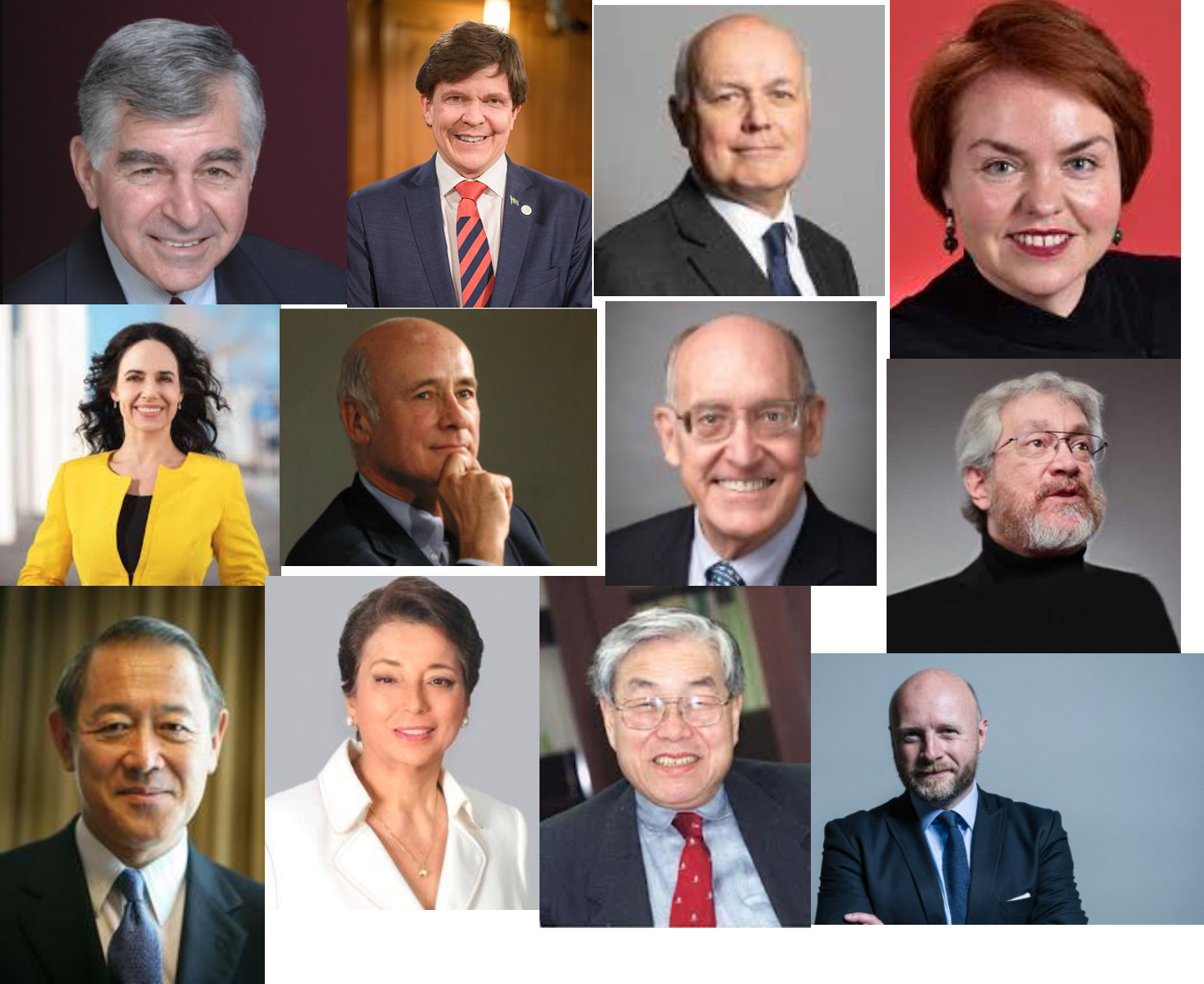
On July 1, 2020, at Democratic Alliance on Digital Governance, organized by the Boston Global Forum, Professor Alex Pentland, Founding Faculty Director of MIT Connection Science, co-author of the Social Contract 2020, and Mentor of AIWS.net, presented “Building The New Economy” in the section section “New Supply Chain, New Economy, New Democracy” with other speakers and panelists Australian Senator Kimberley Kitching, Professor Richard Vietor, Harvard Business School, British MP Liam Byrne, Ambassador Ichiro Fujisaki, Professor Koichi Hamada, Yale University and Special Adviser to Prime Minister Shinzo Abe, Nam Pham, Assistant Secretary of Massachusetts, Former President of Ecuador Jamil Mahuad, and Professor David Silberweig, Harvard. In his talk, Professor Pentland presented Trade-coin as a new digital tool to make investments easier.
The Social Contract 2020, A New Social Contract in the Age of AI, mentioned: “Build and develop Democratic Alliance for Digital Governance as global power to enforce the Social Contract 2020.”
Here are some initial ideas to build a Democratic Alliance on Digital Governance (DADG):
I. DADG Mission:
The Democratic Alliance on Digital Governance (DADG) will use standards of the Social Contract 2020 to:
– Support fundamental rights, the rule of law, and democratic institutions, especially in the aftermath of COVID-19.
– Maintain peace and security (including AI and cyberspace) in Alliance members, and around the world.
– Address challenges, threats, and perils from any countries in the world, including climate change, pandemics, cyberattack, harmful AI, extreme nationalism, totalitarianism, dictators, destruction natural resources, or others that violate the Social Contract 2020.
– Create new models, methodologies, concepts, and initiatives to make a better and smarter world. This smarter world is a democratic one with deep-applied AI.
The Democracy Alliance on Digital Governance include:
Democratic governments
Companies in democratic countries
Thoughtful Civil Societies or Intellectual Societies
II. Activities of DADG:
– Unite Inter-Parliamentary Alliance on China, Global Partnership on AI, World Leadership Alliance-Club de Madrid, OECD, Boston Global Forum, AIWS Innovation Network (AIWS.net) and top universities into an alliance – “Democratic Alliance on Digital Governance”
– Discuss and decide strategies for a peaceful, safe, effective, and smart world.
– Maintain peace and security for the world.
– Maintain standards of the Social Contract 2020 in global business such as setting up and maintaining the Supply Chain 2020.
– Create international laws and accords based on standards of the Social Contract 2020.
– Enforce international laws and accords.
– Create systems for Global Monitoring and Judging such as Global Courts and Global AI-Citizen.
III. Leadership:
Board of Governance: Coordinate between Boards below:
Executive Board: Coordinate and lead governments to protect and strengthen AI and digital democracy.
Industry Board: Coordinate and lead businesses to respect and apply AI and digital democracy, encourage businesses to exchange social reward value.
Monitoring Board: Supervise of laws, accords, and standards; generate initiatives for legislatures. Create laws and accords. This is representative for Thoughtful Civil Society or Intellectual Society.
Judging Board: Eg. Global Judges, assisted by Judging Systems. The Judging System uses AI and data science to support and assist courts, as well as recommend and suggest in judging conflicts or disputes between countries, organizations, and companies.
AI Assist Board: Create, develop, and maintain AI-systems of DADG.
IV. Implementation:
Concepts:
Governments, think tanks, intellectual networks, advocacy groups, influential figures, and companies join Democratic Alliance on Digital Governance.
Governments will join and run the Executive Board (AI-Government)
Companies will join and run the Industry Board.
Thoughtful Civil Society or Intellectual Society will join and run Monitoring Board (AI-Congress)
Courts of countries will join and run Judging Systems (AI-Court)
AI Assist Coop will join and run AI Assist Board
The Monitoring and Judging Board and AI Assist Coop will be a check on the Executive Branch and the Industry Branch.
Implementation:
Group 1: 8 key countries of Democratic Alliance on Digital Governance: US, Japan, UK, Germany, France, India, Canada, Australia; and European Union.
Group 2: innovative democracies such as Sweden, Denmark, Finland, Norway, Iceland, Austria, Switzerland, Netherlands, Belgium, Latvia, Estonia, Lithuania, Poland, Czech, Israel, New Zealand, South Korea, Taiwan.
Group 3: Spain, Italy, Portugal, Greece, Slovakia, Slovenia, Hungary, Singapore, South Africa.
Core organizations: Inter-Parliamentary Alliance on China (IPAC), Global Partnership on AI (GPAI), OECD, Boston Global Forum, Michael Dukakis Institute, AI World Society Innovation Network (AIWS.net), and World Leadership Alliance-Club de Madrid.
Press Release, Michael Dukakis Institute for Leadership and Innovation
Boston, July 1, 2020
Technology policy expert Marc Rotenberg will join the Michael Dukakis Institute for Leadership and Innovation to launch a new Center on Artificial Intelligence and Digital Policy.
“We are thrilled that Marc Rotenberg is joining us,” said Governor Michael Dukakis. “We have worked with Marc over the last several years. We are all very impressed by his breadth of knowledge and his passionate commitment to fundamental rights and democratic governance.”
In 2018, Governor Dukakis called for a Global Accord on the Use of Artificial Intelligence and co-founded the AI World Society. Governor Dukakis also coauthored, “The concepts of AI-Government” and “Ethics Code of Conduct for Cyber Peace and Security.” Governor Dukakis works closely with many international organizations.
The Center on AI and Digital Policy, directed by Marc Rotenberg, will promote the new Democratic Alliance on Digital Governance and assess country practices for Artificial Intelligence and Digital Policy. Marc recently led global campaigns to establish a human rights framework for AI and to seek a moratorium on face surveillance.
“Marc’s global leadership on AI policy is widely admired,” said Dukakis Institute co-founder and Director Nguyen Anh Tuan. “We share a common commitment to safeguard democracy as new technologies emerge.”
Tuan is recognized globally for his pivotal role as a Vietnam Government reformer. He successfully fostered freedom-of-expression, vigorous open debate and private enterprise in Vietnam. Tuan launched the first Internet Service Provider in Vietnam and founded Vietnam’s preeminent online newspaper.
“It is an honor to work with Governor Dukakis, Tuan, and the fellows and scholars at the Institute,” said Marc Rotenberg. “We have a lot of work ahead. We must ensure that new technologies — and AI in particular — promote a better world.”
The formal announcement of the Center on AI and Digital Policy will be made at the Institute’s event on July 1st, 2020 – “Democratic Alliance on Digital Governance – Protecting and Strengthening Democracy in the Aftermath of COVID-19.” The event will feature political leaders, scholars, and thinkers from around the world.
About the Michael Dukakis Institute
The Michael Dukakis Institute was born in 2015 with the mission of generating ideas, creating solutions, and deploying initiatives to solve global issues, especially focused on Cybersecurity and Artificial Intelligence. Led by Chairman Michael Dukakis and Director Nguyen Anh Tuan, the Institute has emerged as a powerful voice in global policy, bringing together world leaders, scientists, thinkers, and innovators. A top priority now for the Institute is the development of a Social Contract that ensures that AI and other technological innovations advance the goals of democratic governance.
As a part of United Nations 2045 Initiative – UNleashed 2045: The United Nations at 100, the United Nations Charter Day Roundtable, June 26, 2020, was co-organized by the United Nations Academic Impact and the Boston Global Forum. At the roundtable, authors Nguyen Anh Tuan and professor David Silbersweig (Harvard) presented Intellectual Society-Thoughtful Civil Society, a new version of the article “Intellectual Society” which was published on May 31, 2020.
Intellectual Society – Thoughtful Civil Society
Nguyen Anh Tuan and David Silbersweig
While writing a proposal for the Democratic Alliance on Digital Governance (DADG) and developing the Social Contract 2020, a New Social Contract in the Age of AI, we conceived an idea: to upgrade civil society to a more thoughtful society. This captures both aspects of being thoughtful – intellectual and compassionate.
The initial name for it was Intellectual Society. After discussion, we will call it Thoughtful Civil Society (TCS). This avoids sounding elitist, and connotes both intelligence and compassion.
It is just an initial idea draft.
The features of Intellectual Society-Thoughtful Civil Society are knowledge, critical thinking and social responsibility.
Intellectual Society-Thoughtful Civil Society is a progression of civil society, it will be a guidepost for society and will contribute to social services with assistance from AI. In the Age of AI, we have many tools to support this mission, and thoughtful society must monitor ethics and manage the risks and perils of AI as well as the threats from any governments or companies that undermine democratic values. Furthermore, intellectual society-thoughtful civil society can contribute new economic models by using AI to improve problems in the distribution of income and it can promote the opinions and influence of distinguished thinkers and notable personalities in society.
In the Age of AI, citizens need to adapt to new knowledge and ways of thinking. Companies, and governments can provide every individual with educational apps that provide inexpensive convenient learning. AI can assist citizens to become more thoughtful byenhancing knowledge, critical thinking and social responsibility to maintain moral and ethical values and when intellectual society-thoughtful civil society becomes a large part of civil society, the world will be better a better place.
With good education, citizens can understand common values, standards, etc., and develop critical thinking. They can make better informed decisions and they can more readily identify fake news and disinformation, thus making it more difficult to deceive and manipulate them.
Governments should design policy with the following goal in mind: all citizens are educated through a basic program for a citizen in the Age of AI.
1. What is an Intellectual Society-Thoughtful Civil Society?
Intellectual Society-Thoughtful Civil Society is progressive part of civil society: organizations within civil society with good education, knowledge, critical thinking and social responsibility who can contribute positive actions, initiatives, and solutions to solve social issues.
They are thinktanks, intellectual networks, advocacy groups who respect and apply the Social Contract 2020, all of them have wisdom and knowledge, and are assisted in information and decision making by AI. Influencers who are more deliberative can be part of an independent organization of Intellectual Society-Thoughtful Civil Society.
2. Role and contribute in society, what is its scope and authority?
As with members of the House of Representatives who raise concerns and amendments to shape political decisions before passing a bill to the Senate for approval to become law, with an Intellectual Society-Thoughtful Civil Society citizen can participate more meaningfully in direct democracy.
Monitor ethical practices by governments, corporations, and other power centres.
Generate concepts, models, initiatives, and solutions to solve social issues.
Take actions to address social problems.
Intellectual Society-Thoughtful Civil Society is a very important part of civil society, which is one of seven branches of power, and Intellectual Society-Thoughtful Civil Society will work closely with congresses, or national assemblies and other centers of power. These include: branches of Government (Executive Branch, Legislative Branch, Judicial Branch), the Business Sector, Civil Society, and Influencers.
3. How do they operate, how to evaluate their effectiveness?
Register under laws and regulations.
Evaluate by results: transparency of their work and results.
They have the right to connect and contribute to society and governments; the business sector has to be monitored.
Monitoring Board: Supervisor of the adherence to laws, agreements and standards; generate initiatives to shape policy, create new laws and accords.
Intellectual Society-Thoughtful Civil Society would be a partner in the formation of the Monitoring Board (AI-Congress)
4. How to build the Intellectual Society-Thoughtful Civil Society?
Education: the general public will have access to knowledge-based education to develop critical thinking. Governments would design policies with the following goal in mind: all citizens are educated through a basic program relevant in the Age of AI.
In the context of laws and regulations, identify people and organizations that deliberately deliver fake news, misinformation, and cyber-attacks as serious criminals.
Support and exchange values: organizations with initiatives, solutions, or projects can get financial support and have their values recognized which would lead to the exchange of values and use of new services and products.
New AI economy model to improve unreasonable distribution of income, opinions and influence of thinkers and notable personalities in society.
5. How can AI support Intellectual Society-Thoughtful Civil Society?
Education of citizens to help them have the basis for intellectual development and critical thinking.
Assist in decision-making by using causal inference methodology.
Help the creation of Global Monitoring and the Global AI-Citizen using Causal Inference Methodology.
New model of AI economy: make the economy more equitable, everyone who has contributed to society or the economy should be able to lead a life with dignity and values and should be acknowledged. AI can make a system to fairly recognize contributions, a system to directly deliver an unbiased value of contributors. Financial leaders should not be compensated so much more than other innovators, creators, founders, inventors, or thought leaders.
A system that recognizes not only noble, honest, and good people, but also dishonest people. Now, with civil society in an age of social media, everyone can contribute to discussions but with this comes many problems. Intellectual Society-Thoughtful Civil Society needs to contribute to an AI system that can distinguish the difference between the noble, honest people and the immoral and dishonest. The Casual Inference Methodology of Judea Pearl can also be applied.
Develop products and services of innovators, creators, and founders and deliver directly to users; create a mechanism to prevent governments from abusing markets to ask companies to meet unfair requirements, or to foment totalitarian power. Through this method, governments can promote innovations, creativities, inventions, and contributions.
By the time the United Nations celebrates its first centenary in 2045, we hope that Intellectual Society – Thoughtful Civil Society will be a large part of civil society.
Co-chairs of the Inter-Parliamentary Alliance on China (IPAC) – eg. Sir Iain Duncan Smith, Senator Kimberley Kitching, MEP Miriam Lexmann – will speak and dialog with political leaders and distinguished thinkers to build new alliances and new global economic strategies after the pandemic COVID-19.
On May 12, 2020, the World Leadership Alliance-Club de Madrid and the Boston Global Forum held a roundtable to discuss the Social Contract 2020, A New Social Contract in the Age of AI and risks to human rights stemming from governments’ response to COVID-19. On June 5, 2020, a new group, The Inter-Parliamentary Alliance on China (IPAC), was formed to assess the challenge posed by China’s ascendancy. It consists of 18 lawmakers from the U.S, Australia, Canada, Germany, Japan, Norway, Sweden, the U.K. and the European Parliament. The July 1st conference is a follow-up to these efforts, focusing on creative responses to the threats to democracies posed by COVID-19 and China, and building Democratic Alliance on Digital Governance.
Organizers: Boston Global Forum, Sponsor: Government of Massachusetts
Moderator: Governor Michael Dukakis
Date and Time: 8:30 am – 11:50 am (EST), July 1, 2020
Format: Online conference
Participants:
Political Leaders: Liam Byrne, UK Member of Parliament, the Chair of the Parliamentary Network on the World Bank & IMF, Governor Michael Dukakis, Co-founder and Chair of the Boston Global Forum (BGF), Ichiro Fujisaki, former Japanese Ambassador to US, Senator Kimberley Kitching, Parliament of Australia, Co-chair of Inter-Parliamentary Alliance on China (IPAC), Miriam Lexmann, Member of European Parliament, Co-chair of IPAC, Jamil Mahuad, former President of Ecuador, Beatriz Merino, former Prime Minister of Peru, Yasuhide Nakayama, Member of the House of Representatives of Japan, the State Minister for Foreign Affairs, Andreas Norlén, Speaker of the Swedish Parliament , Nam Pham, Asistant Secretary, Massachusetts, Sir Iain Duncan Smith, UK Member of Parliament, Co-chair of (IPAC).
Scholars and Thinkers: Professor Nazli Choucri (MIT), Prof. Koichi Hamada (Yale), Prof. Joseph Nye (Harvard Kennedy School), Prof. Thomas Patterson (Harvard Kennedy School), Prof. Alex Pentland (MIT), Marc Rotenberg (Director of the Center on AI and Digital Policy (CAIDP), Michael Dukakis Institute, former President of EPIC), Prof. David Silbersweig (Harvard), Nguyen Anh Tuan (CEO of the Boston Global Forum (BGF)), Prof. Dick Vietor (Harvard Business School)
Agenda
8:30 am – Opening Remarks, Governor Michael Dukakis, Co-founder and Chair of the BGF
8:35 am – Topic 1: New Alliance, New Order, New Democracy
Speakers: Sir Iain Duncan Smith, UK MP, Co-chair of the Inter-Parliamentary Alliance on China (IPAC), Miriam Lexmann, MEP, Co-chair of IPAC, Professor Joseph Nye, Harvard Kennedy School
Moderator: Governor Michael Dukakis
Panelists: Marc Rotenberg, Director of the Center on AI and Digital Policy (CAIDP), Michael Dukakis Institute, Ambassador Ichiro Fujisaki, Professor Nazli Choucri, MIT, Beatriz Merino, former Prime Minister of Peru, Professor Thomas Patterson, Harvard Kennedy School, Nguyen Anh Tuan, Speaker of the Swedish Parliament Andreas Norlén, Vaira Vike-Freiberga, former President of Latvia.
10:25 am – Topic 2: New Supply Chain, New Economy, New Democracy
Speakers: Senator Kimberley Kitching, Parliament of Australia, Co-Chair of the Inter-Parliamentary Alliance on China (IPAC), Professor Dick Vietor, Harvard Business School, Professor Alex Sandy Pentland, MIT
Moderator: Governor Michael Dukakis
Panelists: MP Liam Byrne, Professor Koichi Hamada, Yale, and Special Adviser to Prime Minister Shinzo Abe, Yasuhide Nakayama, State Minister of Japan, Nam Pham, Assistant Secretary of Massachusetts, Jamil Mahuad, former President of Ecuador, Professor David Silberweig, Harvard
11:40 am – Announce the Center on Artificial Intelligence and Digital Policy (CAIDP), Marc Rotenberg, Director of CAIDP, Michael Dukakis Institute
11:45 am – Concluding Remarks: Governor Michael Dukakis.
Ramu Damodaran, Chief of United Nations Academic Impact: “We prepare to observe the 75th anniversary of the United Nations, we in the Academic Impact are particularly mindful of the opportunities, challenges and dangers inherent in new and emerging technologies which were unforeseen at the time the Organization was founded.
We look ahead to the global landscape in 2045, when the United Nations completes its first centenary, in areas of these technologies, including artificial intelligence, cyber security and weapons systems, among others. Such a compilation which looks both to the horizon ahead and the role of the United Nations in making it beneficial and secure, would be timely.”
On United Nations Charter Day June 26, 2020, the Boston Global Forum and the United Nations Academic Impact organize a UN Charter Day Roundtable to talk about A New Social Contract in the Age of AI and Intellectual Society.
The UN Charter Day Roundtable will discuss the world in 2045 with deeply applied AI, how to upgrade civil society to Intellectual Society, a knowledge-based global society, and how the Social Contract 2020 will happen in 2045.
The UN Charter Day Roundtable is a part of the United Nations 2045 Initiative.
Panelists: Governor Michael Dukakis, Professors Thomas Patterson, Nazli Choucri, Alex Pentland, David Silbersweig; Nguyen Anh Tuan
Moderator: Ramu Damodaran, Chief of Academic Impact, United Nations, and Editor-in-Chief of the UN Chronicle Magazine.
Agenda
June 26, 2020
11:30 am: Opening Remarks, Ramu Damodaran, Chief of Academic Impact, United Nations and Editor in Chief of the UN Chronicle Magazine
11:50 am: The Social Contract 2020, A New Social Contract in the Age of AI and Intellectual Society, Governor Michael Dukakis, Professors Thomas Patterson, Nazli Choucri, Alex Pentland, David Silbersweig; Nguyen Anh Tuan
12:40 pm: Q&A, Moderator Ramu Damodaran
Llewellyn King, Pham Trong Nghia, Barry Nolan, Ta Bich Loan, Mariko Gakiya, Mikhail Kupriyanov and Allan Cytryn contribute questions and dialog