Innovative AI software for the detection of pancreatic diseases: first-in-human application successful

Diseases of the pancreas can have serious consequences for patients and are difficult to diagnose. Early detection is crucial for the patient’s chance of survival. In Europe today, more than 90 percent of patients die of pancreatic cancer within the first five years after diagnosis. The Medi-Globe Group, a leading international MedTech company based in Achenmühle, Bavaria, will, in cooperation with the French Institut Hospitalo-Universitaire (IHU) Strasbourg, develop the world’s first AI software for the detection of diseases of the pancreas in endoscopic ultrasound (EUS) examination. The key technology here is artificial intelligence. As part of large-scale clinical studies prior to market introduction, the AI ​​software has now gone into clinical test with patients, so-called first-in-human applications.

“The new software has the potential to revolutionize the diagnosis of pancreatic diseases and, above all, the diagnosis of pancreatic cancer. That would be a dream for society as a whole and an important milestone in medicine and for medical technology,” says Prof. Dr. Leonardo Sosa Valencia, one of the leading gastroenterologists in the world and a top expert in the field of pancreatic disease detection.

The AI ​​software brings together the clinical experience of the world’s most experienced gastroenterologists. It bundles the knowledge from countless EUS examinations of the pancreas in an algorithm and transforms it into use in endoscopic ultrasound. The expert knowledge is used to train a neural network according to the deep learning method. For the diagnosis, it is crucial to recognize pathologically altered areas in the pancreas at an early stage so that a fine needle biopsy can accurately take tissue samples for further analyses and as basis for therapy decisions.

The original article was published at Business Wire.

The Boston Global Forum (BGF), in collaboration with the United Nations Centennial Initiative, released a major work entitled Remaking the World – Toward an Age of Global Enlightenment.   More than twenty distinguished leaders, scholars, analysts, and thinkers put forth unprecedented approaches to the challenges before us. These include President of the European Commission Ursula von der Leyen, Governor Michael Dukakis, Father of Internet Vint Cerf, Former Secretary of Defense Ash Carter, Harvard University Professors Joseph Nye and Thomas Patterson, MIT Professors Nazli Choucri and Alex ‘Sandy’ Pentland, and Vice President of European Parliament Eva Kaili.  The BGF introduced core concepts shaping pathbreaking international initiatives, notably, the Social Contract for the AI Age, an AI International Accord, the Global Alliance for Digital Governance, the AI World Society (AIWS) Ecosystem, and AIWS City.
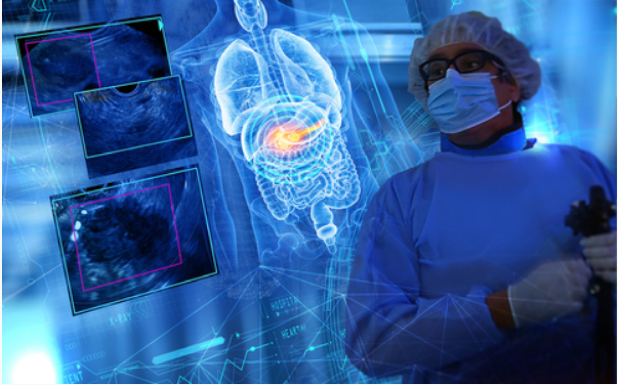

How AI can increase healthcare organizations’ efficiency and reduce burnout

AI-powered systems like natural language processing can be used to detect the crucial elements in unstructured data, transforming it into structured data that can be used to streamline a patient’s care journey and improve outcomes.

Artificial intelligence (AI) is one of the primary means for accomplishing this while also achieving greater efficiency, cost-effectiveness, and patient outcomes. One study showed that after the pandemic began, 84 percent of American healthcare systems began using AI or were planning to do so in 2020, up from 45 percent before the pandemic. The top uses were predictive analytics for early intervention, clinical decision support and improving patient care through collaboration among multiple specialists.

Specific to healthcare, AI-powered systems like natural language processing can be used to detect the crucial elements in unstructured data, transforming it into structured data that can be used to streamline a patient’s care journey and improve outcomes.

Consider radiology. Nearly three in every 10 Americans working in the field believe it could be made more efficient through the use of technology like AI. Indeed, AI can make CT and MR scans more precise, thereby freeing up technicians from image analysis and creating a more patient-centered experience.

Also, consider the manner in which AI can be used to predict and manage patient flow by using remote monitoring to determine where best to direct a given patient based on the seriousness of his or her condition or the availability of beds.

The Boston Global Forum (BGF), in collaboration with the United Nations Centennial Initiative, released a major work entitled Remaking the World – Toward an Age of Global Enlightenment.   More than twenty distinguished leaders, scholars, analysts, and thinkers put forth unprecedented approaches to the challenges before us. These include President of the European Commission Ursula von der Leyen, Governor Michael Dukakis, Father of Internet Vint Cerf, Former Secretary of Defense Ash Carter, Harvard University Professors Joseph Nye and Thomas Patterson, MIT Professors Nazli Choucri and Alex ‘Sandy’ Pentland, and Vice President of European Parliament Eva Kaili.  The BGF introduced core concepts shaping pathbreaking international initiatives, notably, the Social Contract for the AI Age, an AI International Accord, the Global Alliance for Digital Governance, the AI World Society (AIWS) Ecosystem, and AIWS City.
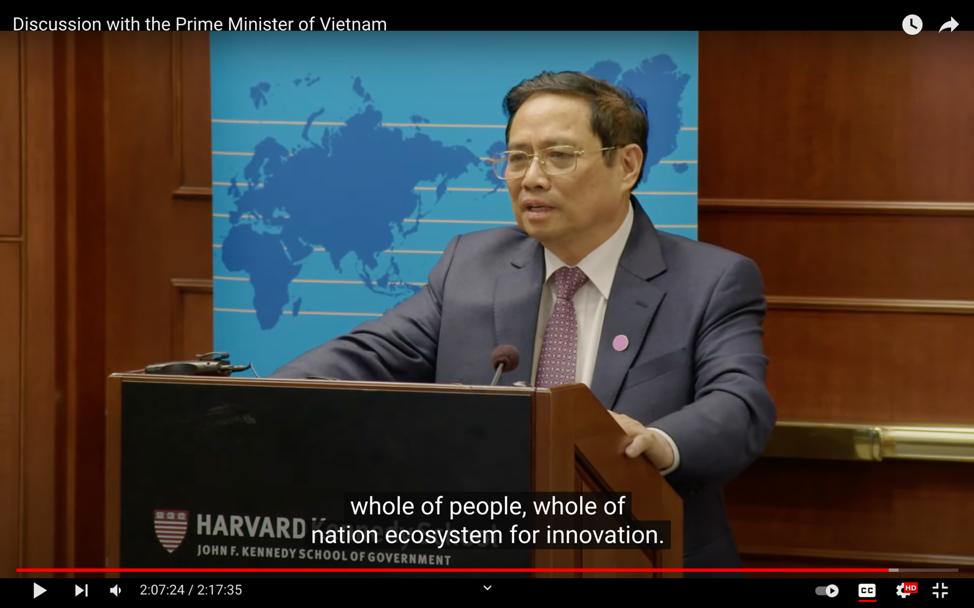
Vietnamese Prime Minister respect and call to implement Community Innovation Economy, the concept and idea from “Remaking the World – Toward an Age of Global Enlightenment”

On November 23, 2021, Boston Global Forum sent the Recommendation to Vietnamese leaders to advise “Breakthrough solutions to restore and develop Vietnam after the Covid-19 pandemic.” In this special report, the Vietnam Spark Initiative of the Boston Global Forum contributes ideas: Building a Community Innovation Economic ecosystem for all people: “Vietnam – Every citizen is an innovator.”

On May 14, 2022, at Harvard Kennedy School, Vietnamese Prime Minister Pham Minh Chinh delivered keynote speech, he raised concepts and ideas about Community Innovation Economy.

Here is the link: https://www.youtube.com/watch?v=e1pXMcrlh3k

Mr. Thomas Vallely, Founder of the Fulbright University and the Ash Center’s Vietnam Program, hosted this discussion with Vietnamese Prime Minister Phạm Minh Chính on Vietnam’s economic development strategy. Following his remarks, the Vietnam Program hosted an expert panel to respond to the Prime Minister’s speech and discuss Vietnam’s sustainable economic growth and ambitious climate change commitments in further detail. The additional panelists included: Jason Furman, Aetna Professor of the Practice of Economic Policy at HKS, David Golan, Dean for Research Operations and Global Programs at Harvard Medical School, David Dapice, senior economist with the Kennedy School’s Vietnam Program, and Vietnamese leaders:

Nguyen Chi Dung, Minister of Ministry of Planning and Investment, Nguyen Hong Dien, Minister of Trade and Industry, and Nguyễn Thị Hồng, Governor of the State Bank.

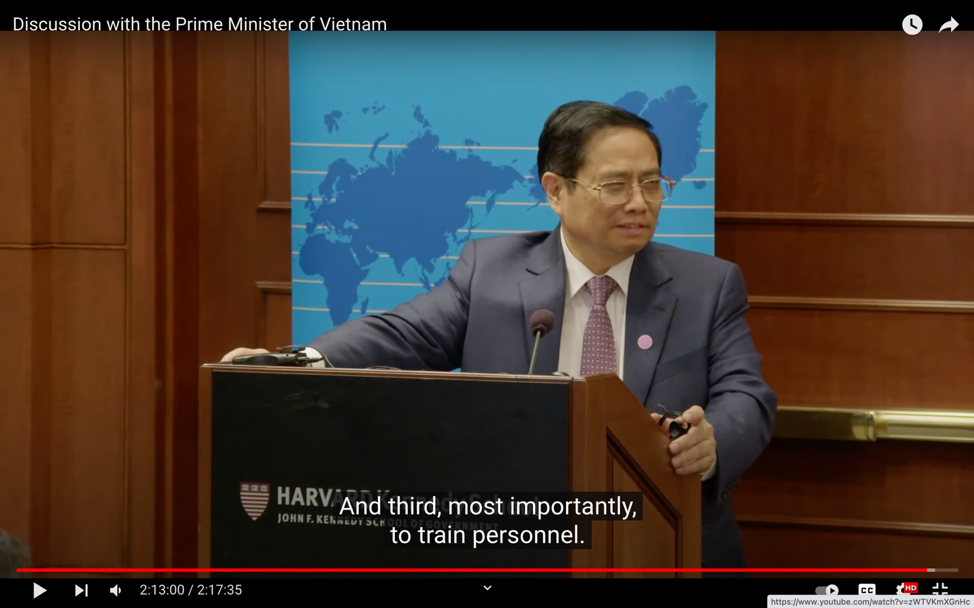
Vietnamese Prime Minister Pham Minh Chinh says “Vietnam need to get support in education in cybersecurity”

On may 14, 2022, at Harvard Kennedy School, the Ash Center’s Vietnam Program hosted a discussion with Vietnamese Prime Minister Phạm Minh Chính on Vietnam’s economic development strategy. Following his remarks, the Vietnam Program hosted an expert panel to respond to the Prime Minister’s speech and discuss Vietnam’s sustainable economic growth and ambitious climate change commitments in further detail. The additional panelists included: Jason Furman, Aetna Professor of the Practice of Economic Policy at HKS, David Golan, Dean for Research Operations and Global Programs at Harvard Medical School, Nguyễn Thị Hồng, Governor of the State Bank of Vietnam, David Dapice, senior economist with the Kennedy School’s Vietnam Program.

To answer question from Mr. Duong Ngoc Thai, Senior Cybersecurity Expert of Google, Prime Minister Pham Minh Chinh calls the US to support Vietnam in education cybersecurity.

https://www.youtube.com/watch?v=N9Rg6JtQlPM

To make AI fair, here’s what we must learn to do

Developers of artificial intelligence must learn to collaborate with social scientists and the people affected by its applications.

Beginning in 2013, the Dutch government used an algorithm to wreak havoc in the lives of 25,000 parents. The software was meant to predict which people were most likely to commit childcare-benefit fraud, but the government did not wait for proof before penalizing families and demanding that they pay back years of allowances. Families were flagged on the basis of ‘risk factors’ such as having a low income or dual nationality. As a result, tens of thousands were needlessly impoverished, and more than 1,000 children were placed in foster care.

From New York City to California and the European Union, many artificial intelligence (AI) regulations are in the works. The intent is to promote equity, accountability and transparency, and to avoid tragedies similar to the Dutch childcare-benefits scandal.

But these won’t be enough to make AI equitable. There must be practical know-how on how to build AI so that it does not exacerbate social inequality. In my view, that means setting out clear ways for social scientists, affected communities and developers to work together.

Right now, developers who design AI work in different realms from the social scientists who can anticipate what might go wrong. As a sociologist focusing on inequality and technology, I rarely get to have a productive conversation with a technologist, or with my fellow social scientists, that moves beyond flagging problems. When I look through conference proceedings, I see the same: very few projects integrate social needs with engineering innovation.

The article was originally posted at Nature.

The Boston Global Forum (BGF), in collaboration with the United Nations Centennial Initiative, released a major work entitled Remaking the World – Toward an Age of Global Enlightenment.   More than twenty distinguished leaders, scholars, analysts, and thinkers put forth unprecedented approaches to the challenges before us. These include President of the European Commission Ursula von der Leyen, Governor Michael Dukakis, Father of Internet Vint Cerf, Former Secretary of Defense Ash Carter, Harvard University Professors Joseph Nye and Thomas Patterson, MIT Professors Nazli Choucri and Alex ‘Sandy’ Pentland, and Vice President of European Parliament Eva Kaili.  The BGF introduced core concepts shaping pathbreaking international initiatives, notably, the Social Contract for the AI Age, an AI International Accord, the Global Alliance for Digital Governance, the AI World Society (AIWS) Ecosystem, and AIWS City.
The Looming Board Challenge: Oversight Of Artificial Intelligence

One of the most consequential challenges confronting corporate governance in the near term will be its ability to exercise informed oversight over the application of artificial intelligence (AI) within its organization. It will be a challenge that will arise regardless of the industry sector in which the company operates, and regardless of how it applies AI in that operation.

The essence of the challenge is the rapidly emerging conflict between the perceived societal and commercial benefits arising from AI implementation, and the perceived societal and institutional risks arising from its use. The need to address the challenge is urgent; the competing interests of benefit and risk are hurtling at each other at hypersonic speed.

While the challenge is certain to arise at some point at the government/regulatory level, it is likely to arise more immediately at the corporate, operational level. And the governing board, with its strategic and risk management portfolios, is the most appropriate platform from which companies may resolve the challenge for the benefit of all corporate constituencies.

Nowhere is this risk/benefit conflict better demonstrated than in the health care sector, which is widely acknowledged for leveraging research and innovation to achieve advances and efficiencies in patient care and treatment.

The articlee was originally posted at Forbes.

The Boston Global Forum (BGF), in collaboration with the United Nations Centennial Initiative, released a major work entitled Remaking the World – Toward an Age of Global Enlightenment.   More than twenty distinguished leaders, scholars, analysts, and thinkers put forth unprecedented approaches to the challenges before us. These include President of the European Commission Ursula von der Leyen, Governor Michael Dukakis, Father of Internet Vint Cerf, Former Secretary of Defense Ash Carter, Harvard University Professors Joseph Nye and Thomas Patterson, MIT Professors Nazli Choucri and Alex ‘Sandy’ Pentland, and Vice President of European Parliament Eva Kaili.  The BGF introduced core concepts shaping pathbreaking international initiatives, notably, the Social Contract for the AI Age, an AI International Accord, the Global Alliance for Digital Governance, the AI World Society (AIWS) Ecosystem, and AIWS City.
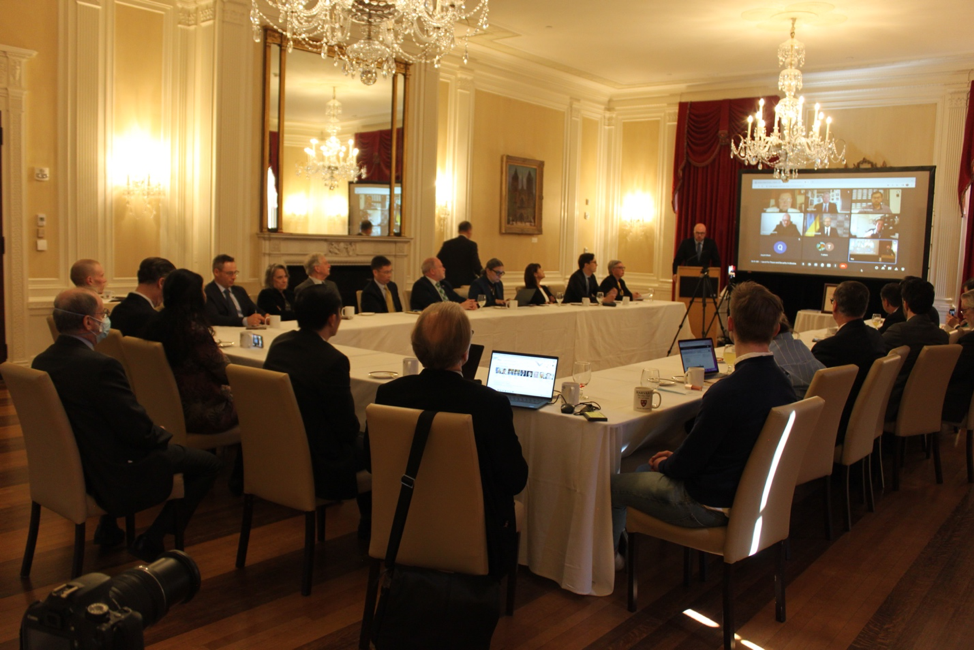
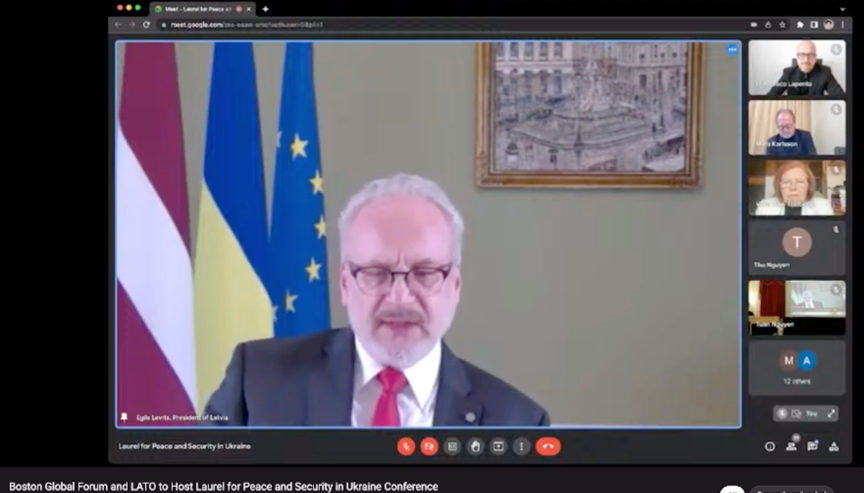
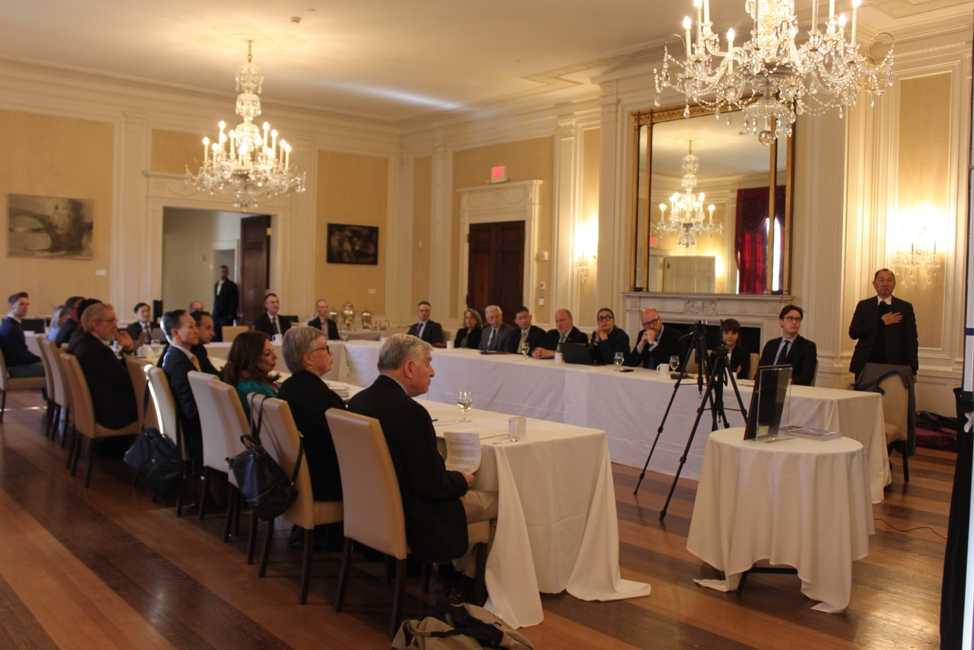
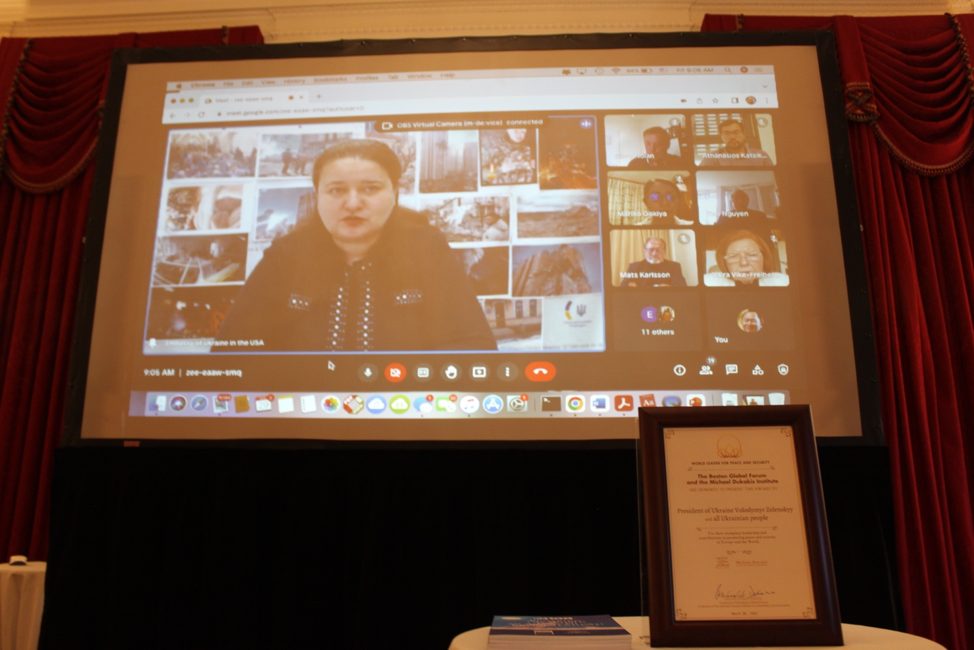
Speech by H.E. President of the Republic of Latvia Egils Levits at Boston Global Forum “Remaking Ukraine – Toward an Age of Global Enlightenment”

29 April, 2022


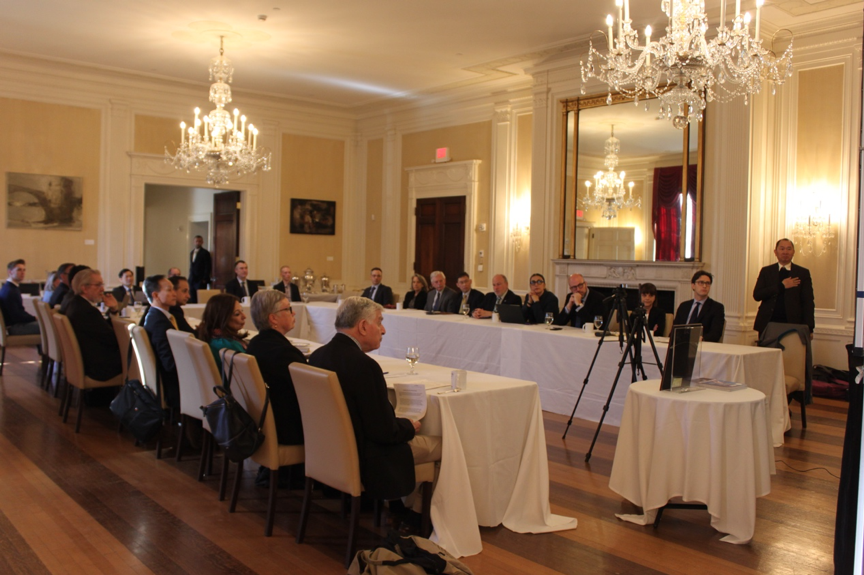
Dear Governor Dukakis, prof. Patterson, dear Ambassador Markarova, excellencies, ladies and gentlemen, Boston Global Forum made the right choice to award the 2022 World Leader for Peace and Security Prize to President Volodymyr Zelenskyy.

The people of Ukraine, under the leadership of President Zelenskyy, are fighting not only for their own land, but also on our behalf.  The outcome of this war, which Russia has provoked, will have global consequences.  I use the analogy of history as a volcano that erupts.  Now is a moment when the lava is flowing and still hot.  That is why every action and inaction in these weeks and months will shape the future landscape of Europe and beyond for many decades to come.  That is why we have to get it right, we have to help Ukraine win this war and remain on the map of Europe.

Latvia is not surprised at the strength of Ukrainian resistance.  Ukraine knows, we know what it means to live under Russian rule.  Never again will we be wiped off the map of Europe!

There are short, medium un long-term tasks in order to help Ukraine.

The immediate is maximum possible support in military equipment.  Latvia has already given equipment equal to one third of our defence budget since the war began.  Here I commend the fullhearted support by the US under the leadership of President Biden.

The humanitarian crisis inside Ukraine and outside, given the numbers of refugees, is the greatest Europe has seen since World War II.  The human losses and tragedies that Ukraine has experienced will be felt for decades to come.  The least we can do is give refuge while homes and lives are rebuilt.

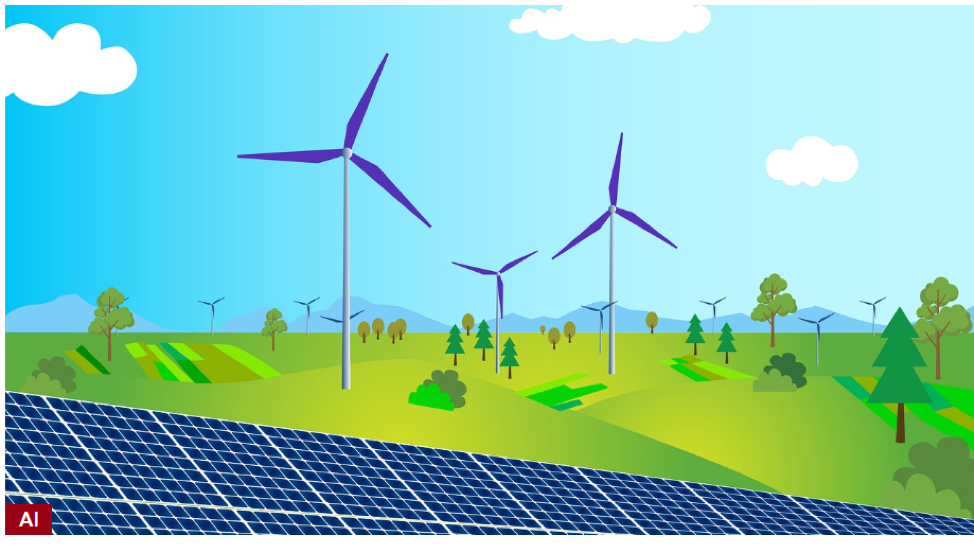
Sanctions against Russia need to be effective, wide-ranging and convincing!  For far too long and too heavily Western countries have relied on Russian gas and oil.  This is the moment to change our consumption patterns and switch to sustainable energy technologies.

A particular focus for me is support for Ukraine’s claims in the ICJ and the ICC. I also believe a special tribunal should be created, such as for the former Yugoslavia and Rwanda. Those perpetrating war crimes – from Putin at the top to every individual so-to-say just fulfilling orders, will be held accountable, sooner of later.  Evidence is being gathered from refugees in Latvia that will one day be useful in an international tribunal.

Ukraine will have massive rebuilding needs once the war ends, but even now it needs financial help to cover essential expenditures.  We anticipate a new kind of Marshall plan for Ukraine.  Within the EU there is widespread support that Ukraine should be granted EU candidate country status and its application fast-tracked.

Various other platforms can be used to extend a helping hand, including the Three Seas Initiative, which Latvia is currently chairing, and where the US is a long-standing partner, with bipartisan support.  The infrastructure needs of Ukraine will be immense, we can look for ways to build better digital, transport and energy connections between Ukraine and the EU.

When meeting with President Zelenskyy in Kyiv on 13 April, the Presidents of the three Baltic states and Poland were there in solidarity with Ukraine, but behind this show of solidarity is also serious practical help for Ukraine.  Our region, in turn, feels that kind of solid support from the US – President Biden and Vice-President Harris have several times met with us and reassured us that Article 5 of the NATO is ‘sacrosanct’.  We have always advocated stronger Transatlantic links and now we truly feel the bond.  Just like 100 years ago, when the US recognized the newly independent Baltic states de iure.

Now is the time to recognize our shared responsibility for saving Ukraine from Russia, and hopefully one day saving Russia from itself.  Now is the time to give immediate help to Ukraine, to focus on our long-term sustainable energy needs, to build resilience against disinformation and defend media freedom, to know and understand the history of the past and of the history that is being made right now.


Thank you!

How Meta is using AI to focus on more sustainable technology

Meta Platforms Inc., formerly Facebook, which has been working to use machine learning technologies to combat climate change and increase the efficiency of industrial systems, today outlined a number of approaches it’s taking using artificial intelligence to tackle these issues and develop elegant engineering solutions.

The Open Catalyst Project represents one of these initiatives, a partnership between Meta AI and Carnegie Mellon University’s Department of Chemical Engineering, which helps bring together artificial intelligence researchers to design new ML models to predict new chemical reactions for energy storage.

For example, when it comes to renewable energy, solar and wind energy depend on the availability of sun and wind in order to generate power. But when it’s not sunny or windy for a long period of time, power generation drops off. That requires building energy storage, usually batteries, to absorb excess energy so that it can be delivered during off-peak times.

“The problem is that batteries don’t scale really well with storage,” said Larry Zitnick, lead research scientist for the Open Catalyst Project. “So we need to find a way to store energy that actually scales. That’s where the Open Catalyst Project actually comes in.”

The project provides datasets for the discovery of chemical catalysts for building cheaper and scalable batteries for renewable energy networks. With the research team’s efforts to date, Zitnick says Open Catalyst has built the largest training data set of materials for renewable energy storage in the world.

According to Zitnick, there are possibly millions of different material combinations that could be tested in labs meaning that they could be tested at a rate of potentially only a thousand a year. A slow, arduous process for human hands. However, Open Catalyst, which has more than 8 million data points and 40,000 unique simulations across a variety of materials, can give researchers a massive experimental jumpstart.

He also added that the system can use computational computing that can “brute force” simulations in seconds which would take other systems days to find viable optimizations before researchers test them in labs.

Another important aspect of using AI to address the climate crisis is the efficiency of its own infrastructure and energy needs. Mike Schroepfer, a senior fellow at Meta, wrote that Meta’s own global operations are supported by 100% renewable energy, but efficiency is still crucial and the company is exploring Green AI models.

The original article was posted here.

The Boston Global Forum (BGF), in collaboration with the United Nations Centennial Initiative, released a major work entitled Remaking the World – Toward an Age of Global Enlightenment.   More than twenty distinguished leaders, scholars, analysts, and thinkers put forth unprecedented approaches to the challenges before us. These include President of the European Commission Ursula von der Leyen, Governor Michael Dukakis, Father of Internet Vint Cerf, Former Secretary of Defense Ash Carter, Harvard University Professors Joseph Nye and Thomas Patterson, MIT Professors Nazli Choucri and Alex ‘Sandy’ Pentland, and Vice President of European Parliament Eva Kaili.  The BGF introduced core concepts shaping pathbreaking international initiatives, notably, the Social Contract for the AI Age, an AI International Accord, the Global Alliance for Digital Governance, the AI World Society (AIWS) Ecosystem, and AIWS City.
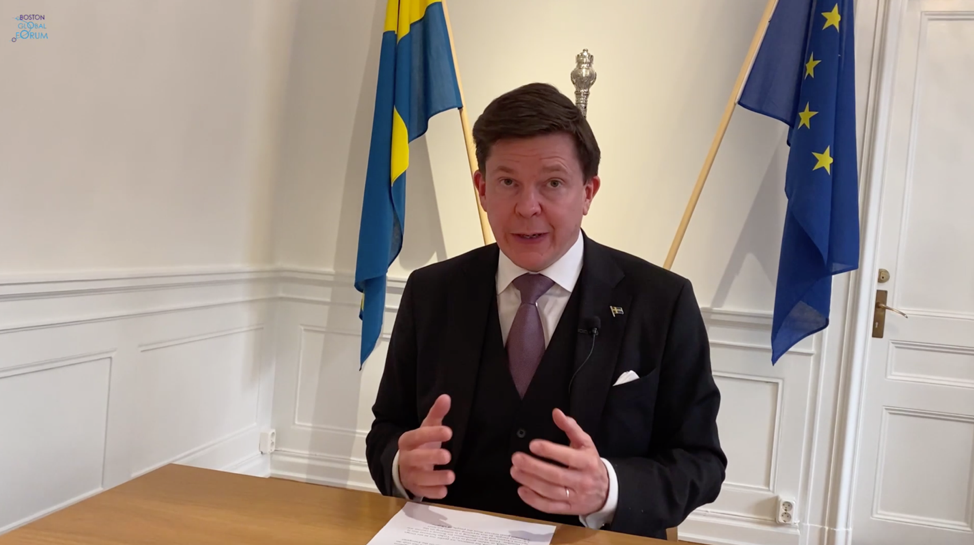
Riksdag Speaker Andreas Norlen’s Speech at 2022 The Conference Honoring President Zelensky and all Ukraine people with the World Leader for Peace and Security Award

April 29, 2022

Ladies and gentlemen, thank you for the opportunity to address you on this very special occasion. I was very honored last year when I received the World Leader for Peace and Security Award from the Boston Global Forum, and it is a great honor to come back to say a few words at this year’s award ceremony as the speaker of the Swedish parliament, the Riksdag. I have joined so many others and condemned in the strongest possible terms Russia’s ongoing invasion of Ukraine. The Riksdag has manifested strong support for Ukraine, expressed through unique decisions to send supplies including weapons. The people of Ukraine have a right to defend themselves against this brutal aggression, and we have a moral obligation to support them in that struggle. Russia’s acts are not only an attack on freedom and democracy but also on the European and global security order. Often, we like to look for nuances. We prefer not to see things purely in black or white, good or evil. Today, however, this is not possible. There is no justification for Russia’s vicious war against Ukraine and the suffering it is inflicting on the Ukrainian people in this appalling situation. We have witnessed great bravery from the people of Ukraine. We have also seen admirable leadership from many, in particular the president of Ukraine Volodymyr Zelenskyy, who has been a true leader at this most pivotal of times. His extraordinary courage and leadership have been crucial to the Ukrainian war effort, and he has worked tirelessly also to bring the world’s attention to the atrocities committed by the Russian forces. I therefore strongly support the decision of the Boston Global Forum board to honor President Zelenskyy and all the Ukrainian people as 2022 world leader for peace and security. I cannot imagine a more worthy recipient of this award. We stand with President Zelenskyy and Ukraine in this struggle, because freedom matters, peace matters, Ukraine matters. Thank you