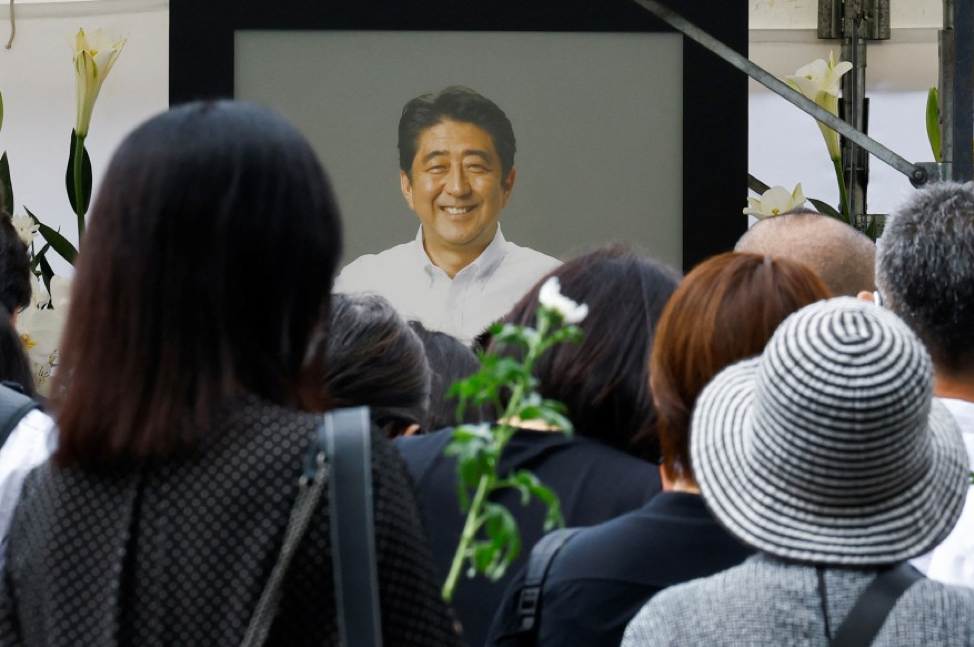
Why Shinzo Abe Will Continue to Govern Japan for Years After His Death

In foreign policy, Abe started from the premise that China’s rise meant that Japan had no alternative to keeping the U.S. committed to Japan’s defense and the security and prosperity of Asia more broadly. He repeatedly took risks to achieve this goal, including bolstering ties with Australia and India—the other members of an increasingly institutionalized Quadrilateral Security Dialogue, or “Quad.” He also made shadow competition with China in Southeast Asia a top priority.

Although he had tried to stabilize relations with China while in office—Chinese President Xi Jinping had been scheduled to visit Japan in spring 2020—following his resignation, Abe became an increasingly vocal critic of China’s human rights violations and alarmed by the shifting military balance in the Taiwan Strait. Last year, he argued that “a Taiwan crisis would be a crisis for Japan” and called for the U.S. to end its strategic ambiguity policy. Both Suga and Kishida have followed Abe’s approach to foreign policy. 

https://time.com/6196551/shinzo-abe-legacy-after-death-japan/

The Boston Global Forum established the Shinzo Abe Initiative for Peace and Security in order to:

  • Connect world leaders (leaders of government, parliament, businesses), scholars, thinkers, creators to accompany, dedicate, continue to fight, build a world of peace, security and prosperity.
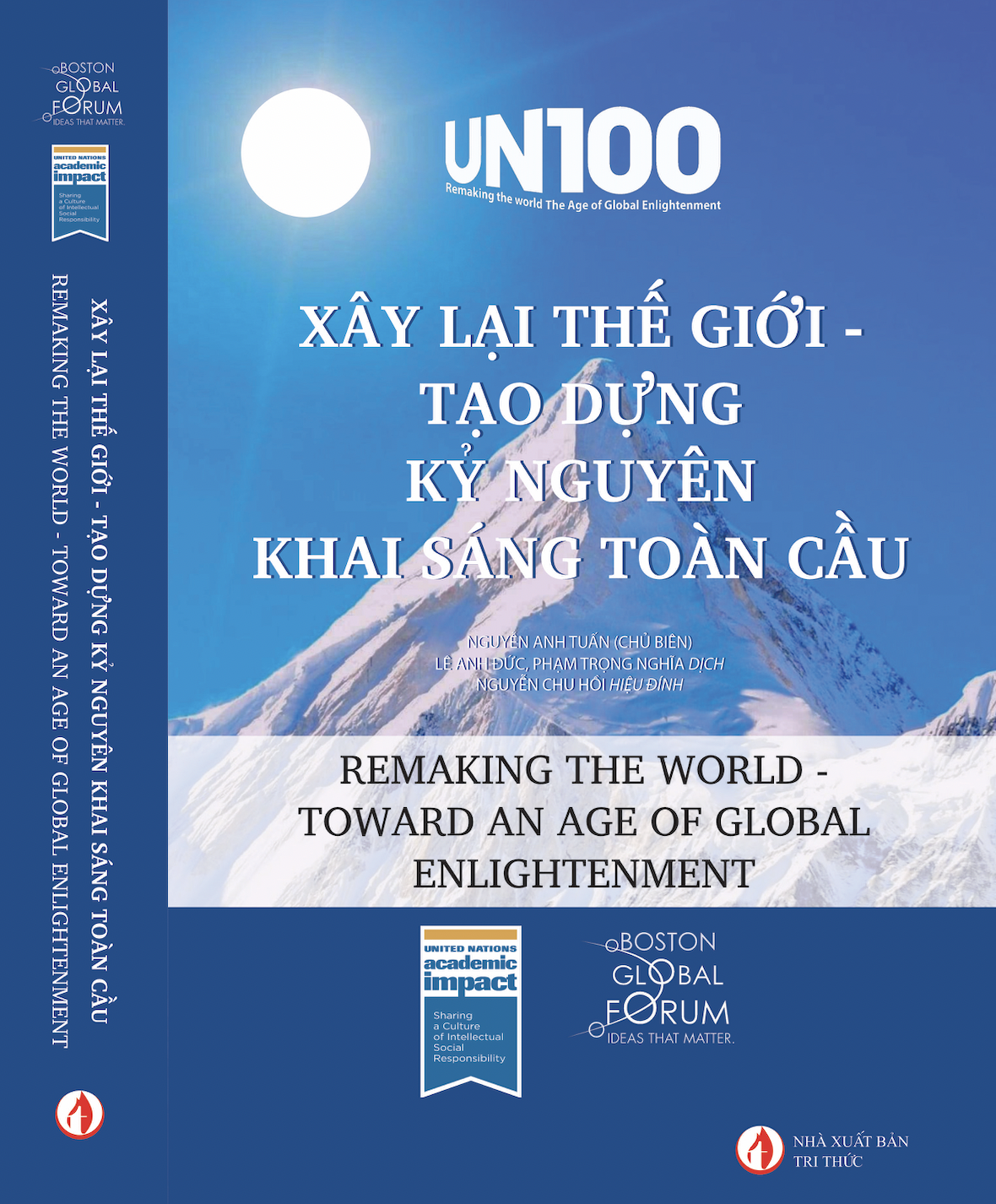
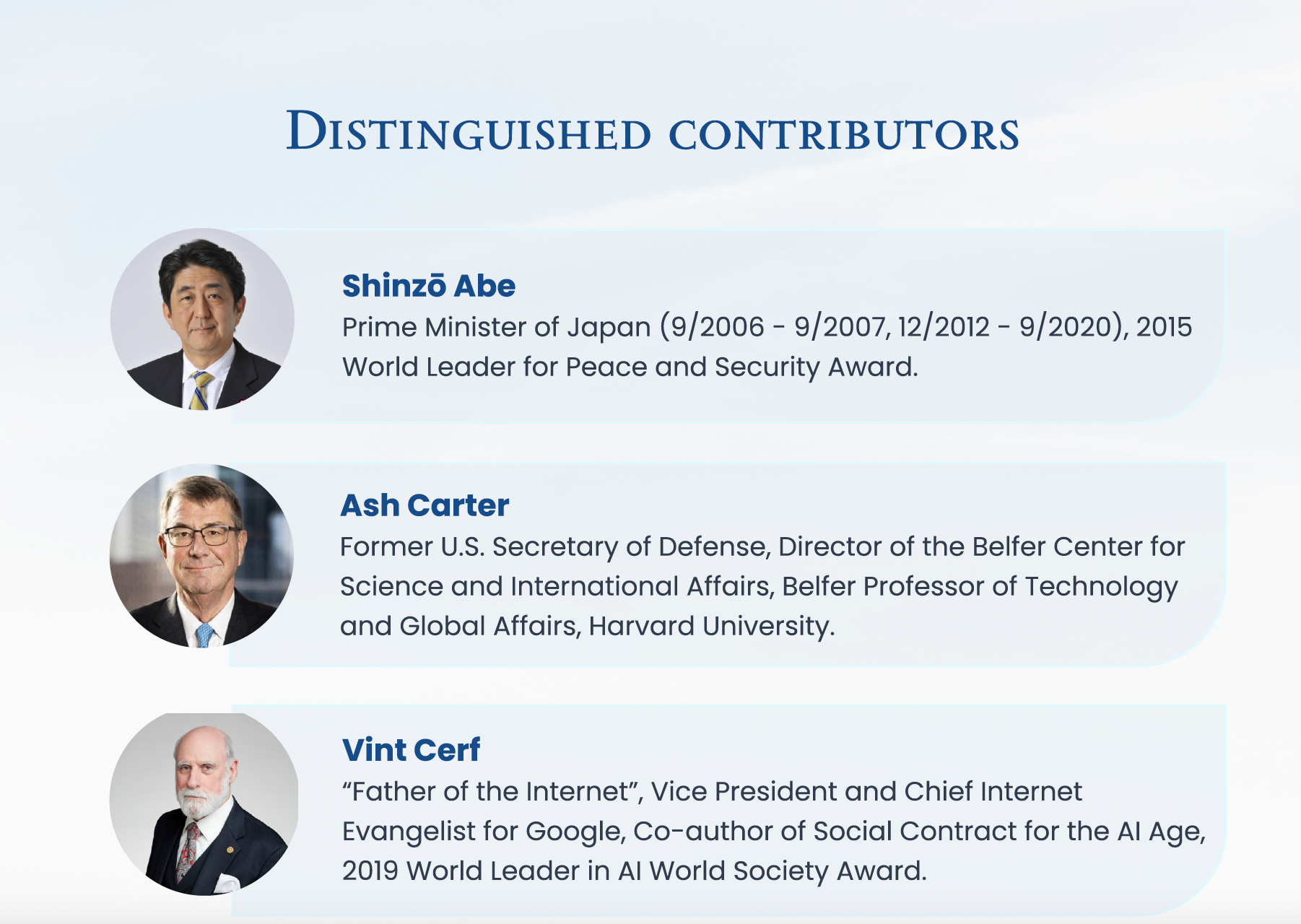
  • Continue the implementation of the fundamental ideas in the book “Remaking the World – Toward an Age of Global Enlightenment”, which Prime Minister Abe is a Distinguished Contributor.
  • Recruit organizations and individuals to join this initiative.

Former Gov. Michael Dukakis on how Shinzo Abe’s assassination is resonating in Massachusetts

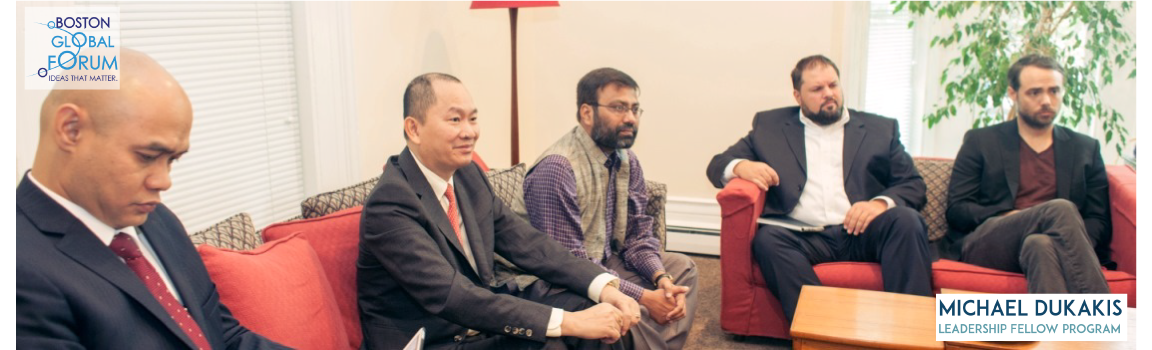
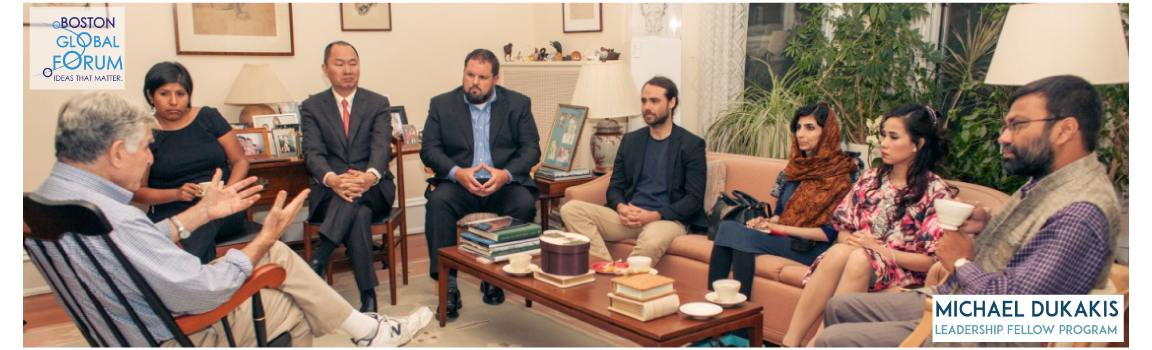
The Shinzo Abe Initiative for Peace and Security has attracted interested in public opinions and leaders. On July 11, 2022,  NPR interviewed Governor Michael Dukakis, Co-founder and Chairman of the Boston Global Forum:

Former Gov. Michael Dukakis on how Shinzo Abe’s assassination is resonating in Massachusetts

Former Massachusetts Gov. Michael Dukakis once worked closely with former Japanese Prime Minister Shinzo Abe through the Boston Global Forum. Dukakis joins us to talk about the recently assassinated world leader and his connections to Boston.

This segment aired on July 11, 2022

https://www.wbur.org/radioboston/2022/07/11/governor-dukakis-shinzo-abe-assassination

Shinzo Abe Initiative for Peace and Security

Prime Minister Shinzo Abe, the first leader who received the World Leaders Award for Peace and Security honored by the Boston Global Forum (BGF) on 12/12/2015, has dedicated to Japan and to world’s peace and security. Prime Minister Abe was senselessly assassinated on July 8, 2022. To honor his legacy and to continue his work the BGF is establishing the Shinzo Abe Initiative for Peace and Security in order to:

  • Connect world leaders (leaders of government, parliament, businesses), scholars, thinkers, creators to accompany, dedicate, continue to fight, build a world of peace, security and prosperity.
  • Continue the implementation of the fundamental ideas in the book “Remaking the World – Toward an Age of Global Enlightenment”, which Prime Minister Abe is a Distinguished Contributor.
  • Recruit organizations and individuals to join this initiative.

The Shinzo Abe Initiative for Peace and Security supports efforts move humanity Toward an Age of Global Enlightenment, including:

  • Security in cybersecurity, AI and digital governance, along with the Global Alliance for Digital Governance.
  • Peace and Security concerning disputes over national sovereignty and territorial integrity
  • Peace and Security for citizens

Furthermore, the Initiative includes

  • Building of the Prime Minister Shinzo Abe Digital Memorial Hall on AIWS City (House of Honor Section), to showcase Abe’s dedication and to commemorate Shinzo Abe with actions and initiatives to build peace and security for mankind.
  • Offering daily Tram Huong in memory of Abe by actions or postings of wishes, aspirations, stories, ideas for peace and security submitted by anyone and everyone submit articles in their native language.

Toward these ends, the Global Enlightenment Community accompanies Shinzo Abe Initiative in the struggle for Peace and Security.

BGF Statement on former Prime Minister Shinzo Abe

We are shocked and deeply saddened by the assassination of Former Japanese Prime Minister Shinzo Abe. The entire Boston Global Forum community condemns this senseless act of violence that occurred during a public political campaign event in Japan.

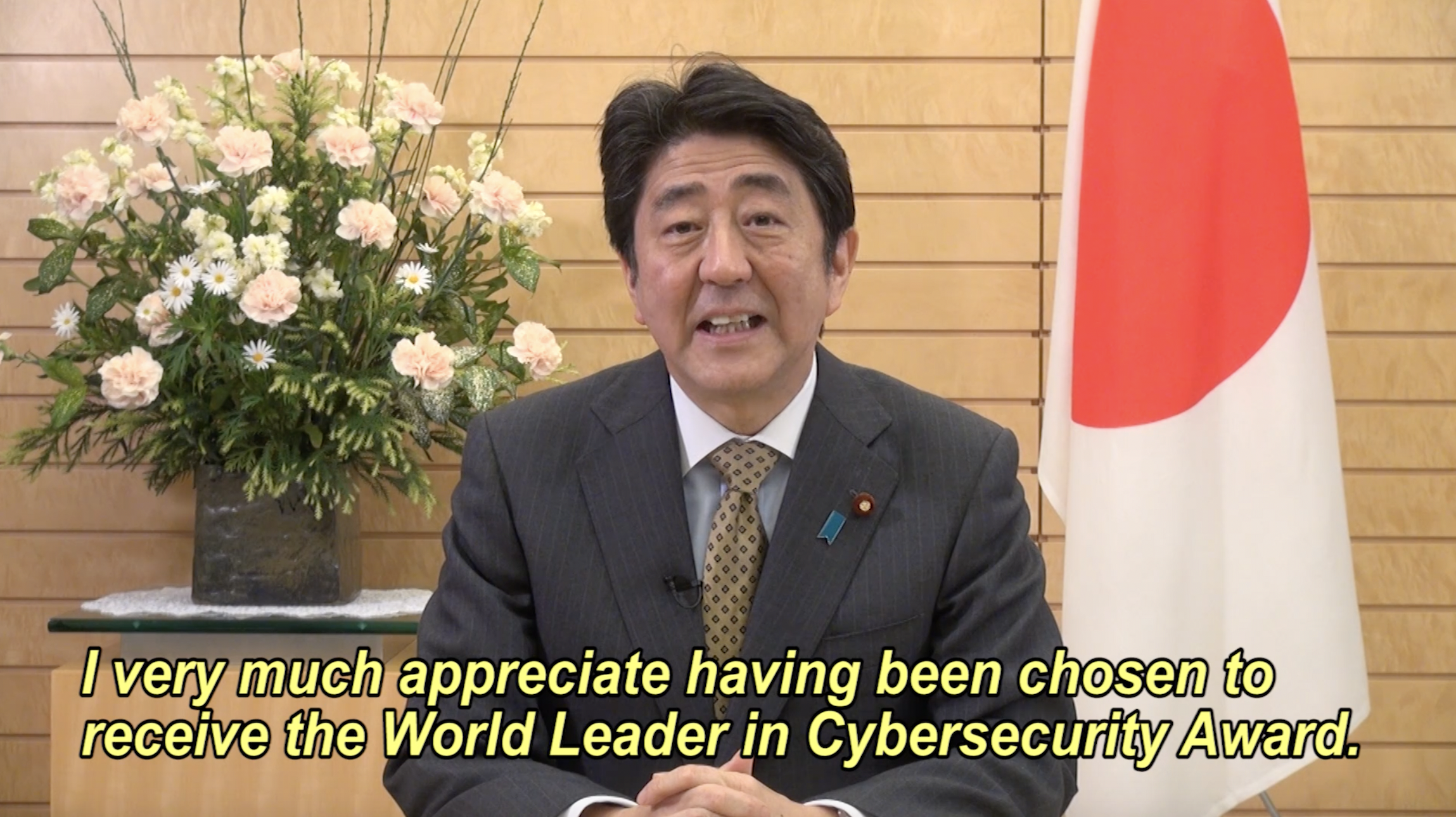
Mr. Abe was a good friend to the Boston Global Forum (BGF), participating in numerous events that highlighted his continuing prestige in Japan and on the world stage. Mr. Abe was the first world leader to receive the World Leaders Award for Peace and Security from the Boston Global Forum in 2015. At that time, Mr. Abe issued a message of support for BGF’s Global Cybersecurity Day Initiative and then the BGF-G7 Summit Initiative in Japan in 2016.

Mr. Abe frequently addressed the need for greater global attention for digital standards and individual rights in an age increasingly dominated by artificial intelligence. He was a strong supporter of Boston Global Forum’s Cybersecurity Demands. In December 2021, Mr. Abe presented his keynote speech in the Boston Global Forum Conference, and made distinguished contributions to the BGF book, “Rebuilding the World – Toward an Age of Global Enlightenment.”

More than any Japanese leader, Shinzo Abe understood the shifting power structure in Asia and the need for Japan to exert a stronger leadership role. The Japanese people, Asia, and the world have lost a key leader for the challenges that lie ahead.

The Boston Global Forum extends our condolences to Mr. Abe’s friends and family. We will honor Mr. Abe by continuing to promote his ideas and positions that uphold the dignity and rights of individuals in the age of digital and artificial intelligence.

Research confirms AI adoption growing but governance is lagging

While it’s true that the adoption of artificial intelligence in various applications is yielding tangible results for all kinds of enterprises, there is a downside: AI’s full potential isn’t being realized because of a lack of human expertise to optimize it for business purposes.

A new global research project conducted by Juniper Networks and Wakefield Research and released June 15 shows an increase in AI adoption during the last 12 months, but a shortage of human talent is holding a great deal of good implementation back. Governance policies involving AI continue to lack maturity, the report said, and this is also a stumbling block. Both of these factors are needed to responsibly manage AI’s growth when considering privacy issues, regulation compliance, hacking and AI terrorism, the survey said.

The survey indicates that the disparity between the substantial increase in AI implementation in the enterprise and the immaturity of AI governance and policies is staggering, Mandell said.

“It will be critical for governance to pick up the pace so that the positives of AI deployment overshadow existing fears of whether AI can be effectively controlled. This is a challenge not unique to AI, but all emerging technologies,” Mandell said.

Thee original article was posted at VentureBeat.

The Boston Global Forum (BGF), in collaboration with the United Nations Centennial Initiative, released a major work entitled Remaking the World – Toward an Age of Global Enlightenment.   More than twenty distinguished leaders, scholars, analysts, and thinkers put forth unprecedented approaches to the challenges before us. These include President of the European Commission Ursula von der Leyen, Governor Michael Dukakis, Father of Internet Vint Cerf, Former Secretary of Defense Ash Carter, Harvard University Professors Joseph Nye and Thomas Patterson, MIT Professors Nazli Choucri and Alex ‘Sandy’ Pentland, and Vice President of European Parliament Eva Kaili.  The BGF introduced core concepts shaping pathbreaking international initiatives, notably, the Social Contract for the AI Age, an AI International Accord, the Global Alliance for Digital Governance, the AI World Society (AIWS) Ecosystem, and AIWS City.


 

The Ghost of Internet Explorer Will Haunt the Web for Years

“After years of decline and a final wind-down over the past 13 months, on June 22, Microsoft confirmed the retirement of Internet Explorer, the company’s long-lived and increasingly notorious web browser. Launched in 1995, IE came preinstalled on Windows computers for almost two decades, and like Windows XP, Internet Explorer became a mainstay—to the point that when it was time for users to upgrade and move on, they often didn’t. And while last week’s milestone will push even more users off the historic browser, security researchers emphasize that IE and its many security vulnerabilities are far from gone,” writes Lily Hay Newman in Wired

The Boston Global Forum (BGF), in collaboration with the United Nations Centennial Initiative, released a major work entitled Remaking the World – Toward an Age of Global Enlightenment.   More than twenty distinguished leaders, scholars, analysts, and thinkers put forth unprecedented approaches to the challenges before us. These include President of the European Commission Ursula von der Leyen, Governor Michael Dukakis, Father of Internet Vint Cerf, Former Secretary of Defense Ash Carter, Harvard University Professors Joseph Nye and Thomas Patterson, MIT Professors Nazli Choucri and Alex ‘Sandy’ Pentland, and Vice President of European Parliament Eva Kaili.  The BGF introduced core concepts shaping pathbreaking international initiatives, notably, the Social Contract for the AI Age, an AI International Accord, the Global Alliance for Digital Governance, the AI World Society (AIWS) Ecosystem, and AIWS City.
Singapore-Based Researchers Launch ‘AI Verify’: The First AI Governance Testing Framework (MVP)

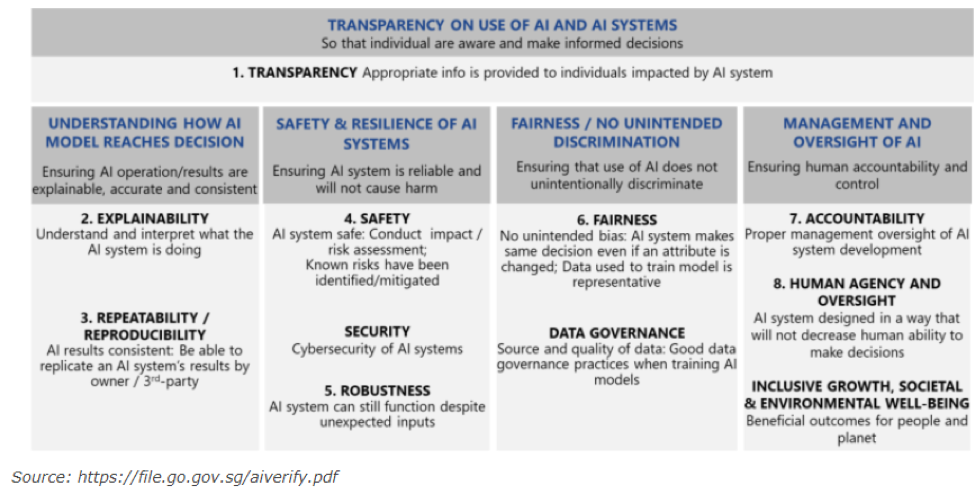
Singapore-based researchers launch the first AI Governance Testing Framework and Toolkit for organizations looking to demonstrate responsible AI measurably. An early-stage product called AI Verify attempts to increase trust between businesses and their stakeholders by performing technological testing and process audits in conjunction with each other.

There is a constant need for the public to be assured that AI systems are fair, explainable, safe, and accountable; as more products and services use AI to personalize or make autonomous predictions. The objective is to increase public confidence in AI while encouraging its more comprehensive application. Voluntary AI governance frameworks and guidelines have been published to help system owners and developers implement trustworthy AI products and services.

Understanding how AI models make judgments and if the AI predictions models make have any unintentional bias is a vital part of transparency. AI systems should be held accountable and subject to scrutiny.

The original article was posted here.

The Boston Global Forum (BGF), in collaboration with the United Nations Centennial Initiative, released a major work entitled Remaking the World – Toward an Age of Global Enlightenment.   More than twenty distinguished leaders, scholars, analysts, and thinkers put forth unprecedented approaches to the challenges before us. These include President of the European Commission Ursula von der Leyen, Governor Michael Dukakis, Father of Internet Vint Cerf, Former Secretary of Defense Ash Carter, Harvard University Professors Joseph Nye and Thomas Patterson, MIT Professors Nazli Choucri and Alex ‘Sandy’ Pentland, and Vice President of European Parliament Eva Kaili.  The BGF introduced core concepts shaping pathbreaking international initiatives, notably, the Social Contract for the AI Age, an AI International Accord, the Global Alliance for Digital Governance, the AI World Society (AIWS) Ecosystem, and AIWS City.

The U.S. can improve its AI governance strategy by addressing online biases

The United States has been working to codify the National Artificial Intelligence (AI) Initiative that focuses on six strategic pillars: improving AI innovation, advancing trustworthy AI, creating new education and training opportunities through AI, improving existing infrastructure through new technologies, facilitating federal and private sector utilization of AI to improve existing systems, and promoting an international environment that supports further advances in AI. In April 2022, the U.S. Department of Commerce, and the National Institute on Standards (NIST) announced members of the inaugural National Artificial Intelligence Advisory Committee (NAIAC), which will be tasked with advising the Biden administration on how to proceed with national AI governance efforts. At their first meeting on May 4, 2022, the NAIAC discussed the use of AI pertaining to U.S. competitiveness, issues related to workforce, and whether there is adequate national oversight of AI systems. Taken together, the objectives of the national AI initiative and the creation of the NAIAC will ensure strategic and timely approaches to the design and deployment of autonomous systems, as well as further establish national norms.

Of equal importance is that the technology needs to be improved for domestic use cases as part of this national effort, especially in areas with the potential to create either differential treatment or disparate impact for federally protected and other vulnerable populations. If the U.S. excludes such considerations from national governance discussions, historic and systemic inequalities will be perpetuated, limiting the integration of the needs and lived experiences of certain groups into emerging AI innovations. Poor or inadequate decisions around financial services and creditworthiness, hiring, criminal justice, health care, education, and other scenarios that predict social and economic mobilities stifle inclusion and undercut democratic values such as equity and fairness. These and other potential harms must be paired with pragmatic solutions, starting with a comprehensive and universal definition of bias, or the specific harm being addressed. Further, the process must include solutions for legible and enforceable frameworks that bring equity into the design, execution, and auditing of computational models to thwart historical and present-day discrimination and other predatory outcomes.

The original article was posted at the Brookings Institute.

The Boston Global Forum (BGF), in collaboration with the United Nations Centennial Initiative, released a major work entitled Remaking the World – Toward an Age of Global Enlightenment.   More than twenty distinguished leaders, scholars, analysts, and thinkers put forth unprecedented approaches to the challenges before us. These include President of the European Commission Ursula von der Leyen, Governor Michael Dukakis, Father of Internet Vint Cerf, Former Secretary of Defense Ash Carter, Harvard University Professors Joseph Nye and Thomas Patterson, MIT Professors Nazli Choucri and Alex ‘Sandy’ Pentland, and Vice President of European Parliament Eva Kaili.  The BGF introduced core concepts shaping pathbreaking international initiatives, notably, the Social Contract for the AI Age, an AI International Accord, the Global Alliance for Digital Governance, the AI World Society (AIWS) Ecosystem, and AIWS City.
Artificial intelligence is breaking patent law

In 2020, a machine-learning algorithm helped researchers to develop a potent antibiotic that works against many pathogens. Artificial intelligence (AI) is also being used to aid vaccine development, drug design, materials discovery, space technology and ship design. Within a few years, numerous inventions could involve AI. This is creating one of the biggest threats patent systems have faced.

Patent law is based on the assumption that inventors are human; it currently struggles to deal with an inventor that is a machine. Courts around the world are wrestling with this problem now as patent applications naming an AI system as the inventor have been lodged in more than 100 countries1. Several groups are conducting public consultations on AI and intellectual property (IP) law, including in the United States, United Kingdom and Europe.

If courts and governments decide that AI-made inventions cannot be patented, the implications could be huge. Funders and businesses would be less incentivized to pursue useful research using AI inventors when a return on their investment could be limited. Society could miss out on the development of worthwhile and life-saving inventions.

Rather than forcing old patent laws to accommodate new technology, we propose that national governments design bespoke IP law — AI-IP — that protects AI-generated inventions. Nations should also create an international treaty to ensure that these laws follow standardized principles, and that any disputes can be resolved efficiently. Researchers need to inform both steps.

The original article was posted at Nature.

The Boston Global Forum (BGF), in collaboration with the United Nations Centennial Initiative, released a major work entitled Remaking the World – Toward an Age of Global Enlightenment.   More than twenty distinguished leaders, scholars, analysts, and thinkers put forth unprecedented approaches to the challenges before us. These include President of the European Commission Ursula von der Leyen, Governor Michael Dukakis, Father of Internet Vint Cerf, Former Secretary of Defense Ash Carter, Harvard University Professors Joseph Nye and Thomas Patterson, MIT Professors Nazli Choucri and Alex ‘Sandy’ Pentland, and Vice President of European Parliament Eva Kaili.  The BGF introduced core concepts shaping pathbreaking international initiatives, notably, the Social Contract for the AI Age, an AI International Accord, the Global Alliance for Digital Governance, the AI World Society (AIWS) Ecosystem, and AIWS City.