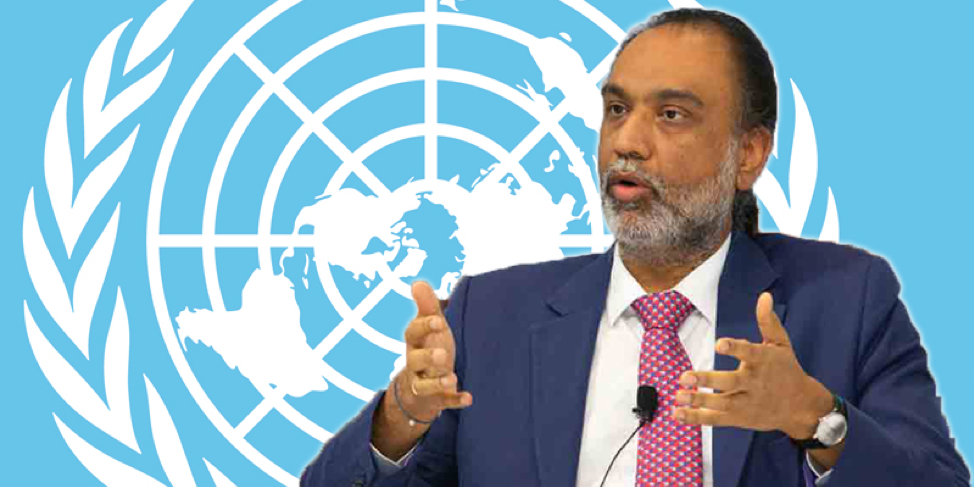

Boston Global Forum honors UN Secretary-General’s Envoy on Technology Amandeep Gill with World Leader in AIWS Award

November 22 event draws world leaders, thinkers and diplomats for exchange on AIWS Actions to create the Global Enlightenment Age
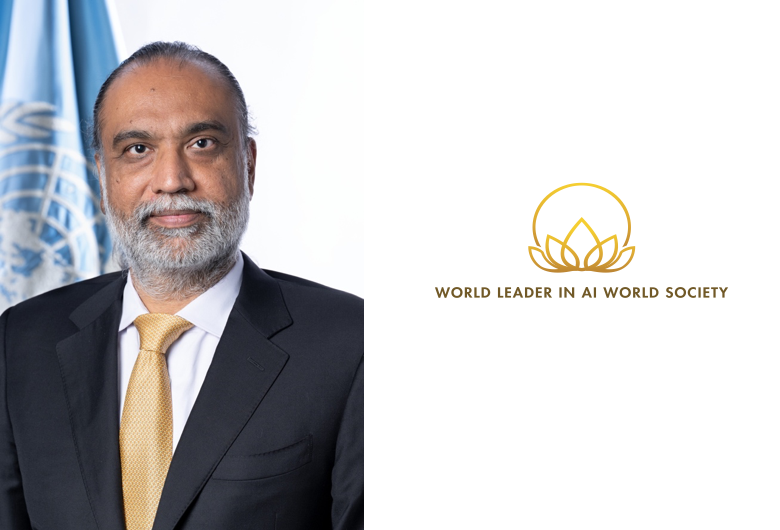
 

Cambridge, MA Nov 11, 2022 – The Boston Global Forum (BGF) is pleased to announce that the Technology Envoy to the United Nations Secretary General, Ambassador Amandeep Gill, will accept the World Leader in AIWS Award and present the keynote address at the BGF’s 10th anniversary Forum on November 22 at Harvard University’s Loeb House.

Ambassador Gill is a pioneer of international cooperation on the governance of artificial intelligence (AI), a passionate advocate of inclusive, responsible and collaborative applications of data and AI to the Sustainable Development Goals (SDGs), and United Nations Secretary-General’s Envoy on Technology.

The United Nations is championing a Global Digital Compact and Roadmap for Digital Cooperation under the leadership of Mr. Gill. These will be important areas of discussion at the United Nations Summit of the Future in 2024.

The Boston Global Forum has been actively involved in global discussions with high impact organizations with pioneering initiatives in AI and Digital Governance. Its recent book, “Remaking the World – Toward an Age of Global Enlightenment” captures the best thinking about the need to coordinate actions and policies to guarantee rights and privacy. BGF established Global Alliance for Digital Governance (GADG) to coordinate global resources for this mission: create the Global Enlightenment Age.

WHAT: UN Technology Envoy Amandeep Gill to deliver keynote address at Boston Global Forum 10 Anniversary Forum

WHEN: Tuesday, November 22, 2022, 2:30p.m.-5:30 pm,

WHERE: Harvard University’s Loeb House, 17 Quincy Street, Cambridge, MA

WHO: Mr. Gill, Former Governor Michael Dukakis, Tuan Nguyen, CEO of Boston Global Forum. For full agenda and list of distinguished speakers, please visit: https://bostonglobalforum.org/bgf-events/


About Boston Global Forum and AI World Society 

The Boston Global Forum (BGF) offers a venue for world leaders, strategists, thinkers, and innovators to contribute to the process of Remaking the World – Toward an Age of Global Enlightenment. The BGF introduced core concepts that are shaping groundbreaking international initiatives, most notably, the Social Contract for the AI Age, AI International Law and Accord, the Global Alliance for Digital Governance, the AI World Society (AIWS) Ecosystem, and the AIWS City.

Co-founders of the Boston Global Forum are Governor Michael Dukakis, Nguyen Anh Tuan, Founder & Editor-in-Chief of VietNamNet (1997-2011), Harvard Professors Thomas Patterson, and John Quelch.

The evolution of Artificial Intelligence holds great promise in a wide variety of sectors but can also be used in damaging ways, including political manipulation and unwarranted surveillance. For this reason, Michael Dukakis Institute has created the Artificial Intelligence World Society Initiative (AIWS) as a means of counteracting harmful and unethical uses of AI, and building the 7-layer AI model, including ethics, to achieve a peaceful and secure world.

The mission of AIWS is to develop recommendations for the development and implementation of AI in ways that promote the public interest. This includes:

  • Develop an ethical framework for the use of AI.
  • Create Social Contract for the AI Age, AI International Accord, and Global Alliance for Digital Governance
  • Innovate technical protocols to enhance cybersecurity and protect privacy.
  • Building AI-Government, the AIWS City, and AI Initiatives in Politics and Society.


Contacts:

Tuan Nguyen, CEO of the Boston Global Forum:

Email: [email protected]

Phone: 617 286 6589


Jim McManus:

Email: [email protected]

Phone: 617-413-9232

 

Parliamentary committee launches inquiry into AI governance

The House of Commons Science and Technology Committee has launched an inquiry into the UK’s governance of artificial intelligence (AI), which will examine how to ensure the technology is used in an ethical and responsible way.

The committee’s inquiry will now examine whether the government’s proposed approach – which will be formalized in an upcoming whitepaper before the end of 2022 – is the right one, with a particular focus on bias in algorithms and the lack of transparency around both public and private sector AI deployments.

The inquiry will also explore how automated decisions can be effectively challenged by ordinary people, as well as how the risks posed by AI systems should be addressed generally.

This includes looking at, for example, which bodies should provide formal regulatory oversight, and how to improve the explainability of AI models to the public.

parliamentary inquiry into AI-powered workplace surveillance previously found that AI was being used to monitor and control workers with little accountability or transparency, and called for the creation of an Accountability for Algorithms Act.

The original article was published at ComputerWeekly.

The Boston Global Forum (BGF), in collaboration with the United Nations Centennial Initiative, released a major work entitled Remaking the World – Toward an Age of Global Enlightenment.   More than twenty distinguished leaders, scholars, analysts, and thinkers put forth unprecedented approaches to the challenges before us. These include President of the European Commission Ursula von der Leyen, Governor Michael Dukakis, Father of Internet Vint Cerf, Former Secretary of Defense Ash Carter, Harvard University Professors Joseph Nye and Thomas Patterson, MIT Professors Nazli Choucri and Alex ‘Sandy’ Pentland, and Vice President of European Parliament Eva Kaili.  The BGF introduced core concepts shaping pathbreaking international initiatives, notably, the Social Contract for the AI Age, an AI International Accord, the Global Alliance for Digital Governance, the AI World Society (AIWS) Ecosystem, and AIWS City.


Understanding the US ‘AI Bill of Rights’ – and how it can help keep AI Accountable

Last week, the US White House Office of Science and Technology Policy (OSTP) released a “Blueprint for an AI Bill of Rights” along with several related agency actions. The document provides an important framework for how government, technology companies, and citizens can work together to ensure more accountable AI.

The need to resolve issues around the Responsible Use of Artificial Intelligence (AI) has become increasingly important for countries, citizens, and businesses over the last eight years. Approximately 60 countries now have National AI Strategies and many have, or are creating, policies which allow for responsible use of a technology which can bring huge benefits but, without adequate governance, can do significant harm to individuals and our society.

The Blueprint is 76 pages and includes many examples of AI use cases that the White House OSTP considers problematic. Importantly, the document clarifies that the Blueprint should only apply to automated systems that have the potential to meaningfully impact the American public’s rights, opportunities, or access to critical resources or services, generally excluding many industrial and/or operational applications of AI. The Blueprint expands on examples for use of AI in Lending, Human Resources, surveillance and other areas (which would also find a counterpart in the ‘high-risk’ use case framework of the forthcoming EU AI Act).

This article was originally published at the World Economic Forum.

The Boston Global Forum (BGF), in collaboration with the United Nations Centennial Initiative, released a major work entitled Remaking the World – Toward an Age of Global Enlightenment.   More than twenty distinguished leaders, scholars, analysts, and thinkers put forth unprecedented approaches to the challenges before us. These include President of the European Commission Ursula von der Leyen, Governor Michael Dukakis, Father of Internet Vint Cerf, Former Secretary of Defense Ash Carter, Harvard University Professors Joseph Nye and Thomas Patterson, MIT Professors Nazli Choucri and Alex ‘Sandy’ Pentland, and Vice President of European Parliament Eva Kaili. The BGF introduced core concepts shaping pathbreaking international initiatives, notably, the Social Contract for the AI Age, an AI International Accord, the Global Alliance for Digital Governance, the AI World Society (AIWS) Ecosystem, and AIWS City.

Japan can lead the G-7 toward an AI governance agreement

AI will transform the world as we know it. There will be no dimension of economic or social life that will not be affected by AI. AI has the potential to discover new lifesaving medicines. AI can help design new materials for construction, manufacturing and consumer products.

Individual countries are now exploring narrow governance solutions designed for their own national best interests. The EU is negotiating the text of the EU AI Act. Here in the U.S., the National Institute of Standards and Technology is finalizing the AI Risk Management Framework. Recently, the U.K. released the first draft of its approach to AI legislation.

Japanese Prime Minister Fumio Kishida has developed a general vision for Society 5.0 that   provides a well-balanced approach to this very important problem.

Japan was able to craft an excellent solution to data governance back in 2019 that became the world standard at the G-20 meeting. We now need Japan to take the lead on AI governance for the upcoming G-7. The G-20 is no longer a viable venue because of Russia’s and China’s geopolitical positions. We need to focus now on leading democracies to develop this critical governance framework.

The original article was posted at the Nikkei.

The Boston Global Forum (BGF), in collaboration with the United Nations Centennial Initiative, released a major work entitled Remaking the World – Toward an Age of Global Enlightenment.   More than twenty distinguished leaders, scholars, analysts, and thinkers put forth unprecedented approaches to the challenges before us. These include President of the European Commission Ursula von der Leyen, Governor Michael Dukakis, Father of Internet Vint Cerf, Former Secretary of Defense Ash Carter, Harvard University Professors Joseph Nye and Thomas Patterson, MIT Professors Nazli Choucri and Alex ‘Sandy’ Pentland, and Vice President of European Parliament Eva Kaili.  The BGF introduced core concepts shaping pathbreaking international initiatives, notably, the Social Contract for the AI Age, an AI International Accord, the Global Alliance for Digital Governance, the AI World Society (AIWS) Ecosystem, and AIWS City.

Is the AI Revolution creating Information Governance Problems?

In order to make smarter governance decisions, the first step is expanding knowledge about how AI operates. While it is not necessary to be an algorithm expert, it is important to understand that this technology has the potential to bank an extremely large amount of consumer data that, in turn, can trigger various compliance obligations. Organizations using AI for business functions already understand the basics: this machine learning technology utilizes trained algorithms that grow to detect trends and automate a variety of human tasks. However, to improve AI governance, there needs to be a larger focus on the data that AI systems rely upon to make inferences. Where does this information come from? What are the collection and storage protocols? Are the resulting patterns accurate? Most importantly, what is happening with sensitive consumer data? These are all questions to evaluate to minimize the chance that AI usage runs afoul of legal obligations, especially those rooted in privacy. Having a handle on this aspect of AI will also contribute to stronger information governance practices. When an organization better understands the tools it deploys in the regular course of business, there is more insight into what data they collect and store. This will strengthen information governance, bring unknown obligations to the surface, and lessen the risk of noncompliant behavior.

As organizations navigate through the digital age and data boom, governance should be a top concern. When dealing with AI technology, there needs to be a greater level of accountability and transparency. Organizations can look to their general data privacy framework and expand it to consider unique AI challenges. Pay close attention to compliance obligations under privacy laws and determine how AI fits into that. One definite issue to address is that there could be a bunch of private consumer data living on a company server simply because an algorithm made an inference. If this data is accurate, then there is the concern of failing to obtain consumer consent (which violates the GDPR and other new privacy laws). If that data is inaccurate, then according to these laws consumers should be able to challenge the inferences made about them.

The original article was posted here.

The Boston Global Forum (BGF), in collaboration with the United Nations Centennial Initiative, released a major work entitled Remaking the World – Toward an Age of Global Enlightenment.   More than twenty distinguished leaders, scholars, analysts, and thinkers put forth unprecedented approaches to the challenges before us. These include President of the European Commission Ursula von der Leyen, Governor Michael Dukakis, Father of Internet Vint Cerf, Former Secretary of Defense Ash Carter, Harvard University Professors Joseph Nye and Thomas Patterson, MIT Professors Nazli Choucri and Alex ‘Sandy’ Pentland, and Vice President of European Parliament Eva Kaili.  The BGF introduced core concepts shaping pathbreaking international initiatives, notably, the Social Contract for the AI Age, an AI International Accord, the Global Alliance for Digital Governance, the AI World Society (AIWS) Ecosystem, and AIWS City.

New York’s Landmark AI Bias Law Prompts Uncertainty

Companies that use AI in hiring are trying to determine how to comply with a New York law that mandates they test their systems for potential biases.

Businesses and their service providers are grappling with how to comply with New York City’s mandate for audits of artificial intelligence systems used in hiring.

A New York City law that comes into effect in January will require companies to conduct audits to assess biases, including along race and gender lines, in the AI systems they use in hiring. Under New York’s law, the hiring company is ultimately liable—and can face fines—for violations.

But the requirement has posed some compliance challenges. Unlike familiar financial audits, refined over decades of accounting experience, the AI audit process is new and without clearly established guidelines.

The city law will potentially impact a large number of employers. New York City in 2021 had just under 200,000 businesses, according to the New York State Department of Labor.

The original article was posted by the Wall Street Journal.

The Boston Global Forum (BGF), in collaboration with the United Nations Centennial Initiative, released a major work entitled Remaking the World – Toward an Age of Global Enlightenment.   More than twenty distinguished leaders, scholars, analysts, and thinkers put forth unprecedented approaches to the challenges before us. These include President of the European Commission Ursula von der Leyen, Governor Michael Dukakis, Father of Internet Vint Cerf, Former Secretary of Defense Ash Carter, Harvard University Professors Joseph Nye and Thomas Patterson, MIT Professors Nazli Choucri and Alex ‘Sandy’ Pentland, and Vice President of European Parliament Eva Kaili.  The BGF introduced core concepts shaping pathbreaking international initiatives, notably, the Social Contract for the AI Age, an AI International Accord, the Global Alliance for Digital Governance, the AI World Society (AIWS) Ecosystem, and AIWS City.

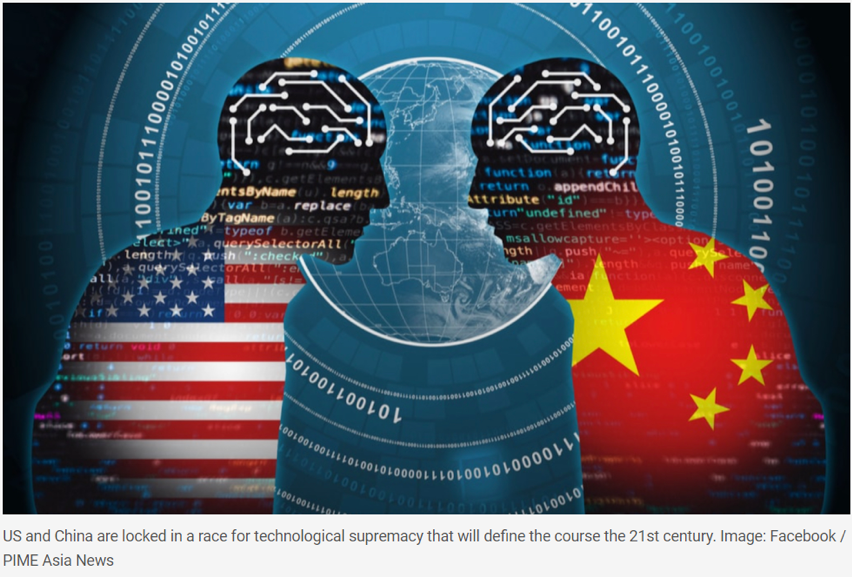
America’s AI edge fading fast to China

The report, titled “Mid-Decade Challenges to National Competitiveness,” was released this month by the congressionally-mandated National Security Commission on Artificial Intelligence (NSCAI).

The report begins by painting a stark picture if the US loses its technological competition with China. In that scenario, China comes to dominate the global economy and earn trillions of dollars in revenue through the development of next-generation technologies it uses for global political leverage.

It also claims that China will use its success to justify and export its authoritarian system, with its digital platforms, surveillance technology and digital payment infrastructure used to undermine democracies, support China’s political objectives, target perceived as threatening individuals and refine its propaganda.

The report also outlines the various challenges the US faces in restoring its technological competitiveness.

Finally, the report stresses that the US should govern AI systems wisely, shaping their development and use through the full range of regulatory and non-regulatory governance mechanisms.

The original article was posted here.

The Boston Global Forum (BGF), in collaboration with the United Nations Centennial Initiative, released a major work entitled Remaking the World – Toward an Age of Global Enlightenment.   More than twenty distinguished leaders, scholars, analysts, and thinkers put forth unprecedented approaches to the challenges before us. These include President of the European Commission Ursula von der Leyen, Governor Michael Dukakis, Father of Internet Vint Cerf, Former Secretary of Defense Ash Carter, Harvard University Professors Joseph Nye and Thomas Patterson, MIT Professors Nazli Choucri and Alex ‘Sandy’ Pentland, and Vice President of European Parliament Eva Kaili.  The BGF introduced core concepts shaping pathbreaking international initiatives, notably, the Social Contract for the AI Age, an AI International Accord, the Global Alliance for Digital Governance, the AI World Society (AIWS) Ecosystem, and AIWS City.


Ethics in AI: Where it fits and Singapore’s approach

Artificial intelligence (AI) has the potential to do what humans can do. AI-enabled tools or solutions have the ability to process data as humans do. There are many benefits in deploying AI. We can now diagnose diseases, drive cars, and even identify criminals using AI solutions. But what are the ethical considerations in using AI? What are the developers’ ethical obligations in developing intelligent machines that will work alongside human beings? And how has Singapore’s Model AI Governance Framework developed since its initial launch in 2019?

Singapore launched a Model AI Governance Framework (the “Model Framework”) in January 2019 at the World Economic Forum in Davos. A year later, the second edition of the Model Framework was published, incorporating experiences of organisations that have adopted AI and feedback received from leading international platforms. The second edition of the Model Framework provides clearer and more effective guidance for organisations to implement AI responsibly.

The Model Framework focuses primarily on four broad areas including internal governance structures and measures, human involvement in AI-augmented decision-making, operations management and stakeholder interaction and communication.

While every AI implementation is different and the considerations vary widely, understanding the possible ramifications and identifying all the relevant stakeholders is critical to this process.

It’s our responsibility to ensure that AI is created ethically and maintains ethical standards. Prioritizing an ethical approach in the design and implementation of AI is an important first step toward building the technology of the future.

The original article was posted here.

The Boston Global Forum (BGF), in collaboration with the United Nations Centennial Initiative, released a major work entitled Remaking the World – Toward an Age of Global Enlightenment.   More than twenty distinguished leaders, scholars, analysts, and thinkers put forth unprecedented approaches to the challenges before us. These include President of the European Commission Ursula von der Leyen, Governor Michael Dukakis, Father of Internet Vint Cerf, Former Secretary of Defense Ash Carter, Harvard University Professors Joseph Nye and Thomas Patterson, MIT Professors Nazli Choucri and Alex ‘Sandy’ Pentland, and Vice President of European Parliament Eva Kaili.  The BGF introduced core concepts shaping pathbreaking international initiatives, notably, the Social Contract for the AI Age, an AI International Accord, the Global Alliance for Digital Governance, the AI World Society (AIWS) Ecosystem, and AIWS City.


Peace in the Age of Global Enlightenment: Technology for Peace

Each year the International Day of Peace is observed around the world on 21 September. The UN General Assembly has declared this as a day devoted to strengthening the ideals of peace, through observing 24 hours of non-violence and cease-fire.

But achieving true peace entails much more than laying down arms.  It requires the building of societies where all members feel that they can flourish.

The Boston Global Forum (BGF) will organize an online high-level panel “Peace for the Global Enlightenment Age”


Time: 9 AM – 10:30 AM EDT, September 21, 2022.

Speakers will discuss ideas in utilization of technology to maintain world peace and security

Theme: Technology for Peace


Moderator:

Ramu Damodaran, Co-chair of the United Nations Centennial Initiative


Agenda (Tentative):

Opening Remarks, Ramu Damodaran, Co-chair of the United Nations Centennial Initiative

Vision from the United Nations, Amandeep Singh Gill, UN Envoy on Technology

Data Science contributes to peace and security, Alex Sandy Pentland, MIT Professor

Peace for the Global Enlightenment Age: Tech Movement, Nguyen Anh Tuan, CEO of Boston Global Forum, Francesco Lapenta, Representative of BGF in Rome


Discussants:

Roland Schatz, Founder and CEO, UNGSII Foundation, Switzerland

Seongbae Lim, Ph.D., Director, King Sejong Institute, Greehey School of Business St. Mary’s University, San Antonio, USA

Mami Katsumi, Education Administrator, Nagaoka University of Techonology, Japan

Dr Staci Martin, Assistant Professor of Practice, Portland State University School of Social Work

Tim Büthe, Professor and Chair for International Relations, Hochschule für Politik at the Technical University of Munich (TUM)


Moderated by Ramu Damodaran

Concluding Remarks, Ramu Damodaran