

Photonic processor could enable ultrafast AI computations with extreme energy efficiency

This new device uses light to perform the key operations of a deep neural network on a chip, opening the door to high-speed processors that can learn in real-time.

The deep neural network models that power today’s most demanding machine-learning applications have grown so large and complex that they are pushing the limits of traditional electronic computing hardware.

Photonic hardware, which can perform machine-learning computations with light, offers a faster and more energy-efficient alternative. However, there are some types of neural network computations that a photonic device can’t perform, requiring the use of off-chip electronics or other techniques that hamper speed and efficiency.

Building on a decade of research, scientists from MIT and elsewhere have developed a new photonic chip that overcomes these roadblocks. They demonstrated a fully integrated photonic processor that can perform all the key computations of a deep neural network optically on the chip.

The optical device was able to complete the key computations for a machine-learning classification task in less than half a nanosecond while achieving more than 92 percent accuracy — performance that is on par with traditional hardware.

The chip, composed of interconnected modules that form an optical neural network, is fabricated using commercial foundry processes, which could enable the scaling of the technology and its integration into electronics.

Please see full here: https://news.mit.edu/2024/photonic-processor-could-enable-ultrafast-ai-computations-1202

Responsibility or Chaos: Finance’s Historic Choice

Finance shapes the world.

The only question is: in which direction?

Every investment decision, every capital allocation is a political act.

In 2025, amid accelerating climate, social, and geopolitical crises, continuing to finance without ethics is not just irresponsible — it is suicidal.

Neutrality is no longer an option.

Responsibility must become the norm.

For too long, finance saw itself as an external referee, detached from real-world consequences.

Today, the facts are undeniable:

  • 90% of carbon emissions are linked to economic and financial decisions.
  • Unequal access to finance deepens social divides.
  • Lack of transparency fuels speculation and systemic crises.
  • 1% of the population now owns nearly twice as much wealth as the remaining 99% combined (Oxfam, 2024).
  • Global debt has reached a record $315 trillion, or 336% of global GDP (Institute of International Finance, 2025).
  • 72% of citizens in G20 countries believe the financial system is unfair and serves only the most powerful (Edelman Trust Barometer, 2024).

To continue as before is to betray future generations.

The dominance of rent-seeking speculation — where financial gains are pursued without creating real economic or social value — has widened inequalities and fueled public distrust.

In contrast, responsible finance is rooted in value creation: investing in innovation, sustainability, and human potential.

The choice is clear: we can continue feeding a system that extracts without building, or we can finance a future that restores balance, opportunity, and trust.

But another path is possible.

A different kind of finance is already emerging.

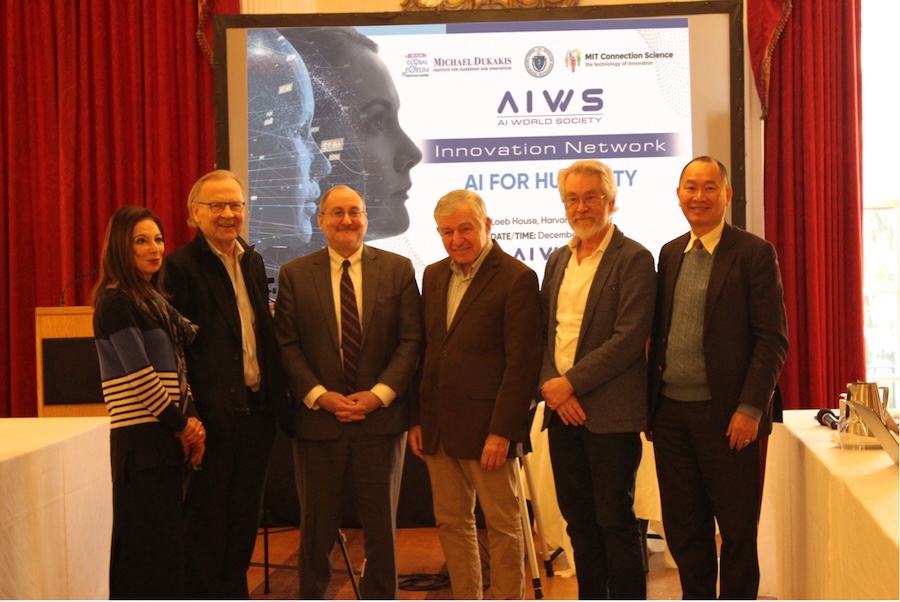
On April 22nd, during a high-level conference at Harvard University, leading scholars, policymakers, and business leaders came together to sign the Boston Finance Accord for 24/7 AI Governance — a foundational declaration for building a new global order anchored in ethics, transparency, and inclusion.

This text follows that milestone moment.

That same day, the Boston Ethics Finance Protocol (BEFP), developed by experts from Harvard and MIT, was officially presented.

This document is not just a reform.

It is a renaissance — aiming to return finance to its true mission: serving the common good, rebuilding trust, and restoring hope — 24 hours a day, 7 days a week.

Through the BEFP, we are laying the foundation for a responsible financial revolution:

  • 90% bias-free financial decisions by 2028.
  • 100% blockchain traceability for every transaction.
  • 20% increased access to finance for underserved populations.
  • 50 cybersecurity hubs to ensure digital financial stability.

These are not promises.

These are measurable, verifiable commitments.

Today, we issue a clear call to action:

  • To investors: demand real, audited ESG standards — not greenwashing.
  • To corporations: align your business models with planetary boundaries and societal needs.
  • To governments: accelerate the adoption of global ethical finance standards, starting with the G7 and G20.

Because there are only two futures ahead:

One driven by greed and fragmentation.

Or one built on responsibility, transparency, and equity.

The time to act is not tomorrow. It is today.

And finance can no longer afford to be a spectator.

It must become the architect of a sustainable future.

Responsibility or chaos.

The choice is ours.

The time is now.

Michael Dukakis, Former Governor of Massachusetts, Co-Founder of the Boston Global Forum.

Élisabeth Moreno, Chairwoman of Ring Capital, former Minister for Gender Equality, Diversity, and Equal Opportunities (France).

Cameron Sabet, EAA Member, Introduces the Boston Finance Accord for AI Governance 24/7 at Harvard Loeb House

At the Boston Global Forum (BGF) Conference on April 22, 2025, Cameron Sabet, a member of the Enlightenment in Action Alliance (EAA), delivered a compelling address introducing the Boston Finance Accord for AI Governance 24/7, a groundbreaking framework aimed at embedding trust, ethics, and human values into AI-driven finance.

Sabet began by emphasizing the urgency of the moment, noting that AI’s rapid integration into global finance has created a critical trust gap. With algorithms moving money faster than regulations and eroding public confidence, he argued that finance requires not future promises, but continuous, transparent, and ethical governance—24/7.

The Boston Finance Accord, he explained, is designed as a practical solution to this challenge. Rooted in AI World Society (AIWS) principles and strengthened by international collaboration, the Accord offers a citizen-centered framework for ethical AI finance. Key innovations include:

  • Trust Score and Peace Finance Index: Tools to measure transparency, fairness, and social impact.
  • AIWS Citizen Forum: Enabling public participation through AI-assisted deliberation.
  • Boston Ethics Finance Protocol (BEFP): Establishing global standards for AI auditing and eliminating spaces for unethical practices.

Sabet highlighted the global nature of the initiative, noting its ties to the Tokyo Accord and its alignment with G7, G20, and Indo-Pacific nations’ efforts. Pilot programs are already underway, signaling tangible progress.

He concluded with a call to action, inviting governments, financial institutions, and global stakeholders to engage with the Accord, participate in its forums, and help shape a future where AI in finance enhances human dignity, trust, and inclusion.

“Finance must be a force that protects communities and fosters integrity around the clock,” Sabet affirmed. “Now is the time for leadership and global collaboration.”

Please see his video here:

Trump Executive Order Calls for Artificial Intelligence to Be Taught in Schools

Trump’s order directs the federal Education Department and the National Science Foundation to prioritize awarding grants and conducting research related to artificial intelligence.

President Donald Trump signed an executive order on April 23, 2025 aimed at bringing artificial intelligence into K-12 schools in hopes of building a U.S. workforce equipped to use and advance the rapidly growing technology.

Trump also directed the Education Department to favor the application of AI in discretionary grant programs for teacher training, the National Science Foundation to prioritize research on the use of AI in education, and the Labor Department to expand AI-related apprenticeships.

“This is a big deal, because AI seems to be where it’s at,” Trump said before he signed the order in the Oval Office.

https://www.whitehouse.gov/presidential-actions/2025/04/advancing-artificial-intelligence-education-for-american-youth/

AIWS Contributions to Rebuilding Trust in Finance Groups

In the Age of AI, financial institutions face growing public scrutiny and trust deficits rooted in concerns over transparency, fairness, ethical behavior, and human dignity. To address these challenges and shape a more trustworthy and inclusive financial system, the AI World Society (AIWS) proposes the following contributions as part of the Boston Finance Accord for AI Governance 24/7:

  1. Promote Transparent and Ethical AI Governance:
    • AIWS will develop and encourage adoption of AIWS Ethical Standards for Financial AI Systems to ensure fairness, explainability, and transparency in AI-driven financial decision-making. Through partnerships with regulatory agencies and financial leaders, AIWS will support the implementation of AI auditing mechanisms and explainable AI (XAI) frameworks that align with democratic values and human rights.
  2. Develop Human-Centric Digital Finance Platforms:
    • Inspired by the AIWS Government 24/7 model, AIWS advocates for financial platforms that prioritize citizen engagement, empathy, and accessibility. Broad listening methodologies—enabling inclusive, participatory dialogue—will be incorporated into the design and delivery of financial services to rebuild public confidence and responsiveness.
  3. Build Trust Frameworks and AI Ethics Scorecards:
    • AIWS will design and promote a Trustworthiness Scorecard for AI in Finance, enabling institutions to benchmark their performance in areas such as ethical integrity, transparency, data responsibility, and user-centered service. This initiative aims to reinforce institutional accountability while fostering trust among users and the wider public.
  4. Facilitate Multi-Stakeholder Deliberation Forums:
    • To democratize the shaping of AI in finance, AIWS will convene deliberative forums—both physical and virtual—bringing together citizens, technologists, policymakers, and industry leaders. These AI-assisted citizen assemblies will help co-create regulatory frameworks and platform governance practices grounded in public values.
  5. Champion Democratic Finance in the AI Economy:
    • AIWS will advocate for a new model of Democratic Finance, where financial institutions are guided by principles of inclusivity, social responsibility, and sustainability. A proposed AIWS Democratic Finance Charter will serve as a voluntary commitment for institutions that align financial growth with human-centered and equitable development.
  6. Advance AI and Financial Literacy for All:
    • Recognizing the need for greater public understanding of finance and AI, AIWS will partner with educational institutions and media to develop open-access resources that promote digital and financial literacy. These efforts will demystify AI, empower informed choices, and reduce inequality in access to financial tools and knowledge.
  7. Recognize Ethical Leadership and Best Practices:
    • To elevate role models and innovations, AIWS will launch an annual AIWS Ethical Finance Leadership Prize. This recognition will honor financial leaders and organizations that demonstrate outstanding commitment to transparency, fairness, and public service in the deployment of AI technologies.

Boston Finance Accord: Pioneering AI Governance 24/7

The Boston Finance Accord for AI Governance 24/7, set to be unveiled on April 22, 2025, at Harvard University’s Loeb House during the Boston Global Forum (BGF) Conference, represents a groundbreaking framework to revolutionize governance through artificial intelligence and innovative financial systems. Building on the legacy of the AI World Society (AIWS) Initiative (2017), the Social Contract for the AI Age (2020), and the Tokyo Accord (March 28, 2025), this accord harnesses Boston’s financial and academic leadership—embodied by Fidelity Investments’ pioneering achievements and distinguished professors from Harvard Business School (HBS) and MIT Sloan—to establish secure, scalable funding mechanisms for continuous, AI-driven public service. Championed by BGF co-founders Governor Michael Dukakis, Nguyen Anh Tuan, Professor Thomas Patterson, and Professor John Quelch, alongside its Board of Directors, the accord integrates ethical AI standards, citizen empowerment, and a new AIWS Knowledge System to promote fairness, kindness, and global collaboration. It aims to redefine governance for the Age of Global Enlightenment, ensuring 24/7 access to equitable, transparent services worldwide.

Invitation to Contribute
We invite thought leaders, innovators, policymakers, financial experts, and citizens worldwide to contribute to the official version of the Boston Finance Accord for AI Governance 24/7, to be announced at the BGF Conference on April 22, 2025, at Harvard University’s Loeb House. Your insights—whether on financial infrastructure, ethical AI governance, citizen participation, or the AIWS Knowledge System—will shape this transformative framework. Join us in advancing a vision where AI and finance unite to serve humanity continuously, reflecting the principles of transparency, equity, and inclusivity championed by the Boston Global Forum. Please submit your contributions, ideas, or feedback by April 18, 2025, to [email protected]. Together, let’s build a future of governance that inspires peace and opportunity for all.


Carrying Forward Shinzo Abe’s Vision ― A Financial AI Protocol for Ethical Innovation and Global Security

Distinguished Speech by Yasuhide Nakayama at the 4th Shinzo Abe Conference, Tokyo, March 28, 2025

Today, the world stands at the beginning of an era unlike any before―a time of tremendous technological change. Among these changes, artificial intelligence (AI) is already transforming how our economies and societies function, and the financial world is no exception.

We must guide this transformation so that it leads to prosperity and safety for all people. The proposal I present today―the Abe Financial AI Protocol―is a framework inspired by the vision and values of the late Prime Minister Shinzo Abe. It provides direction for how financial systems should operate in the age of AI.

Prime Minister Abe always based his policies on universal values: freedom, democracy, the rule of law, and human dignity. The Abe Financial AI Protocol is also built on these principles. It aims to create a financial system that is open and secure, where trust and transparency support innovation. This protocol reflects the idea of “Society 5.0”― a society where technology serves people―and embraces the concept of “Data Free Flow with Trust (DFFT),” which Japan has championed on the global stage.

With these frameworks, we seek to make sure AI brings benefits to many, while protecting human rights and dignity.

Prime Minister Abe often said, “Without economic revitalization, there can be neither national prosperity nor national security.” This belief is at the heart of the economic strategy behind this protocol. By using financial technologies (fintech) and AI, we can drive economic growth, improve financial services, and create new industries. In doing so, we can once again revitalize Japan’s economy and tackle long-term challenges such as our aging population. These efforts carry forward the spirit of Abenomics―a policy focused on inclusive growth that reaches all citizens.

At the same time, innovation must always go hand-in-hand with safety and security. In the financial world, the misuse of AI can pose serious threats―from destabilizing the economy to disrupting daily life.

We must protect society against AI-driven financial crimes, cyberattacks on infrastructure, and the harmful use of new technologies. Just as Prime Minister Abe strengthened Japan’s national security under the idea of “Proactive Contribution to Peace,” this protocol places great importance on defending our financial systems in the AI era. We must update legal frameworks, ensure transparency in algorithms, and give our regulators and law enforcement the tools they need to keep us safe.

In addition, allow me to speak from the perspective of a politician. Japan once achieved remarkable postwar recovery and high economic growth as a nation built on “processing trade.”

Please see full here:

https://bostonglobalforum.org/initiative/shinzo-abe-initiative-for-peace-and-security/carrying-forward-shinzo-abes-vision-a-financial-ai-protocol-for-ethical-innovation-and-global-security/

The Boston Global Forum (BGF) also recognizes a groundbreaking project by Professor Alex Pentland, a distinguished BGF Board of Directors member, as an integral component of the “Abe Financial AI Protocol.” Titled “Trusted and Reliable AI Agents: Building the Future of the Consumer Experience in an Agentic World,” this initiative, launched on March 24, 2025, is a collaboration between Stanford University and Consumer Reports. Led by Professor Pentland, the project advances the Tokyo Accord’s vision by developing trustworthy AI agents to enhance consumer interactions within financial systems, aligning with AIWS Government 24/7’s emphasis on transparency, scalability, and citizen empowerment. This effort underscores BGF’s commitment to actionable innovation, honoring Shinzo Abe’s legacy by integrating cutting-edge AI research into real-world governance solutions.

A Strategic Vision for US AI Leadership: Supporting Security, Innovation, Democracy and Global Prosperity

Mark Kennedy, Member of BGF Board of Thinkers

 As submitted to the Office of Science and Technology Policy in response to a Request For Information asking for input for their upcoming US AI Action Plan

 Action Steps to Strengthen US AI Leadership and Economic Competitiveness

  • Invest in AI Talent Pipeline– China graduates twice the number of Science, Technology, Engineering, and Math (STEM) PhDs as the US. With the US ranking near the bottom in the percentage of graduates pursuing STEM fields, it has long relied on attracting the world’s best and brightest. Visas for Chinese students and academics have fallen by two-thirds since peaking in 2015. A recent surge in students from India is taking up some of the slack. It is important that policies and a welcoming environment continue to attract the global AI talent essential to US tech leadership while also investing more in STEM education for American students.
  1. Provide Access to High-Performance Compute Power– Establish a national AI compute network to support research universities. Increase domestic semiconductor production and high-performance computing (HPC) resources to support AI research and private-sector innovation. Gain a decisive lead in emerging technologies that promise faster and greener compute power, such as optical computing (using laser light waves), neuromorphic computing (modeled after systems in the human brain), and quantum computing (using subatomic particles).
  • Secure Data– Secure access to unbiased, high-quality data for US AI researchers. Consider which datasets should be restricted from strategic competitors. Counter China’s growing control over the data flowing through global telecommunications (Huawei, ZTE) and logistics (LOGINK) software, while promoting secure, US-aligned alternatives.
  1. Fund Research– Fully fund research as authorized in the CHIPS and Science Act, prioritizing AI and other technologies that will shape tomorrow like quantum, biotech and nanotechnology. According to the Organization for Economic Cooperation and Development (OECD), China recently overtook the US in research funding at universities and government entities. Unless funding trends are reversed China will soon overtake the US in total research funding. The US must ensure American institutions remain the world’s AI research hubs.
  2. Invest in AI for Economic Competitiveness– Support AI-driven innovation across key industries (healthcare, manufacturing, energy, finance) by incentivizing AI adoption in small businesses and expanding AI-driven workforce training programs. The goal should be for AI to enhance productivity and job creation to ensure continued opportunities for American workers.
Action Steps to Address AI’s Societal Risks 
  1. Strengthen AI Transparent Government Use– Promote AI usage to provide 24/7 government services in a transparent manner, enhancing the availability and ease of accessing government services while maintaining trust and accountability.
  2. Combat AI-Powered Disinformation While Preserving Free Speech –Work with AI firms to advance voluntary content labeling, misinformation detection, and deepfake protections—without empowering censorship frameworks that could restrict political discourse.

Please see full here: https://bostonglobalforum.org/publication/14916/

and https://www.wilsoncenter.org/article/strategic-vision-us-ai-leadership-supporting-security-innovation-democracy-and-global


Friends of Vietnam-U.S. Film Collaboration Program

Launched at the BGF Roundtable: “Humanity and Compassion in Vietnamese Film and Contributions to the AI World Society”
Harvard University Faculty Club, Cambridge, MA
March 11, 2025

Overview

The Friends of Vietnam-U.S. Film Collaboration program is a landmark initiative to strengthen cinematic ties between Vietnam and the United States, celebrating 30 years of normalized relations and our comprehensive strategic partnership. Spearheaded by the Boston Global Forum (BGF) and the Vietnam Film Development Association (VFDA), this program unites esteemed leaders, filmmakers, scholars, and innovators to foster creativity, advance AI-driven storytelling, and promote cultural exchange through film.

Objectives

  1. Enhance Industry Ties: Facilitate collaboration between Vietnamese and U.S. filmmakers, producers, and technologists to share expertise, resources, and opportunities.
  2. Promote Innovation: Support the integration of artificial intelligence (AI) in cinema, guided by AI World Society (AIWS) standards, to responsibly shape the future of storytelling.
  3. Celebrate Cultural Exchange: Highlight the humanity and compassion in Vietnamese cinema while expanding its reach through U.S. platforms and vice versa.
  4. Build Global Networks: Connect film communities in Vietnam and the U.S. with international hubs, amplifying their impact in the AI era.
  5. Access Film Markets: Open pathways for Vietnamese and U.S. films to enter and thrive in each other’s markets, enhancing visibility and economic opportunities.

Key Initiatives

  • AIWS Film Park: Develop a pioneering cinema hub in a beautiful city, Vietnam, linking it to Boston, New York, Hollywood, and beyond, with support from program friends.
  • Da Nang Asian Film Festival Promotion: Elevate the festival’s profile in Boston and other U.S. cities, fostering cross-cultural dialogue and collaboration.
  • Workshops and Exchanges: Organize events, roundtables, and mentorship programs to connect filmmakers, innovators, and scholars from both nations.

Esteemed Friends

The program is honored to include the following distinguished individuals as foundational supporters:

  • Governor Michael Dukakis, Former Governor of Massachusetts, Co-Founder and Co-Chair, Boston Global Forum
  • Professor Thomas Patterson, Harvard University,
  • Nguyen Anh Tuan, Co-Chair and CEO, Boston Global Forum
  • Meg Montagnino-Jarrett, Director, Massachusetts Film Office
  • Angela Peri, Founder, Boston Casting
  • Sara Archambault, Director of Harvard Shorenstein Center Doc Film Program
  • Matthew Salloway, Filmmaker and CEO GSI Ventures
  • Le Vinh Hoa, Director of Harvard University Vietnamese Language Program
  • Tony Bui, Artist-in-Residence at Columbia University, Acclaimed Filmmaker
  • Mark Kennedy, Director of the Wilson Center’s Wahba Institute for Strategic Competition, Mark Kennedy
  • Lorie Conway, Boston Film Producer
  • Professor Robert Desimone, MIT, Neuroscience and Technology Expert
  • Professor David Silbersweig, Harvard Medical School, Innovator in Science and Culture
  • Jeff Saviano, Harvard University
  • Lrod, MIT Lecture
  • Professor Suk-Young Kim, UCLA
  • Cameron Kerry, Former Acting Secretary of Commerce
  • Ngo Phuong Lan, Chairwoman, Vietnam Film Development Association (VFDA)
  • Ambassador Nguyen Quoc Dung, Vietnam’s Ambassador to the United States
  • Tran Thi Bich Van, Spouse of Ambassador Nguyen Quoc Dung
  • Ambassador Dang Hoang Giang, Permanent Representative of Vietnam to the United Nations
  • Ambassador Hoang Anh Tuan, Consul General of Viet Nam Consulate General in San Francisco, California, the United States of America
  • Pham Viet Dung, VST Business Leader, VFDA
  • Dinh Trong Tuan, Member of Standing Committee, VFDA
  • Nguyen Phuong Hoa, Vice Chairwoman, VFDA

Roles and Contributions

The Esteemed Friends will:

  • Provide strategic guidance, mentorship, and advocacy for the program’s initiatives.
  • Leverage their networks to connect Vietnamese and U.S. film communities with global opportunities and markets.
  • Participate in key events, such as the AIWS Film Park launch (April 2, 2025) and the Da Nang Asian Film Festival showcase (June 30, 2025).

Implementation

  • Launch: Discuss at the BGF Roundtable on March 11, 2025.
  • Next Steps: Convene an inaugural meeting of the Esteemed Friends by April 2025 to outline priorities, followed by workshops and exchanges throughout 2025-2026.
  • Support: Backed by BGF’s strategic expertise and VFDA’s leadership, with collaboration from academic partners (Harvard, MIT, Columbia, UCLA).

Vision

The Friends of Vietnam-U.S. Film Collaboration program aspires to create a vibrant, interconnected film ecosystem that honors the past 30 years of Vietnam-U.S. relations while forging a future where cinema and AI unite to inspire, educate, and connect the world. Together, we will build bridges that amplify Vietnamese and American voices in the global AI landscape and open new markets for mutual growth.