Setting the Stage for Global Harmony: First Official Discussion on the AIWS Music for Humanity Movement

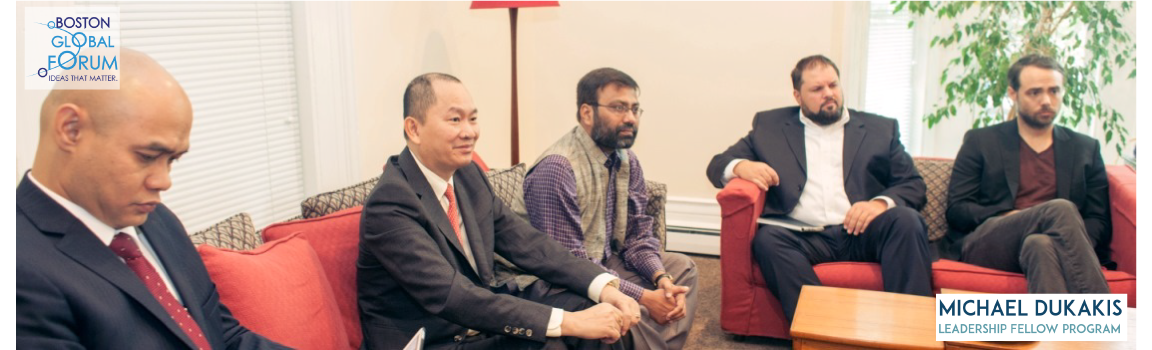
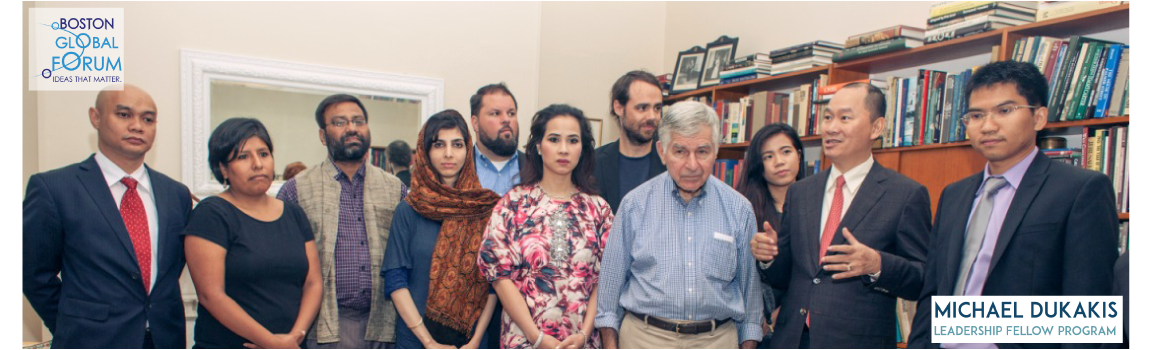
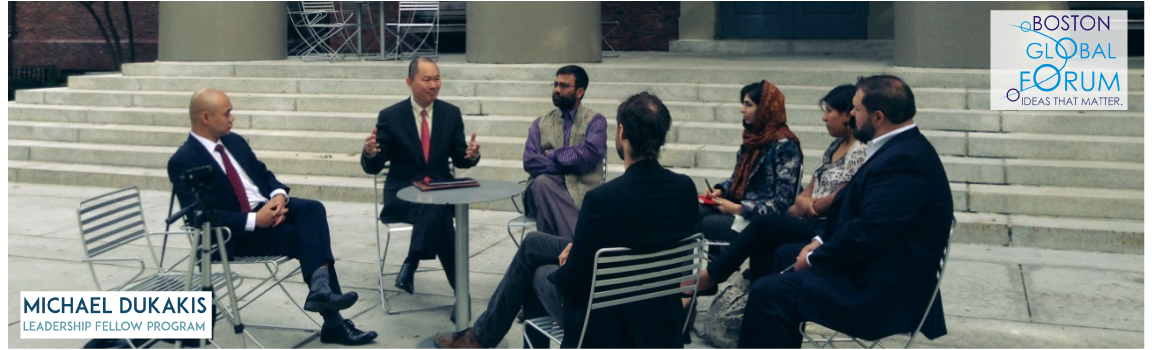
On July 4, 2025, a landmark discussion will officially launch the vibrant AIWS Music for Humanity Movement. Bridging continents and cultures, this inaugural discussion will connect leaders and artists across diverse locations, including Boston, Nha Trang, Tokyo, Lake Como, Paris, and Tromsø (Northern Norway).

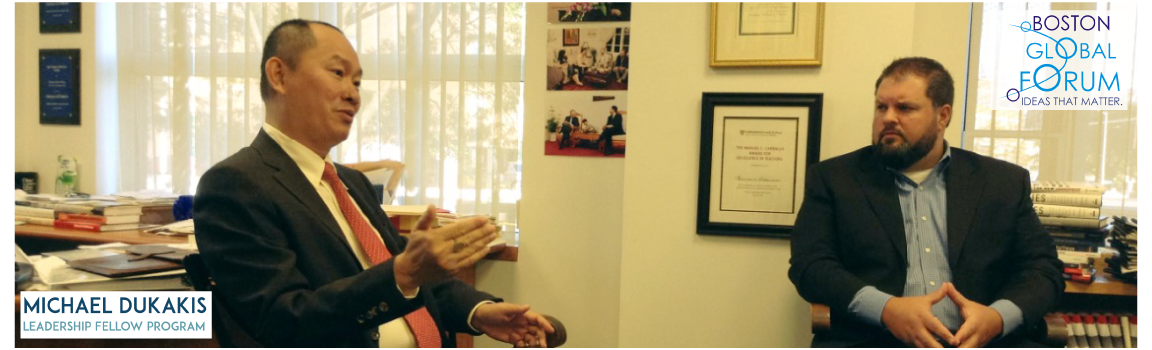
At the heart of this global conversation will be Governor Michael Dukakis and Mr. Nguyen Anh Tuan, alongside an esteemed group of musicians and newly appointed Ambassadors for the AIWS Music for Humanity. Their collective dialogue will lay the groundwork for the upcoming AIWS Music for Humanity Forum, exploring how the universal language of music, amplified by the ethical advancements of AI, can foster peace, compassion, and understanding in our world. One key topic for discussion will be precisely how the AIWS Music for Humanity will contribute to shaping a better world in the AI Age. This session marks a pivotal step in harnessing artistic expression to advance the human-centered vision of the AI World Society.

Photonic processor could streamline 6G wireless signal processing

By performing deep learning at the speed of light, this chip could give edge devices new capabilities for real-time data analysis.

As more connected devices demand an increasing amount of bandwidth for tasks like teleworking and cloud computing, it will become extremely challenging to manage the finite amount of wireless spectrum available for all users to share.

Engineers are employing artificial intelligence to dynamically manage the available wireless spectrum, with an eye toward reducing latency and boosting performance. But most AI methods for classifying and processing wireless signals are power-hungry and can’t operate in real-time.

Now, MIT researchers have developed a novel AI hardware accelerator that is specifically designed for wireless signal processing. Their optical processor performs machine-learning computations at the speed of light, classifying wireless signals in a matter of nanoseconds.

The photonic chip is about 100 times faster than the best digital alternative, while converging to about 95 percent accuracy in signal classification. The new hardware accelerator is also scalable and flexible, so it could be used for a variety of high-performance computing applications. At the same time, it is smaller, lighter, cheaper, and more energy-efficient than digital AI hardware accelerators.

The device could be especially useful in future 6G wireless applications, such as cognitive radios that optimize data rates by adapting wireless modulation formats to the changing wireless environment.

Tech billionaires are making a risky bet with humanity’s future

Sam Altman, Jeff Bezos, Elon Musk, and others may have slightly different goals, but their grand visions for the next decade and beyond are remarkably similar.

They include aligning AI with the interests of humanity; creating an artificial superintelligence that will solve all the world’s most pressing problems; merging with that superintelligence to achieve immortality (or something close to it); establishing a permanent, self-­sustaining colony on Mars; and, ultimately, spreading out across the cosmos.

Three features play a central role with powering these visions, says Adam Becker, a science writer and astrophysicist: an unshakable certainty that technology can solve any problem, a belief in the necessity of perpetual growth, and a quasi-religious obsession with transcending our physical and biological limits.

In his timely new book, More Everything Forever: AI Overlords, Space Empires, and Silicon Valley’s Crusade to Control the Fate of Humanity, Becker reveals how these fantastical visions conceal a darker agenda.

https://www.technologyreview.com/2025/06/13/1118198/agi-ai-superintelligence-billionaires/?utm_source=the_download&utm_medium=email&utm_campaign=the_download.unpaid.engagement&utm_term=&utm_content=06-13-2025&mc_cid=ba57858a89&mc_eid=be5202f3c7

Boston Global Forum Announcement:“Amplifying Human Creativity and Problem Solving with AI Through Generative Collective Intelligence”

The Boston Global Forum (BGF) is pleased to introduce a groundbreaking new paper by BGF Board Member Professor Alex Pentland and BGF Contributor Thomas Kehler, titled:

“Amplifying Human Creativity and Problem Solving with AI Through Generative Collective Intelligence”

This insightful work explores how AI—when designed as a facilitator of Generative Collective Intelligence—can significantly enhance human creativity, collaboration, and complex problem-solving. The paper offers a powerful framework for building systems that combine human insight and machine learning to support democratic governance, innovation, and ethical decision-making in the Age of AI.

As part of BGF’s continued mission to shape a human-centered future with AI, we encourage scholars, technologists, and policymakers to engage with this important contribution.

📄 Read the full paper: https://arxiv.org/pdf/2505.19167

📧 For media or academic inquiries: [email protected]

Please see full here:

https://arxiv.org/pdf/2505.19167

Post-CMOS Photonic Integration

Anna Lena Schall-Giesecke

Integrated photonics leveraging CMOS technology could help pioneer the future of sensing and computing.

Photonics is rapidly transforming electronics, opening doors to faster, more energy-efficient and robust systems. At the heart of this transformation is CMOS technology—the backbone of modern electronics. CMOS chips are used in everything from smartphones to supercomputers, thanks to their low power consumption and scalability. Integrating photonics directly onto CMOS circuits takes this a step further by combining the precision of light-based systems with the reliability of CMOS electronics.

Please read full here:

https://www.optica-opn.org/home/articles/volume_36/june_2025/departments/post-cmos_photonic_integration/?src=hpmiddle

AI learns how vision and sound are connected, without human intervention

This new machine-learning model can match corresponding audio and visual data, which could someday help robots interact in the real world.

“We are building AI systems that can process the world like humans do, in terms of having both audio and visual information coming in at once and being able to seamlessly process both modalities. Looking forward, if we can integrate this audio-visual technology into some of the tools we use on a daily basis, like large language models, it could open up a lot of new applications,” says Andrew Rouditchenko, an MIT graduate student and co-author of a paper on this research.

A new approach developed by researchers from MIT and elsewhere improves an AI model’s ability to learn in this same fashion. This could be useful in applications such as journalism and film production, where the model could help with curating multimodal content through automatic video and audio retrieval.

https://news.mit.edu/2025/ai-learns-how-vision-and-sound-are-connected-without-human-intervention-0522

Photonic processor could enable ultrafast AI computations with extreme energy efficiency

This new device uses light to perform the key operations of a deep neural network on a chip, opening the door to high-speed processors that can learn in real-time.

The deep neural network models that power today’s most demanding machine-learning applications have grown so large and complex that they are pushing the limits of traditional electronic computing hardware.

Photonic hardware, which can perform machine-learning computations with light, offers a faster and more energy-efficient alternative. However, there are some types of neural network computations that a photonic device can’t perform, requiring the use of off-chip electronics or other techniques that hamper speed and efficiency.

Building on a decade of research, scientists from MIT and elsewhere have developed a new photonic chip that overcomes these roadblocks. They demonstrated a fully integrated photonic processor that can perform all the key computations of a deep neural network optically on the chip.

The optical device was able to complete the key computations for a machine-learning classification task in less than half a nanosecond while achieving more than 92 percent accuracy — performance that is on par with traditional hardware.

The chip, composed of interconnected modules that form an optical neural network, is fabricated using commercial foundry processes, which could enable the scaling of the technology and its integration into electronics.

Please see full here: https://news.mit.edu/2024/photonic-processor-could-enable-ultrafast-ai-computations-1202

Responsibility or Chaos: Finance’s Historic Choice

Finance shapes the world.

The only question is: in which direction?

Every investment decision, every capital allocation is a political act.

In 2025, amid accelerating climate, social, and geopolitical crises, continuing to finance without ethics is not just irresponsible — it is suicidal.

Neutrality is no longer an option.

Responsibility must become the norm.

For too long, finance saw itself as an external referee, detached from real-world consequences.

Today, the facts are undeniable:

  • 90% of carbon emissions are linked to economic and financial decisions.
  • Unequal access to finance deepens social divides.
  • Lack of transparency fuels speculation and systemic crises.
  • 1% of the population now owns nearly twice as much wealth as the remaining 99% combined (Oxfam, 2024).
  • Global debt has reached a record $315 trillion, or 336% of global GDP (Institute of International Finance, 2025).
  • 72% of citizens in G20 countries believe the financial system is unfair and serves only the most powerful (Edelman Trust Barometer, 2024).

To continue as before is to betray future generations.

The dominance of rent-seeking speculation — where financial gains are pursued without creating real economic or social value — has widened inequalities and fueled public distrust.

In contrast, responsible finance is rooted in value creation: investing in innovation, sustainability, and human potential.

The choice is clear: we can continue feeding a system that extracts without building, or we can finance a future that restores balance, opportunity, and trust.

But another path is possible.

A different kind of finance is already emerging.

On April 22nd, during a high-level conference at Harvard University, leading scholars, policymakers, and business leaders came together to sign the Boston Finance Accord for 24/7 AI Governance — a foundational declaration for building a new global order anchored in ethics, transparency, and inclusion.

This text follows that milestone moment.

That same day, the Boston Ethics Finance Protocol (BEFP), developed by experts from Harvard and MIT, was officially presented.

This document is not just a reform.

It is a renaissance — aiming to return finance to its true mission: serving the common good, rebuilding trust, and restoring hope — 24 hours a day, 7 days a week.

Through the BEFP, we are laying the foundation for a responsible financial revolution:

  • 90% bias-free financial decisions by 2028.
  • 100% blockchain traceability for every transaction.
  • 20% increased access to finance for underserved populations.
  • 50 cybersecurity hubs to ensure digital financial stability.

These are not promises.

These are measurable, verifiable commitments.

Today, we issue a clear call to action:

  • To investors: demand real, audited ESG standards — not greenwashing.
  • To corporations: align your business models with planetary boundaries and societal needs.
  • To governments: accelerate the adoption of global ethical finance standards, starting with the G7 and G20.

Because there are only two futures ahead:

One driven by greed and fragmentation.

Or one built on responsibility, transparency, and equity.

The time to act is not tomorrow. It is today.

And finance can no longer afford to be a spectator.

It must become the architect of a sustainable future.

Responsibility or chaos.

The choice is ours.

The time is now.

Michael Dukakis, Former Governor of Massachusetts, Co-Founder of the Boston Global Forum.

Élisabeth Moreno, Chairwoman of Ring Capital, former Minister for Gender Equality, Diversity, and Equal Opportunities (France).
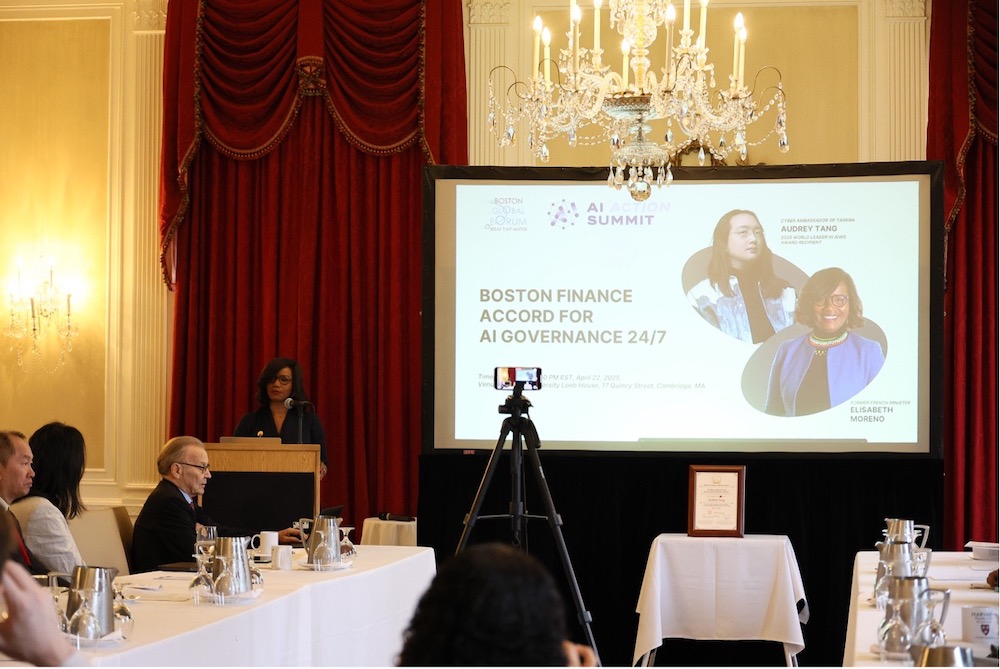

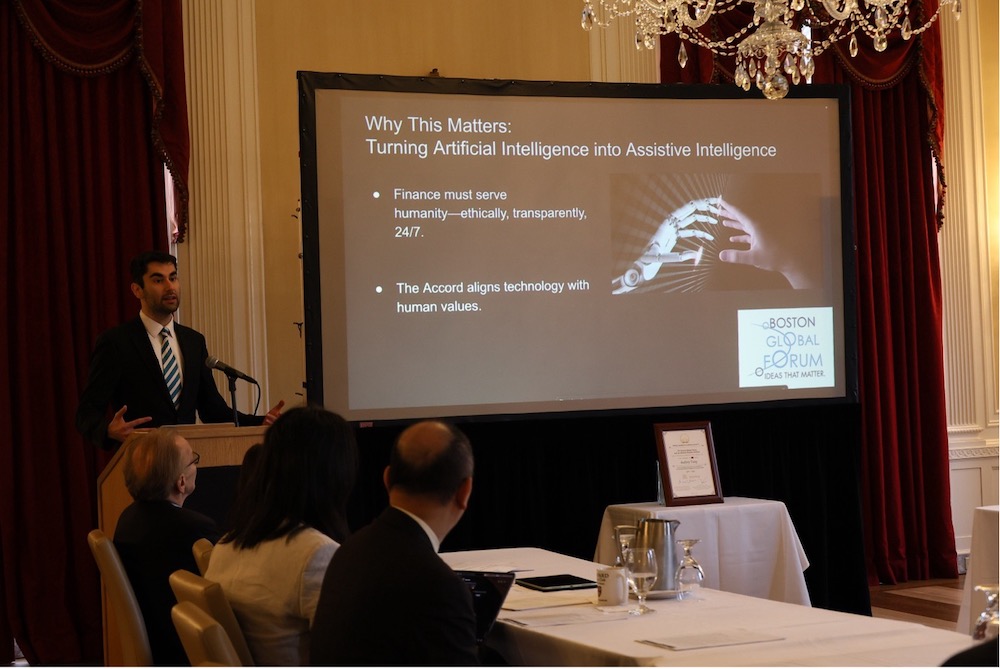
Cameron Sabet, EAA Member, Introduces the Boston Finance Accord for AI Governance 24/7 at Harvard Loeb House

At the Boston Global Forum (BGF) Conference on April 22, 2025, Cameron Sabet, a member of the Enlightenment in Action Alliance (EAA), delivered a compelling address introducing the Boston Finance Accord for AI Governance 24/7, a groundbreaking framework aimed at embedding trust, ethics, and human values into AI-driven finance.

Sabet began by emphasizing the urgency of the moment, noting that AI’s rapid integration into global finance has created a critical trust gap. With algorithms moving money faster than regulations and eroding public confidence, he argued that finance requires not future promises, but continuous, transparent, and ethical governance—24/7.

The Boston Finance Accord, he explained, is designed as a practical solution to this challenge. Rooted in AI World Society (AIWS) principles and strengthened by international collaboration, the Accord offers a citizen-centered framework for ethical AI finance. Key innovations include:

  • Trust Score and Peace Finance Index: Tools to measure transparency, fairness, and social impact.
  • AIWS Citizen Forum: Enabling public participation through AI-assisted deliberation.
  • Boston Ethics Finance Protocol (BEFP): Establishing global standards for AI auditing and eliminating spaces for unethical practices.

Sabet highlighted the global nature of the initiative, noting its ties to the Tokyo Accord and its alignment with G7, G20, and Indo-Pacific nations’ efforts. Pilot programs are already underway, signaling tangible progress.

He concluded with a call to action, inviting governments, financial institutions, and global stakeholders to engage with the Accord, participate in its forums, and help shape a future where AI in finance enhances human dignity, trust, and inclusion.

“Finance must be a force that protects communities and fosters integrity around the clock,” Sabet affirmed. “Now is the time for leadership and global collaboration.”

Please see his video here: