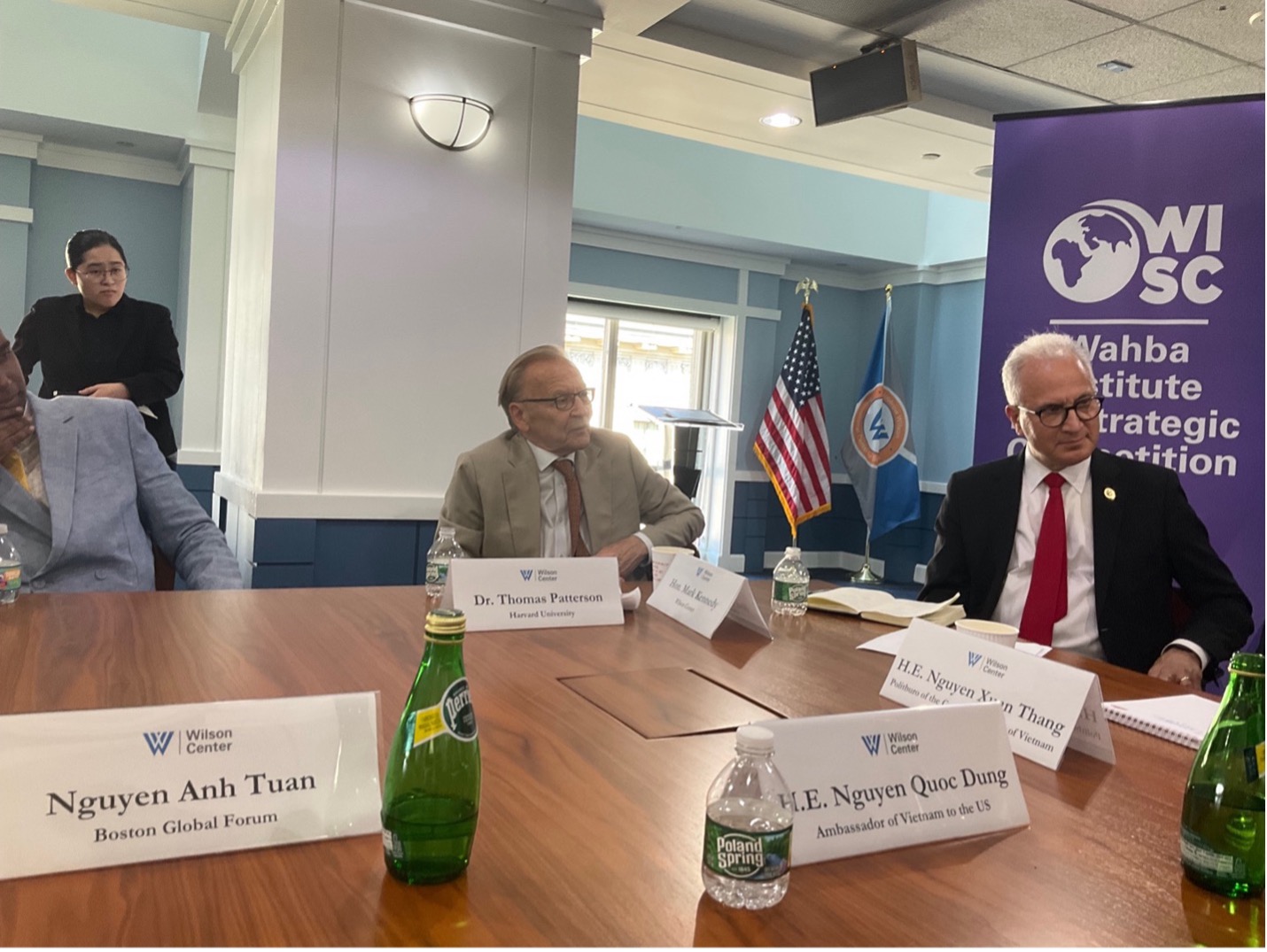




This brief summarizes the assessment of the US-China tech race provided by Mark Kennedy, Founding Director of the Wahba Initiative for Strategic Competition at NYU and member of the Boston Global Forum (BGF) Board of Thinkers, as featured in the Goldman Sachs Top of Mind report (Issue 144, December 2025).
The “Central Switchboard” of Rivalry
Kennedy characterizes technology not merely as a component of the US-China rivalry, but as its “central switchboard”. He argues that whoever controls the routing of technology, data, and computing power will dictate terms across military, economic, and informational domains. He suggests that the geopolitical implications of this contest are currently underappreciated.
The Four Arenas of the Tech Race
Kennedy identifies four distinct “arenas” where the competition is unfolding:
- Technological Innovation:The United States leads in most advanced technologies, including semiconductors, AI frameworks, cloud infrastructure, and quantum computing. It also maintains a superior ability to attract global talent.
- Practical Application:China leads in the deployment and adoption of technology. For example, China’s robotics deployment in manufacturing is twelve times greater than that of the US when adjusted for income. It is also more proactive in testing and deploying physical AI, such as uncrewed taxis and drone deliveries.
- Global Installations (“Digital Plumbing”):China dominates this arena, particularly in the Global South, where it has outpaced the West in building essential digital infrastructure and networks.
- Technological Self-Sufficiency:China is making significant strides toward independence through its “dual circulation” strategy. It is actively reducing reliance on Western technology while increasing Western dependence on Chinese supply chains for batteries and critical minerals.
Key Findings and Outlook
- Effectiveness of Export Controls:Kennedy asserts that US export controls have not been “especially significant” in stopping China. Instead, they have accelerated China’s planned transition toward domestic semiconductor technology.
- Current Standing:While the US leads in developing the technology itself, China is rapidly closing the gap or leading in infrastructure, application, and self-sufficiency.
- The Future Result:Kennedy envisions a world where neither side is the outright victor. He predicts a bifurcated outcome where the US may continue to lead in developing the most advanced technologies, while China leads in global installations.
Professor Paul Triolo and others in the report echo Kennedy’s concerns, noting that China’s vast engineering talent and resources make it a formidable contender for eventual technological self-sufficiency.