
Detecting urinary tract infections via a new AI

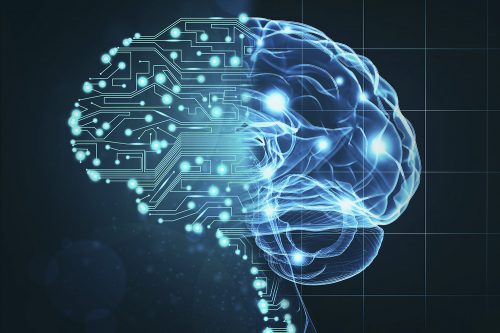
A new AI created at the University of Surrey can distinguish and help decrease one of the top reasons for hospitalization for individuals living with dementia: urinary tract infections (UTI).
UTI is a disease of any piece of the urinary system. The indications incorporate torment in the lower of the stomach, blood in urine, expecting to urinate all of a sudden or more frequently than expected and changes in state of mind and behaviour.

In a paper distributed by PLOS ONE, researchers from the University of Surrey’s Center for Vision, Speech and Signal Processing (CVSSP) detail how, in a NHS clinical preliminary at that point utilized novel machine learning calculations to distinguish early UTI symptoms.

The test was a piece of the TIHM (Technology Integrated Health Management) for dementia venture. The task, which is a piece of the NHS Test Beds Program and is financed by NHS England the Office for Life Sciences, enabled clinicians to remotely screen the soundness of individuals with dementia living at home, with the assistance of a system of web empowered gadgets, for example, ecological and movement checking sensors, and essential body flag observing gadgets.

As indicated by The World Health Organization, around 50 million individuals worldwide have dementia. This number is evaluated to reach 152 million by 2050. Professor Helen Rostill, Director of Innovation and Development at Surrey and Borders Partnership NHS Foundation Trust, stated: “The TIHM for dementia contemplate is a shared undertaking that has united the NHS. Our point has been to make an Internet of Things drove framework that utilizes machine figuring out how to caution our clinicians to potential medical issues that we can venture in and treat early. The framework enhances the lives of individuals with dementia and their carers and could likewise decrease pressure on the NHS.”

This technology could offer opportunities for the world of AI. Yet, giving it so much power can result in a development speed beyond our control. It needed to be careful monitored and regulated for the machine as well as its developers. There are organizations such as the Michael Dukakis Institute (with the AIWS Initiative and the AIWS 7-Layer Model) are constantly researching and raising people’s awareness to ensure the future of AI.


OECD Summit on Going Digital in March 2019

In March 2019, the Organisation for Economic Co-operation and Development (OECD) will hold OECD Summit on Going Digital in Paris.

This is a high-level closing event of Going Digital Project since 2017. This summit will be attended by high-level policy makers and key stakeholders to share stories and their opinion about key areas of policy.

OECD Summit on Going Digital will be organized in two day. There are 14 topics:

  • Promises of digital transformation
  • Measuring digital transformation
  • Strategies for digital transformation
  • Addressing digital divides
  • Making digital transformation work for growth & productivity
  • Policies for the digital age
  • Day 1 wrap-up
  • Jobs in the digital age
  • Education and skills for the digital age
  • Trade, investment and competition in the digital age
  • Imagining 2030
  • Can we ensure privacy in a data-driven world?
  • Well-being and the digital transformation
  • Realising the potential of new digital technologies
  • Steering towards a better digital future

Finland’s ambition in AI teaching plan

In the time of AI superpowers, Finland can’t coordinate the US and China. So this nation is executing an aspiring test to show the essentials of AI to 1% of the populace in this nation, equal to 55,000 individuals. When that objective is met, the goal is expanding the extent of the populace that knows about AI. This program is a piece of the push to enable Finland to lead the application and utilization of innovation.

The Finnish government is currently deploying it nationwide. As of mid-December, more than 10,500 people, including at least 4,000 people outside the Finnish border, took the course. More than 250 companies have also committed to training part or all of their employees.

At the heart of promoting economic, skilled Finnish workers is another attempt to create a more modern and modern democracy. That’s what made Teemu Roos, the founder of the course, relate educator of software engineering at the University of Helsinki, begin the project from the earliest starting point. He wanted to outfit voters with the data expected to think about the speculation and manage the country’s AI.

It is a key strategy to address the problem which countries face in the world: inadequate knowledge of technology. Especially in the United States, a contemplate distributed a week ago by the AI Management Center at Oxford University has noted that numerous Americans don’t perceive the nature or ubiquity of AI, which makes labeling Facebook photographs and Netflix recommendation instrumental. Strategy creators are similarly befuddled about the extension and abilities for innovation. Without a sensible comprehension, the United States is in danger of altering the AI too aimlessly, or coincidentally controlling advancement or not limiting outcomes.

In this way, during the time spent affirming its contribution in the worldwide AI economy, Finland is pushing its initiative in an unexpected way: it is to demonstrate to different nations generally accepted methods to alter AI to be increasingly thorough.

MDI is working to promote the AIWS 7-Layer Model to build Next Generation Democracy. This invention will hopefully provide a service that helps the development of AI in order to protect achievements and reduce risks from spreaded and actual harms that AI could create for humanity.

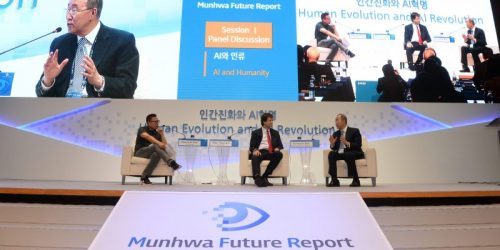
Former Secretary General Ban Ki-moon spoke about human evolution and AI revolution

On September 2018, Former Secretary General Ban Ki-moon attended at the Munhwa (Cultural) Future Report held at the Korea Chamber of Commerce and Industry in Seoul, Korea.

Former Secretary General Ban Ki-moon gave a speech on human evolution and AI (artificial intelligence) revolution. He was honored as a World Leader for Peace, Security and Development Award by the Boston Global Forum in 2016.

In the first Munhwa Future Report forum, the topic was on misunderstandings about AI and providing a mutual understanding of future developments.

In the remaining sessions of the forum, participants discussed on top global issues which are increasing threats and conflicts against world peace, population aging and decreasing growth potential, the technological big bang, and environmental issues. The purpose of the discussion is answering the question what Korea need to do for a good future.

There are many professors and experts took part in the Munhwa Future Report such as Professor Max Tegmark of Massachusetts Institute of Technology (MIT), Professor Dae-shik Kim of Korea Advanced Institute of Science and Technology (KAIST), Professor Stuart Russell of UC Berkeley.

Vaira Vike-Freiberga: The electronic condition will change our disposition towards composing word

Talking in 2018, the Reading Promotion Project “Library” distributed a video with the preference of previous President, Vaira Vike-Freiberga where she shared her encounters on reading books and literature.

She believes that literature represented everything written in letters. Fundamentally, the beginnings of the composed declaration were exceptionally handy, associated with property and power. About fiction, it initially created regarding legends, fantasies, and somewhat with religious traditions, gradually as a kind advanced into epic.

“Individuals’ poetry has been rousing with its creative ability and with its cadenced, smooth dialect. Pretty much society verse has inspired numerous journalists.” She believes that “nobody could view himself as an informed individual if his school’s scholarly program had not had the first oral stage, that was, both fantasies and society verse. Folk songs are melodious verse.” She said: “The song is alive if there are people who sing him.”

All above, the former President believes, that word that was composed all the more regularly would spread electronically. Conversely, electronic could toss anything out, they could get back, but she mentioned that book could not disappear completely in the next 100 years.

Vaira Vike-Freiberga was honored as the Distinguished Innovation Leader for her distinguished work in the humanities and social sciences by the Boston Global Forum and the Michael Dukakis Institute on May 15, 2018.

AIWS for Leadership and Innovation

On this week, AIWS talkshow for Leadership and Innovation will be co-organized by Boston Global Forum (BGF) and Vietnam Televisions VTV3 Chanel.

The moderators of the program will be Journalist Ta Bich Loan (the Director of Vietnam Televisions VTV3 Channel and one of Vietnam’s top 50 most influential women 2017), together with Barry Nolan (the former presenter on Comcast Cable’s CN8 channel in the US, and winner of multiple Emmy Awards). In this event, participants will discuss on AI in general and The Artificial Intelligence World Society (AIWS).

Journalist Ta Bich Loan, Director of Vietnam Televisions VTV3 Channel

A year after the AIWS was born, it has spread its influence to the world’s leading science and technology centers as well as political and cultural centers. Rt. Hon. Liam Byrne MP, Member of Parliament for Birmingham, Hodge Hill, Shadow Digital Minister, Chair of the All-Party Parliamentary Group on Inclusive Growth, delivered the first AI World Society Distinguished Lecture at Global Cybersecurity Day 2018. On April 25, 2018, OECD Secretary, General Angel Gurria, receive the first world leader in AIWS Award at BGF-G7 Summit Conference at Harvard University Faculty Club. AI-Government, a component of the AIWS became a topic in a section at AI World Conference and Expo which was held in Boston in December 2018; besides that Michael Dukakis Institute for Leadership and Innovation (MDI) will be the core partner who organizes AI-Government conference in DC in June 2019. Out of Boston, many AIWS groups are established in various countries such as Japan, England, Germany, Finland, Belgium, Austria, New Zealand, Australia, Russia…

This event will have the presence of not only two famous anchors, but also many leading professors and experts in AI technology: Prof. Jason Furman (economist and professor at Harvard University’s Kennedy School of Government and a Senior Fellow at the Peterson Institute for International Economics), Mr. Nicco Mele (The Director of the Shorenstein Center on Media, Politics and Public Policy and an academic research center in the Harvard Kennedy School at Harvard University), Professor Nazli Choucri (Member of Boston Global Forum’s Board of Thinkers; Co-founder, member of GC Development Council; Global Citizenship Educators at Global Citizenship Education Network), Marc Rotenberg (President and Executive Director of the Electronic Privacy Information Center – EPIC) and many other prominent characters.

5 important predictions for Artificial Intelligence in 2019

In 2018, Artificial Intelligence (AI) was mentioned almost every field. For the next year, there will be more incredible new discoveries and also the exaggeration of the commentators. There are five important things related to AI that are expected to happen in 2019:

1. AI will make extra contributions to international political issues

2018 has seen an increase in trade protectionism in the global trading system, especially in the relationship between top countries in the race for Artificial Intelligence, the US and China. While the US was imposing more rule of goods and services used to build AI, China was trying to explore on its own.

As a result, authoritarian regimes could assume the AI technology more and more to control freedoms. Moreover, the partnership between the AI organizations across the world could be compromised making the difficulties in setting common standards for AI.

2. Increasing the transparency of AI

Everyone should know what AI is and how it works to believe in AI. 2019 may see more measures created to increase the transparency of AI.

According to reports, many companies sometimes are repressing the setup of AI due to the fear of liabilities in the future if current technology were to be judged to be unfair or unethical in the future.

3. AI and robotization bearing further into each business

In financial services, immense ongoing logs of thousands of exchanges for each second are routinely parsed by machine learning calculations.

In 2019, what we’ll see developing certainty is that this keen, prescient innovation, supported by the learnings it has grabbed in its underlying organizations, can be taken off discount over the majority of a business’ activities.

AI will stretch out into help capacities, for example, HR or improving supply chains, where choices around coordination, just as procuring and terminating, will turn out to be progressively educated via computerization.

We’re additionally to see an expansion in organizations utilizing their information to create new income streams. In 2019 more organizations will receive this remarkably to comprehend the estimation of the data they possess.

4. A larger number of occupations will be made by AI than be lost to it.

As we referenced, in the long term the ascent of the machines will uncertainly prompt human joblessness and social struggle or something in the middle.

While 1.8 million occupations will be lost to computerization – 2.3 million will be made in assembling – one factor that can prompt this uniqueness is the accentuation on offering AI in the capacity to “strengthen” while conveying it in non-manual employment. This implies those ventures profit by the development in human occupations on the specialized side

For the monetary administrations, the viewpoint is maybe marginally grimmer. With back-office works progressively being managed via machines, we could be well on our approach to seeing that materialize by the end of next year.

5. AI collaborators will become really helpful

In 2019, more of the human than any time will utilize an AI associate to mastermind our timetables, plan our adventures, or request a pizza. These services will turn out to be progressively valuable as they figure out how to envision our practices better and comprehend our habits.

Information assembled from clients enables application designers to see precisely what the clients require. Therefore, capacities which we would like to utilize AI for –, for example, requesting taxicabs and sustenance deliveries– are ending up progressively streamlined and available.

Over this, AI associates are intended to end up progressively productive at understanding their human clients.

BGF is discussing these issues as well, including growing threats to democratic governance. We believe that AI technology and analytical thinking can help us face the challenges of nationalist populism and dictatorship.

New AI named DeepGestalt can identify genetic diseases by looking at your face

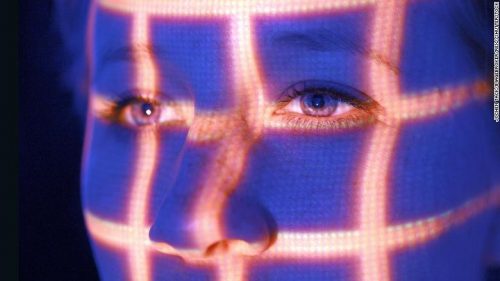
According to a recent study, a new artificial intelligence (AI) technology can accurately identify rare genetic disorders using a photo of a patient’s face which could be of value in personalized medicine.

Named DeepGestalt, this new AI technology outperformed clinicians in identifying a range of syndromes in three trials. The study was published in the journal Nature Medicine.

According to the study, 8% of the population has diseases with key genetic components, and many have recognizable facial features. The DeepGestalt tool could identify, for example, Angelman syndrome with characteristic features such as a wide mouth or a protruding tongue.

Speaking about the technology, Yaron Gurovich, the chief technology officer at FDNA and lead researcher of the study, said: “It demonstrates how one can successfully apply state of the art algorithms, such as deep learning, to a challenging field where the available data is small, unbalanced in terms of available patients per condition, and where the need to support a large number of conditions is great.”

DeepGestalt was trained on 17,000 facial images of patients who had been diagnosed with over 200 distinct genetic maladies.

The deep learning algorithm outperformed clinicians in identifying a target syndrome among 502 chosen images, proposing a list of potential diseases and identifying the right one in its top 10 possibilities 91% of the time.

The AI also managed to outperform clinicians when it came to identifying subtypes in Noonan syndrome, achieving a 64% accuracy, compared to its human counterparts’ historical success rate of 20%.

Gurovich mentioned that one difficulty is the hard measure of the AI’s performance. He said: “The reason it is hard because there are not enough publicly available benchmarks.”

Jorge Cardoso, senior lecturer in artificial medical intelligence at the school of biomedical engineering and imaging sciences at King’s College London, expressed that the AI  is “very interesting.”

“While several limitations still need to be addressed to ensure the proposed algorithms are robust in the hospital environment, clinically accurate, and applicable to different age groups and ethnic populations, the potential of AI in healthcare is immense,” said Cardoso.

Following the first layer of the AIWS 7-Layer Model—the set of ethical standards for AI developed by MDI—AI should not be able to put at risk the health and safety of humans. Therefore, we should always keep in mind the risk of malfunction in self-driving cars, and users’ safety needs to be guaranteed by developers.

Auto-generating textbooks by browsing Wikipedia

Wikipedia is a profitable asset. But it’s not constantly clear how to order the substance on some random point into a coherent whole.

The Complete Guide is a profound tome. At in excess of 6,000 pages, this book is a complete prologue to machine learning, with up and coming sections on counterfeit neural systems, hereditary calculations, and machine vision.

However, this is no common production. It is a Wikibook, a reading material that anybody can get to or alter, made up from articles on Wikipedia, the immense online reference book.

Enter Shahar Admati and associates at the Ben-Gurion University of the Negev in Israel, these people have built up an approach to naturally create Wikibooks utilizing machine learning. They consider their machine the Wikibook-bot. “The oddity of our strategy is that it is gone for producing a whole Wikibook, without human association,” they state.

The specialists started by recognizing a lot of existing Wikibooks that can go about as a preparation informational index. They began with 6,700 Wikibooks, incorporated into an informational collection made accessible by Wikipedia, for this sort of scholarly examination.

Since these Wikibooks frame a sort of best quality level both for preparing and testing, the group required an approach to guarantee their quality. “We focused on Wikibooks that were seen something like multiple times, in view of the supposition that well known Wikibooks are of a sensible quality,” they state.

That left 490 Wikibooks that they separated further, in view of components, for example, having in excess of 10 sections. That left 407 Wikibooks that the group used to prepare their machines.

The group at that point separated the errand of making a Wikibook into a few sections, every one of which requires an alternate machine-learning aptitude. The errand starts with a title produced by a human, portraying an idea or something to that affect, for example, Machine Learning—The Complete Guide.

To help with this assignment, the group utilized the system structure of Wikipedia—articles regularly point to different articles utilizing hyperlinks. They started with the titles of the 407 Wikibooks made by people and played out the three-bounce examination. They at that point worked out the amount of the substance in the human-made books were incorporated by the computerized methodology.

The following stage is to compose the articles into parts. The last advance is to decide the request in which the articles ought to show up in every part. To do this, the group sort out the articles in sets and utilize a system based model to figure out which ought to seem first. By rehashing this for all mixes of article matches, the calculation works out a favored request for the articles and accordingly the sections. Along these ways, the group could deliver robotized adaptations of Wikibooks that had just been made by people.

It is intriguing work that can possibly deliver important course readings on a wide scope of points, and even to make different messages, for example, meeting procedures. Exactly how significant they will be to human perusers is yet to be resolved. Be that as it may, we will watch discover.

As AI develops at a very fast pace, it is necessary to observe its progress from time to time to keep it under control. Developers and organizations should use a certain set of standards to keep track of the technology’s development. The AIWS 7-layer model for AI ethical issues developed by MDI can be a good one to follow.