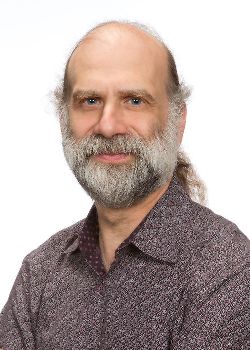
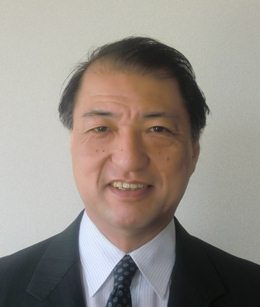
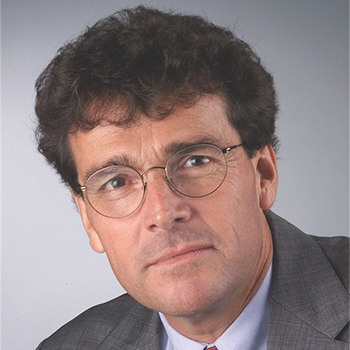
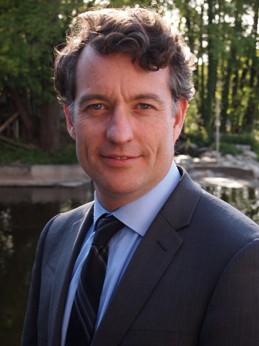
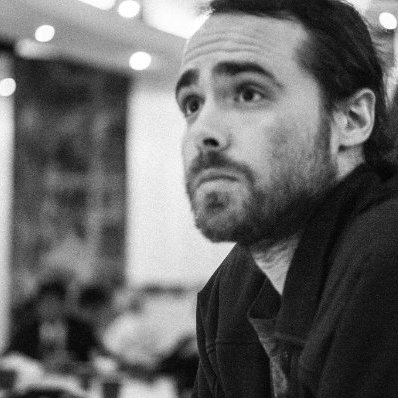
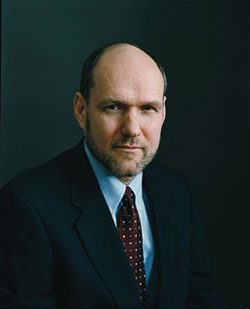
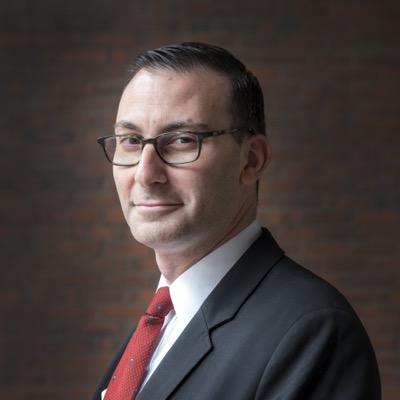
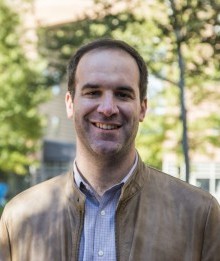
Allan M. Cytryn is with Risk Masters International, LLC, a consulting firm that advises clients on Risk Mitigation and Management, including business continuity planning, disaster recovery, and recovery from cyber attacks. He has been a senior Information Technology executive for more than 30 years. Prior to Risk Masters, Allan spent 15 years at Deloitte where he was a Director. His roles and responsibilities there included Regional CIO, National Director of Applications, and National Director of Technology for Audit and Enterprise Risk Services. Before joining Deloitte, Allan was the CIO of Simpson Thacher & Bartlett, a Vice President of Corporate Finance with Goldman Sachs, and a Vice-President of Information Technology with Bankers Trust. In all of these roles he led organizations through rapid operational and technological transformations and helped them adopt new and innovative technologies to support their core strategic objectives.
Allan additionally played a critical leadership role for Deloitte in managing the IT recovery from the 9/11/2001 attack in New York and for Simpson Thacher and Bartlett leading their recovery from the 1993 NatWest Tower Bombing in London.
Allan earned a BS in Electrical Engineering and Computer Science and an MS in Operations Research & Applied Mathematics from Columbia Engineering, as well as a M.Arch from Columbia’s Graduate School of Architecture, Planning and Preservation. He is active in alumni affairs, serving as the Chair of the Alumni Board of Visitors of the Columbia University School of Engineering and Applied Sciences and as the Treasurer of The Society of Columbia Graduates.
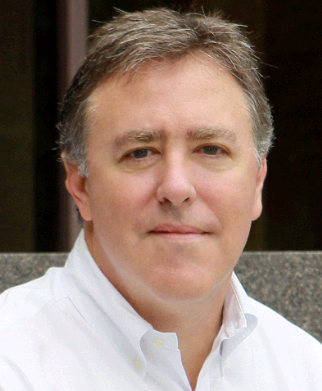
Professor of Philosophy, Chair, Department of Philosophy and Religion
Northeastern University
Ronald Sandler is chair of the Department of Philosophy and Religion, professor of philosophy, a researcher in the Nanotechnology and Society Research Group, and a research associate in the Environmental Justice Research Collaborative at Northeastern University. His primary areas of research are environmental ethics, ethics and technology, ethical theory, and Spinoza.
Sandler has taught courses on subjects ranging from philosophy of religion to ethics after Darwin and from contemporary moral issues to history of philosophy. He has received Northeastern University’s Excellence in Teaching Award.
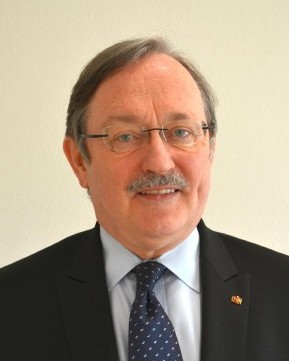
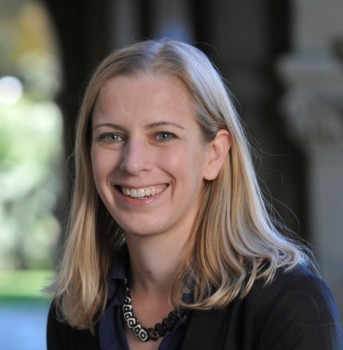
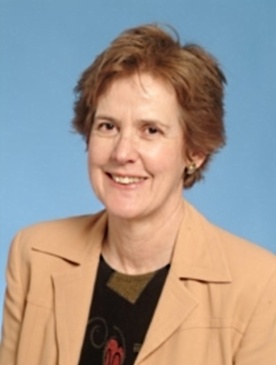
Tina Eliassi-Rad is an Associate Professor of Computer Science at Northeastern University in Boston, MA. She is also on the faculty of Northeastern’s Network Science Institute. Prior to joining Northeastern, Tina was an Associate Professor of Computer Science at Rutgers University; and before that she was a Member of Technical Staff and Principal Investigator at Lawrence Livermore National Laboratory. Tina earned her Ph.D. in Computer Sciences (with a minor in Mathematical Statistics) at the University of Wisconsin-Madison. Her research is rooted in data mining and machine learning; and spans theory, algorithms, and applications of massive data from networked representations of physical and social phenomena. Tina’s work has been applied to personalized search on the World-Wide Web, statistical indices of large-scale scientific simulation data, fraud detection, mobile ad targeting, and cyber situational awareness. Her algorithms have been incorporated into systems used by the government and industry (e.g., IBM System G Graph Analytics) as well as open-source software (e.g., Stanford Network Analysis Project). In 2010, she received an Outstanding Mentor Award from the Office of Science at the US Department of Energy.
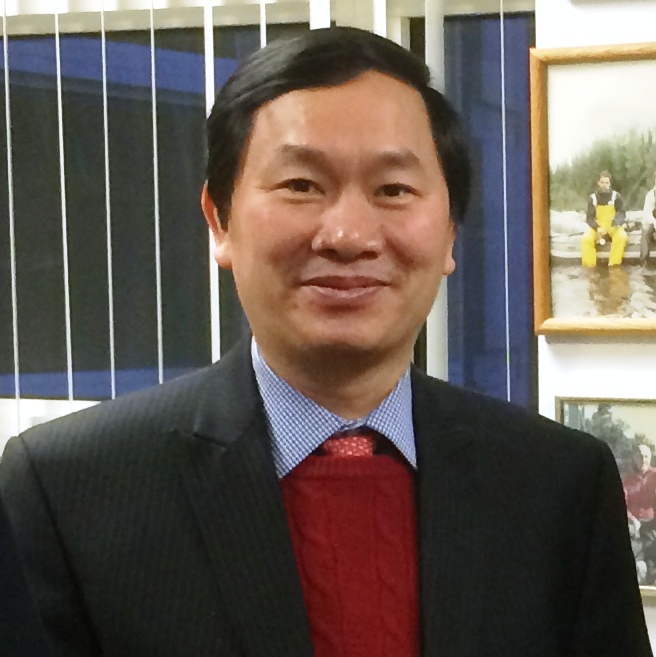
Director of The Michael Dukakis Institute for Leadership and Innovation; Co-Founder, and Chief Executive Officer of The Boston Global Forum;
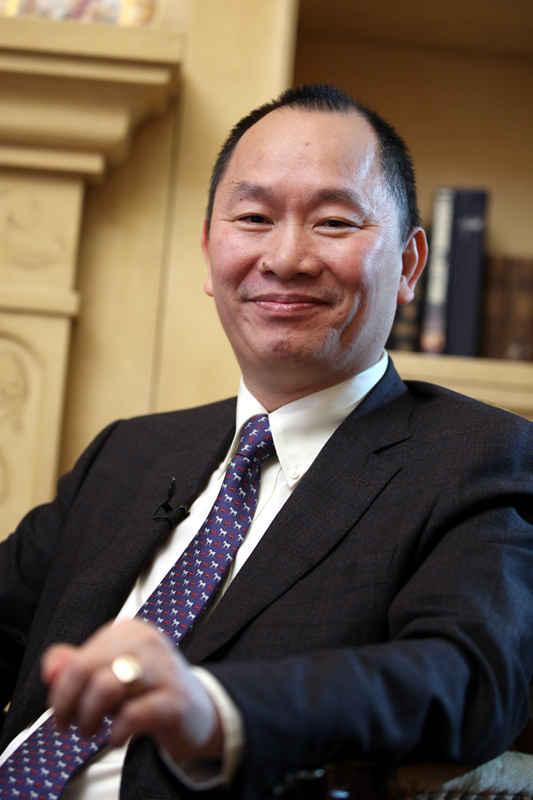
Mr. Nguyen Anh Tuan is co-founder and Director of The Michael Dukakis Institute for Leadership and Innovation (MDI), and co-founder and CEO of The Boston Global Forum (BGF).
Tuan is recognized globally for his pivotal role as a Vietnam Government reformist, who has successfully fostered freedom-of-expression, vigorous open debate and private enterprise in a nation that has become a leader in commerce, culture, and the innovation as well as a close ally of the West.
For his AI World Society Initiative and the concepts of AI-Government he developed, Vietnam National Television (VTV) named him Person of The Year 2018.
He is the Founder and Chairman of the VietNamNet Media Group and the Founder and Editor-in-Chief of VietNamNet, Vietnam’s preeminent online newspaper. Additionally, Tuan was the Founder and CEO of VASC Software and Media Company and VietNet, the first Internet service provider in Vietnam.
In recognition of his contributions to his native country, the Government of Vietnam named Tuan one of the nation’s 10 most outstanding young talents in 1996.
Under Tuan’s leadership, VietNamNet has raised significant political issues resulting in greater Vietnamese Government transparency and freedoms. He pioneered an interactive live format called the VietNamNet Online Roundtable that allowed online Vietnamese citizens to participate in interviews with leading political, social and cultural figures as well as foreign dignitaries. In 2009, Tuan conceived of an annual global initiative making September 9th World Compassion and Reconciliation Day. Additionally, he founded and organized the Vietnam National Concert to be held annually on September 2nd, Vietnam’s National Day holiday.
In 2011, he became a Pacific Leadership Fellow at the School of International Relations and Pacific Studies at the University of California San Diego. That year he addressed the prestigious Club de Madrid Conference, a gathering of former prime ministers and presidents, in a speech titled Democracy and Digital Technology.
From February 2011 to July 2014 Tuan was an Associate of the Shorenstein Center on Media, Politics and Public Policy, John F. Kennedy School of Government, Harvard University.
He later became a Visiting Scholar at the College of Communication, Boston University for the academic years 2014-2015, and 2015-2016.
As a Shorenstein Fellow at Harvard Kennedy School in 2007, Tuan researched major trends in the development of electronic media in Vietnam.
Tuan served on the Harvard Business School Global Advisory Board from 2008 to 2016. He also serves on the Board of Trustees of the Free-for-All Concert Fund in Boston. Since July of 2015 to November of 2017 he served as Chair of the International Advisory Committee of UCLA – UNESCO Chair on Global Learning and Global Citizenship Education at the University of California Los Angeles.
Tuan is a co-founder, and Chief Executive Officer of the Global Citizenship Education Network (GCEN), a collaboration between the Boston Global Forum and the UNESCO-UCLA Chair on Global Learning and Global Citizenship Education as well as being co-founder and Former Associate Editor of UCLA’s Global Commons Review.
In an effort to enhance cybersecurity worldwide, Tuan created Global Cybersecurity Day, produced the recent BGF-G7 Summit Initiative, and coauthored the Ethics Code of Conduct for Cyber Peace and Security (ECCC).
In November of 2017, Tuan and Governor Michael Dukakis founded AI World Society Initiative, and on June 25, 2018, Tuan and Governor Dukakis, Professor Thomas Patterson, Professor Nazli Choucri announced the Concepts of AI-Government. In 2018, Tuan created the World Leader in AI World Society Award, and the AI World Society Distinguished Lecture, and became the co-author of AI World Society Ethics and Practices Index.
Some of the nation’s leading authorities on Fake News and Cyberwar will speak at the next Boston Global Forum symposium at Harvard University on Tuesday, April 25. Coverage is invited.
The emergence of Fake News and threat of Cyberwar now impact free, fair and peaceful elections in the US and worldwide.
Leading cybersecurity and international media authorities will discuss coping with the rising impact of fake news and peaceful solutions to the threat of cyberwar at the upcoming Boston Global Forum-G7 Summit Initiative Conference in Cambridge.
8:30-11:30 AM, Tuesday, April 25 The Harvard University Faculty Club 20 Quincy Street, Cambridge, MA
Cyberwar
The first Initiative of the BGF-G7 Summit: Solutions to Prevent Cyberwar will be delivered by Prof. John Savage, Brown University; Mikko Hypponen – Chief Research Officer, F-Secure, and Trey Herr – Cybersecurity Fellow, Harvard Kennedy School.
Their presentation will be followed with a panel discussion by Prof. Derek Reveron and Prof. Thomas E. Creely, Naval War College; Prof. Nazli Choucri, MIT; Ryan Maness, Northeastern University; and Anders Corr, Principal, Corr Analytics.
Fake News
Coping with the spread of fake news will be addressed by Global Citizenship Education Network Professor Thomas Patterson of Harvard University; Anders Corr of Corr Analytics, and with Nguyen Anh Tuan, cofounder and CEO of The Boston Global Forum and chair of the International Advisory Committee of UNESCO in Global Learning and Global Citizenship Education at UCLA. This is the second Initiative of the BGF-G7 Summit.
Their comments will be followed by a panel discussion on the recent emergence of fake news and its impact on the democratic process with Prof. Carlos Alberto Torres, UCLA; Llewellyn King, Host, Whitehouse Chronicle and Barry Nolan, Senior Advisor, Joint Economic Committee, US Congress.
About The Boston Global Forum
Established in 2012, The Boston Global Forum brings together, in an open and accessible public forum, an eclectic and engaging spectrum of highly regarded academic leaders, real-world experts, influential thoughts leaders, media experts and promising young leaders.
BGF’s immediate goal is to identify emerging threats to peace and stability around the globe, suggest realistic solutions, and identify possible actions that can be taken to avert armed conflict. The Forum’s ultimate goal is to lessen tensions, promote peace and security, and foster conditions that lead to greater social justice and broader economic prosperity wherever they are most needed.
(Boston, December 08, 2015) – Boston Global Forum (BGF) is pleased to host the Global Cybersecurity Day at Harvard Faculty Club in Cambridge on December 12 at 10:00 AM (Eastern Time).
Time: 10:00AM – 12:30PM (Eastern time), December 12, 2015
Venue: Harvard University Faculty Club, 20 Quincy Street, Cambridge, MA, USA
Live-streamed at www.bostonglobalforum.org
Moderator: Governor Michael Dukakis, Chairman & Co-Founder, Boston Global Forum
AGENDA:
Statement on Global Cybersecurity Day by Governor Michael Dukakis
Statement on Global Cybersecurity Day by United Nations Secretary-General Ban Ki-moon
Announcement of Honors:
Business leader in Cybersecurity Award by Professor Thomas Fiedler
Practitioner in Cybersecurity Award by Professor Robert Desimone
World Leader in Cybersecurity Award by Governor Michael Dukakis
World Leaders for Peace, Security and Development Award by Governor Michael Dukakis
Speeches of Award Winners
Announcement of BGF Report on Cyber Security 2016
Announcement of BGF Ethics Code of Conduct for Cyber Peace and Security
Cyber Threat Index by Jeremy Samide
Online Festival “For a Clean and Pure Internet”
SPEAKERS
Governor Michael Dukakis, Chairman & Co-Founder, Boston Global Forum
Professor Thomas E. Patterson, Co-Founder, Member of Board of Directors, Boston Global Forum; Acting Director of Shorenstein Center on Media, Politics, and Public Policy, and Bradlee Professor of Government and the Press, Harvard Kennedy School
His Excellency, Mr.Shinzo Abe, Prime Minister of Japan
Bruce Schneier, Fellow, Berkman Center for Internet and Society, Harvard Law School; Chief Technology Officer, Resilient Systems, Inc.
Anders Corr, Ph.D, Founder and Principal, Corr Analytics Inc.
Jeremy Samide, Michael Dukakis Leadership Fellow, Boston Global Forum; Lead Consultant to Stealthcare Labs
Bill Ottman, Michael Dukakis Leadership Fellow, Boston Global Forum; Founder & CEO, Minds.com
DISCUSSANTS
Tsutomu Himeno, Consulate General of Japan in Boston
Professor Thomas Fiedler, Member of Board of Thinkers, Boston Global Forum; Dean & Professor of the Practice, Journalism, College of Communication, Boston University
Professor Robert Desimone, Member of Board of Thinkers, Boston Global Forum; Doris and Don Berkey Professor & Director of McGovern Institute, Massachusetts Institute of Technology (MIT)
Anders Corr, Ph.D, Founder and Principal, Corr Analytics Inc.
Bill Ottman, Michael Dukakis Leadership Fellow, Boston Global Forum; Founder & CEO, Minds.com
Jeremy Samide, Michael Dukakis Leadership Fellow, Boston Global Forum; Lead Consultant to Stealthcare Labs
Ambassador James D. Bindenagel, Member of Board of Thinkers, Boston Global Forum; Henry Kissinger Professor & Director, Center for International Security and Governance, University of Bonn
Jovan Kurbalijia, Ph.D, Director, DiploFoundation; Head of the Geneva Internet Platform, United Nations
Nguyen Anh Tuan, Co-Founder & CEO, Boston Global Forum; Chair, International Advisory Committee, UNESCO-UCLA on Global Citizenship Education
Professor Stephen Walt, Robert and Renee Belfer Professor of International Affairs; Member of the Board, Belfer Center for Science and International Affairs, Harvard Kennedy School
Dr. Michael Sulmeyer, Director, Belfer Center’s Cyber Security Project, Harvard Kennedy School
Professor Hirotaka Takeuchi, Professor in Strategy Unit, Harvard Business School
Senior Lieutenant General Van-Rinh Nguyen, former Deputy Minister of Vietnam Ministry of Defense; Member of Vietnam National Assembly
Trong-Nghia Pham, Deputy Director General of the Department of Law at Vietnam National Assembly Office; Fellow at Princeton University
Cong-Tien Le, Counselor, Chief Economic Officer, Vietnam Embassy in the USA
Jackie Kerr, Science, Technology, and Public Policy (STPP) Fellow, Belfer Center for Science and International Affairs, Harvard Kennedy School
Ryan Ellis, Assistant Professor of Communication Studies, Northeastern University
Ryan Maness, Visiting Fellow of Security and Resilience Studies, Department of Political Science, Northeastern University
Mark Harding, Chief Technology Officer, Minds.com
Richard Stallman, Founder of GNU/Linux
MárioMacilau, Photographer; The Foreign Policy’s Top 100 Global Thinker 2015
Professor Suzanne Ogden, Member of Editorial Board, Boston Global Forum; Professor emeritus, Department of Political Science, Northeastern University; Research Associate, Fairbank Center for Chinese Studies, Harvard University
GOVERNOR MICHAEL DUKAKIS
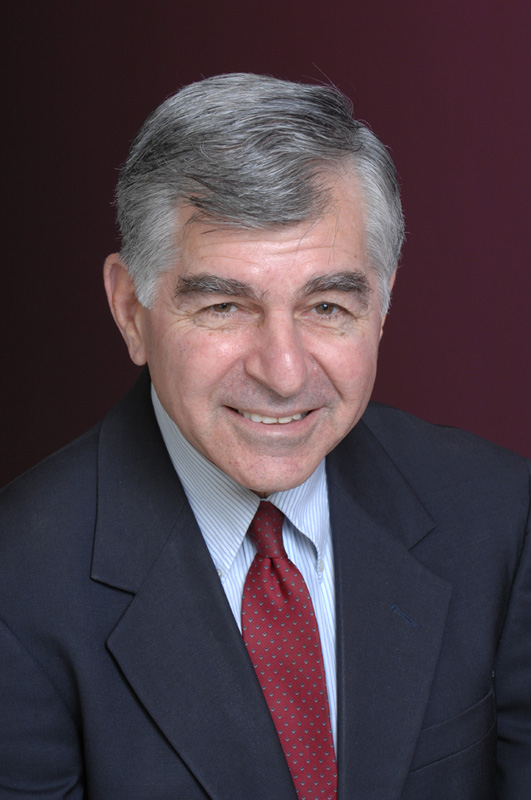
Co-Founder; Chairman of The Board of Directors and Board of Thinkers, The Boston Global Forum. Democratic Party Nominee for President of the United States, 1988. Distinguished Professor J.D., Harvard University
Michael Stanley Dukakis was born in Brookline, Massachusetts to Greek immigrant parents. He attended Swarthmore College and Harvard Law School and served in the United States Army from 1955-1957, sixteen months of which was with the support group to the U.S. delegation to the Military Armistice Commission in Korea.
He served eight years as a member of the Massachusetts legislature and was elected governor of Massachusetts three times. He was the Democratic nominee for the presidency in 1988.
Since 1991 he has been a distinguished professor of political science at Northeastern University in Boston, and since 1996 visiting professor of public policy during the winter quarter at UCLA in Los Angeles. He is chairman of Boston Global Forum.
PROFESSOR THOMAS PATTERSON
Co-Founder & Member of Board of Thinkers, Boston Global Forum
Thomas E. Patterson is Bradlee Professor of Government and the Press of Harvard Kennedy School and has served as the Acting Director of Shorenstein Center on Media, Politics, and Public Policy since July 1, 2015. His book, The Vanishing Voter, looks at the causes and consequences of electoral participation. His earlier book on the media’s political role, Out of Order, received the American Political Science Association’s Graber Award as the best book of the decade in political communication. His first book, The Unseeing Eye, was named by the American Association for Public Opinion Research as one of the 50 most influential books on public opinion in the past half century.
He also is author of Mass Media Election and two general American government texts: The American Democracy and We the People. His articles have appeared in Political Communication, Journal of Communication, and other academic journals, as well as in the popular press. His research has been funded by the Ford, Markle, Smith-Richardson, Pew, Knight, Carnegie, and National Science foundation.
Patterson received his PhD from the University of Minnesota in 1971.
BRUCE SCHNEIER
Fellow, Berkman Center for Internet and Society, Harvard Law School; Chief Technology Officer, Resilient Systems, Inc.
Bruce Schneier is an internationally renowned security technologist, called a “security guru” by The Economist. He is the author of 12 books — including the New York Times best-seller “Data and Goliath: The Hidden Battles to Collect Your Data and Control Your World” — as well as hundreds of articles, essays, and academic papers. His influential newsletter “Crypto-Gram” and blog “Schneier on Security” are read by over 250,000 people. Schneier is a fellow at the Berkman Center for Internet and Society at Harvard University, a board member of the Electronic Frontier Foundation, and an Advisory Board member of the Electronic Privacy Information Center. He is also the Chief Technology Officer of Resilient Systems, Inc. in Alewife. MA.
TSUTOMU HIMENO
Consul-General of Japan in Boston
Mr. Himeno served at the Embassies of Japan in the United Kingdom, Washington, D.C. and Singapore, at the Permanent Mission of Japan to the United Nations and Other International Organizations in Geneva, and, immediately prior to his appointment in Boston, as Deputy Permanent Representative and Minister of the Permanent Delegation of Japan to the Organisation for Economic Co-operation and Development (OECD) in Paris.
THOMAS FIEDLER
Member of BGF’s Board of Thinkers; Dean of COC, Boston University
Tom Fiedler began his tenure as Dean of the College of Communication, Boston University on June 1, 2008, following a distinguished career in journalism. After graduating from the U.S. Merchant Marine Academy with a bachelor’s in engineering, he earned a master’s in journalism at COM. Later, he joined the Miami Herald, where he would work for more than 30 years, as an investigative reporter, a political columnist, the editorial page editor, and finally, the executive editor, from 2001 to 2007.
In 1987, after presidential hopeful Gary Hart told journalists asking about marital infidelity to follow him around, Fiedler and other Herald reporters took him up on the challenge and exposed Hart’s campaign-killing affair with a Miami model. The next year, Fiedler received the Society of Professional Journalists’ top award for his coverage of the 1988 presidential election. Three years later, his investigative work was part of a Herald series on a religious cult, which earned the paper a Pulitzer Prize. The Herald’s entire staff won another Pulitzer in 1993 for the paper’s coverage of Hurricane Andrew.
As the newspaper’s executive editor, Fiedler was a stickler for journalism ethics, particularly after reporters working for the Herald’s Spanish-language sister publication, El Nuevo Herald, were found to be on the payroll of a U.S. government–owned anti-Castro news service in 2006. Fiedler also pushed his reporters and editors to embrace the Internet as a critical means of news delivery, rather than as just an appendage of the newspaper.
He has also embraced new media as a Visiting Murrow Lecturer and Goldsmith Fellow at Harvard University’s Shorenstein Center on the Press, Politics, and Public Policy, where he investigated the impact of the Web on the presidential primary system and taught a graduate course on the intersection of media, politics and public policy. In addition, Fiedler co-directed a project, sponsored by the Carnegie Corporation and the Knight Foundation, exploring the future of journalism education.
In 2003, Fiedler received a COM Distinguished Alumni Award, and in 2005, the college presented him with the Hugo Shong Lifetime Achievement Award in Journalism. In 2006, he was elected a member of BU’s Board of Overseers.
PROFESSOR ROBERT DESIMONE
Member of BGF’s Board of Thinkers; Director of MIT’s McGovern Institute for Brain Research
Robert Desimone is director of the McGovern Institute and the Doris and Don Berkey Professor in the Department of Brain and Cognitive Sciences. Prior to joining the McGovern Institute in 2004, he was director of the Intramural Research Program at the National Institutes of Mental Health, the largest mental health research center in the world. He is a member of the National Academy of Sciences and the American Academy of Arts and Sciences and a recipient of numerous awards, including the Troland Prize of the National Academy of Sciences, and the Golden Brain Award of the Minerva Foundation.
ANDERS CORR, Ph.D
Principal, Corr Analytics Inc.
Dr. Anders Corr (B.A. Yale 2001 Summa, Ph.D. Harvard 2008) founded Corr Analytics Inc. (www.canalyt.com) to provide strategic analysis of international politics. He is the Editor of the Journal of Political Risk (www.jpolrisk.com). His areas of expertise include global macro analysis, quantitative analysis, and public opinion, and he maintains a global network of regional and subject-specific political risk experts.
Dr. Corr has researched Russia and Ukraine for the US Department of Defense, as well as Israel and the Palestinian territories for a private client. He led the US Army Social Science Research and Analysis group in Afghanistan, which oversaw 600 Afghan contract employees on 44 survey projects, and conducted quantitative predictive analysis of insurgent attacks. Dr. Corr coordinated analysis at US Pacific Command (USPACOM) and US Special Operations Command Pacific (SOCPAC) on catastrophic risks for US national security throughout Asia, with foci on the Philippine insurgency, instability in Nepal, and security in Bangladesh. Dr. Corr conducted red team modeling and simulation for the Defense Department of terrorist attacks against extremely sensitive military installations, and worked on social networking for early warning of biological weapons of mass destruction.
The research of Dr. Corr focuses on effects of military technology on the likelihood and outcome of war, predictors for revolutions and coups, and terrorist use of weapons of mass destruction. South End Press published his book, No Trespassing: Squatting, Rent Strikes, and Land Struggles Worldwide (1999), and the peer-reviewed journal Nonproliferation Review published his work on deterrence of nuclear terrorism. He peer reviews for the Journal of Conflict Resolution, the Journal of Urban History, and Routledge Press. He frequently appears in the press, including Bloomberg, Financial Times, Forbes, New York Times, Nikkei Asia Review, United Press International, and Business Week.
BILL OTTMAN
Michael Dukakis Leadership Fellow, Boston Global Forum; Co-Founder & CEO, Minds.com
Bill Ottman is the Founder and CEO of Minds.com, a free, open-source and encrypted social networking platform and mobile app. He administrates social media pages with millions of followers in the alternative news industry and is active in viral media research. He also is advisor of Code to Inspire, a nonprofit organization focusing on education of Afghan female students for better life, and has served as advisor in developing the open source network Word of Word Capital, a global macro investment company based in New York.
Prior to that, he was Marketing Director at Gathering of the Vibes, an annual music and arts festival. He graduated from University of Vermont.
JOHN OTTMAN
Co-Founder & Chairman, Minds.com
John Ottman is Executive Chairman of Solix Technologies, Inc. and brings over 25 years of industry experience. Mr. Ottman is also Chairman and Co-Founder of Minds.com a leader in open source social media.
Previously, Mr. Ottman was President and CEO of Application Security, Inc., President of Princeton Softech, Inc., and Executive Vice President, Worldwide Markets at Corio, Inc.. He also has held key senior management roles at Oracle and IBM.
Mr. Ottman began his career in sales at Wang Laboratories, Inc. where he became a Branch Manager. He then joined Oracle for 10 years serving in various field executive positions including Group Vice President, Industrial Sector. In 1999 Mr. Ottman joined cloud industry pioneer Corio, Inc. as Executive Vice President, Worldwide Markets. At Corio he led the company from the startup phase to an early cloud industry leadership position resulting in an IPO and acquisition by IBM in 2004. He then joined IBM to manage the integration of Corio into IBM Applications on Demand. Later he joined Princeton Softech, Inc., as President, Global Operations. Princeton Softech, Inc., a high growth company and leading provider of enterprise data management software, was also acquired by IBM in 2007. Mr. Ottman then rejoined IBM to run worldwide sales for the IBM Optim product line. In 2008 Mr. Ottman joined Application Security, Inc. and served as President and CEO until 2012. Application Security, Inc., a leader in database security, risk and compliance was subsequently acquired by Trustwave Holdings, Inc.
Mr. Ottman is also author of the database security book, Save the Database, Save the World!. He holds a B.A. from Denison University.
JEREMY A. SAMIDE
Michael Dukakis Leadership Fellow, Boston Global Forum; Lead Consultant to Stealthcare Labs
Jeremy Samide is an industry-recognized cyber security expert with over 15 years of leading-edge private sector, government security consulting and research and development work.
Jeremy advises an international client base on solutions from full service managed cyber security services to research and development on intelligent predictive analysis technology in recognizing cyber threats before they occur. Jeremy has expertise in the analytical, technical, advisory and tactical level on next generation security threats.
Mr. Samide has advised many startups and was the CEO of E-merging Technologies Group, Inc., a professional services firm specializing in security, technical, cyber, intelligence, and policy support for the US Government, allied foreign governments, private sector markets and the UHNWF. Under Samide’s leadership, Inc. Magazine ranked E-merging Technologies Group in the top 20% of the fastest growing privately held small businesses in the United States for five years in a row (2012, 2011, 2010, 2009, and 2008). Mr. Samide was also credited with putting ETG on the distinguished Washington list; Washington Technology Fast 50. This honor showcases the 50 fastest growing small businesses in the government market.
Mr. Samide most recently, in conjunction with Federal law enforcement has consulted to both large and small businesses on the cyber security risks associated with organizations conducting business within the People’s Republic of China.
Mr. Samide is a sought after cyber security expert speaker globally with recent talks in Rome, Hamburg, Madrid, London, Lausanne, Toronto and Dallas.
Mr. Samide was also nominated as a Finalist in Ernst & Young’s Entrepreneur of the Year. The Ernst & Young’s Entrepreneur of the Year is the world’s most prestigious business award for entrepreneurs. Recognized globally, the award honors the most outstanding entrepreneur who inspire others with their vision, leadership and achievement.
AMBASSADOR JAMES DALE BINDENAGEL
Former U.S. Ambassador; Henry Kissinger Professor for International Security and Governverce, Bonn University
J.D. Bindenagel, the Henry Kissinger Professor for International Security and Governverce in Bonn University, is responsible for deepening connections between DePaul’s Chicago and overseas campuses and communities. These local, global and government relationships support DePaul’s mission to prepare students, not only to better understand, but also to influence and shape the world in which they live.
A former ambassador and 28-year veteran of the U.S. diplomatic corps, Bindenagel brings extensive experience in governmental and international affairs to his new post.
Prior to joining DePaul, he was vice president for program at the Chicago Council on Foreign Relations. President Bill Clinton appointed him in 1999 as U.S. ambassador and special envoy for Holocaust issues. As ambassador, he provided policy, diplomatic and negotiating advice to the Secretary of State on World War II-era forced labor, insurance, art, property restitution, and Holocaust education and remembrance. He played an instrumental role in the negotiations that led to agreements in 2001 securing $6 billion in payments from Germany, Austria and France for Holocaust and other Nazi victims. A U.S. Army veteran, he served the State Department in Washington, D.C., and Germany in various capacities from 1975 to 2003.
He was director for Central European Affairs in the Bureau of European and Canadian Affairs at the State Department from 1992 to 1994 and U.S. charge d’affaires and deputy chief of mission in Bonn, Germany, from 1994 to 1997. He was U.S. deputy chief of mission at the American Embassy in Berlin, East Germany, at the time of the fall of the Berlin Wall in 1989 and helped negotiate the reunification of Germany. Other Foreign Service assignments included head of the embassy political affairs unit in Bonn in the mid-1980s, when he helped pave the way for the deployment of U.S. Pershing missiles on German soil. Bindenagel was special U.S. negotiator for “Conflict Diamonds,” leading a U.S. government interagency group to create a certification process to prevent proceeds from sales of illicit rough “conflict” diamonds from financing insurrections against legitimate governments in Africa.
He also was an American Political Science Association fellow with Congressman Lee H. Hamilton (1987-1988) and was director, Business-Government Programs for Rockwell International (1991-1992). Bindenagel received the State Department’s Distinguished Service Award in 2001, the Commander’s Cross of the Federal Order of Merit from the President of Germany in 2001, and the Presidential Meritorious Service Award from President George W. Bush in 2002. He holds a bachelor’s degree in political science and a master’s degree in public administration from the University of Illinois at Urbana-Champaign.
JOVAN KURBALIJIA, Ph.D
Jovan Kurbalija (CH/RS) is the founding director of DiploFoundation. He is a former diplomat with a professional and academic background in international law, diplomacy and information technology. In 1992 he established the Unit for IT and Diplomacy at the Mediterranean Academy of Diplomatic Studies in Malta. In 2002, after 10 years of successful work in training, research and publishing, the Unit evolved into DiploFoundation. Dr Kurbalija currently directs online learning courses on ICT and diplomacy and lectures in academic and training institutions in Switzerland, the United States, Austria, Belgium the United Kingdom, the Netherlands and Malta. His main areas of research are diplomacy and Internet governance, e-diplomacy, online negotiations, and diplomatic law. He holds a BA, LLM and PhD in Law from the University of Belgrade and an MA in Diplomacy from the Mediterranean Academy of Diplomatic Studies, Malta.
NGUYEN ANH TUAN
Co-Founder, Chief Executive Officer and Editor-in-Chief of The Boston Global Forum; Chair of International Advisory Committee for UNESCO-UCLA Chair in Global Citizenship Education.
Nguyen Anh Tuan was the Founder and Chairman of the VietNamNet Media Group and the Founder and Editor-in-Chief of VietNamNet Online Newspaper. Tuan was also the Founder and CEO of the VASC Software and Media Company and VietNet, the first Internet service provider in Vietnam.
In 1996, Tuan was named as one of the Top Ten Outstanding Young Talents of Vietnam by the Prime Minister. Under Tuan’s leadership, VietNamNet raised significant political topics for reform in Vietnam. He pioneered an interactive live format called the “VietNamNet Online Roundtable” that enabled readers to participate in interviews of leading political, social and cultural figures.
In 2009, Tuan conceived a global initiative called the “World Compassion and Reconciliation Day” on September 9th of each year. In 2007, as the Shorenstein Center’s Fellow, Tuan researched key trends in the development of electronic media in Vietnam. In 2011, Tuan was a part of the Pacific Leadership Fellows Program at the School of International Relations and Pacific Studies at the University of California in San Diego. That year, he was also a speaker at the prestigious annual Club de Madrid Conference on the subject of Democracy and Digital Technology. Since February 2011, Tuan has been an Associate of the Shorenstein Center on the Press, Politics and Public Policy, John F. Kennedy School of Government, Harvard University. In April 2012, he founded the Tran Nhan Tong Academy.
In December 2012, Tuan co-founded the Boston Global Forum with the Honorable Michael Dukakis who was Massachusetts Governor and U.S. Presidential Nominee, and currently serving as the Boston Global Forum’s Chief Executive Board and Editor-in-Chief. Also in 2012, together with Ambassador Swanee Hunt, Tuan established the Charles Ansbacher Music Club to bring classical music to people who live in remote and distant locations. Tuan has been a member of Harvard Business School Global Advisory Board since 2008. He also serves on the Board of Trustees of the Free for All Concert Fund in Boston and Chair of International Advisory Committee for UNESCO-UCLA Chair in Global Citizenship Education.
PROFESSOR STEPHEN WALT
Robert and Renee Belfer Professor of International Affairs; Member of the Board, Belfer Center for Science and International Affairs, Harvard Kennedy School
Stephen M. Walt is the Robert and Renee Belfer Professor of International Affairs. He previously taught at Princeton University and the University of Chicago, where he served as Master of the Social Science Collegiate Division and Deputy Dean of Social Sciences. He has been a Resident Associate of the Carnegie Endowment for Peace and a Guest Scholar at the Brookings Institution, and he has also served as a consultant for the Institute of Defense Analyses, the Center for Naval Analyses, and the National Defense University. He presently serves on the editorial boards of Foreign Policy, Security Studies, International Relations, and Journal of Cold War Studies, and he also serves as Co-Editor of the Cornell Studies in Security Affairs, published by Cornell University Press. Additionally, he was elected as a Fellow in the American Academy of Arts and Sciences in May 2005.
Professor Walt is the author of The Origins of Alliances (1987), which received the 1988 Edgar S. Furniss National Security Book Award. He is also the author of Revolution and War (1996), Taming American Power: The Global Response to U.S. Primacy(2005), and, with co-author J.J. Mearsheimer, The Israel Lobby (2007).
DR. MICHAEL SULMEYER
Director of Belfer Center’s Cyber Security Project, Harvard Kennedy School
Dr. Michael Sulmeyer is the Belfer Center’s Cyber Security Project director at the Harvard Kennedy School. He recently concluded several years in the Office of the Secretary of Defense, serving most recently as the Director for Plans and Operations for Cyber Policy. He was also Senior Policy Advisor to the Deputy Assistant Secretary of Defense for Cyber Policy. In these jobs, he worked closely with the Joint Staff and Cyber Command on a variety of efforts to counter malicious cyber activity against U.S. and DoD interests. Previously, he worked on arms control and the maintenance of strategic stability between the United States, Russia, and China.
As a Marshall Scholar, Sulmeyer received his doctorate in Politics from Oxford University, and his dissertation, “Money for Nothing: Understanding the Termination of U.S. Major Defense Acquisition Programs,” won the Sir Walter Bagehot Prize for best dissertation in government and public administration. He received his B.A. and J.D. from Stanford University and his M.A. in War Studies from King’s College London. He is a Term Member at the Council on Foreign Relations.
PROFESSOR HIROTAKA TAKEUCHI
Member of BGF’s Board of Thinkers; Professor in the Strategy Unit at Harvard Business School
Hirotaka Takeuchi is a Professor in the Strategy Unit at Harvard Business School, where he currently teaches three second-year elective courses: Knowledge-based Strategy, Japan IXP, and Microeconomics of Competitiveness (which he co-teaches with University Professor Michael Porter). He received a BA from International Christian University in Tokyo, Japan and an MBA and PhD from the University of California, Berkeley. Professor Takeuchi’s first faculty position at Harvard was in the Marketing Unit from 1976 to 1983 as an Assistant Professor and his second as a Visiting Professor teaching the Advanced Management Program in 1995-1996. Starting in 1983, he taught at Hitotsubashi University in Tokyo and served as the Founding Dean of its business school, Graduate School of International Corporate Strategy, from 1998 to 2010. Prior to his academic career, he worked at McCann-Erickson in Tokyo and San Francisco and at McKinsey & Company in Tokyo.
Professor Takeuchi’s research has focused on the knowledge creation process within organizations, the competitiveness of Japanese firms in global industries, and the link between strategy and innovation. He is the author or editor of 17 books, including The Knowledge-Creating Company: How Japanese Companies Create the Dynamics of Innovation co-authored with Ikujiro Nonaka (which won the 1995 Best New Book of the Year Award in the business and management category by the Association of American Publishers), Can Japan Compete? co-authored with Michael Porter, and Extreme Toyota: Radical Contradictions That Drive Success at the World’s Best Manufacturer co-authored with Hitotsubashi professors Emi Osono and Norihiko Shimizu (which won the Best 30 Business Books by Soundview Executive Book Summaries in 2008). His most recent Harvard Business Review article is The Wise Leader (May 2011) with Ikujiro Nonaka.
Professor Takeuchi serves as a member of the board of directors of Integral Corporation, and has served on the board of ORIX Corporation and Trend Micro Inc., all based in Japan. He is also a director of several non-profit organizations, including Japan Society of Boston, Nonaka Institute of Knowledge, and Ark Hills Club. He is and has been a member of the advisory board of Fast Retailing, All Nippon Airways, NTT DoCoMo, Mitsui & Co., Yoshimoto Kogyo, World Economic Forum, Russell Reynolds, Japan Association of Corporate Directors, Japan Sports Association, among others. He has been a member of a number of committees and councils formed by government agencies in Japan, including the Cabinet Office; Ministry of Economy, Trade and Industry; Ministry of Finance; Ministry of Education, Culture, Sports, Science and Technology; and Ministry of Land, Infrastructure and Transport and also a member of the editorial board of Japan Marketing Journal, Journal of Knowledge Management, and Hitotsubashi Business Review.
JACKIE KERR
Science, Technology, and Public Policy (STPP) Fellow, Belfer Center for Science and International Affairs, Harvard Kennedy School
Jackie Kerr is a Science, Technology, and Public Policy (STPP) Fellow at the Belfer Center for Science and International Affairs at the Kennedy School of Government at Harvard University. She is also a Visiting Scholar at the Davis Center for Russian and Eurasian Studies at Harvard and a doctoral candidate in government at Georgetown University. Her research examines the Internet policies adopted by authoritarian and hybrid regimes in their attempts to adapt to the potentially destabilizing influence of growing Internet penetration. She holds a bachelor’s degree in Mathematics and Slavic Studies, and a master’s degree in Russian, East European, and Eurasian Studies from Stanford University.
In 2014-2015, Jackie was a Cybersecurity Predoctoral Fellow at the Center for International Security and Cooperation (CISAC) at Stanford University. In 2013-2014, she was a research fellow at the Center for the Study of New Media and Society at the New Economic School in Moscow, while conducting field research for her dissertation. She has worked as a research assistant at the Berkman Center for Internet and Society at Harvard, has been an IREX EPS Fellow at the U.S. Embassy in Kazakhstan, a Research Fellow at Georgetown’s School of Foreign Service in Qatar, an IREX YLF Fellow in Saint Petersburg, Russia, and has previous professional experience as a software engineer with Symantec and Comcast.
RYAN ELLIS
Assistant Professor of Communication Studies, Northeastern University
Ryan Ellis is an Assistant Professor of Communication Studies at Northeastern. Ryan’s research and teaching focuses on topics related to communication law and policy, infrastructure politics, and cybersecurity. Prior to joining the Department, Ryan held fellowships at the Harvard Kennedy School’s Belfer Center for Science and International Affairs and at Stanford University’s Center for International Security and Cooperation (CISAC). He received a Ph.D. in Communication from the University of California, San Diego.
RYAN MANESS
Visiting Fellow of Security and Resilience Studies, Department of Political Science, Northeastern University
Ryan C. Maness is a visiting fellow of security and resilience studies in the Department of Political Science at Northeastern University. Ongoing research includes international cyber conflict and security, cyber coercion, issues of post-Soviet space, Russian foreign policy, American foreign policy, conflict-cooperation dynamics between states using events data, and regional security and energy politics. Dr. Maness has published peer-reviewed articles in Journal of Peace Research, Armed Forces and Society, and Journal of Slavic Military Studies, as well as in Foreign Affairs. He has recently completed two books, Cyber War versus Cyber Realities: Cyber Conflict in the International System (Oxford University Press, 2015) and Russia’s Coercive Diplomacy: Cyber, Energy and Maritime Power (Palgrave Macmillan, 2015). His main focus is the continuation of an empirical cyber incident and dispute dataset and Russian energy policies in post-Soviet space. His new book project uses content analysis to study the concept of state coercion in cyberspace.
MARK HARDING
Chief Technology Officer, Minds.com
Mark Harding is the CTO of Minds.com overseeing and managing the infrastructure and architecture, application development, open source community, contractors and projects, high availability of all site operations and technical cost management. He also serves as Director of Kramnorth, a software design and development company specializing in elgg, web and iOS applications.
RICHARD STALLMAN
Founder of GNU/Linux
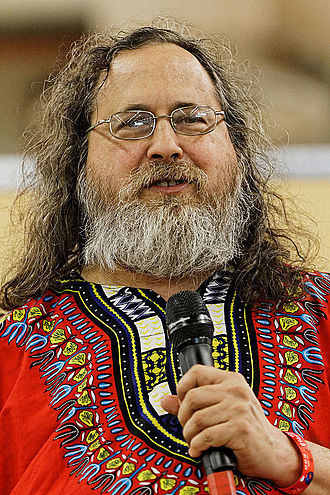
Richard Matthew Stallman is a software developer and software freedom activist. Born in 1953, he attended Harvard starting in 1970 and graduated in 1974 with a Bachelor of Arts in physics. From September 1974 to June 1975 he was a graduate student in physics at MIT.
He worked at the Artificial Intelligence Lab at MIT from 1971 to 1984, learning operating system development by doing it, except for the year he was a graduate student. He wrote the first extensible Emacs text editor there in 1976, and developed the AI technique of dependency-directed backtracking, also known as truth maintenance.
In 1983 Stallman announced the project to develop the GNU operating system, a Unix-like operating system meant to be entirely free software, and has been the project’s leader ever since. With that announcement he also launched the Free Software Movement.
Stallman began working on this project on January 5, 1984, resigning from MIT employment in order to do so. In October 1985 he started the Free Software Foundation, of which he is president as a full-time volunteer. Stallman developed a number of widely used software components of the GNU system: the GNU Compiler Collection, the GNU symbolic debugger (gdb), GNU Emacs, and various others.
The GNU/Linux system, which is a variant of GNU that also contains the kernel Linux developed by Linus Torvalds, are used in tens or hundreds of millions of computers, and are now preinstalled in computers available in retail stores. However, the distributors of these systems often disregard the ideas of freedom which make free software important, and even include nonfree software in those systems.
That is why, since the mid-1990s, Stallman has spent most of his time in political advocacy for free software, and spreading the ethical ideas of the movement, as well as campaigning against both software patents and dangerous extension of copyright laws.
Stallman pioneered the concept of copyleft, and is the main author of the GNU General Public License, the most widely used free software license, which implements copyleft.
Stallman gives speeches frequently about free software and related topics. Common speech titles include “The GNU Operating System and the Free Software movement”, “The Dangers of Software Patents”, and “Copyright and Community in the Age of the Computer Networks”. A fourth common topic consists of explaining the changes in version 3 of the GNU General Public License, which was released in June 2007. Another topic is “A Free Digital Society”, which treats several different threats to the freedom of computer users today.
In 1999, Stallman called for development of a free on-line encyclopedia through the means of inviting the public to contribute articles.
Stallman is officially a Visiting Scientist at MIT.
MARIO MACILAU
Photographer; The Foreign Policy’s Top 100 Global Thinker 2015
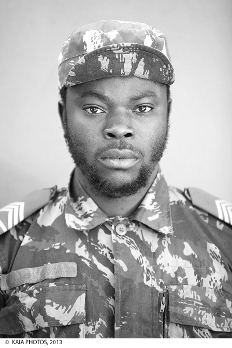
Mário Macilau (1984, Mozambique) was born in Maputo where he currently lives and works. In newly independent Mozambique, during the most critical phase of the civil war, his family struggled with financial difficulties and moved from the province of Inhambane to Maputo capital in search of a better life. At the age of ten, he began to work in a small market frequented by the middle / upper class and helping to carry the groceries and washing cars at the park in an effort to support his family.
Macilau started his journey as photographer in 2003 and went professional when he traded his mother’s cell phone for his first camera in 2007, he specializes in long term projects that focus on living and environmental conditions over the time that affects the social isolated groups. His work has been recognized with awards and featured regularly in numerous solo and group exhibitions both in his home country and abroad including: The Pan African group exhibition during the Biennale of African Photography in Bamako, Mali 2011, VI Chobi Mela Photo Festival in Dhaka, Bangladesh 2011, Photo Spring in Beijing, China 2011, Lagos Photo in Lagos, Nigeria, 2011, BESphoto at CCB – Centro Cultural de Belém in Lisbon, Portugal 2011 and Pinacoteca de Estado de São Paulo in Brazil, the KLM in Kuala Lumpur, Malasya , 2012, The Johannesburg Art Fair 2013, Les Recontres Picha in Lubumbashi, RD Congo, 2013, The Biennale Arts Actuels in Saint Dinis, Reunion Island 2013, The African Art Auction in London, England, 2013 and among others. He has also completed a number of artistic residencies.
Macilau was named in Top 100 Global Thinkers 2015 by the Foreign Policy
PROFESSOR SUZANNE OGDEN
Member of Editorial Board, Boston Global Forum; Professor emeritus, Department of Political Science, Northeastern University; Research Associate, Fairbank Center for Chinese Studies, Harvard University
Suzanne Ogden is a professor emeritus in the Department of Political Science at Northeastern University. She is also a research associate in Harvard’s Fairbank Center for Chinese Studies. As a China specialist, she has focused primarily on the interplay of culture, development, and politics. Prof. Ogden is best known for her books Inklings of Democracy in China; China’s Unresolved Issues; 11 editions of Global Studies: China; and China’s Search for Democracy: The Student and Mass Movement of 1989 (the last co-authored with Kate Hartford, Lawrence Sullivan and David Zweig). In recent years, she has shifted her research focus to research on China’s role in the Mekong River Basin and the Greater Mekong Subregion.
Preventing Cyber Conflict: A 21st Century Challenge
Allan Cytryn, Nazli Choucri, Michael Dukakis, Ryan C. Maness, Tuan Nguyen, Derek S. Reveron, John E. Savage, and David Silbersweig
At the 2016 G-7 Summit at Ise-Shima, Japan, countries affirmed their commitment to support an open, secure, and reliable cyberspace through the application of international law to state behavior in cyberspace, voluntary norms of responsible state behavior in peacetime, and close cooperation against malicious cyber activity. Absent from formal communiqué were statements on cyber conflict. While cyber-enabled criminal activity and espionage preoccupy cyber discussions today, dozens of countries are building military cyber commands. Given the potential devastation a cyber conflict with advanced cyber weaponry would bring civilian populations; it is essential to develop ways to prevent the proliferation of cyber weaponry. Thus far, states have shown remarkable restraint in using overt cyber weaponry, the exceptions being acts such as Stuxnet and Shamoon. It is important that the international community build upon this restrained behavior and push toward norms that would make their use taboo.
Cyber weapons are new, not well understood, and if not properly controlled, likely to lead to escalation, a process that can lead to serious unexpected consequences, including conventional war. Development costs are minuscule relative to conventional military power and has expanded the range of threats. Differentiating the intent of software designed for espionage from a cyber weapon, designed for sabotage is easily confused that can cause miscalculation. Thus, implantation of foreign software in an adversary’s military or critical infrastructure systems poses a serious threat of both harm and escalation. In a worst-case scenario, if a computer system in question consists of a state’s nuclear weapons command and control center, nuclear conflict may result especially with states locked in unresolved conflict, such as India and Pakistan.
Under the UN Charter, an attack is a use of force, to which states have the right to self-defense. We define a cyber attackto be an action launched via computer and/or networking technology that either produces physical damage equivalent to the use of force or corrupts critical information sufficient to cause damage to the national welfare akin to that produced by the use of force. We define cyber to be a conflict that largely consists of cyber attacks. Given the novelty of cyber conflict and the opportunities for miscalculation, cyber conflict has the potential to lead to conventional conflict using both kinetic and cyberspace technologies. In the event countries think they may lose a capability due to a cyberattack, they could prematurely escalate a conflict through pre-emptive military strikes.
Targets of cyber attacks could be a) a nation’s military command and control system, which includes military satellites, its logistical systems, and one of its major wartime commands; b) its economy, which includes its critical infrastructure such as power, water and banking; or c) operation of its system of governance, including its major agencies and its national electoral system. Whether the damage done by a cyber action arises to the level of force will need to determined. However, loss of GPS during a period of heightened tensions could be considered a use of force, as could the disabling of a significant fraction of the electricity grid of a state under similar circumstances. Altering the outcome of the election of a national executive, an act tantamount to the forceful replacement of the executive, may also rise to a use of force.
Because national economies are much more tightly integrated today than at any previous time in human history, cyber conflict, whether it escalates to kinetic warfare or not, is likely to cause serious economic or political damage to many states. Given how widespread a cyberattack can be impacting telecommunications, banking, and power generations, civilians are at grave risk. Citizens regardless of nationality are exposed to risks created by cyber insecurity. International cooperation is essential and countries must prioritize ways to reduce the risk of cyberwar.
Yet the use of cyber weapons that do physical harm remain rare, and we must promote their non-use further, while at the same time recognizing the proliferation of certain types of acts that continue to have real impact: espionage and disruptive cyber events. Chinese espionage on US intellectual property has had real monetary impacts in the billions of dollars. Russian disruptive campaigns against the electoral processes in the West have sown discontent in institutions among these populations. The prevention of these types of attacks should be at the forefront, as their continued use could lead to retaliation with cyber and conventional weapons, and possibly major power war. The battle over information is being fought now, and measures must be taken to stem its tide.
Progress has been made in this battle. As a result of a bilateral agreement between the United States and China struck in September 2015, the incidence of “theft of intellectual property, including trade secrets or other confidential business information, with the intent of providing competitive advantages to companies or commercial sectors” has greatly subsided. (See http://www.nbcnews.com/news/us-news/russia-may-be-hacking-us-more-china-hacking-us-much-n664836.)
Risk reduction must begin with identification of critical assets and the risks to which they are exposed. States must then create a system to reduce risks. This will include acquiring the necessary expertise, whether available domestically or not, to reduce software vulnerabilities and cooperate with other nations to improve transparency. This cooperation can take the form of information sharing, bilateral and multilateral agreements, articulation of norms of state behavior, and the creation of risk reduction centers designed to control escalation and equipped with “hot lines” to other national risk reduction centers.
Restraint is strengthened by implementing norms against unacceptable behaviors and creates a more mindful attitude towards using cyber systems. Fostering collective action, which is necessary to protect cyber capabilities needed by individuals, groups, and societies, enhances restraint. There may be a time when the international community establishes an international center to monitor and combat cyber threats, and to coordinate actions to protect computer systems and disrupt non-state actors that operate in cyberspace. States may have to surrender some sovereignty to do this, but it may be reflective of the non-sovereign Internet.
Cyber risk reduction begins with adherence to the GGE Norms (UN A/70/174), the G7 Ise-Shima norms, and the G20 Norms. However, it goes beyond these and should include the following measures:
Sharing in depth of best practices to secure computers and networks.
Public identification of critical national infrastructure asset classes.
National prioritizationofassets by value.
Reduction of the risk of compromise of high-priority assets.
Creation and proper manning of risk reduction centers.
Establishment of regular security drills both domestically and with other risk reduction centers.
Banning of the implantation of software in another state’s high-value systems during peacetime.
Applying the law of armed conflict in cyberspace.
Improving attribution through forensics and context.
Cyber attacks present a new danger to the security of states. Thus, states are urgently encouraged to begin discussion of mechanisms to address these issues.
The Global Cybersecurity Day’s first conference will be held in the America-Japan Society in Tokyo at 12:00 noon in December 12 in local time (at 10:00 PM, Friday, December 11, 2015 in Boston time) and connects with Boston via video conference.
Another event will be held at Harvard Faculty Club in Cambridge on December 12, 2015 at 10:00 AM (Eastern time).
Venue: The America-Japan Society, 8F, 1-11-28, Akasaka, Minato-ku, Tokyo
In connection with Boston
Live-streamed at www.bostonglobalforum.org
Moderator: Ambassador Ichiro Fujisaki – President of the America-Japan Society, Inc.; Professor at Sophia University and Keio University; Former Ambassador to the U.S
Conference Organizer:
Nobue Mita, Boston Global Forum Japan Representative
Shinya Saotome, Assistant, Boston Global Forum Japan
Boston’s Speakers:
Michael Dukakis, Co-Founder & Chairman of Boston Global Forum; Three-term governor of Massachusetts; The 1988 Democratic nominee for president of the United States; Distinguished Professor of Political Science at Northeastern University; Visiting professor at the Luskin School of Public Affairs at UCLA
Nguyen Anh Tuan, Co-Founder & CEO of Boston Global Forum; Chair of International Advisory Committee of UNESCO Chair on Global Citizenship Education, UCLA; Emeritus Member of Harvard Business School’s Global Advisory Board
Japan’s Speakers:
Kazuhiro Nakatani, Member of the Cybersecurity Strategic Headquarters (of the Government of Japan); Professor of International Law at the University of Tokyo
Hiroshi Ito, Ph.D, Director of National Security Laboratory; Board of Directors, LAC Co. Ltd; First commander of “System Protection unit” that is first Cyber military unit of Japanese Ground Self-Defense Force; Author of “The Fifth battle domain” and “Threat of Cyber warfare”
Koji Murata, Dean, Doshisha University
Shunji Yanai, Member of the International Tribunal for the Law of the Sea ,President of the Tribunal (2011-2014); Former Japanese Ambassador to the US; Chairman, Adivisory Panel for the Prime Minister on Reconstruction of the Legal Basis for Security Japan; Professor, Waseda University and Chuo University
Mr. Waichi Sekiguchi, Senior Staff Writer, Nikkei, Inc.