

Transformation of Pittsburgh to a site for AI and robotics

AI is offering huge opportunities to industries, it’s our choice to change or not.
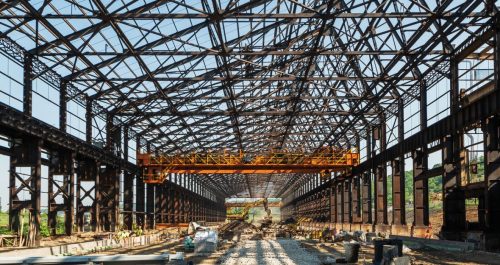
The rust belt in the US’s heartland- Pittsburgh is witnessing a huge transformation, Pittsburg was once a land of facilities of steel and coal, structures of coke, now they are a fading memory. The old steel site called Hazelwood Green has now become a test area for Uber’s self-driving cars; the former coke works – Mill 19 will be Advanced Robotic for Manufacturing Institute by the next spring. According to an article on MIT Technology Review, Pittsburgh is reinventing, using advances in automation, robots and artificial intelligence.

Billions of dollars from Silicon Valley have been invested in the city making it “a Robot belt”. In spite of all the changes, Pittsburgh’s economy is facing many problems. In the last decade, over 70,000 people from age 35-54 left the region. Automation and robots have certainly wiped out many jobs, it is calculated by Daron Acemoglu at MIT, for every robot, six jobs are lost, automation is changing work significantly although the exact number of a jobs lost will depend on the costs machines. Regarding new jobs, the number remains uncertain, the debate over the impact of automation is controversial but the location of jobs and kind of work people do are changing and causing difficulties to local populations and economies.

Turning to Pittsburgh’s case, the city is being transformed by new, young people working in AI and robotics, says Andrew Moore- dean of computer science at Carnegie Mellon University (CMU). In addition, Amazon is pledging 50,000 jobs and $5 billion in investment. If Amazon invests in Pittsburgh, it will be a solution for people’s jobs here.

The development of AI should be carried out slowly to ensure the world can catch up with the pace. It is essential to pay attention to ethical implications and keep the advance of AI under control. BGF and MDI are currently developing the AIWS 7-layer Model – an outstanding model for developers to follow to guarantee the future of AI.
Chancellor Angela Merkel put an emphasis on the fundamentals of data security in China

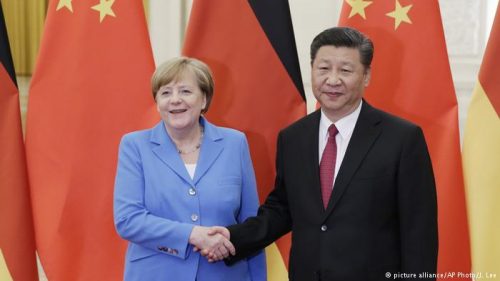
German Chancellor visited China to strengthen international ties at the tech-hub in Shenzhen. She called for better data security in China.

According to Deutsche Welle’s article, in May, German Chancellor Angela Merkel had a two-day trip to China to improve ties with China and to seek greater market access for German businesses in China. At the end of her visit, she called for better data protection for German firms in Beijing in the upcoming time. She critically spoke of China’s security law, emphasizing its lack of protection, especially of intellectual property and human rights. The reason for this statement is one of the laws in China, taking effect since June 2017, requires firms to keep data on servers in China. This might pose a threat for German automakers during the data collecting progress for autonomous cars, as the data collected needs to be kept confidentially.

On December 12th, 2015, Chancellor Angela Merkel was honored as the World Leader for Peace, Security and Development by MDI with her contribution for the world’s peace and development.


World Leadership Alliance – Club de Madrid is working on a new initiative called “Education for Shared Societies”

A new initiative called “Education for Shared Societies” is being developed in the partnership of World Leadership Alliance – Club de Madrid (WLA- CdM) and the Varkey Foundation.

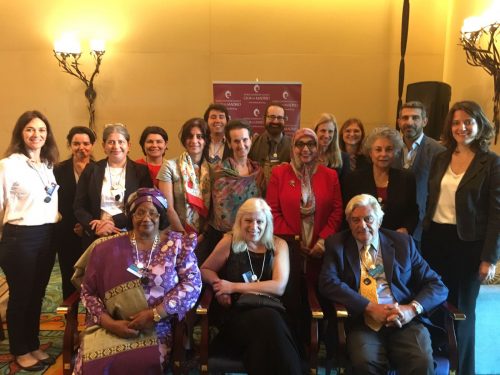
WLA-CdM, one of BGF and MDI’s closest partners in developing the AIWS 7-layer Model, partnered with the Varkey Foundation and kicked off “Education for Shared Societies” with the purpose to channel the collective knowledge of multiple fields to highlight the role of education in building peaceful communities from Shared Societies perspective. The expected outcome of the project is a strong Call to Action on Education for Shared Societies.

The kick-off of this initiative was held in Dubai on March 16th. The event was considered a brainstorming to identify stakeholders and participants, evaluating the possibilities to make contribution to transformative policies and practices with the presence of 30 representatives from governments, policy makers, educators, etc. who desire to present their opinion on how education can be better.

Governor Michael Dukakis’s discussion with Senator Ed Markey over the AIWS Ethics and Standards Committee

Stated in Senator Ed Markey’s article on The Boston Globe, the US is having a serious privacy issue due to many incidents involving consumer’s data being breached. The problem of cybersecurity in the US requires urgent action.

Just this year, there have been multiple invasions of privacy as smart phone apps become more popular, with notable incidents being two billion Facebook users having their information harvested, Delta Airline travelers’ credit cards breached, and 150 million under Armour’s MyFitnessPal having their data compromised. These breaches of personal information have clearly alarmed the nation, and American users are demanding an online bill of rights, which includes detailed descriptions of consumer data collection and usage by websites.

In the era of Big Data, the world must cope with challenges of information availability. It is necessary to have legislation that makes consent the law of the land; voluntary standards will not be enough, said Senator Markey.

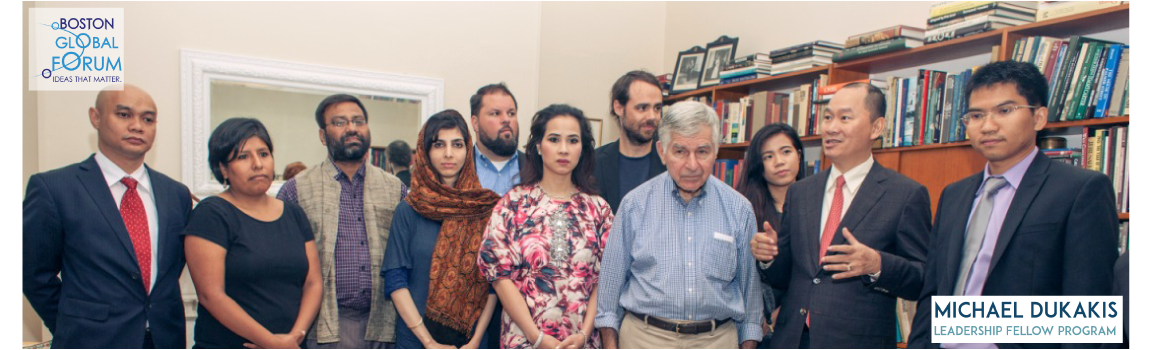
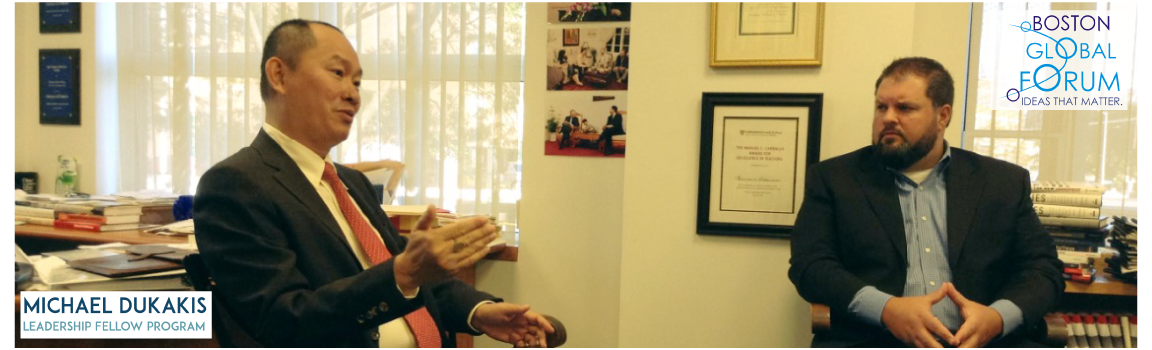
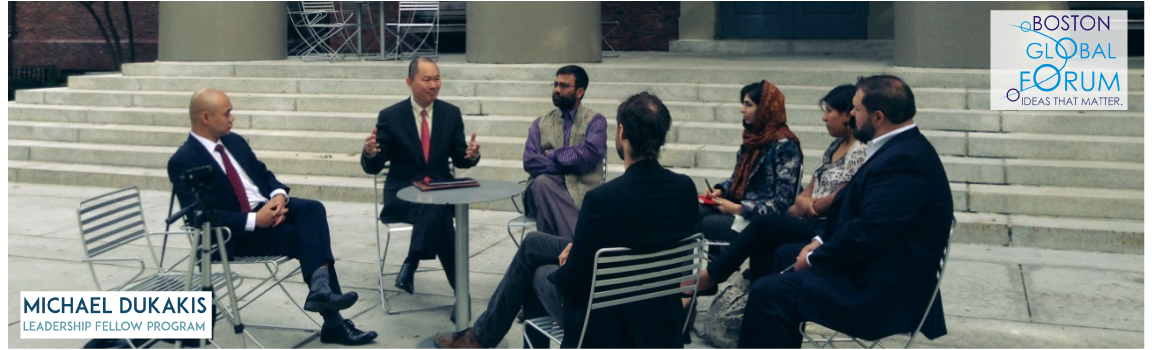
In the search for the solution, Senator Edward J. Markey had a discussion with Governor Michael Dukakis, founder of MDI, on MDI’s AIWS Initiative and AIWS Ethics and Standards.

Announcing Michael Dukakis Leadership Fellow 2018-2019

The Michael Dukakis Institute for Leadership and Innovation (MDI) carefully selected several outstanding scholars, whose achievements in their fields make them promising leaders, and who have displayed an early commitment to promoting global peace and security.

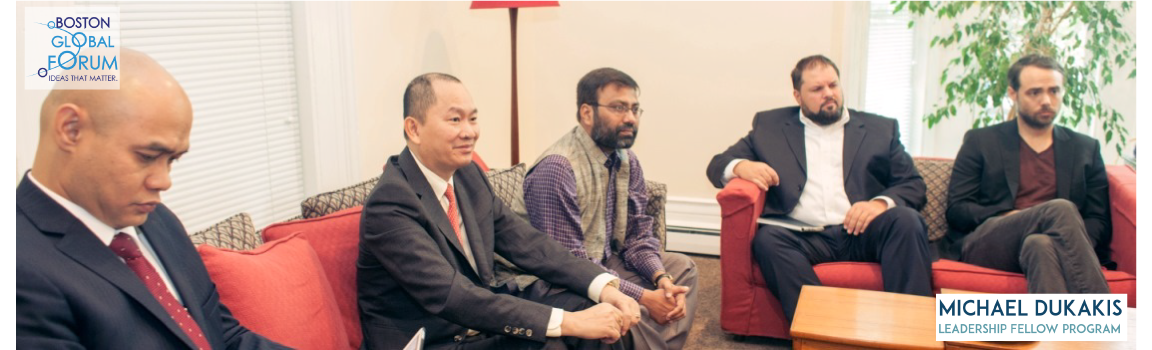
In 2018-2019, Michael Dukakis Leadership fellows come from a diversity of disciplines, including the Media, Computer Science/Artificial Intelligence, and Psychology, but they share a common interest in promoting human well-being.

Here are the four members of Michael Dukakis Leadership Fellow 2018-2019:

Walter Langelaar: Co-founder of SAM, an AI Politician, which aims to raise awareness as well as pose critical perspectives on AI cloud infrastructure, blockchains and social media mining while contextualizing these tools in relation to contemporary Internet culture, political science and e-governance.

Angela Schoelig: She leads the Dynamic Systems Lab at the University of Toronto, and has developed algorithms that allow robots to learn together. Her algorithms are helping self-driving and self-flying vehicles move around more safely. She was named as one of 35 Innovators under 35 by MIT Technology Review in 2017.

Sarah Cotterill: PhD, College Fellow in Psychology at Harvard University, Secretary of MDI’s AIWS Standards and Practice Committee. She conducts research on political misinformation, as well as decision-making in the context of charitable giving, using experimental and machine learning techniques.

Kevin Roose: A technology columnist for The New York Times and a writer-at-large for The New York Times Magazine. In 2015, he was named in Forbes’s “30 Under 30” list and Time’s list of the 140 best Twitter feeds, and his work has been featured in The Best American Business Writing, GQ, Esquire, Vanity Fair, and other publications.

A new economic breakthrough strategy for Vietnam will soon be introduced

AI is changing the way business works at a very fast pace, The Michael Dukakis Institute (MDI) is giving a finishing touch to the AI economic breakthrough strategy for Vietnam with the collaboration of Professor Jason Furman.

Professor Jason Furman – Professor of the Practice of Economic Policy at Harvard Kennedy School, Chairman of the Council of Economic Advisers (CEA) of President Barack Obama, and Mr. Nguyen Anh Tuan – Director of MDI are working together to complete the AI economic breakthrough strategy for Vietnam. The plan for is nearly completed, including outstanding strategies to place Vietnam at the full front of AI development with other nations.

Prof. Jason Furman and Mr. Nguyen Anh Tuan are doing their best to make the preparation for the presentation of the strategy to Vietnamese leaders with the hope to enlighten the leaders with the best opportunities for Vietnam’s economy.

Inside Elon Musk and Tesla’s Model 3 Factory

Tesla’s production process is on the fly as Elon Musk modified Model 3 Production line utilizing automation.

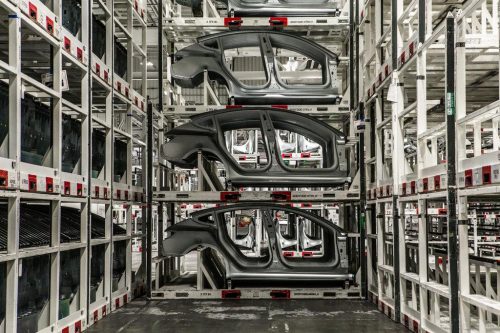
According to New York Times’s article, Elon Musk’s vision in 2016 didn’t turn out the way he expected since Tesla encounter difficulties in mass-producing battery packs and cars. Now, Tesla is trying to minimize the time that robots take to weld parts, revolutionizing the field. He has made many changes in his production plants to accelerate the operating speed including installing automated assembly machines, robots and setting up third Model 3 Production line by using owned equipment

To some extent, Tesla’s reliance on automation is a success, specifically regarding the installation of battery packs and electric motors to the vehicles underbodies. For the Model 3, that function involves just five work stations and no workers at all, said Lars Moravy, the company’s director of chassis engineering. But for some tasks, robots perform with less efficiency. In general, the production line is on the fly despite difficulties in technicality, labour… In the beginning of June, 3500 Models 3 sedans were being made in a week, Mr. Musk vowed to reach 5000 a week by the end of June. The result of the plants modification will be revealed in a few months when Tesla reports profit.

As AI is deployed to be used by business, industry, and private citizens, it is essential to that AI technologies remain benevolent and free from risks of misuse, error, or loss of control. Therefore, it is necessary to follow a certain set of principles in applying AI to assist businesses such as such as the AIWS 7-Layer Model by MDI.

Amateur Dota 2 players have been defeated by a team of AI algorithms

The algorithmic A team called the OpenAI Five was developed by OpenAI. The team has shown its initial achievement, gaining a victory over amateur Dota 2 players in testing. What makes this win significant is that besides individually learning how to play the game, each algorithm learns how to cooperate with the other teammates.

Dota 2 is a complex strategy game in which teams of five players compete to control a structure within a sprawling landscape. Dota 2 is evaluated as difficult to master, and it is even more challenging for machines since when playing, they are required to predict what their opponents intend to do as well as to be able to support and cooperate.

By playing against various versions of themselves, the OpenAI Five figured out the key points, the roles of objectives in the game and created strategies in the way similar to what humans do. The AI team has won against a team of amateur players in testing.

This is a cutting-edge development for AI advancement. If this approach is successfully developed, the commercial use of technology is without controversy. For example, AI algorithms could team up to outmaneuver opponents in online trading or ad bidding. Also, collaboration between algorithms and humans is not far off.

Also, the next challenge for AI is to develop algorithms to compete in games involving communication, which demand players collaboration-competition balance.

AI is advancing against humans in many fields; if its development is not carefully monitored, it might result in unwanted consequences for humankind. It is fortunate for us that there are organizations currently working on AI ethical standards to ensure human well-being in the future. For instance, BGF and MDI are currently developing the AIWS 7-Layer Model for AI development.

Prime Minister Shinzo Abe is traveling to Europe and the Middle East to sign a free trade pact with the European Union

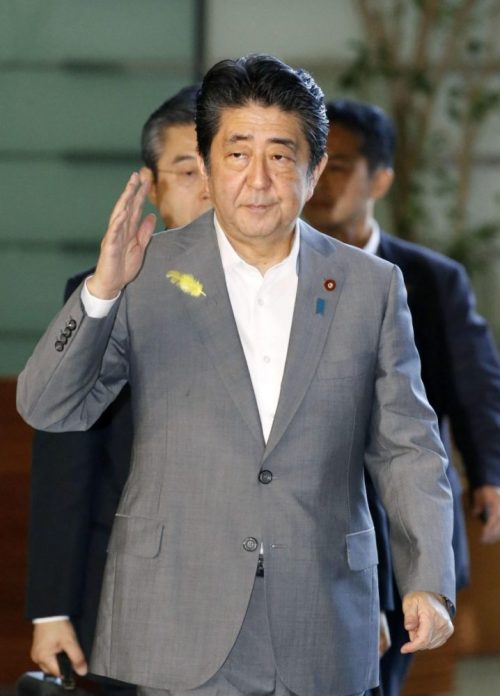
From July 11, Prime Minister will start his Europe and Middle East tour and sign a free trade pact with European Union during his visit.

Mr. Shinzo Abe, the 57th Prime Minister of Japan, has been traveling from place to place to tighten relations between Japan and other nations. In the following week, he will start his eight-day tour to France for the opening ceremony of Japonismes 2018 and Saudi Arabia and Egypt accompanied by Japanese business executives with the purpose of boosting ties.

During his time with the EU, he will attend a signing ceremony for free trade between Japan and European Union in Brussel, with the hope to put the agreement into effect by late March next year.

Prime Minister Shinzo Abe was also one of MDI’s honorees in 2015, awarded with the title World Leader in Cybersecurity.