
AI is essential factor in leveraging data to keep track of happiness

Dr. Kazuo Yano, Chief Engineer of Hitachi, Ltd. and member of MDI’s AIWS Standards and Practice Committee, said about “AI: The new measurement of happiness” at the Global Dialogue for Happiness in the sixth World Government Summit in Dubai.
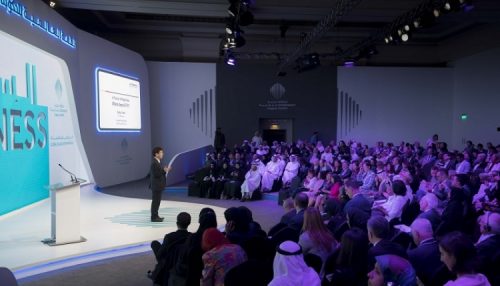
As reported by Mena Herald, Dr. Kazuo Yano, Corporate Chief Scientist at Hitachi, Ltd., opened his speech at the Dialogue with the statement: “AI: The New Measurement of Happiness”.

He explained further how AI will result in better outcomes and processes through carrying out experiments. By using AI, “we can move away from standardized processes and we will see an ensuing increase in happiness and productivity”, said he.

AI can measure a user’s gestures and voice level by wearing sensors, and in this way, workers’ happiness can be tracked. There is a connection between physical motion and happiness, Dr. Kazuo claimed: “A happy organization is more productive organization”, improving happiness in workplace bring up to a 30% increase in productivity.

On July 25, 2018, Dr. Kazuo Yano is going to participate in Vietnam CEO Summit 2018 with other innovators in AI to discuss the strategy for Vietnam in the field of AI.

Best ways to recognize automated social-media accounts

As bots become more humanlike, there are systems capable of mimicking human conversation. MIT Technology Review provides people with ways to detect fake accounts.

Twitter has recently shut down more than two million accounts or bots. It could only remove obvious offenders and there are tricksters to be expected when it comes to fake users.

Here are the five signals to tell you are chatting with a bot:

  1. Its user profiles

Bot profiles usually lack a photo, a link, or a bio. More complex bots might use stolen photos and automatically generated account names.

  1. Tweet syntax

A bot’s tweets often reveal algorithmic logic—for example, they might be repetitive or use common responses. Moreover, comprehending the nuances of human language is a difficult task for machines—missing a joke and changing the subject are potential warning signs you might be chatting with a bot.

  1. Tweet semantics

Bots are sometimes fixated on a specific topic, perhaps sharing or tweeting the same post.

  1. Temporal behavior

If an account tweets at highly regular intervals, it may be a sign of a fake profile as well.

  1. Network features

Network dynamics aren’t visible to users. But bots may follow a few profiles and be followed by many other bots, lacking social interaction can also indicate that the account is fake.

As AI develops at a very fast pace, it is necessary to observe its progress from time to time to keep it under control. Developers and organizations should use a certain set of standards to keep track of the technology’s development. The AIWS 7-layer model for AI ethical issues developed by MDI can be a good one to follow.

Estonian President Ileves put an emphasis on the fundamental of a union for cyberwarfare

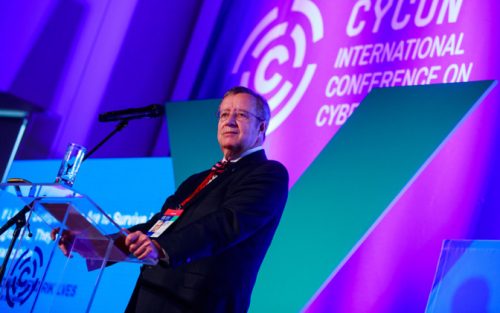
On May 30, 2018 at the 10th International Conference on Cyber Conflict (CyCon2018), Former Estonian President Toomas Hendrik Ilves emphasized the need for a united body to fight cyber warfare, especially when it comes to securing liberal democracies.

As we are now in the age of Big Data, nations are vulnerable to not only threats from neighboring states, but to would-be adversaries around the globe, regardless of geographical proximity etc. Democracies have been the target of cyber-attacks, specifically attacks on their electoral and democratic processes.

In the CyCon2018, the Former Estonian President made a speech. President Toomas Hendrik Ilves recommended the establishment of an organization to withstand threats concerning cybersecurity issues. The organization should require its members to hold democratic ideals. In addition, Members of cyber of NATO need to exemplify concepts such as free and fair elections, observance of the rule of law, and a fundamental concern for human rights and freedom.

During his presidency, he led Estonia to be one of the first countries to pursue digital evolution in the end of 20th century. He was named one of the World Leaders in Cybersecurity by BGF and MDI in 2017.

Prime Minister of Norway Kjell Magne Bondevik came to Kyrgyzstan to protect the rights of persons with disabilities

Kyrgyz Prime Minister Muhammetkaliy Abulgaziyev called for action to ratify UN Convention on the Rights of Person with Disabilities.

Kjell Magne Bondevik, former Prime Minister of Norway and member of WLA-CdM, recently visited Bishkek, Kyrgyzstan to support the inclusion of people with disabilities in the country’s labour market. with the mission of the INSPIRED+ project which is to support the implementation of UN Human Rights and International Labour Organization (ILO). In the National Conference on the Economic Rights of Persons with disabilities, he shared his experience and gave a summary of key policies in the area. He also recommended that government officials and ministers exclude medical and budgetary considerations when it comes to inclusion of persons with disabilities.

WLA-CdM also played the role of a partner in developing the AIWS 7-layer model alongside MDI and BGF.

Shaping Futures (Number 1 Issue)

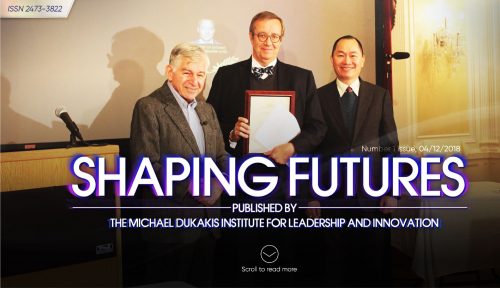
The Michael Dukakis Institute for Leadership and Innovation (MDI) has launched Shaping Futures magazine. The new magazine will cover Artificial Intelligence (AI) and Cybersecurity innovations, initiatives, and solutions, as we with a focus on creating a better world for all mankind through the ethical implementation and expansion of technology.

Print and digital copies of the magazine will be published twice annually, with articles compiled from special events and editorial content created by members and delegates participating in the MDI’s events, symposia, as well as whitepapers and think-pieces.

For this first issue of Shaping Futures, our editorial team has introduced the AIWS initiatives and some of the many achievements of Boston Global Forum (BGF) and MDI as we continue to work with top thinkers and leaders in AI and Cybersecurity to create the best possible future in a world that increasingly relies on technology.

Download Shaping Futures – Number 1 Issue

How will the world order be reshaped by artificial intelligence?

AI is reshaping the world, to the extent that the current liberal democracy might be replaced with digital authoritarianism. Is this an incoming struggle between liberal democracy and digital authoritarianism?

The two usual themes of AI dominance in the world includes AI dominating humans and causing disasters, or AI replacing humans in every area of society. There is another approach that AI is reshaping the world and that the current liberal democracy might be replaced with digital authoritarianism.

Authoritarianism has been believed to lead to stagnation in the long run, but AI promises to turn the table, offering a way for economically advanced countries to enrich their citizens’ lives while maintaining control over them. This model has been seen in some countries, China being a prime example since it has begun to carry out a digital authoritarian state by using machine learning to surveil its populations and creating a “social credit system”. Several countries have followed China’s lead since then. Similar to the competition between fascism, democracy and communism in the twentieth century, the struggle between digital authoritarianism and liberal democracy is reshaping the globe.

Either way, the world will be reshaped, humans at the same time are getting ready to cope with it as Michael Dukakis Institute for Leadership and Innovation (MDI) is working on MDI’ AIWS initiative – the AIWS 7-layer Model to ensure AI’s development is made for the good of humanity.

Vietnam’s government took interest in AI solution for its economy

In the conversation with business executives in Industry 4.0 Forum held on 12th and 13th of July, Vietnamese Prime Minister Nguyen Xuan Phuc put forward his interests and strategy for Vietnam.

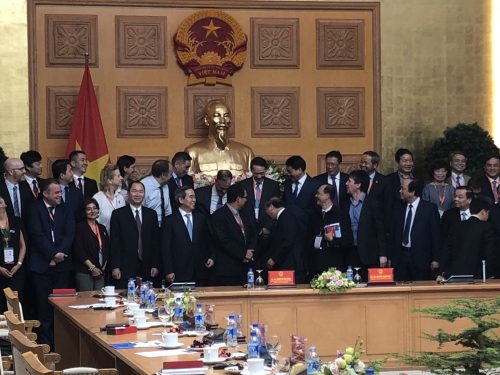
Vietnamese Prime Minister (center) and MDI’s Director Nguyen Anh Tuan (standing fourth from the left, first row), with other Vietnamese leaders and experts.

On July 12th and 13th, the Board Central Economic and the Government of Vietnam hosted a platform on Economic breakthrough strategy in the era of Industry 4.0 with the presence of many Vietnamese leaders, economists and innovators in technology.

Prime Minister Nguyen Xuan Phuc recommended Vietnam take the first steps in applying 4.0 technologies such as: cloud computing, robots, big data, artificial intelligence in services and agriculture, etc.

According to Prime Minister, Vietnam is considered a start-up nation with 3,000 start-ups and an ideal place for foreign investment, which is an appropriate environment to make use of technologies.

“The most important thing is not only to raise people awareness but also to come up with a strategy for Vietnam to succeed in the era”. He indicated the need of expertise and qualified human resource in order to successfully bring Industry 4.0 to Vietnam.

Towards that aim, on July 25th in Hanoi, some members of MDI, including Director Nguyen Anh Tuan, will have a conference to discuss breakthrough strategy for Vietnam’s economy.

Upcoming Vietnam CEO Summit 2018: AI Economic Breakthrough Strategy and Solutions for Vietnam

On July 25th, Vietnam CEO Summit 2018 will take place in Hanoi with the participation of MDI’s Director Nguyen Anh Tuan and Prof. Jason Furman, who was named by President Barack Obama as Chairman of the Council of Economic Advisers. The Summit is expected to bring an innovative and practical approach to AI in Vietnam.

Vietnam CEO Summit is an annual event for CEOs of top businesses in Vietnam to discuss the future of regional economy, including opportunities and risks. This year’s Summit will take place on July 25th at Sheraton Hanoi Hotel with the theme: The Age of Artificial Intelligence and Vietnamese Enterprises: Implications from Harvard Case Studies and the World Business Ideals.

This year, the Summit welcomes world leaders and innovators to discuss AI and strategy for AI economy in Vietnam. In this event, Mr. Nguyen Anh Tuan – Director of MDI and Professor Jason Furman – Chairman of the Council of Economic Advisers (CEA), Obama’s advisor during his presidency, are going to present on AI economy for Vietnam, including strategy as well as execution and implementation of the solutions. With Governor Michael Dukakis, Prof. Thomas Patterson and Prof. Nazli Choucri, they have been working together on the report of the breakthrough strategy to take Vietnam to a new prosperous age.

Other guest speakers are leading innovators in the AI such as Minister Nguyen Chi Dung – Ministry of Planning and Investment in Vietnam, Governor Michael Dukakis – Former Governor of Massachusetts, Chairman of MDI, Dr. Kazuo Yano – Chief Engineer of Hitachi Group, Dr. Masahiro Fukuhara – CEO of Instution for a Global Society (Japan), and Prof. Nazli Choucri – MIT.

Race to build a supercomputer between the US and China

The two nations are in a technology race to create a supercomputer that could result in major advances in many fields.

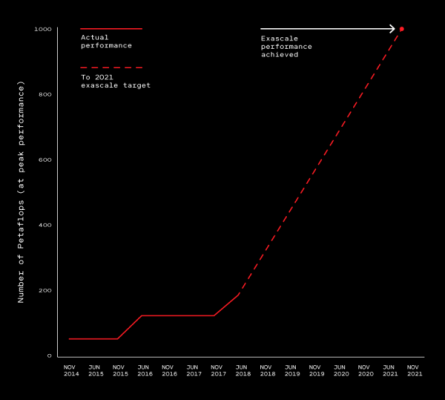
Reported by MIT Technology Review, last month, the US Department of Energy (DOE) unveiled the world’s fastest supercomputer called Summit. Thus, a new goal must be set.

The next goal is to create exascale computing-referring to computing systems capable of at least a billion calculations per second in the next few years. With such phenomenal power, it will facilitate industries and enable researchers in many field to expand remarkably. The competition for technological leadership between China and the US started.

China declared their plan to produce one exascale machine by the end of 2020, they have been working on three prototypes of this machine.

The DOE of the US made a proposal worth up to $1.8 billion for two exascale computers between 2021 and 2023.

Both China and America are using all their resource for exascale machines. China has teams working on some 15 application areas, while in the US, teams are working on 25, including applications in fields such as astrophysics and materials science.

Both countries are funding work on software, data processor, energy consumption, and chips for the machine. While there is plenty of national pride behind this competition, it should be kept in mind that, what matters is how it is used to solve the world’s problems. Technology should be developed with ethical standards. It is fortunate that in such a fast pace of development human kind is witnessing, there are institutions are working on moral issues of technology as well. For instance, BGF and MDI are currently developing the AIWS initiative- especially the AIWS 7-Layer Model to ensure the well-being of humans.