





How will robots dominate the world in the future?

As development proceeds, robots or emsone way or anotherwill make great changes to human society.
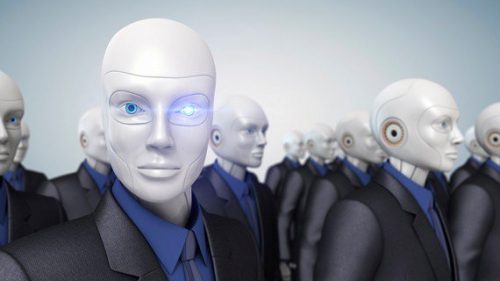
While people and policy makes are worry about job displacement as a result of technological advancement, a new report argues that the jobs displacement rate will likely remain constant in the near future. At the same time, decades and centuries down the road, robots may slowly gain control over humans.

Any divisions made by human such as territories, cities, regions will likely not change going forward, as robots will simply fit in the existing environment. On the contrary, there would be huge changes in the society of robots. The structure of a future robot society depends on how machines evolve over the ages from where they are today. Future robots might possibly be much similar to the models that human have been building recently. All the same, future society could be full of completely different kinds of robots that do not exist at the moment. For instance, with robotic types called brain emulations, the will be different trends in future social structure.

A brain emulation, as known as uploads or ems, is made by taking a particular human brain, scanning to record cell features and connections, and then building a computer model that processes signals according to those features and connections. The three basic technologies required to build ems (computing, scanning, cell modelling) have been developed for centuries and are ready to be applied. Ems can learn, have friends, lovers, bosses and colleagues just like human.

There are two possible scenarios for a future robot society: one consists of robots similar to those today, while the other is filled with brain emulations. One key questions imposed by experts is “How might one try to influence such a robot future?”

The aforementioned case introduced some possible ways to control the future of robot society. One can accumulate resources and entrust them to appropriate organizations in order to gain power to promote large-scale political institutions. Another way is to influence the future via our choices today of structures in computer-intensive parts of society.

The situation in the latter case differs from that of the former, because each emulation is produced from a particular human brain. This allows humans to expect great influence over the individual ems. Moreover, because ems are copies of humans, they will be better fit in the preexisting social structure and characteristics created by human. However, a future in which traditional robots exist instead of ems is more desirable as it would potentially involve less conflict than an em-based society, and will possibly cause enormous changes to prior human arrangements in society.

There are a lot of benefits as well as risks involved in AI. It is difficult to anticipate at this moment how AI development can unfold, but we can lower foreseeable risks. By considering and developing ethical frameworks and standards such as the AIWS Initiative of MDI, we lower the chance of robots gaining control of humans.


Estonian President Toomas Hendrik Ilves: It takes political will to develop a digital society

On July 19, at the Digital Innovation Forum 2018 in Taipei, Toomas Hendrik Ilvesformer President of Estonia gave a speech, sharing his experience in digitization.

During his presidency in Estonia, President Toomas Hendrik Ilves, honored as a World Leader in Cybersecurity by BGF in 2017, made his nation one of the most advanced digitalized societies, particularly when it comes to internet freedom and cybersecurity. Over the years, Estonians have gained internet access, improving computer literacy remarkably. During this time, data integrity and privacy were also kept secured.

He emphasized the role of political will in making digitalization feasible—meaning digitalization requires government’s cooperation when it comes to policy, facilitation, and promotion of technology. “A lot of countries do not have the political will to take the same steps,” said President Ilves.

So as to ensure people’s privacy, the country established a digital signature law. It also uses end-to-end encryption and two-factor authorization systems, which can only be decrypted by the recipient of a message.

Another measure to manage cybersecurity in Estonia was the X Road—“a distributed data exchange layer that enable e-services databases to link up and operate”, according to the Estonian President.

As technology is rapidly advancing, it is important to ensure this kind of privacy and security for user’s around the world. For developers, it is essential that they follow a certain set of moral codes as well. The AIWS 7-Layer Model, developed by MDI, is an example of these kinds of ethical standards.

Global Governance for Information Integrity Roundtable

On September 27 in Riga, Latvia, the Ministry of Foreign Affairs of the Republic of Latvia and the World Leadership Alliance-Club de Madrid (WLA-CdM) will hold the Global Governance for Information Integrity Roundtable. Mr. Nguyen Anh Tuan, CEO of BGF and Director of MDI, will attend the panel discussion of this Roundtable, with the consultation of the Latvian Association of Political Science and the NATO Strategic Communications Center of Excellence.

A discussion between global political leaders and international experts is needed to address the issue of fake news in the information space. In the era of thriving communication, social media has had a huge influence on politics. It brought about many opportunities as well as challenges concerning transparency and accountability of political information.

The Roundtable will focus on the first pathway to global action: protecting the integrity of political information through global governance. It will seek to address questions such as:

  • What aspects of new information technologies and social media are most threatening for democratic processes?
  • Should information integrity be protected by law? If so, what should be the priorities and boundaries of information integrity regulation?
  • What lessons can be learned from early experiences with information integrity regulation?
  • What aspects of information integrity regulation can best be achieved through international cooperation? What are the obstacles and opportunities for international cooperation on information integrity?

Agenda:

9:00 – 9:30          Registration

9:30 – 11:00         Opening Session (public) – Information Integrity and the Future of Democracy

11:00 – 11:30        Coffee

11:30 – 13:00       Session I (closed door) – National Regulation for Information Integrity – Teachings from Early Legislation Initiatives

13:00 – 14:00      Buffet lunch

14:00 – 15:30       Session II (closed door) – Opportunities and Obstacles for International Cooperation to Protect Information Integrity

15:30 – 16:00       Closing Session (closed door) – Conclusions

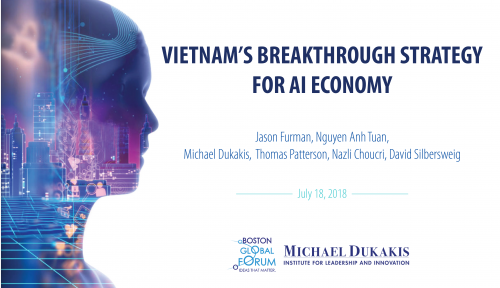
Vietnam’s breakthrough strategy for AI economy

By Jason Furman, Nguyen Anh Tuan, Michael Dukakis, Thomas Patterson, Nazli Choucri,
David Silbersweig

July 18, 2018

Vietnamese Prime Minister Nguyen Xuan Phuc has an aspiration to utilize Artificial Intelligence (AI) to build a civilized and prosperous Vietnam, taking this great opportunity for Vietnam to become a pioneer. Under the direction of Prime Minister Nguyen Xuan Phuc, Minister of Ministry of Planning and Investment (MPI) Nguyen Chi Dung led a delegation of MPI’s leaders to study in the United States, and on April 23, 2018, the delegation worked with the Michael Dukakis Institute for Leadership and Innovation (MDI) and the Boston Global Forum (BGF) to discuss and propose MDI to advise the development of an AI economic strategy for Vietnam.

In response to the aspirations of the Government of Vietnam, MDI carried out the research and prepare report a report by Prof. Jason Furman – Harvard University, Chairman of the Council of Economic Advisers of President Barack Obama, who chaired the drafting of the AI Strategy for the US Government, and Mr. Nguyen Anh Tuan – Director of MDI, with the support of Governor Michael Dukakis – Chairman of MDI and BGF, Prof. Thomas Patterson – Harvard University and Prof. Nazli Choucri – Massachusetts Institute of Technology (MIT) and Prof. David Silbersweig – Harvard University.

The main features of the breakthrough strategy for AI economy and specific solutions, measures for Vietnam: Becoming an pioneer in building the AI-Government and the AI Age Culture owned by the Government of Vietnam, attracting intellectual elites in the Boston area, attracting fundings from the World Bank and the United States, establishing a leading country in automatic governance by AI, then building an AI Innovation Zone which has the ability to provide advanced products and services for Vietnam and international markets, helping Vietnam to become one of the advanced and leading countries in AI.

It is hoped that the Government of Vietnam will find here useful suggestions and recommendations for the development of Vietnam’s AI economy, making Vietnam move forward to go with the civilized and advanced countries in the field of AI.

♦ ♦ ♦

Download Summary Report

Download Full Report

Advancements in developing conversational humanoid robots

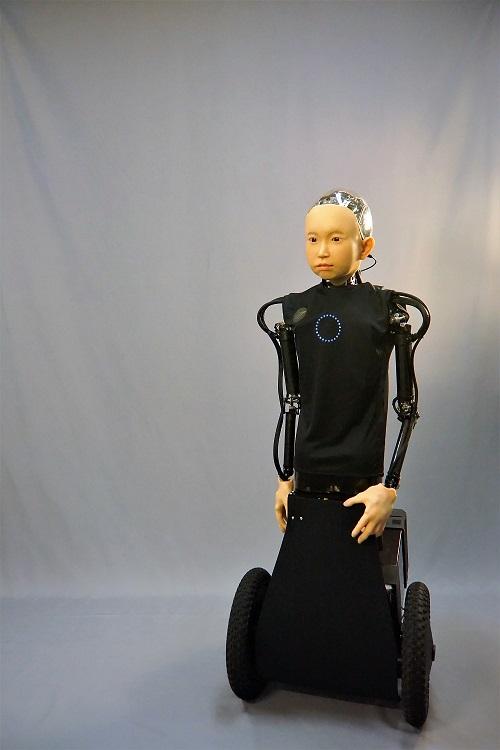
ERICA, CommU, and Ibuki are some of the new advances brought by Prof. Hiroshi Ishiguro and his team, within the project ERATO ISHIGURO, in developing a humanoid robot with the ability to make human-like conversation.

According to a press release from Japan Science and Technology Agency, Prof. Hiroshi Ishiguro – Member of AIWS Standards and Practice Committee, along with his team, have recently developed a humanoid robot with the ability to take part in human-like conversation. As part of the work, Prof. Hiroshi Ishiguro and his team have developed a child-like android named “ibuki”, with the goal of developing a conversational robot that is also  capable of walking alongside humans by using equipped wheels.

As part of the ERATO ISHIGURO project, a multimodal recognition system was built, including a camera and microphone array. Then, a conversation control system was developed that can control the speech, motion, gaze, and emotion of the robot. This attempts to set a technological foundation to facilitate the interaction of the robot with the human. Though it’s only been tested over a relatively short period, the android “ERICA” has shown abilities to have natural conversations with humans and increase the perceived existence of the robot by the human.

Moreover, a more comprehensive system was developed for the robot which has resulted in a more human-like sense of conversation. It consists of novel technologies, such as the implementation of natural and various types of nodding or asking in return with analyzing the linguistical focus terms of the interaction sentence.

Additionally, a multi-robot conversation control system has been developed with a group of conversational social robots named “CommU”. This system controls the timing of multiple conversational behaviors, which make it possible for the robots to perform turn-taking interactions, such as passing the conversation or playing specific roles during the conversation.

These improvements are expected to be applied during further stages of the development of social conversational robots, which aim to support life as well as human learning.

A Regional Reality Check: Mapping Automation-Proof Jobs and Skills

In June 2018, Iyad Rahwan, PhD from the University of Melbourne, Australia, and an affiliate faculty at the MIT Institute of Data, Systems, and Society, took part in a discussion at EmTech about which skills will be most valuable in the new era.

The talk focused on the changes AI and automation will bring about in the workforce. It is difficult to predict which risks will come to fruition in the future, as different researchers have argued for different outcomes and their data offer different findings. But it’s certain that there will be changes in jobs and salaries, and consequently it is necessary for people to be able navigate possible career transitions as AI advances.

To understand more about the relationship between jobs and skills, a study was done on 700 job categories classified by Department of Labor and 200 skill categories, producing a network of skills for each category of job. Skill polarization separates socio-cognitive skills including social, analytical, managerial skills, etc. (on the left) from sensory-physical skills including sensory, physical, psychomotor (on the right) The map given by Iyad Rahwan  suggests that skill polarization underlies job polarization. In term of jobs, there are two branches: cognitive job and physical jobs, types of jobs are on one side of the two islands on the map. As there’s often little connection between these branches, people can’t easily move from one to the other, as well as from lower-skilled portion to higher-skilled portion of the map. When the time comes, it will be easier for people with cognitive skills: analytic, programing… but workers who has set of sensory skills  will likely need to pursue additional education to be competitive in the labor market. Prof. Iyad Rahwan then emphasized the importance of education since the more people learn the more they progress in their career.

The work presented by Iyad Rahwan showed potential in predicting temporal changes to occupational skill requirements and even how the skills of entire urban labor markets evolve over time. As a result, this insight demonstrates how workplace skills underlie the US economy and suggests the possible retraining programs for workers. It also points to policies aimed at maintaining employment opportunities as economic competition increases under globalization and automation.

Iyad Rahwan is an associate professor at the MIT Media Lab and a fellow of the Michael Dukakis Leadership Fellow Program, which was established as an effort of the MDI to enrich the participants’ leadership competency and integrity and to engage youth in the promotion of peace and world security. Last year, Prof. Iyad Rahwan had a discussion with Gorvernor Michael Dukakis on the need for standards and norms to advance the peaceful development of AI—a view shared by AIWS, the BGF, the MDI and this brilliant young researcher.

Which ethics should AI follow?

The recent scandals over the use of Facebook user data has proven the necessity of ethics for AI, but standards to assess AI are still in their infancy. Further debate should be done to come up with solutions to this pressing issue.

According to the World Economic Forum’s news, so far, the ethical standards for assessing AI and its associated technologies are still in their beginnings. Some standards mentioned are deontological and teleological ethical standards, the golden rule of ethics which means treating others the way you want to be treated. Another set is cultural relativism versus universalism, the former evaluates actions through values and norms of a given culture while the latter encourages living up to universal standards. Ethical standards have the tendency to shape global competition since many companies are trying to become industry leaders, and it is difficult to tell what they could do to get ahead. Moreover, predictability and transparency are also required to attract investment in the use of AI.

Another aspect in need of careful consideration is creating cognitive machines capable of making independent decisions. AI has strong potential to do good in the world, but it also poses some ethical challenges. Firstly, if mistakes made by AI cause serious damage, who should take the responsibility for the damage? Secondly, if AI can make many important decisions independently, transparency will be something that needs attention, otherwise people might find it difficult to understand the causes behind a specific series of actions made by AI. A few other issues including bias and human values pose a challenge to humankind, as AI mostly uses data for machine learning progress.

AI needs attention to moral principles and values to ensure its action will be for human interests. MDI is developing the 7-Layer Model on ethical standards for AI to serve as a platform for exploiting the benefit aspects of AI and a useful approach for innovators to follow.

AI can evaluate your performance, address the skills you lack, and provide information on how to acquire them

Coursera introduces new learning machine tool which can show companies what their employees are learning from its courses and at what level they are doing.

According to MIT Technology Review’s article, there are now an abundant number of online courses, making it sometimes difficult for companies to decide which courses are suitable for their employees. However, training has now been easier for companies as they no longer have to ambiguously figure out their employees’ needs and gains. This improvement is thanks to a new AI-powered tool by Coursera, playing the role of an objective metric to evaluate proficiency. It lets companies know how their employees are progressing and what course they actually need to learn.

Coursera has a data-science team that does everything “from collecting and storing data in a warehouse to interpreting information for making internal decisions to building algorithms that feed back into the site”, according to Emily Glassberg Sands, who leads the group.

As it wanted to quantify the benefits of classes, its data-science team began developing machine learning algorithms to map 40,000 skills taught on Coursera. A psychometrics methodology called Item Response Theory (IRT) was also used to evaluate learners’ proficiency by looking at how they performed on quizzes and assignments.

The skills-benchmarking information is expected to be helpful to learning-and-development specialists, HR professionals and hiring managers. However, to some learners it is also a barrier, as they do not expect bosses’ decisions to be made based on their online-learning performance.

However, results of AI algorithms should always be interpreted by humans—who should also make the final decision. It is essential to keep in mind that AI is a useful tool to boost human productivity, but it often can’t fully replace human decision-making.

How does ASEAN Cybersecurity Capacity create benefits from Japan-UK cybersecurity cooperation?

Reported by the Council Foreign Relations, Japan may be the UK’s best partner in accessing Southeast Asia cyber market …

Japan is going to host the 2020 Summer Olympics and Paralympics, and it mandatory that authorities ensure the cybersecurity of the events. For this purpose, last month, Japan and the UK held their fourth dialogue on cyberspace in London to discuss their cooperation in this affair. Considering major sporting events that have become targets for malicious cyber activities, such as potential electricity disruption in the opening ceremony of the 2012 London Games or cyberattacks in the opening ceremony in Pyeongchang (Korea), Japan believes there’s a great chance to learn from the UK and to collaborate in the development of international cyber norms, the security of internet of things devices, and capacity building.

For the UK, the benefits include the opportunity to access the Southeast Asia cybersecurity market via capacity building efforts.

While the UK has little experience working in the ASEAN region in terms of cyberspace, Japan has long been an active in building cybersecurity capacity in the region with various workshops, training courses and collaborative projects such as the Internet Traffic Monitoring Data Sharing Project (TSUBAME Project). The UK expressed interest in accessing Southeast Asian customers, and Japan will be an important partner in these efforts.

One common drawback faced by the UK, Japan, and the ASEAN regions as well is the shortage of cybersecurity professionals. Hence, collaboration in cybersecurity training should be conducted. Both Japan and the UK have national level efforts to cultivate cybersecurity professionals from the entry level to the C-suite. The Japanese government founded some cyber educational program such as the National Cyber Training Center and the Industrial Cyber Security Center of Excellence. Similarly, the UK government provides an apprenticeship scheme to train people to protect critical infrastructure. With the cooperation between Japan and the UK, Southeast Asia might have an opportunity to access their beneficial training programs.