The U.S. Bureau of Labor Statistics projected that banks will eliminate more than 40,000 jobs in 10 years, through 2026. Yet, banks also raising the minimum wage to $15 an hour.
As the technology develops, bank tellers are increasing expected to lose their jobs to automation. Howoever, their wages have actually risen this year, as customers are increasingly using mobile phones for financial services and tellers are needed to help customers navigate these services. Tellers are taught to pitch loans, guide local entrepreneurs, and offer technical support. “They have to solve problems like my PayPal doesn’t work, or my Venmo doesn’t work, or why doesn’t Uber accept my card?’’ said Christopher Maher, chief executive officer of Ocean First Financial Corp., New Jersey’s fourth-largest lender.
As reported by Bloomberg, Ocean First, for example, created a nine-week course for staff on payment platforms to bring about 500 tellers to assist customers with financial decisions. The way bankers help others has also changed as well. Now users can experience a video teller — a remote teller that can perform services available online. Video teller machines look like ATMs — but with the option of pushing a button and connecting to a human. One teller can support up to 10 machines.
Of course, AI is just a tool, and it is essential for people to learn how to use AI for their benefit. The importance of AI applications in some key sectors such as finance and banking is the focus of Layer 7 of the AIWS 7-Layer Model.
Elon Musk, the chairman and chief executive of the electric-car maker Tesla, tweeted his intention to take his company private at $420 a share. The message has drawn the attention of Tesla’s stakeholders.
His tweet started a chain reaction with the involvement of investors, Tesla board members and the stock market.
The New York Times had an hour-long interview with Mr. Musk, answering questions relevant to his Twitter post. Mr. Musk said that he had been working 120 hours a week lately, and had not taken more than a week of since 2001. “There were times when I didn’t leave the factory for three or four days — days when I didn’t go outside,” he said. “This has really come at the expense of seeing my kids. And seeing friends.” His restless pace of work was taking a toll on his mental as well as physical health. In the interview, he also blamed the short-sellers and analysts who he said put pressure on him, by promoting a narrative about Tesla’s loss after the Model 3 mass-market declaration. He occasionally had to take Ambien, a hypnotic primarily used for the short-term treatment of sleeping problems.
Worried about him, Tesla executives have attempted to find a chief operating officer or other No. 2 executive to share the burden with Mr. Musk. But Mr. Musk stated that there was no active search at the moment, and he had no intention of relinquishing his role as chairman, saying his commitment to his company remains strong.
For years, politicians have had concerns about cyber issues being used for warfare. However, cyber issues has been proved to be more of a confusion-causing tool, which leads to economic disruption.
Joseph S. Nye, Jr, who was the former US assistant secretary of defense and chairman of the US National Intelligence Council, and now a professor at Harvard University, Member of Board of Thinkers of The Boston Global Forum, expressed his consternation of a potential devil-cyber system: “A doctrine for hybrid warfare that blends conventional weapons, economic coercion, information operations, and cyber-attacks” as described by Russian chief of the general staff Valery Gerasimov.
To demonstrate his point of view, Prof. Joseph Nye used many prime examples of the damage caused by cyber.attacks In December 2015, for example, Russian hackers successfully carried out the first cyberattack on the Ukrainian power grid, compromising information systems of three energy distribution companies and disrupting electricity supply to consumers. Social media is thought to be the perfect instrument for sowing confusion, as was seen in the 2016 U.S. presidential election. Several measures are suggested to address the situation, the most important of which is that the US must be aware of the potential for cyber-attacks, particularly those that involve the manipulation of social media.
Antonio Guterres, the ninth Secretary-General of the United Nations has recently established a committee of digital cooperation to address issues of cybersecurity and hate speech and assigned an Indian diplomat, Amandeep Singh Gill to be executive director.
As reportedby the Financial Express, UN Secretary-General Guterres said at a press conference on July 12, “Digital technology is changing economies and societies at warp speed. At the same time, the world is only beginning to address the dark side of innovation – such as cybersecurity threats, the risks of cyberwarfare, the magnification of hate speech, and violations of privacy. As a global community, we face questions about security, equity, ethics, and human rights in a digital age.”
Secretary-General Guterres created an association consisting of 20 members, many of whom are leaders in their fields, and chaired by US philanthropist Melinda Gates and China-based Alibaba founder Jack Ma.
The initiative was established to address the dark side of innovation, while at the same time mapping the trends of technology and identifying the risks and opportunities to strengthen society. The panel will focus on cyber-bullying, cybercrime and security.
UN Secretary-General Antonio Guterres is also a member of WLA-CdM — a close partner of MDI in developing The Next Generation Democracy.
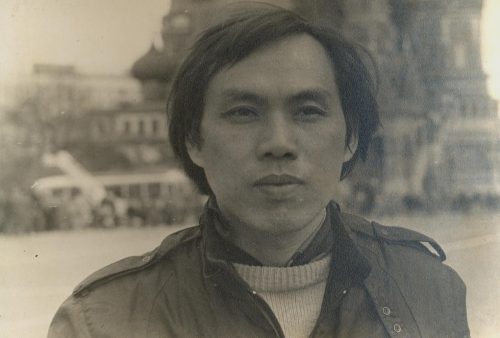
About 40 years ago, the play Green Chrysanthemum on Marsh by famous playwright, author and poet Luu Quang Vu left an indelible impression on the hearts of Vietnamese audiences. The play predicted the emergence of robots that were superior to humans, and presented the ethical and legal challenges that arise when people live together with machines. The author also warned about the use of advances in science and technology to serve selfish individual interests. The play also enquired about how Artificial Intelligence (AI) and robots could bring happiness to humankind.
The poet Luu Quang Vu
Source: Luu Khanh Tho
“Whosoever finds the green chrysanthemum on marsh will receive the gift of happiness” – Folk legends in the countryside have celebrated the young souls and forever re-lived the memory of the three main characters – Lien, Hoang, and Van – three students from a small green valley village school. They treaded the grassy marsh to gather green chrysanthemums believing that by doing this they would be happy for a lifetime. As they grew to adulthood, each of them achieved the career of their dreams. Lien aspired to become a teacher, Van dreamed of becoming a painter. Hoang wanted to be a talented engineer with innovations that could change the world.
One day, Hoang planned to meet Lien to express his love. Ironically, Van and Lien also wanted to send him their wedding invitation. Unable to face the fact, Hoang created two robots identical to Lien and Van but with the most noble and idealistic of qualities. Robot Lien is charming, feminine, honest and sensitive. Her soul is teeming with innocence and love, filled with yesteryears and aspirations. Robot Van is a genius painter with an endless passion for the art. He loves righteousness, freedom, justice and integrity. Hoang created Robot Lien to love him only, and Robot Van to be a loyal, neutral, and subordinate friend. Robots Lien and Van are the embodiments of Hoang’s dream of happiness.
But when Robots Lien and Van came into the real world, there were problems beyond what Hoang had anticipated. Lien Robot dreamed of having a handsome lover with the physique, clothes, and soul to match. Living with Hoang, she soon realized his selfishness, narrow-mindedness, jealousy, falsehood, flattering habits, and aggressiveness, along with the grinding of teeth while he slept. These frailties led her to lose affection for Hoang. When she told Hoang of her reservations, he was embarrassed and disappointed. Seeking to escape from him, Robot Lien went out to search for Robot Van and discovered that he was locked inside the basement to paint and fantasize.
The two of them ran away, only to encounter difficulties. Robots Lien and Van looked exactly like the real Lien and Van, creating misunderstanding and confusion. Hoang has told authorities that Robots Lien and Van were a danger to public security, which led authorities to set up a special committee to find them. Confusing situations and grim distractions occur when the robot and real Liens and Vans encountered each other. Hoang followed Robots Lien and Van back to the valley of childhood and saw them sink into the marsh. Through these developments, the real Lien and Van came to realize that their love and happiness rested on respect and the act of daily living. Hoang came to realize that dreams will only be beautiful and long-lasting when people maintain a pure and innocent heart. The moral of the play: individuals must not allow themselves to sink into the swamp of selfish mediocrity.
Trailer of the play Green Chrysanthemum on Marsh
Source: The Youth Theater
Many famous playwrights of Vietnamese theater have presented the play, including People’s Artist Nguyen Dinh Nghi and Eminent Artist Do Ky. In January 2018, when the Youth Theater staged this play, I was the director and felt under great pressure but saw it as an opportunity to stage the play of the greatest writer in Vietnam: Luu Quang Vu. I thought about an innovative approach because the audience of the AI era is different. The challenge was how to create a fresh, youthful, and modern appeal that could draw people to the theater. I advocated the use of many new tricks to break the boredom of the “box stage” – for example, pushing the fantasy element to a higher level of space and time to take the imagination beyond the present. The new theatrical method helped viewers to feel the breath of contemporary life as AI has become increasingly visible. The play’s staging was also adjusted. The horizontal and vertical lines on the background contrasted perfectly with the subtle symbol of a green chrysanthemum, creating a sense of fierce opposition. Cutters ran on stage with sparks to slice through the imaginary space of fragile boundaries. The talent and dedication of the young actors made an important contribution to the success of the play. Participating in the National Professional Theater Competition in April 2018, the play won the Gold Medal. Innovations were done in acting, but we have kept the same pioneering, forward-looking vision that embodies the profound human values of the script. The vital message that the play Green Chrysanthemum on Marsh conveyed to the viewers is this: Is it time for robots to replace humans? And what distinguishes man from machine? Robots could become more intelligent, even more perfect than human beings. How can people live harmoniously with them? What do people need to do to adapt and to retain human values?
Along with the Green Chrysanthemum on Marsh, over 50 other plays by the famous writer Luu Quang Vu, such as Truong Ba’s Soul, Butcher’s Body, Me and Us, Thing Cannot Lose, and The Ninth Oath, and Ms. SiTa have contributed to the spurring of innovation in Vietnam. His plays dealt with the hottest and toughest issues of reality after the War. They were hindered by the centralized subsidy mechanism, which was a proper management mechanism during the War but a barrier of development in peacetime. It caused rigid habits and ideologies that retarded society’s development. Through these plays, Luu Quang Vu criticized the bureaucratic evils: the dogma of the people clinging to the old and being afraid of the new. Simultaneously, he also exposed, cheered for new trends, praised and dared pioneers to think, do, and take responsibility. He explored the core issues of reality and expressed them vividly on the stage, then sent out prognostic messages about the new beginnings. Luu Quang Vu ushered in the golden age of the Vietnamese stage in the late twentieth century. His plays were well received and widely welcomed. With great spirit and innovation in his work, he “ignited” the young Vietnamese generation in the Early Renewal Period. Believing in love, they eagerly embarked on new jobs and societal contributions. Luu Quang Vu contributed greatly to the country’s transformation. He was a brilliant pioneer of the Vietnamese people during the eve of the Renewal Period. The Vietnamese people love and acknowledge his contributions.
In 2018, during the 30th anniversary of their passing (Luu Quang Vu; his talented wife, Ms. Xuan Quynh; and their beloved son, Luu Quynh Tho) into the realms of immortality after a tragic accident, the literary public is grieved in remembering them. Several activities of remembrance and gratitude were organized.
The disruptions caused by writer Luu Quang Vu have been addressed by creators and innovators at the Michael Dukakis Institute for Leadership and Innovation (MDI) in Boston, US through the Artificial Intelligence World Society (AIWS) Initiative. Aware of the opportunities and challenges that AI brings to humanity, the MDI announced the AIWS Initiative in November 2017. The AIWS Initiative is a collection of concepts, ideas, and solutions that appeal to governments, technology groups, academics, universities, lawmakers, and others. It aims to establish a moral foundation, a legal framework, and to establish an AI Society. In addition, it proposes the establishment of a committee of standards to monitor and supervise research and application of AI processes to real-life processes towards a safe and prosperous world with noble human values. The work of the Boston Global Forum (BGF) and the MDI is inspired and led by the scholar Nguyen Anh Tuan – CEO of the BGF and Director of the MDI, Founder and former Editor-in-Chief of VietNamNet Newspaper – along with former Massachusetts Governor Michael Dukakis, who was the Democratic Party nominee in the US Presidential Election in 1988.
AIWS Initiative
Source: Michael Dukakis Institute for Leadership and Innovation
The AIWS Initiative, which represents a pioneering vision at the dawn of AI, has attracted the attention of AI professionals, academics, research institutions, and technology firms around the world. Many AIWS conferences have been held at Harvard University to gather the essentials of AI from Harvard University, MIT, and other US universities. An AIWS conference was also held in Tokyo and attracted top Japanese AI experts. In June 2018, the first concept of the AI-Government, which was announced by MDI at Harvard University, is being promoted by BGF in concert with the United Nations. On August 9th, 2018, top US newspapers such as the New York Times, the Washington Post, the Boston Globe, the Chicago Tribune, the San Francisco Chronicle and the ABC News were proud to present the AIWS and the AI-Government.
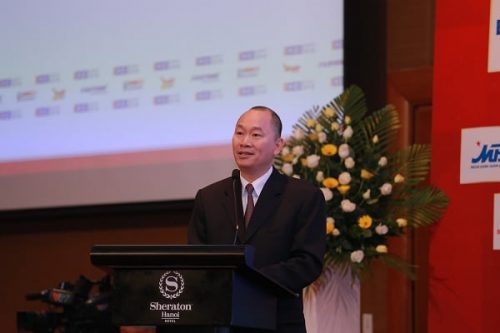
Mr. Nguyen Anh Tuan presented the AIWS Initiative at Vietnam CEO Summit 2018 in Vietnam
Source: Vietnam Report
Nearly 40 years ago, Luu Quang Vu, through the play Green Chrysanthemum on Marsh, predicted the emergence of a society where AI robots co-exist with humans, posing unique problems and challenges. Thirty years ago, on August 29th, 1988, Luu Quang Vu died at the age of 40 to the great sorrow of the Vietnamese people. In 2018, on the 30th anniversary of his departure, there was a global pioneering initiative – an AI world society as proposed by Vietnamese scholar, Nguyen Anh Tuan. The coincidence in thought between the authors of Green Chrysanthemum on Marsh and the AIWS is the harmony of great minds whose souls are filled with love and passion for humankind.
An analysis on the future of AI by Margaret Boden, research professor of cognitive science at University of Sussex, was published by AEON. The article contrasts humans with computers and AI, and discusses a possibility: Will AI take over the world?
AI has been developing at an extremely fast pace, and some think it might one day gain control over humans.
“But this wasn’t real anxiety: the computer couldn’t care less,” said Prof. Margaret Boden. According to her, there are human attributes machines will never be able to acquire.
Living creatures seek out resources to maintain their existence, and have mechanisms to meet general survival needs such as food, shelter, warmth, sleep, etc., through to specific neurotransmitters and hormones. Humans are also capable of complex thoughts, including planning, reflection, and goal pursuit.
A machine’s goals, on the other hand, are generated by humans. Priorities and values aren’t things AI understand, as these entities don’t feel emotions like satisfaction. The overuse of AI might result in the dehumanization spreading into the society.
Prof. David Silbersweig—Chairman of Department of Psychiatry and Co-Director of Institute for the Neurosciences, Brigham and Women’s Hospital, member of Board of Directors of Boston Global Forum (BGF) and AI Director of Michael Dukakis Institute for Leadership and Innovation (MDI)—has a different opinion.
Prof. David Silbersweig
“The author makes excellent points about human drives and needs, and contrasts them with computers and AI, which have programmed or eventually even auto-developed goals, but not such emotions and motivations. But the author claims that computers/AI can never have such attributes. However, if one considers the biological and functional mechanisms underlying subjective experience, as well as emergent properties of complex systems, it may be possible that non-human entities could have a meaningful version of subjectivity (though how one would verify it remains an issue).”, said Prof. Silbersweig.
The US Defense Department produced the first tools for catching deepfakes called Media Forensics. This may start an arms race between counterfeiters and governmental agents.
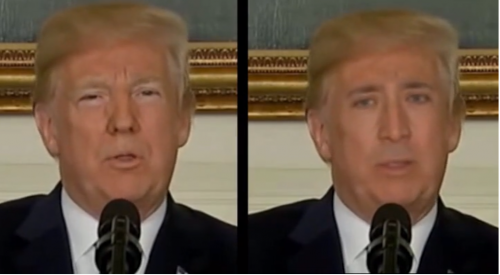
Techniques for faking facial gestures are now easier to implement than ever. The creation of this so-called deepfake might appeal to many internet users, but there are also significant consequences. Since deepfakes are usually used to create fake celebrity pornographic videos, to produce “revenge porn,” and even to misrepresent well-known politicians, there are tremendous risks to individuals’ reputation.
To generate these fake videos, developers use a machine-learning technique known as generative modeling, which allows computers to access to images of a real individual before creating the fake model.
On this issue, the US Defense Department’s program, Defense Advanced Research Projects Agency (DARPA), have developed tools, known as Media Forensics, for catching deepfakes. They are building on work by a team, led by Siwei Lyu, a professor at the State University of New York at Albany, discovered that deepfakes rarely blink, which is because deepfakes are trained on still images, making the imitations look unnatural. “We are working on exploiting these types of physiological signals that, for now at least, are difficult for deepfakes to mimic,” said Hany Farid, a leading digital forensics expert at Dartmouth College.
This invention of the US Defense Department may start an AI-based arms race, since there will be confrontations between video forgers and digital sleuths. Another problem is that the machine-learning system can be trained to outsmart the forensics tools. Therefore, issues of morality and responsibility become more important. That is why MDI has been focusing on building an ethical framework and AI standards for the AI World Society (AIWS).
With the theme “Accelerating Innovation in the Enterprise”, the upcoming AI World Conference and Expo 2018 will be held December 3rd-5th, in Boston. The conference will concentrate on how AI development influences fields such as Healthcare, Pharma, and Business, and will also discuss emerging technologies and the future of AI.
The three-day conference focuses on how enterprises can successfully put artificial intelligence into practice and how they can stimulate inner innovation. Business and technology executives who seek to learn from innovative implementations of AI are welcomed to this instructive event.
How do enterprise organizations set up appropriate AI strategies and technologies for their business and use them to optimize their efficiency? The question is of great concern to organization leaders, and is also a goal of AI World, a partner of MDI. Attending the AI World Conference and Expo 2018 will help leaders to learn how to use AI to build new business models so as to gain more opportunities and competitive advantage.
The event involves the participation of inspiring and influential speakers such as:
Amir Banifatemi, PhD, AI Lead, Xprize
Ed Addison, CEO, Cloud Pharmaceuticals
Michael Ringel, PhD, Senior Partner and Managing Director, Boston Consulting Group
Sandy Aronson, Executive Director, IT, Partners HealthCare Personalized Medicine
James D. Murray, MS, Vice President, Clinical Informatics and Interoperability, CVS Health
Given their shared interests in ensuring the peaceful development of AI, both AI World and MDI see value in collaborating to achieve these outcomes. This collaboration will hopefully accelerate the progress of governments and corporations in solving some of the world’s greatest challenges—including developing and tracking the progress of ethical AI policy, and ensuring adoption of solutions amongst governments and corporations.
C-V2X, a vehicle’s communicator between cars, can help reduce accidents and enhance autonomous driving.
The latest invention reported by MIT Technology Review, is capable of informing self-driving vehicles about obstacles and connecting them to their surroundings.
C-V2X is a peer to peer wireless technology developed by Ericsson, Huawei, Nokia and Qualcomm. The cars that had C-V2X installed sent and received wireless signals about 10 times per second, displaying information and warnings about pedestrians, storms and accidents on their windshields or dashboards.
A demo that took place in Colorado on August 14 showed that the technology was capable of communicating route information between cars, booths, signs, and other infrastructure. This could be a breakthrough innovation for automakers, especially as telecom operators are launching next generation wireless network known as 5G, which will give C-V2x much more bandwidth than current mobile networks and help speed up the vehicle’s data exchange progress.
“When we get to 5G, you’ll be able to know when a vehicle far ahead of you intends to change lanes or starts to brake even if it’s beyond your line of sight,” said Duggal, Qualcomm’s Vice President of Product Management. “There could even be special lanes where autonomous vehicles are allowed to travel really fast because they’re able to share information about incoming and outgoing traffic at great speed.”
Following the first layer of the AIWS 7-Layer Model—the set of ethical standards for AI developed by MDI—AI should not be able to put at risk the health and safety of humans. Therefore, we should always keep in mind the risk of malfunction in self-driving cars, and users’ safety needs to be guaranteed by developers.