

Vaira Vike-Freiberga

Member of Board of Thinkers, Boston Global Forum

Member of AIWS Standards and Practice Committee, Michael Dukakis Institute

President of the World Leadership Alliance – Club de Madrid

Former President of Latvia

Dr. Vaira Vike-Freiberga has been the President of the World Leadership Aliance – Club of Madrid since 2014 and is former President of Latvia (1999-2007). She was instrumental in achieving membership in the European Union and NATO for her country, and was Special Envoy on UN reform among her international activities. Since 2007, she is an oft invited speaker on social issues, moral values, and democracy. She was Vice-chair of the Reflection group on  the long term future of Europe, and chaired the High-level group on freedom and pluralism of media in the EU.

Having left Latvia as a child refugee to Germany in 1945, then French Morocco and Canada, she earned a Ph.D. in psychology (1965) at McGill University. After a distinguished career as Professor at the University of Montreal, she returned to her native country in 1998 to head the Latvian Institute. A year later she was elected President by the Latvian Parliament and re-elected in 2003.

She is member of four Academies, and Board member or patron of 30 international organizations, including the Board of Thinkers of the Boston Global Forum. She has received many highest Orders of Merit, as well as medals and awards, for distinguished work in the humanities and social sciences. She has published 14 books and authored over 200 articles, book chapters, reports, and audiovisual materials.
Masahiro Fukuhara

Member of AIWS Standards and Practice Committee, Michael Dukakis Institute

Founder and CEO, Institution for a Global Society

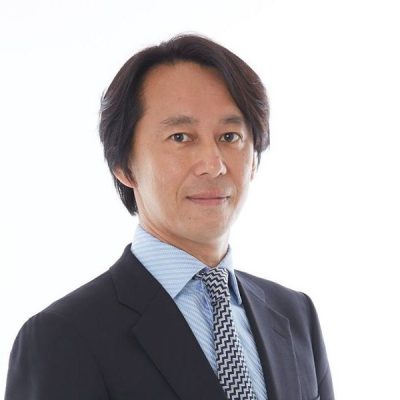
Founder and CEO of Tokyo-based people analytics startup Institution for a Global Society (IGS), which he started in 2010. Prior to founding IGS, Fukuhara was managing director at asset management firm Barclays Global Investors (BGI) where he made investment decisions based on computer-driven models. Fukuhara earned his Bachelor’s degree in Economics from Keio University and MBA from INSEAD. He holds a Master’s degree (with Honors) in International Finance from Grandes Ecoles HEC and Ph.D. from Tsukuba University Graduate School of Business Sciences (Ph.D. in Business Administration).

He is currently a Visiting Professor at the Center for FinTEK (Finance, Technology, and Economy) at Keio University as well as adjunct professor at Hitotsubashi University’s Graduate School of International Corporate Strategy.

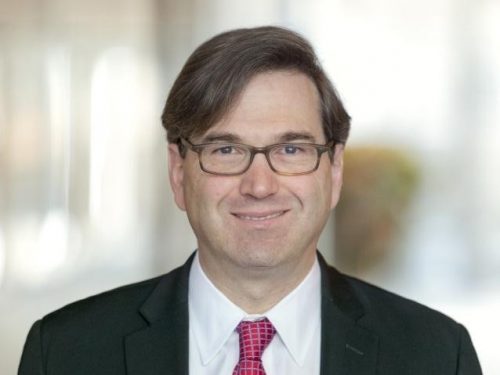
Jason Furman

Member of AIWS Standards and Practice Committee, Michael Dukakis Institute

Professor of the Practice of Economic Policy, Harvard Kennedy School

Former Chairman of the Council of Economic Advisers for US President Barack Obama

Jason Furman is Professor of the Practice of Economic Policy at Harvard Kennedy School. He is also nonresident senior fellow at the Peterson Institute for International Economics. This followed eight years as a top economic adviser to President Obama, including serving as the 28th Chairman of the Council of Economic Advisers from August 2013 to January 2017, acting as both President Obama’s chief economist and a member of the cabinet. During this time Furman played a major role in most of the major economic policies of the Obama Administration. Previously Furman held a variety of posts in public policy and research.

In public policy, Furman worked at both the Council of Economic Advisers and National Economic Council during the Clinton administration and also at the World Bank.

In research, Furman was a Director of the Hamilton Project and Senior Fellow at the Brookings Institution and also has served in visiting positions at various universities, including NYU’s Wagner Graduate School of Public Policy. Furman has conducted research in a wide range of areas, including fiscal policy, tax policy, health economics, Social Security, technology policy, and domestic and international macroeconomics.

In addition to articles in scholarly journals and periodicals, Furman is the editor of two books on economic policy. Furman holds a Ph.D. in Economics from Harvard University.

Ian Goodfellow

Member of AIWS Standards and Practice Committee, Michael Dukakis Institute

Research Scientist, Google

Ian Goodfellow (PhD in machine learning, University of Montreal, 2014) is a research scientist at Google. His research interests include most deep learning topics, especially generative models and machine learning security and privacy. He invented generative adversarial networks, was an influential early researcher studying adversarial examples, and is the lead author of the MIT Press textbook Deep Learning. He runs the Self-Organizing Conference on Machine Learning, which was founded at OpenAI in 2016.

He was named as one of 35 Innovators under 35 by MIT Technology Review. He wondered if two neural networks could work in tandem and invented a way for neural networks to get better by working together. “You can think of generative models as giving artificial intelligence a form of imagination,” Goodfellow says.

Hiroshi Ishiguro

Member of AIWS Standards and Practice Committee, Michael Dukakis Institute

Director of the Intelligent Robotics Laboratory, Department of Systems Innovation, Osaka University

Hiroshi Ishiguro is Director of the Intelligent Robotics Laboratory, part of the Department of Systems Innovation in the Graduate School of Engineering Science at Osaka University, Japan.

Hiroshi Ishiguro studied undergraduate Computer Science at the University of Yamanashi and later received a D.Eng. in Systems Engineering from Osaka University in 1991. Following graduation he began working as a research assistant in the Department of Electrical Engineering and Computer Science at Yamanashi. In 1992 he moved to the Department of Systems Engineering at Osaka University. In 1994 he became an Associate Professor in the Department of Information Science at Kyoto University where he began research in distributed vision using omnidirectional cameras. From 1998 to 1999 he served as a visiting scholar at the Department of Electrical and Computer Engineering at the University of California, San Diego (UCSD), and in 1999 as a visiting researcher at ATR Media Information Science Laboratories developing interactive humanoid robots, such as Robovie. In 2000 he transferred to the Department of Computer and Communication Sciences as an associate professor at Wakayama University, later becoming a full professor in 2001 before moving back to Osaka. He is currently a professor of the Department of Systems Innovation in the Graduate School of Engineering Science at Osaka University (2009-), and group leader of the Hiroshi Ishiguro Laboratory at ATR Intelligent Robotics and Communication laboratories (2011-) and ATR fellow. His current research interests include interactive robots, android robots and perceptual information infrastructure. His contributions to the field of robotics include, publishing more than 300 papers in major journals and conferences, such as Robotics Research and IEEE PAMI, and the development of several humanoids and androids (e.g. Robovie, Repliee, Geminoid, Telenoid, Elfoid, etc.)

In this interview, Ishiguro discusses his career and his accomplishments in the field of robotics. Outlining his various research projects (SLAM, Geminoid, Robovie, etc.) he then comments on the influences of theater and art on his work in humanoid and interactive robotics. He recounts the developments and challenges which arose during his research, such as Android Science and the difficulty of creating a human-like appearance, and reflects on the future challenges and applications of robotics.

Mikhail Kupriyanov

Member of AIWS Standards and Practice Committee

Professor at Saint Petersburg Electrotechnical University “LETI”, Saint Petersburg, Russian Federation

Mikhail Kupriyanov is an expert in the field of intellectual methods for data and process analysis, artificial intelligence, and embedded systems. In 1977 he defended a PhD in the area of embedded system design; in 1988 he defended a doctorate thesis in the area of fault-tolerant and artificial intelligent systems design. In 1991 he gained the title of full-time professor.

Since 1993 he has been working in the position of professor at the Department of Computer Engineering (Saint Petersburg Electrotechnical University “LETI”) since 2015 he is a head of the Department.

Since 2010 he has been occupying the position of the head of the Computer Technologies and Informatics Faculty (Saint Petersburg Electrotechnical University “LETI”).

Since 2018 he has been occupying the position of the Director of Education Department (Saint Petersburg Electrotechnical University “LETI”).

Beatriz Merino

Member of AIWS Standards and Practice Committee, Michael Dukakis Institute

Former Prime Minister of Peru

Beatriz Merino was the first female Prime Minister of Peru. She held office between June 23, 2003 and December 12, 2003. Before serving as Prime Minister, she graduated from Harvard with a Master’s degree in law and had a successful career at Procter & Gamble. After her time at Procter & Gamble, she was elected as Senator from 1990-1992 and Congresswoman from 1995- 2000. During that time she served as President of the Environmental Committee and the Women’s Rights Committee.

Merino is widely recognized for her expertise and work with women’s issues. She was the Director of the Women’s Leadership Program, now known as Gender Equality in Development Unit, at the Inter-American Development Bank in Washington D.C. which aims to support and finance projects to enhance women’s leadership in Latin America. She was also a member of the board of directors for the International Women Forum and a steering committee member for the Business Women’s Initiative against HIV/AIDS. Merino also worked extensively in commercial, labor, corporate, and environmental legislation. She was the first Peruvian woman to serve on the Commission of Andean Jurists. At Lima University, she was the Director of Foreign Cooperation and of the Master’s program on tax revenue and fiscal policies.

She has authored two books, “Peruvian Women in the XX Century Legislation” and “Marriage and Rape: Debate of Article 178 of the Peruvian Criminal Code.” She served as Peru’s public ombudsman from September 2005 until March 2011.

Paul Nemitz

Member of AIWS Standards and Practice Committee, Michael Dukakis Institute

Principal Advisor, Directorate General for Justice and Consumers

Paul F. Nemitz is the Principal Advisor in the Directorate General for Justice and Consumers.

He was appointed by the European Commission on 12. April 2017, following a 6 year appointment as Director for Fundamental Rights and Citizen’s Rights in the same Directorate General.

As Director, Nemitz led the reform of Data Protection legislation in the EU, the negotiations of the EU – US Privacy Shield and the negotiations with major US Internet Companies of the EU Code of Conduct against incitement to violence and hate speech on the Internet.

Before joining the Directorate General for Justice and Consumers, Nemitz held posts in the Legal Service of the European Commission, the Cabinet of the Commissioner for Development Cooperation and in the Directorates General for Trade, Transport and Maritime Affairs.

Nemitz has represented the European Commission in numerous cases before the European Court of Justice and has published widely on EU law.

He is a visiting Professor of Law at the College of Europe in Bruges; Member of the Board of the Verein Gegen Vergessen – Für Demokratie e.V., Berlin; Trustee of the Leo Baeck Institute, New York; Member of the Board of the Association for Accountability and Internet Democracy, AAID, Paris; Member of the Scientific Council of the Foundation for European Progressive Studies, Brussels. He is also a member of the Tönissteiner Kreis e.V., Berlin, the Commission for Media and Internet policy of the SPD, Berlin; the German Association for European Law and the Arbeitskreis Europäische Integration, Heidelberg.

Nemitz studied Law at Hamburg University. He passed the state examinations for the judiciary and for a short time was a teaching assistant for Constitutional Law and the Law of the Sea at Hamburg University.

He obtained a Master of Comparative Law from George Washington University Law School in Washington, D.C., where he was a Fulbright grantee. He also passed the first and second cycle of the Strasbourg Faculty for Comparative Law.

Humanizing the Internet of Things

On 5th of October, Llewellyn King, Host of “White House Chronicle”, Member of Editorial Board of Boston Global Forum had a conversation with John Savage – Professor of Computer Science at Brown University about the development of computer science, artificial intelligence and cybersecurity in our present world. 

John Savage is the An Wang Professor of Computer Science at Brown University. His current research interests are cybersecurity technology and policy, reliable computation with unreliable components, computational nanotechnology, efficient cache management on multicore chips, and I/O complexity.

The talk’s topic focuses on the age of emerging technology with its development in an unprecedented pace. Almost everything, every device around us is now connected and in the future, they are all likely to be automated and computerized, which is the incoming revolution that people should be aware and ready for. In order to prepare people for such changes, it will require a global effort to make it feasible. This, according to Prof. Savage, is similar to the case in West Virginia where local miners are trained to become coders, learn to deal with the shift of global trend.

A further concern that Prof. Savage mentioned is about the importance of safety since most of AI system is programmed and computerized hence it can be messed with causing mixed signal, mistakes and accidental failures. It is necessary that we all work on addressing this issue and use AI with precision. As long as we can accomplish that, AI wouldn’t be bad news to human.

On December 2017, Professor John Savage was honored as the Distinguished Global Educator for Computer Science and Security by the Boston Global Forum and the Michael Dukakis Institute for his tireless dedication and contributions to computer education, both from technological and societal perspectives.