The PDF of this publication can downloaded here.
Tokyo, April 5th, 2023
Contributors: Nazli Choucri, Michael Dukakis, Tuan Anh Nguyen, Quynh Nham, Thomas Patterson, Alex Pentland, Shyamal Sharma, David Silbersweig
The Boston Global Forum Shinzo Abe Initiative
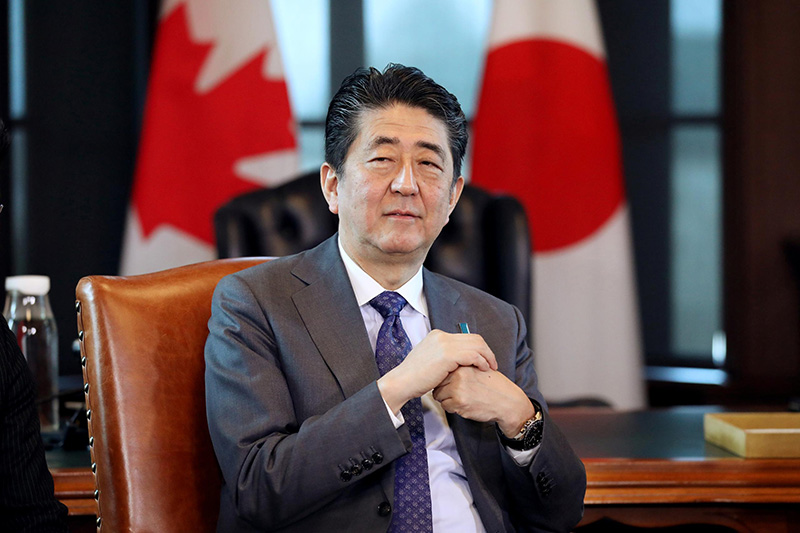
In 2015, the Boston Global Forum (BGF) honored Prime Minister Shinzo Abe with the “World Leader for Peace and Security Award.” This award was given in recognition of Prime Minister Abe’s contributions to promoting peace, security, and economic development in Japan and around the world. Prime Minister Abe’s leadership and vision helped to bolster the Japanese economy, strengthen international partnerships, and promote a more secure and peaceful world for all.
Prime Minister Abe was a distinguished contributor to the book Remaking the World – Toward an Age of Global Enlightenment, which was published in 2021 by the Boston Global Forum and the United Nations Academic Impact. The book presents a vision of the future based on the deep integration of applied Artificial Intelligence (AI) in all aspects of politics, economy, education, and society.
On July 10, 2022, the Boston Global Forum founded the Shinzo Abe Initiative for Peace and Security to recognize his legacy and continue his work on global peace and security through engaging world leaders, scholars, thinkers, and innovators on these topics with special attention to promoting Japan’s economic growth and innovation.
In January 2023, the BGF announced former State Minister for Foreign Affairs Yasuhide Nakayama as the coordinator of the Shinzo Abe Initiative and a distinguished contributor to the BGF.
The Age of Global Enlightenment
The book Remaking the World – Toward an Age of Global Enlightenment (2021) presents a vision of the future based on the deep integration of applied AI in aspects of politics, economy, education, and society. This vision is supported by a 7-layer model of the AI World Society (AIWS), which is at the core of the Age of Global Enlightenment. The book outlines how the 7-layer model of the AI World Society can be used to promote sustainable economic growth and prosperity. The model is designed to guide policymakers, business leaders, and individuals in harnessing the power of emerging innovations in digital technology as well as artificial intelligence (AI) to address the complex challenges facing the world today. It provides a roadmap for policymakers, political leaders, entrepreneurs, and world citizens to work together to establish a new Social Contract for the AI Age that is guided by the principles of broad-based collaboration, innovation, economic justice and equity, and ethical leadership.
Leadership Community in the AI World Society and the Age of Global Enlightenment
In the new AI World Society, maintaining peace, guaranteeing reciprocal security, and promoting shared prosperity are crucial. The effort calls for concerted, collaborative action by world leaders.
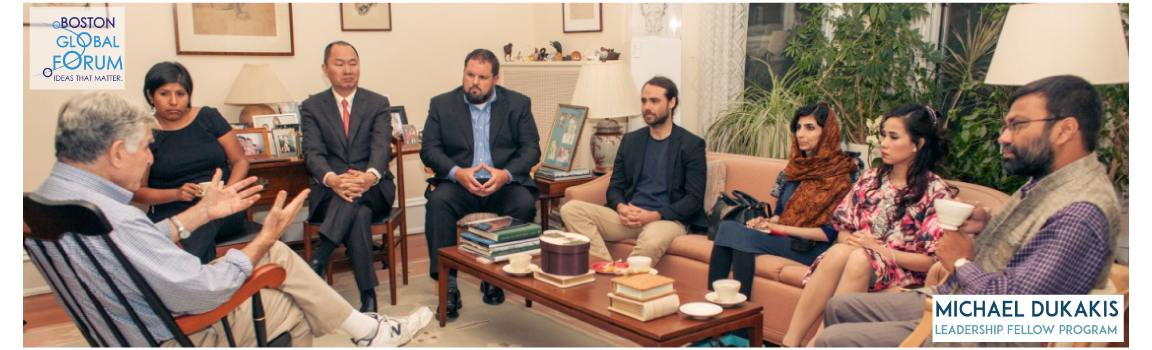
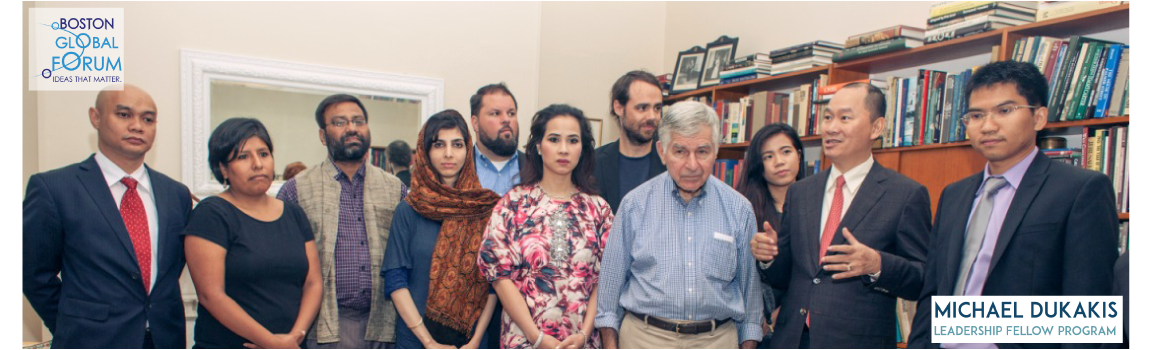
Toward this goal, the Boston Global Forum (BGF) has assembled a Leadership Community for Global Enlightenment. This Leadership Community is composed of distinguished policymakers, political leaders, strategists, scholars, thought leaders, business leaders, innovators, artists, and other public intellectuals who are committed to crafting a new Social Contract for the AI Age. Notable participants in this Community include former Governor Michael Dukakis of Massachusetts, President Ursula von der Leyen of the European Commission, President Sauli Niinisto of Finland, UN Secretary General’s Envoy on Technology Amandeep Gill, Speaker Andreas Norlen of Sweden, and “the father of the Internet” Vint Cerf among scholars from the Massachusetts Institute of Technology (MIT), Harvard University, and other leading institutions. The BGF convenes members of this Leadership Community in High-Level Dialogues and similar discussions for imagining solutions and actions to address the world’s most pressing issues.
Japan’s New Era of Reiwa and the Age of Global Enlightenment
The promise of a new era for Japan emerged in Spring 2019 when Prime Minister Shinzo Abe’s eventual successor Suga Yoshihide gave the promise its name, Reiwa. The first character rei, means “auspicious” or “orderly;” wa means “harmony” or “peace.” Japan’s officials chose “beautiful harmony” as the English rendering for Reiwa. The name came from Japan’s Manyoshu poetry anthology compiled over a millennium ago: “In this auspicious (rei) month of early spring, the weather is fine and the wind gentle (wa).”
The early months of Reiwa were neither auspicious nor gentle with the COVID-19 pandemic taking hold, China suppressing human rights in Hong Kong, and Shinzo Abe stepping down due to illness. Japan has demonstrated resilience in the face of past challenges. In the Showa era from 1926 to 1989, Japan recovered from the Second World War and grew into the world’s second-largest economy. It led Ezra Vogel, a Harvard historian, to write about “Japan as Number One” and to urge America to learn lessons from its former foe. Mr. Abe had this in mind when he declared that “Japan is back.”
Reiwa’s dawn has already provoked soul-searching in Japan. The question for the Reiwa era is what kind of Japan the Japanese seek. Yoshimi Shunya of the University of Tokyo has argued that Japan is in a “post-growth or post-development era” and its values must evolve from the “faster, higher, stronger” of Showa to “diversity, resilience and sustainability.” Others hope to reprise past glories, as in “We must make Japan Number One again.”
Showa Japan once offered lessons on how to win the future. Reiwa Japan will offer lessons on how to survive and prosper. A place to start is on Japan’s front line with China.
Diplomats speak of Asia in terms of a “Free and Open Indo-Pacific,” a coinage of Mr Abe’s. Trade negotiators speak of “Data Free Flow with Trust,” another Japanese idea. Central bankers ponder “quantitative easing,” also pioneered in Japan. Years before Joe Biden promised America would “Build Back Better,” Japan pushed to insert the phrase into the UN framework for disaster-risk reduction.
In Spring 2021, President Biden welcomed then Prime Minister Suga Yoshihide for the first foreign leader visit of his presidency. After a tenuous period under the Trump Administration, the United States and Japan renewed an alliance that has become a cornerstone of peace and security in the Asia-Pacific region and around the world. Japan is central to this century’s geopolitics and a peaceful, democratic world order – spreading Reiwa, Beautiful Harmony, in a world beset by destabilization, displacement, and violent suppression imposed on millions of world citizens by authoritarian regimes.
Welcoming Japan as an Essential Pillar of World Democratic Alliance
It is a great honor for the Boston Global Forum to welcome Japan as its distinguished collaborator from the Asia-Pacific region for co-creating the Global Digital Governance Framework towards peace and security in the new Age of Global Enlightenment ushered in by emerging digital technologies and generative artificial intelligence.
The Leadership Community of the Boston Global Forum looks forward to Japan playing a pivotal role in leading and promoting the comprehensive social integration among the United States, Japan, India, the Europe Union, Australia and other like-minded democratic countries, for shared prosperity and a peaceful world order in this new Age of Global Enlightenment. With its historic excellence in technological innovations and its culture of humility, Japan could pave the way for establishing a robust ecosystem for innovation and technology-driven economy in Asia-Pacific and across the globe. The success of this collaboration will require both Japan and the United States to work together, alongside the European Union and India, considered as the Four Pillars of a free and fair global society in the new Age of Global Enlightenment, and leverage their respective strengths to create new synergies, as well as an effective global framework for digital governance to prevent harm and optimize the common good.
Japan as the Benevolent Economic Giant in the Age of Enlightenment
The Boston Global Forum proposes the following for ongoing dialogue and collaboration:
As a nation with a strong tradition of innovation and technological advancement, Japan has strong potential to play a prominent role in shaping the development and implementation of AI and other emerging technologies in what could be the Global Enlightenment Economy. Japanese companies and institutions have already made significant contributions to the field of AI, and Japan’s leadership in this area can help to drive innovation and promote ethical standards in the use of AI and other technologies. Japan’s leadership role in promoting a shared framework for responsible and ethical standards developed through proactive collaboration with the Boston Global Forum and leaders in the Global Enlightenment Community could be pivotal in advancing democracy, peace, and prosperity in the global economy in the Age of Global Enlightenment.
Furthermore, Japan’s commitment to international cooperation and collaboration, as well as its focus on promoting peace and stability in the Asia-Pacific region, makes it a natural partner and indeed the benevolent economic giant in the Global Enlightenment Community.
Potential Strategies that Japan could adopt for strengthening its economy in the Age of Global Enlightenment:
Foster Innovation and Openness: Japan has a strong tradition of technological innovation. To remain competitive in current times, Japan could encourage greater openness to new ideas and technologies and promote an environment that fosters innovation. This could involve providing more funding for research and development, creating incentives for entrepreneurs and startups, and investing substantially in the development of emerging technologies like AI and robotics.
Focus on Digitalization: Japan could embrace the digital revolution and invest in the redesign of its digital infrastructure. This could involve building a robust and reliable broadband network, investing in 5G technology, and developing new platforms and services that leverage the power of AI and other digital technologies.
Embrace Data Economy: Data is the most vital input of the AI and digital economy, as well as all other highly interdependent sectors of modern life of individual citizens and nations including defense, commerce, and public health. Japan could focus on harnessing the power of data to drive economic growth. This could involve investing in systematic data capture in each sector, data analytics and machine learning technologies, promoting data sharing and collaboration across industries for program planning and implementation, and developing policies and regulations that protect privacy, encourage responsible use of data and improve quality of life for all citizens.
Build a Strong Ecosystem: Japan could work to build a strong ecosystem that supports innovation and entrepreneurship. This could involve creating incubators and accelerators to support startups, developing a network of investors and venture capitalists, and fostering collaboration between academia, government, and industry.
Partner with Other Countries: Finally, Japan should seek to partner with other like-minded countries that are leaders in the digital economy, such as the United States, India, and those in the European Union. By working together, these countries can share knowledge, resources, and best practices, and create a unified front to compete with China in the global digital economy.
Kindness Culture of Japanese is Japan’s soft power: Japan should promote its culture of kindness, civility, and politeness not only through tourism, but also through immersive cultural exchange programs and education attuned to the Global Enlightenment Economy and Enlightenment. By sharing its unique culture and values with the world as the soft power of Japan, Japan can become a pillar in building a cultural lifestyle of benevolent humanity in the Age of Global Enlightenment.
One of the barriers to achieving this goal optimally is language. AI-assisted adaptive translation can help to remove the language barrier between Japan and other countries. Such integration can help to facilitate trade, cultural exchange, and collaboration in a variety of fields.
To truly promote the soft power of Japanese culture and values, it is important to also invest in human translators and interpreters who can accurately convey the meaning, intent, and context behind the language. This can help to ensure that cultural nuances and context are properly understood and respected.
Specific Solutions and Actions for Japan’s Increasing Prominence in the New Age of Enlightenment
- Japan partners with the United States, India, and Europe in a Shared Innovation Ecosystems Program, which focuses primarily on building essentially a transcontinental, transpacific common market of US, Japan, Europe, and India to compete with China in the technology-driven economy.
- Japan partners with the United States and India to establish a robust ecosystem for innovation and technology-driven economy, with AI as the pivotal component.
- Japan takes an active role in this strategy and coordinates with the US and India, to invest in pioneering digital products and services and attract young talents from Vietnam and South-East Asia to further enhance this Initiative.
- Japan becomes a major manufacturer of high quality, leading products for the common market of US, Japan, India, Europe.
- Japan uses the Global Enlightenment Community and the Boston Global Forum’s Global Alliance for Digital Governance to establish Japan’s economic development cooperation role.
- Japan leverages the resources and geopolitical networks of the Global Enlightenment Community to establish itself as a prominent economic power, particularly in the areas of innovation and technology, committed to benevolent cooperation and global harmony.
A. Collaborating to Build the Global Enlightenment Mountain
The Global Enlightenment Mountain is a new “Silicon Valley” model.
The Global Enlightenment Mountain Program, developed by the Boston Global Forum, is a revolutionary initiative aimed at creating a virtual Silicon Valley model for the AI and Digital era. This program aims to connect research centers, labs of leading universities, pioneering technology innovation companies from various countries including the US, Japan, India, Europe, Canada, Australia, South Korea, and Israel. By leveraging the collective knowledge and resources of these diverse regions, the program seeks to foster innovation and collaboration in the technology industry.
One of the key goals of the Global Enlightenment Mountain Program is to connect financial investment resources and talented human resources to participate in development and market. By pooling together resources from various sources, the program hopes to accelerate the pace of innovation and facilitate the creation of new products and technologies.
In addition, the program places a strong emphasis on understanding the needs of the market and society. By working closely with end-users and stakeholders, the program aims to identify areas where new technologies can create the greatest impact and support the development of products that meet these needs. Furthermore, the program provides support to create brands, go to market, and develop user communities, helping to ensure that new products and technologies are able to achieve widespread adoption and success.
Overall, the Global Enlightenment Mountain Program represents an exciting and innovative approach to fostering collaboration and innovation in the technology industry. Through its unique virtual model and focus on connecting resources and understanding market needs, the program is well positioned to drive meaningful change and shape the future of the digital era.
The Global Enlightenment Mountain Program includes the following components:
Global Enlightenment Mountain Labs and Centers: This component involves connecting research centers and labs of leading universities, as well as pioneering technology innovation companies from various countries, to foster collaboration and innovation in the technology industry.
Global Enlightenment Mountain Market: This component emphasizes the importance of understanding the needs of the market and society, and working closely with end-users and stakeholders to identify areas where new technologies can create the greatest impact. The program seeks to develop products that meet these needs, and provide support to create brands, go to market, and develop user communities to ensure widespread adoption and success.
Global Enlightenment Mountain Finance: This component aims to connect financial investment resources and talented human resources to participate in development and market, and pool together resources from various sources to accelerate the pace of innovation.
Global Enlightenment Mountain Policy: This involves developing policies and regulations to support innovation and collaboration in the technology industry.
It is envisioned that being an active pioneer in building Global Enlightenment Mountain will make Japan’s economy stronger, more vibrant, and more resilient.
Some pioneering programs will include the AI Sentiment Assistants Program. The Boston Global Forum assembles and links groundbreaking concepts for constructing the AI World Society, and Japan takes the lead in pioneering AI, data, and cognitive, emotion-combining AI products and services (Sentiment AI) as AI Assistants to establish the Age of Global Enlightenment.
B. Promoting the Ideal of “Collaborative, Not Competitive Economics, with Kindness, Civilization, and Ethics Together” in the New Age of Global Enlightenment
In today’s world, the integration of economic development and business with kindness, humane values such as honesty and ethical standards is a pressing issue. The focus should not only be on profits for businesses, but also on upholding moral principles and avoiding compromises with authoritarian governments that may cause harm to humanity. Russia’s government is a clear example of this. On the other hand, Japan is a country that upholds noble, civilized, and polite ethical values in both personal and business matters. This makes Japan an important force in creating a business community within the Global Enlightenment Community, which aims to establish a voice and demand that member governments establish ecosystems for economic, creative, and ethical excellence. This is the primary objective of the Global Enlightenment Economy.
Together with the United States, Japan is a critical player in establishing the economy and society of the Age of Global Enlightenment, characterized by innovation, dynamism, creativity, and genuine democracy. The political landscape is effective, kind, and honest, and society values traits such as kindness, nobility, and good character, which are quantifiable and rewarding for those who contribute to society through intelligence and creativity. Currently, only business people benefit from a good material life, which needs to change. It is imperative to establish a mechanism that recognizes the significance of dedicating oneself to building a better society as good business. This will provide individuals who contribute to society a stronger voice, greater influence, more power, and a better material life.
C. Collaboration between Japan and New England Area in the US
This will be achieved as Japan engages, collaborates with the Boston Global Forum and the New England area in the United States, and plays a key role in building Global Enlightenment Community and the Global Enlightenment Mountain.
One of the key areas of collaboration between Japan and the Boston and New England area is in the field of AI, Digital, and Biotech, Health Care. As the world becomes increasingly interconnected and reliant on technology, it is crucial that ethical standards are upheld in the development and implementation of these new tools. Japan, with its strong emphasis on ethics and responsibility, is well-suited to contribute to this effort.
Japan actively engages and collaborates with the Boston and New England area to build the Global Enlightenment Community.
Japan and the Boston and New England area are actively collaborating to build the Global Enlightenment Community, an initiative aimed at creating a better world in the Age of AI and Digital. As a central member of the Community, Japan is dedicated to sharing its noble and elite values with the world.
The Global Enlightenment Community is an international effort to foster collaboration, innovation, and creativity in pursuit of a better world. With a focus on ethical standards, environmental sustainability, and social responsibility, the Community seeks to address global challenges and create a more just and equitable society towards a better future for all citizens.
D. Attract young talent and expand markets to Vietnam and Southeast Asia:
Collaboration between Japan, the United States, India, Vietnam, and other countries in Southeast Asia can certainly help to create a strong innovation and technology-economy ecosystem with AI as a key component. By combining the strengths of these countries, it may be possible to develop new technologies and solutions that can address some of the world’s biggest challenges.
Collaboration between universities in the United States and Japan, for example, can help to foster greater technological innovation including in digital technology. Similarly, partnering with India can bring untapped human resources for advancing technological innovation, while Vietnam can contribute young and enthusiastic human resources with a desire to learn and grow.
By working together, these countries can create a strong ecosystem for innovation and entrepreneurship in tourism, entertainment, relaxation, creativity, digital economy, and AI. This can involve creating incubators and accelerators to support startups, developing a network of investors and venture capitalists, and fostering collaboration between academia, government, and industry.
At the same time, it is important to ensure that the benefits of this collaboration are shared equitably across all participating countries. This can involve promoting transparency, fairness, and ethical practices in technology development and business operations, and ensuring that all stakeholders have a voice in shaping the direction of this innovation and technology-economy ecosystem that puts genuinely democratic governance and protection of fundamental human rights at its very core.
Japan aims to create an open society that attracts global talents, with a strong emphasis on Japanese lifestyle ethics and social standards for young talents entering the country. Additionally, Japan is actively involved in transmitting knowledge, culture, ethics, and civil society standards of Japan to developing countries in Africa and Southeast Asia, particularly through the promotion and development of the Global Enlightenment Education Program.
Role of BGF, Michael Dukakis Institute (MDI) and AIWS in Japan’s Increasing Prominence
The BGF, MDI, and AIWS play a pivotal role in linking Japanese and US universities and innovative communities, harnessing Japan’s strengths in conjunction with those of the US to generate a potent synergy to tackle the challenges of global peace and security in the 21st century in the Age of AI.
The BGF, MDI, and AIWS can help to connect Japan and the United States, particularly in the areas of education and innovation. Fostering such collaboration between universities and creative communities can help to bring together the strengths of both countries and create new synergies that can address some of the world’s biggest challenges.
In particular, the collaboration between Japan and the United States can be particularly important in the Age of AI, where technology is playing an increasingly important role in shaping the world. By working together, these countries can develop new technologies and solutions that can help to promote world peace and security in the 21st century.
To support this collaboration, Japan can leverage the Global Enlightenment Community and GADG to establish a role of cooperation in Japan’s economic development. This can involve creating new partnerships and initiatives that promote collaboration between Japanese and American universities, companies, and research organizations, as well as fostering a culture of innovation and entrepreneurship in Japan.
Ultimately, the success of this collaboration will depend on the willingness of both Japan and the United States to work together and leverage their respective strengths to create new synergies. By promoting greater collaboration and cooperation, these countries can create a better future for all of humanity in the Age of AI.
Steps Toward a Shared Framework for AI-Digital Governance
Since its founding, the Boston Global Forum has spearheaded transatlantic collaborations between the United States and its allies across Europe. These collaborations are characterized by close cooperation and continuous work for common interests and shared values. This cooperation has been essential to building a multilateral network, considering the shared values and principles of democracy, rule of law, and fairness.
In the Social Contract for the AI Age, Boston Global Forum considered AI Assistants as a center of power in the AI World Society ushered in by the New Age of Global Enlightenment. Recent innovations in AI applications such as ChatGPT and its equivalents, derived from Natural Language Processing (NLP) and Large Language Models (LLM), have exacerbated logical concerns about appropriate use of AI for the common good in a highly interconnected global society, as well as about potential threats to life, liberty, and governance in democratic countries around the world. Intentional misuse of AI and similar advanced digital technology by authoritarian governments pose a unique threat to its own citizens and to democracies worldwide.
Given these threats, it is important for liberal democracies and other institutions in the international community to work together to ensure that the development and use of AI assistants and ChatGPT are guided by ethical principles and a strong regulatory framework. This should include measures to prevent the use of AI for human rights abuses and to hold accountable those who violate these principles. Additionally, international cooperation can help prevent the spread of AI technology to authoritarian regimes that would use it to undermine the rights and freedoms of their citizens, as well as try to disrupt the functioning of democracies around the world.
True to its commitment, the Boston Global Forum is enhancing its efforts in leveraging the brain trust from its existing partners in the transatlantic region and building stronger collaborations with like-minded leaders in the Asia-Pacific region for crafting and disseminating a strategic framework for global governance of AI that is a) guided by fundamental democratic values, and b) informed by existing deep knowledge that constitute the core of the Boston Global Forum and the Global Alliance for Digital Governance.
Key Elements of the Framework (detailed descriptions for each key element will be developed, moving forward, in close consultation with subject matter experts, and in resonance with collaborating partners in the transatlantic and the Asia-Pacific regions)
- Transparency and accountability in AI algorithms and decision-making
- Data privacy and protection
- Ethics of AI development and deployment
- Bias detection and mitigation of harm occurring from biased algorithms
- Responsible AI deployment practices and guidelines
- Community control (as in self-agency) and independent oversight of regulation framework/s
- Protection and any necessary adjudication of intellectual property rights of developers of AI and digital technology, as well as open access to the design of applicable technology or technologies
- Incorporate checks and balances for prevention of AI abuse and digital terrorism by rogue actors
- Proactive vigilance and prevention of misuse and abuse of AI by authoritarian governments to suppress dissent and control their citizens in violation of basic human rights, exploit the vulnerability of neighboring countries for geopolitical dominance, and subvert liberal democracies around the globe international cooperation toward stemming abuses of AI by authoritarian governments
- Clear definitions of parameters of liability and jurisdiction in international and global agreements as they apply to ChatGPT and AI assistants
- Accessibility, i.e., equitable access to AI and assistive digital technology for people with disabilities
- Transparent criteria for standardization, interoperability, accountability and cybersecurity, in accordance with data privacy regulations such as the General Data Protection Regulation (GDPR) and the California Consumer Privacy Act (CCPA), and the Social Contract for the AI Age as well as any other industry-specific regulations
- Liability and jurisdiction
- Other criteria, as appropriate and agreed upon by the Global Enlightenment Community