How the EU AI Act regulates artificial intelligence: What it means for cybersecurity

Critical infrastructure and other high-risk organizations will need to do AI risk assessments and adhere to cybersecurity standards.

On December 8, 2023, after more than 36 hours of negotiations, European Union lawmakers agreed on the details of a new law to regulate artificial intelligence. The document, dubbed the AI Act, is one of the first attempts in the world to establish a comprehensive set of rules for AI, and it aims to protect consumer rights while also fostering innovation. This new legislation is “a historical achievement and a huge milestone towards the future,” said Carme Artigas, Spanish secretary of state for digitalization and artificial intelligence.

The document carries cybersecurity implications and might change how tech giants like Google and Microsoft, as well as AI startups, operate in the EU. However, the impact of the bill may reach well beyond European borders: It could serve as a blueprint for other countries that want to establish rules for AI. The way EU policymakers think about the intersection of AI and cybersecurity could serve as an indicator of future regulatory trends.

Please see full here:

https://www.csoonline.com/article/1258597/how-the-eu-ai-act-regulates-artificial-intelligence-and-what-it-means-for-cybersecurity.html

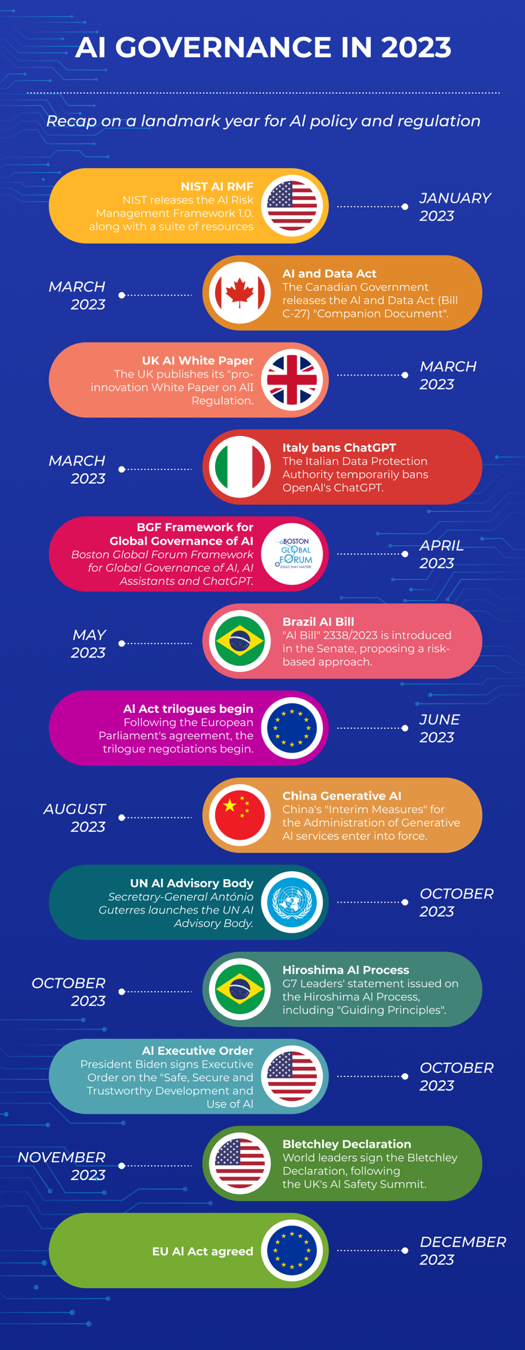
The Boston Global Forum announced the AI World Society initiative in 2017. The AI Act of EU is significant to AIWS, it meets the Social Contract for the AI Age, a part of AIWS. In April 2023, BGF launched the BGF Framework for Global Governance of AI.

Credit: jeffowenphotos

E.U. reaches deal on landmark AI bill, racing ahead of U.S.

The regulation paves the way for what could become a global standard to classify risk, enforce transparency and financially penalize tech companies for noncompliance.

European Union officials reached a landmark deal Friday on the world’s most ambitious law to regulate artificial intelligence, paving the way for what could become a global standard to classify risk, enforce transparency and financially penalize tech companies for noncompliance.

At a time when the sharpest critics of AI are warning of its nearly limitless threat, even as advocates herald its benefits to humanity’s future, Europe’s AI Act seeks to ensure that the technology’s exponential advances are accompanied by monitoring and oversight, and that its highest-risk uses are banned. Tech companies that want to do business in the 27-nation bloc of 450 million consumers — the West’s single largest — would be compelled to disclose data and do rigorous testing, particularly for “high-risk” applications in products like self-driving cars and medical equipment.

Dragos Tudorache, a Romanian lawmaker co-leading the AI Act negotiations, hailed the deal as a template for regulators around the world scrambling to make sense of the economic benefits and societal dangers presented by artificial intelligence, especially since last year’s release of the popular chatbot ChatGPT.

Please read the full article at the Washington Post: https://www.washingtonpost.com/technology/2023/12/08/ai-act-regulation-eu/

Photo from AP News at
https://apnews.com/article/ai-act-europe-regulation-59466a4d8fd3597b04542ef25831322c

3 essential features of global generative AI governance

  • The rapid growth of generative AI brings opportunities and risks. A global regulatory mechanism for this emerging tech is now needed.
  • To do so, countries’ regulatory differences, stakeholders’ incentives and risk appetite, and AI’s open-source and self-generative nature must all be taken into account.
  • Here’s what we can learn from approaches in the US, the EU and China, which reflect different AI regulatory guiding principles and priorities.

Given generative AI’s ubiquity across domains and the risks it brings – including job displacement, deep fakes and automatized weapons – it’s time to contemplate a global AI regulatory mechanism.

It’s a formidable challenge to design a genuinely “fit for purpose” mechanism, however. Countries’ regulatory differences, stakeholders’ considerations for incentives and trade-offs, and AI’s open-source and self-generative nature are all vital factors to think about.

To analyse how regulatory differences are rooted in countries’ legal and administrative systems and political context, let’s dissect the current AI regulatory approaches in the US, EU and China.

https://www.weforum.org/agenda/2023/11/generative-ai-governance-regulation/


Boston Global Forum (BGF) has contributed significant initiatives for AI Global Governance from 2017.

BGF published “From the Masssachusetts Miracle to the Age of Global Enlightenment” to celebrate the 90th birthday of Governor Dukakis, introducing contributions of BGF to AI Global Enlightenment. Please see the book here:

https://bostonglobalforum.org/publications/from-the-massachusetts-miracle-to-the-age-of-global-enlightenment/

My North Star for the Future of AI

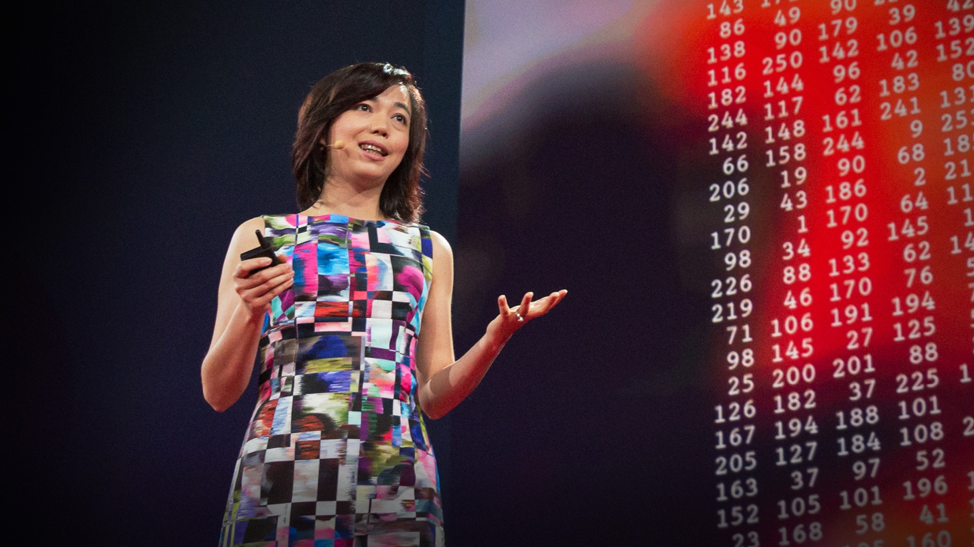
Fei-Fei Li is a computer scientist and a co-director of Stanford’s Human-Centered AI Institute. She is also the inventor of ImageNet and the author of The Worlds I See: Curiosity, Exploration, and Discovery at the Dawn of AI.


Here is her writing in the Atlantic:

The most powerful companies in the world are shaping what artificial intelligence will become—but they’ll never get it right without the ethos and values of university scientists.

Whatever academics like me thought artificial intelligence was, or what it might become, one thing is now undeniable: It is no longer ours to control. As a computer science professor at Stanford, it had been a private obsession of mine—a layer of thoughts that superimposed itself quietly over my view of the world. By the mid-2010s, however, the cultural preoccupation with AI had become deafeningly public. Billboards along Highway 101 on the California coast heralded the hiring sprees of AI start-ups. Cover stories about AI fronted the magazines in my dentist’s waiting room. I’d hear fragments of conversation about AI on my car radio as I changed stations.


AI World Society (AIWS): Pioneering a Visionary Model for Human-Centric AI Governance.

The AI World Society (AIWS) emerges as a trailblazing initiative, boasting the collective intellect of distinguished thinkers from the world’s top universities, including Harvard, MIT, Stanford, Berkeley, Cambridge, and Oxford. This collaborative effort encompasses not only the academic elite but also visionary leaders committed to shaping a future where AI is seamlessly integrated for the betterment of society.

At its core, AIWS envisions and contributes to a model society where AI is applied deeply and responsibly, ensuring safety, effectiveness, and, above all, fostering peace and security. The initiative’s mission extends beyond technological advancements; it is a testament to humanity’s commitment to harness the potential of artificial intelligence for the greater good.

https://www.theatlantic.com/technology/archive/2023/11/ai-ethics-academia/675913/

Tom Kehler: “Nature’s Intelligence Human-Centered AI, Natural Systems and Neuroscience: Societal Well Being”

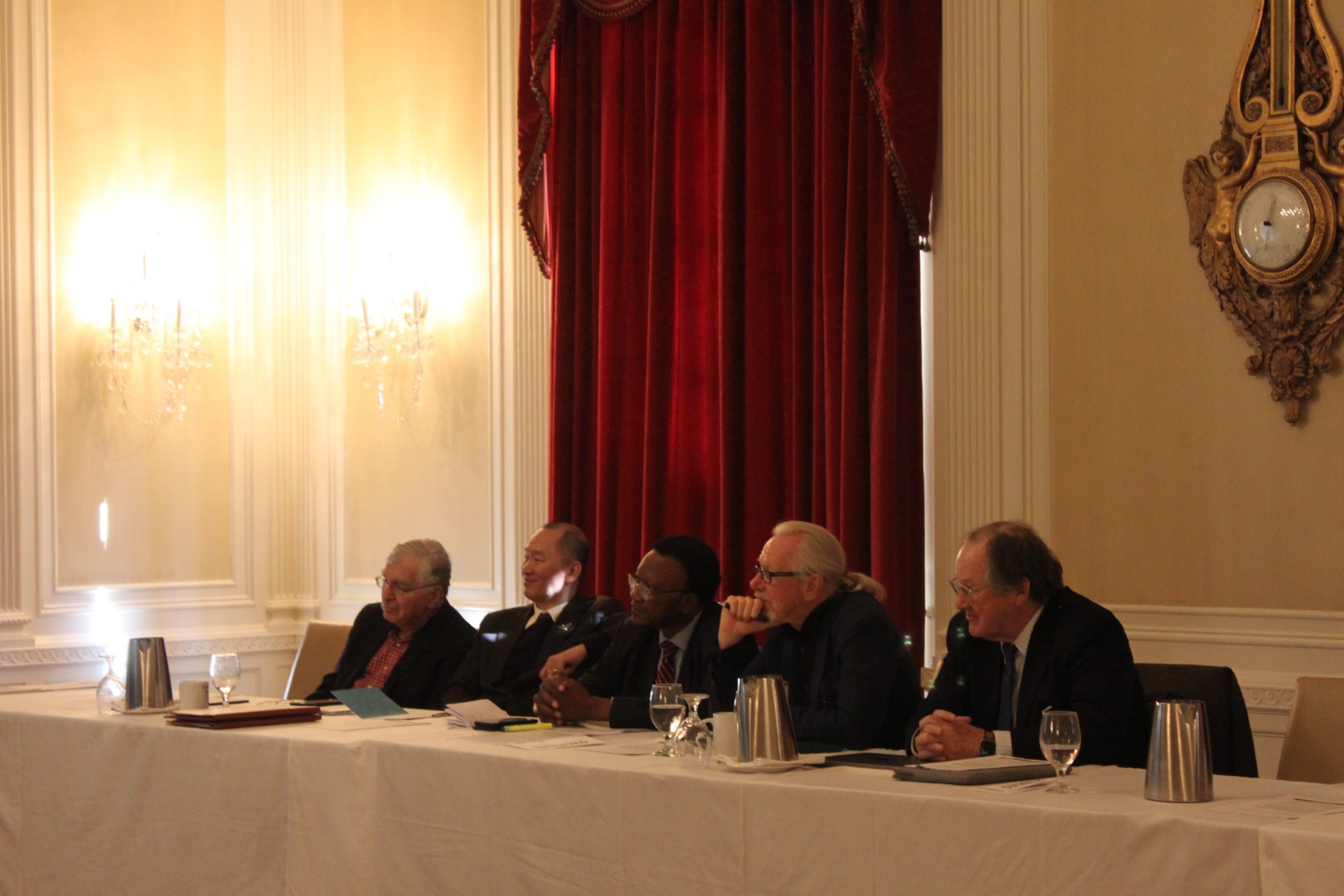
During Governor Dukakis’s 90th Birthday Celebration held on November 2, 2023, at Harvard University Loeb House and organized by the Boston Global Forum (BGF), an exciting and innovative initiative was unveiled. BGF, in collaboration with the Active Inference Institute, introduced the initiative “Advancing Human-Centered AI through Integration with Natural Systems and Neuroscience: Toward Policy and Societal Well-Being.” The presentation featured insights from pioneering innovators such as John Clippinger, Thomas Kehler, and Harvard professor David Silbersweig. Tom Kehler’s presentation, titled “Nature’s Intelligence Human-Centered AI, Natural Systems and Neuroscience: Societal Well Being”.

This initiative is set to drive progress in the field of AI by embracing natural systems and neuroscience, with the ultimate goal of enhancing the well-being of society.

Please read the full presentation here.

World’s Congress of Religions in AI Responsibility: Faith and Reason in the AI Age

During Governor Dukakis’s 90th Birthday Celebration held on November 2, 2023, at Harvard University Loeb House and organized by the Boston Global Forum (BGF), an exciting and innovative initiative was unveiled. BGF, in collaboration with Amrita University, the Center for Interreligious Dialogue – Focolare Movement and UNASDG, introduced the initiative “World’s Congress of Religions in AI Responsibility: Faith and Reason in the AI Age”

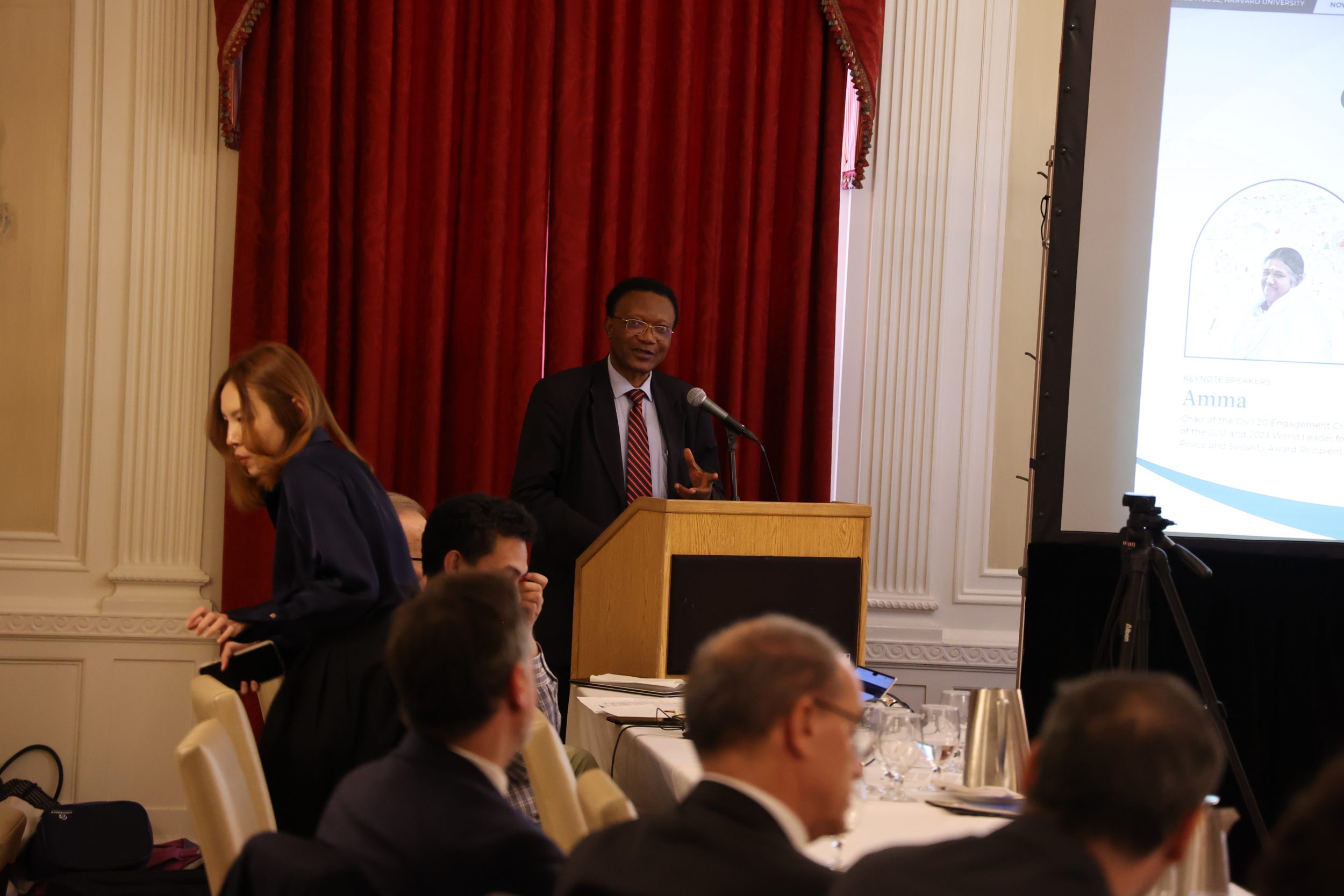
The presentation from Martin Nkafu NKemnkia, Pontifical Lateran University Professor, titled “World’s Congress of Religions in AI Responsibility: Faith and Reason in the AI age” introduced the event of interreligious dialogue in AI, which will be organized in Rome in June 2024.

Co-organizers: Boston Global Forum, Center for Interreligious Dialogue – Focolare Movement And UNASDG (Roland) in Rome and Vatican

The event will provide a platform for religious leaders, scholars, AI experts, and policymakers to share insights and collaborate on ethical AI development and deployment. A section which will be part of an Interfaith Conference 2024, on the Theme: Dialogue towards Being One Human Family, organized by the Centre of Interreligious Dialogue – Focolare Movement (from 29th of May 2024 to 5th June 2024.

The full paper by Professor Martin Nkafu NKemnkia can be read here.

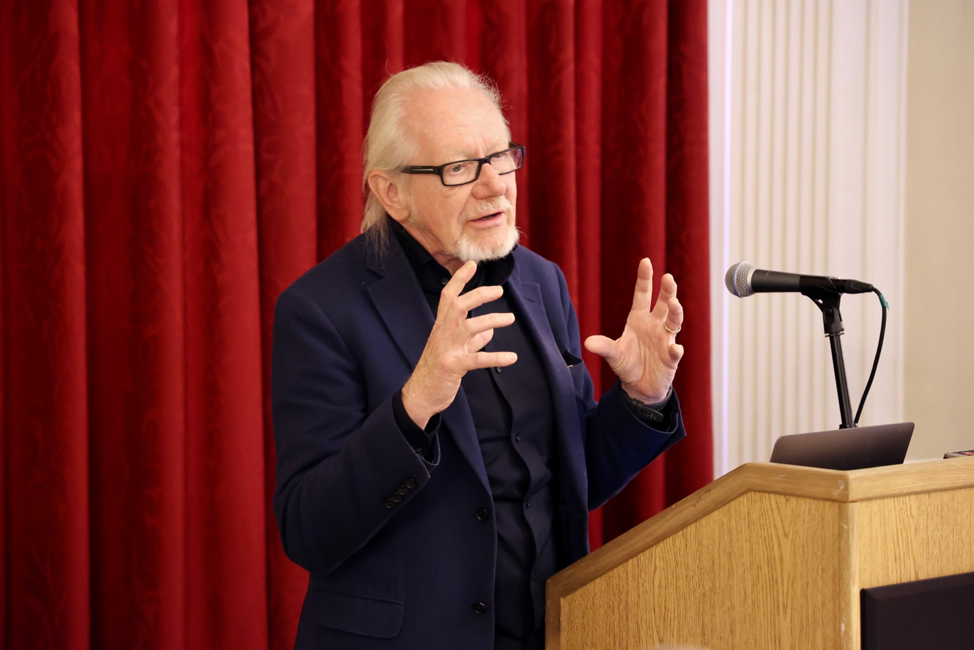
Professor Martin Nkafu NKemnkia presents the Initiative at the BGF Conference on Nov 2, 2023 at Harvard University Loeb House.

World’s Congress of Religions in AI Responsibility: Faith and Reason in the AI age

Boston Global Forum
World’s Congress of Religions in AI Responsibility: Faith and Reason in the AI age

Nature: place and context for the experience of God through African traditional religion
Prof. Martin Nkafu Nkemnkia
(Pontifical Lateran University, Vatican City)

The full article can be read and downloaded here.

ABSTRACT

In order to individuate some responsibilities of Religious Leaders in AI age, coming from Africa, I would like to present African Traditional Religion as a contribution for the building of the platform for religious leaders, scholars, AI experts and policymakers to share insights and collaborate on ethical development and deployment.

In Africa, it is the entire community which is involve in cultural and religious life of the society, thus, each and everyone is, in a certain way, the leader of all that concerns, tradition, system of the transmission of the cultural, human, religious and therefore spiritual values to the future generations.

At this point, one can already affirm that: any educational system comprises both human and spiritual dimension. Science or scientific knowledge is just an extension of the original human knowledge without attributing any conscious meaning to the achievement reached fore, the Soul, which is the vital force of every living being is absent and shall always be absent in any AI performance. Thanks to Energy any AI performance obeys strictly the duty assigned to the
machine which now enables human beings to dedicate more time to noble and divine achievements which is guaranteed by the Raison which distinguish every human/conscious being from all other creatures in the World. This is in fact, what brings every human being to cultivate relationship with the Creator, loving the Divine and becoming similar to the Creature who is the Author of Life, the Immortal and Everlasting.

In Africa, religious believes and practices are integral part of culture and as such there is no separation between what is purely cultural and what can be expressed as religion, there is no dichotomy between sacred and profane. In this also consist the unity of the human person in Africa. There are non-sacred minds and profane ones but one brain, one I, one Man/Woman, humanity created by God.

Religion has always been the way through which entire communities relate themselves to the ultimate reality which is God the Creator. The African God is the God of the people and not of the individual. In a context as that of Africa, religiously rooted and a holistic sense of the Sacred and the worship of God, an intimate part of the daily life, there is an impossibility of atheism or indifferences in matter of faith and Religion.

At the difference of many other religions in the world, African Traditional Religion (ATR) has no founder nor written sacred texts and neither shall there be reformers. In Africa religion is lived and not proclaimed, it is not transmitted through treaties but through experiences of life. Through religion the community speaks with God, dialogues with God through the Ancestors. This favours interreligious dialogue and universalises the religious experience of different peoples in the world. Science is the procedure through which humans beings contribute to make of the world the best place to live in.
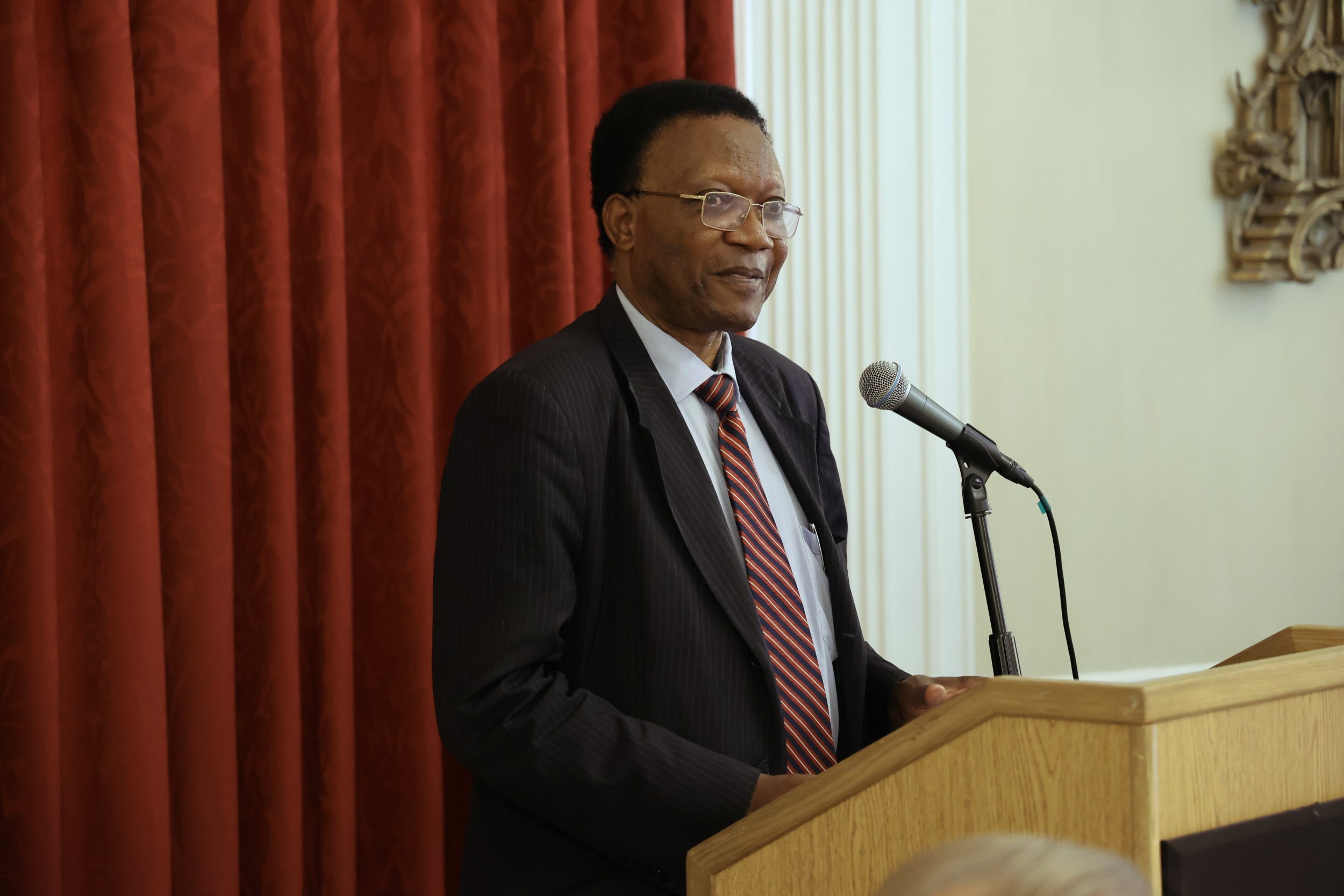
Martin Nkafu Nkemnkia was born in Cameroon. He holds Doctorate Degrees in Philosophy (PhD) and in Theology (D.Th). – respectively, from the Pontifical Lateran University (PUL), Rome. Currently, he has thought “History of African Philosophy; Culture and Religions in Africa” (Faculty of Philosophy) and has been for two mandates (for a total of 10 years 2011-2020) the Director of The International Research Area – Interdisciplinary Studies for the Development of African Culture of the Pontifical Lateran University – Vatican City. Has also been a lecturer at the Pontifical Gregorian University (PUG). A formal member of the Italian Committee on the Reduction of Foreign Debts of Poor Nations (instituted by the Italian Episcopal conference); He has been a formal Member of the National (Italian) Commission for Intercultural Education in the Italian Ministry of Education and Scientific Research. Actually is a Member of Interreligious Centre of the Focolare Movement in charge of Dialogue between Christianism and African Traditional Religion (RTA), Asian Popular Religion (RPA) and Indigenous Religions of Oceania and Central America (RIA). Actually is the President of the Scientific Committee of the CRA-SGI Centre for Relations with Africa of the Italian Geographical Society and is the President of the Nkemnkia Community Development Empowerment International Foundation – Africa/Europa.

NATURE BASED AI JOINT INITIATIVE SCIENCE -TECHNOLOGY AND POLICY: BOSTON GLOBAL FORUM AND ACTIVE INFERENCE INSTITUTE

During Governor Dukakis’s 90th Birthday Celebration held on November 2, 2023, at Harvard University Loeb House and organized by the Boston Global Forum (BGF), an exciting and innovative initiative was unveiled. BGF, in collaboration with the Active Inference Institute, introduced the initiative “Advancing Human-Centered AI through Integration with Natural Systems and Neuroscience: Toward Policy and Societal Well-Being.” The presentation featured insights from pioneering innovators such as John Clippinger, Thomas Kehler, and Harvard professor David Silbersweig. John Clippinger’s presentation, titled “Nature Based AI,” highlighted the joint initiative’s focus on the intersection of science, technology, and policy. This initiative is set to drive progress in the field of AI by embracing natural systems and neuroscience, with the ultimate goal of enhancing the well-being of society.

The presentation can be viewed here.

Ilya Sutskever, OpenAI’s chief scientist, on his hopes and fears for the future of AI

Ilya Sutskever, OpenAI’s cofounder and chief scientist, is no longer focusing on building the next generation of his company’s flagship generative AI models. Instead his new priority is to figure out how to stop an artificial superintelligence (a hypothetical future technology he sees coming with the foresight of a true believer) from going rogue.

A lot of what Sutskever says is wild. But not nearly as wild as it would have sounded just one or two years ago. He thinks ChatGPT just might be conscious (if you squint). He thinks the world needs to wake up to the true power of the technology his company and others are racing to create.

He is certain that machines will one day be as smart as humans. This could, in his opinion, automate health care, make it a thousand times cheaper and a thousand times better, cure diseases, or actually solve global warming. But the problem with a technology that doesn’t exist is that you can say whatever you want about it.


https://www.technologyreview.com/2023/10/26/1082398/exclusive-ilya-sutskever-openais-chief-scientist-on-his-hopes-and-fears-for-the-future-of-ai/?truid=1637671ffcbfe11c6639153159007ef2&utm_source=the_download&utm_medium=email&utm_campaign=the_download.unpaid.engagement&utm_term=&utm_content=10-27-2023&mc_cid=e8b93fb346&mc_eid=be5202f3c7


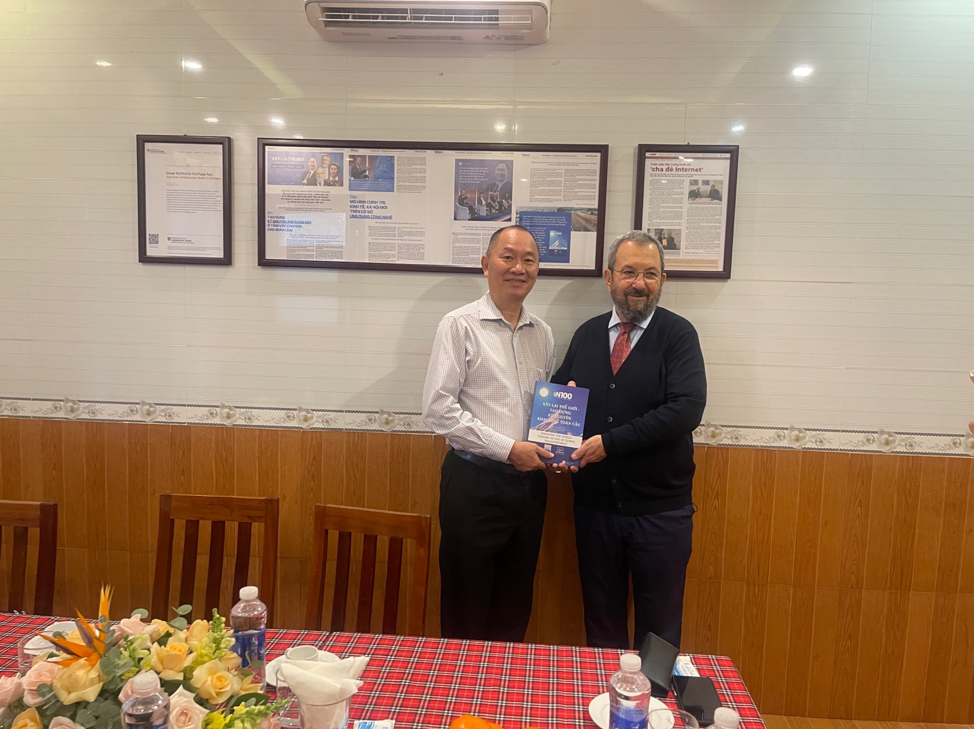
Prime Minister Ehud Barak and Nguyen Anh Tuan discussed about AI World Society