Professor Nazli Choucri presents the Draft of Framework for AI International Accord at the ceremony to honor EU Ambassador Lambrinidis

The Framework for AI International Accord version 1.0, which was presented by Professor Nazli Choucri at the AI International Accord Panel on April 28, 2021 follow the ceremony to honor the European Union Ambassador to the US Stavros Lambrinidis World Leader in AI World Society (AIWS) Award.

Here is the video of her presentation: https://www.youtube.com/watch?v=Oh-w9TGNScQ

AI 50: American’s Most Promising Artificial Intelligence Companies

The Covid-19 pandemic was devastating for many industries, but it only accelerated the use of artificial intelligence across the U.S. economy. Amid the crisis, companies scrambled to create new services for remote workers and students, beef up online shopping and dining options, make customer call centers more efficient and speed development of important new drugs.

Even as applications of machine learning and perception platforms become commonplace, a thick layer of hype and fuzzy jargon clings to AI-enabled software. That makes it tough to identify the most compelling companies in the space—especially those finding new ways to use AI that create value by making humans more efficient, not redundant.

With this in mind, Forbes has partnered with venture firms Sequoia Capital and Meritech Capital to create our third annual AI 50, a list of private, promising North American companies that are using artificial intelligence in ways that are fundamental to their operations. To be considered, businesses must be privately-held and utilizing machine learning (where systems learn from data to improve on tasks), natural language processing (which enables programs to “understand” written or spoken language) or computer vision (which relates to how machines “see”). AI companies incubated at, largely funded through or acquired by large tech, manufacturing or industrial firms aren’t eligible for consideration.

Our list was compiled through a submission process open to any AI company in the U.S. and Canada. The application asked companies to provide details on their technology, business model, customers and financials like funding, valuation and revenue history (companies had the option to submit information confidentially, to encourage greater transparency). Forbes received several hundred entries, of which nearly 400 qualified for consideration. From there, our data partners applied an algorithm to identify 100 companies with the highest quantitative scores—and that also made diversity a priority. Next, a panel of expert AI judges evaluated the finalists to find the 50 most compelling companies (they were precluded from judging companies in which they have a vested interest).

The article was originally published at Forbes.

According to Artificial Intelligence World Society (AIWS.net) and Michael Dukakis Institute for Leadership and Innovation (MDI), AI can be an important tool for supporting helping people achieve well-being and happiness, especially in Covid-19 pandemic. In this effort, Michael Dukakis Institute for Leadership and Innovation (MDI) invites participation and collaboration with think tanks, universities, non-profits, firms, and other entities that share its commitment to the constructive and development of full-scale AI for world society.

AI technology used to track asbestos cancer tumours

Patients receiving treatment for a rare cancer linked to asbestos exposure are being assessed with artificial intelligence in a pilot project.

Scotland has the highest incidence of mesothelioma in the world, connected to traditional heavy industry, but options for treating it are limited.

Researchers have created a prototype artificial intelligence system able to recognise the tumours.

It is hoped the technology could speed up clinical trials of new treatments.

Scottish medical imaging software firm, Canon Medical Research Europe, has been working with the University of Glasgow on a study of the new AI cancer assessment tool.

Chemotherapy does not work as effectively on mesothelioma as it does on other cancers and because of how the tumours grow, it’s hard to monitor if treatments are working.

Prof Kevin Blyth, who runs a specialist clinic for mesothelioma patients, said most cancers grow in sphere and to measure that is “relatively straightforward”.

He said: “Mesothelioma is almost like the peel of an orange, it forms like a rind around the lung and if you take a scan of that tumour, it is a very complex shape. To measure changes in that shape is very difficult.”

The AI prototype, developed by researchers to recognise the tumours, was shown more than 100 CT scans which a clinician had already assessed – it was then able to find and measure tumours without human input.

The article was originally posted at the BBC website.

According to Artificial Intelligence World Society (AIWS.net) and Michael Dukakis Institute for Leadership and Innovation (MDI), AI can be an important tool for supporting medical diagnostic and helping people achieve well-being and happiness. In this effort, Michael Dukakis Institute for Leadership and Innovation (MDI) invites participation and collaboration with think tanks, universities, non-profits, firms, and other entities that share its commitment to the constructive and development of full-scale AI for world society.

Building the Framework for an AI International Accord: The EU is considering a ban on AI for mass surveillance and social credit scores

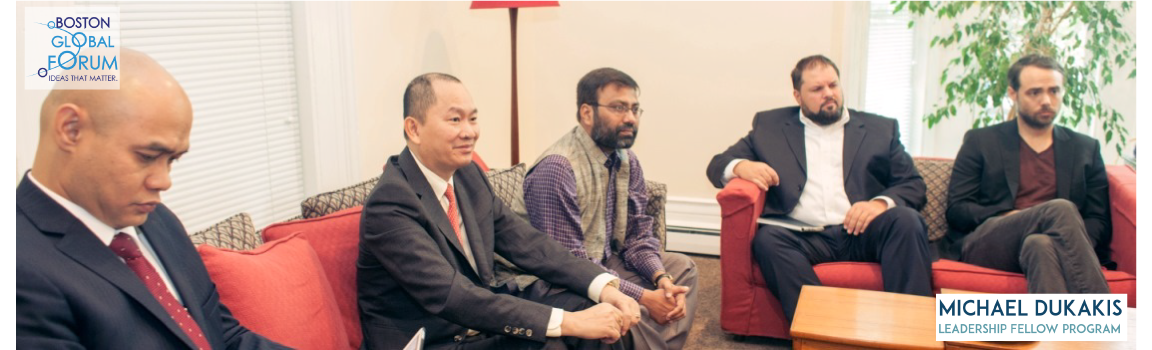
The Boston Global Forum building the framework for an AI International Accord. On April 28, the AI International Accord Panel with the attendance of Ambassador Stavros Lambrinidis; Gabriela Ramos, the Assistant Director-General for the Social and Human Sciences of UNESCO; and Governor Michael Dukakis, Co-founder and Chairman of the Boston Global Forum.

The EU is considering a partial AI ban that will be formally announced April 21.

The proposed ban is the first of its kind

Europe’s legislative body will likely focus on “high risk” AI systems and could fine companies up to €20m or 4% of revenue if they don’t comply.

“High risk” refers to things like mass surveillance and social credit scores that can impact safety and privacy. AI for things like manufacturing and energy would likely be good to go.

The regulations include:

  • A surveillance banson AI systems that track people indiscriminately
  • A ban on social credit scores that track individual behaviors, impact hiring and judiciary decisions, and rate trustworthiness
  • Bias prevention measures like human oversight in testing datasets
  • AI notifications that would be sent to people when interacting with AI systems

The catch: Experts say the rules are vague and leave room for loopholes.

The rules also come as AI investment in the US is hotter than ever:

  • The National Security Commission on Artificial Intelligence recently called for $32Bin annual nonmilitary federal spending on AI research
  • Already in 2021, 442 US VC deals with AI startups were wortha combined $11.65B

US companies could likely be subject to the EU’s new rules. Though the draft could change come April 21, we have a feeling few companies will be big fans.

Microsoft Makes Big Bet on Health-Care AI Technology With Nuance

Microsoft Corp. is making a massive bet on health-care artificial intelligence.

The software giant is set to buy Nuance Communications Inc., tapping the company tied to the Siri voice technology to overhaul solutions that free doctors from note-taking and better predict a patient’s needs. Microsoft may announce the deal as soon as Monday if talks are successful, according to people familiar with the matter.

The price being discussed could value Nuance at about $56 a share, a 23% premium to Friday’s close, said one of the people, who asked not to be identified because the information is private. Set to be Microsoft’s largest acquisition since LinkedIn Corp., the purchase would give Nuance an equity value of about $16 billion, data compiled by Bloomberg show.

Microsoft has been trying to make inroads into the health-care sector, selling more cloud software to hospitals and doctors. It has been working with Nuance for two years on AI software that helps clinicians capture patient discussions and integrate them into electronic health records, and combining the speech technology company’s products into its Teams chat app for telehealth appointments.

The original article was posted at Bloomberg.

According to Artificial Intelligence World Society (AIWS.net) and Michael Dukakis Institute for Leadership and Innovation (MDI), AI can be an important tool for helping people achieve well-being and happiness, relieve them of resource constraints and arbitrary/inflexible rules and processes. In this effort, Michael Dukakis Institute for Leadership and Innovation (MDI) invites participation and collaboration with think tanks, universities, non-profits, firms, and other entities that share its commitment to the constructive and development of full-scale AI for world society.

Towards an AI International Accord: Greater EU-US Alignment needed for innovation, says EU Ambassador to US

2021 has marked a renewal of the transatlantic relationship, with greater collaboration and alignment called on by both sides of the Atlantic on digital trade, artificial intelligence (AI) and cybersecurity. EU Ambassador to the US Stavros Lambrinidis made it clear that Europe’s leadership in digital needs to build on international cooperation.

A transatlantic partnership, he stressed, is how Europe can level the playing field, by incentivising domestic innovation, and advancing markets vis-à-vis competitors.

“Europe wants to be a player in digital, and to run as fast as anyone else. This is only possible with extremely close EU-US cooperation.”

The article was originally published at Digital Europe.

The Four Cs Of AI Literacy: Building The Workforce Of The Future

The AI market is projected to be 190 billion by 2025. AI applications, once the purview of only the most advanced technologists are now pervasive. The average human is likely to interact with at least one AI in their daily life, whether it is auto-correct on their phone, a movie or product recommendation, or, for some, a self-driving car or a digital assistant. While these are the AIs that the average person can see, the impact of the technology is possibly even greater in the AIs that they don’t see, that assist their doctors, their bank’s loan approvals, their city’s budget decisions, and more. The next generation, our children, are the first AI-Native Generation. They have never known life without AI.

I consider AI Literacy to be the ability to understand and form opinions of the role of AI in our lives, industries, and communities. This includes understanding the basics of what an AI is, how it works, and what the strengths and limitations of the technologies are. Just as I do not need to be a computer programmer to appreciate the role of the internet in my life, understand my role in managing my online privacy, and how to leverage the internet for everything from restaurant reservations to job searches, AI Literacy does not require a Ph.D. in Computer Science. While some may require or desire a deeper learning of data science, algorithms, and programming, broad AI Literacy can be acquired through the following four Cs: Concepts, Context, Capability and Creativity.

As our worldwide information economy expands, the role of data, and AI to generate insights from data, will continue to grow. Broad AI Literacy will enable countries, governments, industries, and private citizens to leverage AI technology safely and effectively. As more people become AI Literate, we can expect to see yet more usages and creative applications of this transformative technology.

The original article was posted at Forbes.

In support of positive AI development for human-centric society, the Michael Dukakis Institute for Leadership and Innovation (MDI) and Boston Global Forum (BGF) established the Artificial Intelligence World Society (AIWS) in 2017. According to AIWS, AI can be an important tool for helping people achieve well-being and happiness, relieve them of resource constraints and arbitrary/inflexible rules and processes. In this effort, Michael Dukakis Institute for Leadership and Innovation (MDI) invites participation and collaboration with think tanks, universities, non-profits, firms, and other entities that share their commitment to the construction and development of AIWS City (AIWS.city), a vỉtual, digital, and smart city.

Causal Representation Is Now Getting Its Due Importance In Machine Learning

Bernhard Scholkopf and Stefan Bauer from Max Planck Institute for Intelligent Systems; Francesco Locatello and Nal Kalchbrenner as Google researchers; Yoshua Bengio, Nan Rosemary Ke, and Anirudh Goyal from Montreal Institute for Learning Algorithms (Mila) came together for research.

The research paper titled “Towards Causal Representation Learning” provides the way through which the artificial intelligent systems can learn causal representations and how the absence of the same in machine learning algorithms and models is giving rise to challenges in front of us.

Let’s look at the causal relations between different elements while observing the girl on the horse trying to jump over a barrier. We can clearly observe that the girl, the horse, and the motion of their bodies are in unison. The girl is pulling the horse’s collar with her hands in order to jump over. Similarly, we as humans should think about cases, like what would happen if the horse’s legs hit the barrier? What if the collar around the horse’s neck slipped away from the girl’s hand? These are counterfactuals, and it’s natural to think this way too. We have observed things around us from childhood, learned from nature, and looked out for every other possibility associated with an event. This is the basic intuitive nature of a human being.

However, various machine learning algorithms can execute complex tasks, identify patterns from huge databases, play chess, discover new molecules at a lightning-fast speed. But they fail to make simple causal inferences which we have made out while observing the picture above.

The AI researchers have compiled a list of concepts and principles that can help develop causal machine learning models in their research paper. The two concepts adopted, namely — the structural causal model and the independent causal model. The basic idea behind the models adopted is that instead of relying too much on fixed correlations between sets of data, or the instructions fed, AI systems should have the capability to register causal variables, and understand their effects on the environment, separately.

The article was originally published here.

Regarding to AI and Causal Inference, Professor Judea Pearl is a distinguished pioneer for developing a theory of causal and counterfactual inference based on structural models. In 2011, Professor Pearl won the Turing Award. In 2020, Michael Dukakis Institute for Leadership and Innovation (MDI) and Boston Global Forum (BGF) also awarded Professor Pearl as World Leader in AI World Society (AIWS). At this moment, Professor Judea is a Mentor of AIWS.net and Head of Modern Causal Inference section, which is one of important AIWS.net.