How AI Can Be Used Ethically to Monitor Worker Productivity

Chief technology officers should follow the do no harm mantra of the Hippocratic Oath when incorporating artificial intelligence software into company platforms.

While an overarching goal of introducing AI is to increase efficiencies or remove biases, there are often unexpected consequences when good ideas unintentionally cause harm.

For example, use of facial recognition technology to identify criminal suspects can sometimes result in the arrest (or worse) of an innocent person. Or the development of a weaponized drone for the military that falls into the wrong hands can stray far from the developer’s original intention.

Most of corporate America likely won’t be using facial recognition software or weaponized drones. However, many companies rolled out monitoring software during the pandemic to better keep track of where and how their employees were working remotely.

For some, AI was a great resource for building safety models that helped bring the workforce back to the office in a post-pandemic world. But for others, monitoring productivity in a remote workforce seemed like an invasion of privacy rather than ethical use of AI tools.

The original article was published at Bloomberg Law.

The Boston Global Forum (BGF), in collaboration with the United Nations Centennial Initiative, released a major work entitled Remaking the World – Toward an Age of Global Enlightenment. More than twenty distinguished leaders, scholars, analysts, and thinkers put forth unprecedented approaches to the challenges before us. These include President of the European Commission Ursula von der Leyen, Governor Michael Dukakis, Father of Internet Vint Cerf, Former Secretary of Defense Ash Carter, Harvard University Professors Joseph Nye and Thomas Patterson, MIT Professors Nazli Choucri and Alex ‘Sandy’ Pentland. The BGF introduced core concepts shaping pathbreaking international initiatives, notably, the Social Contract for the AI Age, an AI International Accord, the Global Alliance for Digital Governance, the AI World Society (AIWS) Ecosystem, and AIWS City.


AI Governance: How Blockchain Can Build Accountability and Trust

recent article by McKinsey & Co. perhaps best sums up the current zeitgeist on corporate environmental, social and governance (ESG) initiatives: “Although valid questions have been raised about ESG, the need for companies to understand and address their externalities is likely to become essential to maintaining their social license.” Artificial intelligence (AI) technology is a juggernaut of an externality, increasingly influencing how social license is granted – or not. Fortunately, amidst widespread public mistrust of artificial intelligence, using blockchain technology for AI governance can profoundly help companies wanting to build public trust in their responsible use of this.

Simply put, using blockchain technology to immutably record all the decisions made about an AI or machine learning (ML) model is a major step toward transparency, a critical precursor to trust. This use of blockchain allows auditability, as well, to further help establish trust. These tenets are at the heart of an AI governance model built around a corporate AI and model development standard, and enforced by blockchain technology.

Developing an AI decisioning model is a complex process that comprises myriad incremental decisions. These include the model’s variables, model design, algorithms, training and test data utilized, selection of features, the model’s raw latent features, ethics testing and stability testing. It also includes the scientists who built different portions of the variable sets, participated in model creation, and performed model testing. As enabled by blockchain technology, the sum and total record of these decisions provides the visibility required to effectively govern models internally according to corporate-defined standards, ascribe accountability and satisfy impending regulatory requirements.

The original article was published at EnterpriseAI.

The Boston Global Forum (BGF), in collaboration with the United Nations Centennial Initiative, released a major work entitled Remaking the World – Toward an Age of Global Enlightenment.   More than twenty distinguished leaders, scholars, analysts, and thinkers put forth unprecedented approaches to the challenges before us. These include President of the European Commission Ursula von der Leyen, Governor Michael Dukakis, Father of Internet Vint Cerf, Former Secretary of Defense Ash Carter, Harvard University Professors Joseph Nye and Thomas Patterson, MIT Professors Nazli Choucri and Alex ‘Sandy’ Pentland. The BGF introduced core concepts shaping pathbreaking international initiatives, notably, the Social Contract for the AI Age, an AI International Accord, the Global Alliance for Digital Governance, the AI World Society (AIWS) Ecosystem, and AIWS City.

It is difficult to trust China on ethical AI governance

Artificial Intelligence is one of the most representative disruptive technologies that enable the development of society at the global level. AI has advantages for humankind, while also bringing with it safety and security challenges. The Position Paper of the People’s Republic of China on Strengthening Ethical Governance of Artificial Intelligence (AI) released on Nov 16 highlights China’s vision, practices and views for ethical governance of the technology from the perspective of global cooperation and coordination. It calls for global consensus with mutual respect, and actions for the good of humanity: https://www.chinadaily.com.cn/a/202211/23/WS637d5175a31049175432b4d6.html

It is true that China has a reputation for not having freedom of the internet and freedom of education. The Chinese government has a long history of censorship and control of the internet, and it has imposed strict controls on the content that is available online. This has led to widespread complaints about the lack of freedom on the internet in China, and many people have criticized the government for stifling free speech and limiting access to information.

Similarly, the Chinese government has also been criticized for its lack of freedom in education. The government controls the content of education in China, and it has been accused of promoting a narrow and biased view of history and politics. This has led to concerns about the quality of education in China, and many people have called for greater freedom and diversity in the education system.

Overall, the lack of freedom of the internet and freedom of education in China is a cause for concern, and it has led to widespread criticism of the Chinese government’s policies in these areas and AI, Data, Digital.

It is a concern that the government of China are using AI and data to create a totalitarian state. The use of these technologies for surveillance and control purposes could allow the government to monitor and control the actions and behaviors of its citizens in unprecedented ways. This could lead to a situation in which individual rights and freedoms are severely curtailed, and the government has near-total control over society. This would be a disturbing development, and it is important for individuals and organizations to be aware of the potential risks and to take steps to protect against abuses of these technologies.

This means that the Chinese government do not meet the standards of the Social Contract for the AI Age, so one should not trust the CCP’s vision on AI ethics and governance.

Building US-European Alliance-Japan-India as the Pillars for World Peace and Security

Boston Global Forum, Harvard University Loeb House, November 23, 2022

  1. Why?
  • Global insecurity resulting from Russia’s invasion of Ukraine and China’s threatening posture toward Taiwan, India, and East and SE Asia
  • The need to pool the resources and efforts of the US, European Alliance, Japan, and India – The Pillars of World Peace and Security – to address threats to peace and security.
  1. Concepts:
  • To create innovative and technologically advanced economies as models for the world. They are pillars of innovation, tech economy.
  • To uphold the norms, standards, and values required for world peace and security
  • To apply and expand the norms, standards, and values to nations who accept the opportunity, commitment, and values that they represent.
  • Roles, voices, impacts, decisions of each pillar depend on their contributions in building US-European Alliance-Japan-India Pillars for World Peace and Security, and then apply and expand to nations who accepts this model, paragon to join and become a Pillar nation for World Peace and Security.
  1. Fundamental:

Standards, Norms and Values: As provided by UN conventions and the Boston Global Forum’s Social Contract for the AI Age and AIWS Values

  1. Economy:
  • Dominant tech economy, innovative economy. Innovative and tech-driven economy
  • Every individual become innovators in the Global Enlightenment Age. Communities and citizens as sources of innovation
  • Innovation communities of these Pillars. Create a new economy model of collaboration public – private for maximum resources, faster, smarter, more effective and more innovative. Public-private collaboration is necessary. Economic system rooted in public-private collaboration to encourage innovation and expand applications of technology
  1. Protect peace and security:
  • Support and Respect for sovereignty and territorial integrity of all nations.
  • Promote and Protect Standards and Values between pillars and in all nations.
  1. Education:

The Global Enlightenment Education Program for all people in accordance with Social Contract for the AI Age and AIWS Values:

  • The Social Contract for the AI Age
  • AIWS Values
  • World History: concise, true, independent, scientific
  • Innovation ecosystem where everyone can become innovator. Strengthen communities and individuals’ capacity for innovation
  • Art and Music: Symphonies and Chamber Music, art and music for Peace and Reconciliation
  • Deepen respect for and understanding of nations’ cultures, histories, and peoples
  • Data literacy
  1. Challenges and strategies to win:

Challenges:

  • Inside India
  • Inside European Alliance
  • Inside Japan
  • Inside US
  • Consensus between 4 pillars.

Strategies:

  • Foster agreements and cooperation on innovation and technological progress among India, EU, Japan, and US.
  • Create a common market for mutual benefit, for innovative economy, special for tech economy.
  • Create a network of distinguished thinkers, innovators, business leaders, policymakers, decision makers to solve challenges. Consider AIWS.net as a solution for this special network.
  • Global Alliance for Digital Governance to contribute solutions to solve challenges.
  1. Expand the Pillars Initiative to nations whose values, interests, and commitments align with those of the founding four Pillars:

Consider: Australia, Canada, South Korea, Israel, Brazil, and South Africa.

Why AI governance is important for building more trustworthy, explainable AI

This year the EU unveiled the AI Liability Directive, a bill that will make it easier to sue companies for harm caused, part of a wider push to prevent companies from developing and deploying harmful AI. The bill adds an extra layer onto the proposed AI Act, which will require extra checks for “high-risk” uses of AI, such as in the use of policing, recruitment, or healthcare. Unveiled earlier this month, the bill is likely to become law within the next few years.

While some worry the AI Liability Directive will curb innovation, the purpose is to hold AI companies accountable, and require them to explain how their AI systems are built and trained. Tech companies that fail to comply will risk Europe-wide class actions.

While the US has been slower to adopt protective policies, the White House also released the blueprint for an AI Bill of Rights earlier this month which outlines how consumers should be protected from harmful AI:

  • Artificial intelligence should be safe and effective
  • Algorithms should not discriminate
  • Data privacy must be protected
  • Consumers should be aware when AI is being used
  • Consumers should be able to opt-out of using it, and speak to a human instead

This article was originally posted at The Next Web.

The Boston Global Forum (BGF), in collaboration with the United Nations Centennial Initiative, released a major work entitled Remaking the World – Toward an Age of Global Enlightenment.   More than twenty distinguished leaders, scholars, analysts, and thinkers put forth unprecedented approaches to the challenges before us. These include President of the European Commission Ursula von der Leyen, Governor Michael Dukakis, Father of Internet Vint Cerf, Former Secretary of Defense Ash Carter, Harvard University Professors Joseph Nye and Thomas Patterson, MIT Professors Nazli Choucri and Alex ‘Sandy’ Pentland, and Vice President of European Parliament Eva Kaili.  The BGF introduced core concepts shaping pathbreaking international initiatives, notably, the Social Contract for the AI Age, an AI International Accord, the Global Alliance for Digital Governance, the AI World Society (AIWS) Ecosystem, and AIWS City.

The challenge of digital governance

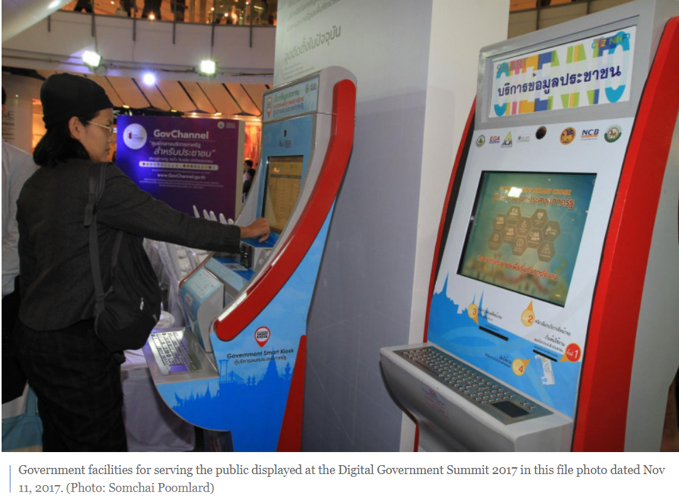
Thailand was an early adopter of the internet for government services, creating an e-government system as early as 1997. But political turmoil in 2006 caused the kingdom to fall behind. When the United Nations ranked countries by e-government in 2012, Thailand was a dismal 92nd out of 193.

Things improved with the establishment of a Digital Government Development Agency in 2018. The Covid pandemic’s necessity for social distancing and lockdown accelerated this transformation. Government departments that invested in digital teams, platforms, and ways of working did better than those that did not. The overall results were encouraging. In the 2022 rankings, Thailand is a respectable 55th, about the same as Malaysia and slightly behind China.

Thailand will successfully manage the transition to digital governance if it takes the time now to make sure it is moving in the right direction. Moving from paper applications to electronic forms was easy. Ensuring that digital governance continues to serve the interests of the people will be a greater challenge.

The original article was posted at Bangkok Post.

The Boston Global Forum (BGF), in collaboration with the United Nations Centennial Initiative, released a major work entitled Remaking the World – Toward an Age of Global Enlightenment.   More than twenty distinguished leaders, scholars, analysts, and thinkers put forth unprecedented approaches to the challenges before us. These include President of the European Commission Ursula von der Leyen, Governor Michael Dukakis, Father of Internet Vint Cerf, Former Secretary of Defense Ash Carter, Harvard University Professors Joseph Nye and Thomas Patterson, MIT Professors Nazli Choucri and Alex ‘Sandy’ Pentland, and Vice President of European Parliament Eva Kaili.  The BGF introduced core concepts shaping pathbreaking international initiatives, notably, the Social Contract for the AI Age, an AI International Accord, the Global Alliance for Digital Governance, the AI World Society (AIWS) Ecosystem, and AIWS City.

Manifesto “AIWS Actions to create an Age of Global Enlightenment”

Harvard University, Loeb House, November 22, 2022

I. Fundamentals and Accompanying the United Nations:

Creating an Age of Global Enlightenment is based on the AIWS model whose core and pillars were introduced in the book “Remaking the World – Toward an Age of Global Enlightenment”.

  1. ​Global Enlightenment Economy and Politics:

Every person can be an innovator with foundation standards are Social Contract for the AI ​​Age.

Building a borderless data infrastructure, creating opportunities for all individuals, businesses, and organizations to co-create new values, new products and services that are prosperous, high efficiency, faster, smarter, but protecting the standards and human values ​​of the United Nations, of the Social Contract for the AI ​​Age (SCAI), this is a prerequisite for connecting data infrastructure, commercial transactions and development. If a country does not meet the standards, it will not be connected. On this data infrastructure, to create an economy where every citizen is an innovator. Creating an education program called the Global Enlightenment Education Program (GEEP) for all individuals. Organizations that commit to respect and apply SCAI standards can participate, and be supported with the GEEP program to know how to build a home of creativity for themselves. Global Alliance for Digital Governance stands out to call, connect, and coordinate between the United Nations, governments of the Pillars: US, Japan, India, and European Alliance (EA), an alliance including the EU, UK, and European countries that accept and apply SCAI standards. These governments have to join a United Nations led AI ​​International Accord, or Global Digital Compact, and then implement it with developing countries.

We call this economy the Global Enlightenment Economy. We call its infrastructure Global Enlightenment Economy Infrastructure (GEEI).

The Global Enlightenment Economy respects and recognizes contributions to society, to drive people and society with a focus not only on material and financial values, but also contribute to creating an Age of Global Enlightenment with peace, security, prosperity for every country, every people, and preventing extreme nationalism in any country. Contributions for this will be recognized as AIWS Rewards.

The Manifesto “AIWS Actions to create an Age of Global Enlightenment” proposes actions and coordination  to build Global Enlightenment Economy Infrastructure that enables interoperability across company and national boundaries, and designs Global Enlightenment Economy ecosystems of trusted data and AI that provide safe, secure, and human-centered services for everyone in need : only governments who sign and apply AIIA, Global Digital Compact in their countries, can join the Global Enlightenment Economy Infrastructure.

The Global Alliance for Digital Governance (GADG) will supervise and control implementing standards of SCAI, ensuring data and algorithms are not biased.

We call this politics the Global Enlightenment Polity where all individuals can participate in policy deliberations, introduce new ideas. And contribute in all ways to the global wellbeing.

GADG can build an operating mechanism for Global Enlightenment Economy Infrastructure so that companies involved in building and connecting infrastructure cannot create a monopoly, and creates opportunities for start-ups, small and medium-sized enterprises, for each individual, to create an Ecology of the Global Enlightenment Economy. The technology platform is introduced in Alex Sandy Pentland’s article “Building a New Economy: Data, AI, and Web3”

Global Enlightenment Economy Infrastructure supported by the Global Enlightenment Polity and its knowledge platform, the Global System for Sustainable Development (GSSD) can be very instrumental in helping to solve problems of disinformation, misinformation and the like. Then GEEI and GSSD will be good and solid platforms for politics and society of the Global Enlightenment Age – AIWS.

  1. ​Global Enlightenment Education Program (GEEP)

This is a program to help remote, mountain, island areas, developing countries, whose vulnerable populations can easily learn and practice becoming innovators to master their lives in the Global Enlightenment Age. The Global Enlightenment Education Program trains people in standards and norms of AIWS and encourages them to respect and recognize contributions to society, driving people and society not only to focus on material and financial values, but also contribute to creating an Age of Global Enlightenment with peace, security, prosperity for every country, every people, and preventing extreme nationalism in more powerful States. This program should be applied to advanced technologies such as AI, digital, blockchain and mobile.

  1. ​Solve Disinformation, Misinformation:  Creating GEEI as an excellent platform and foundation to challenge misinformation and disinformation issues, allowing GEEI to become a solid foundation to build Global Enlightenment politics and society: smarter, faster, more effective, more reliable, more sustainable, fulfilling a United Nations vision of digital trust and security.
  2. ​AI International Accord (AIIA) supports to Global Digital Compact: It defines the responsibilities of all participating groups (governments, industry, academia, science), it means support to the vision of United Nations Secretary-General Antonio Guterres.

“Building on the recommendations of the road map for digital cooperation (see UN document A/74/821), the United Nations, Governments, the private sector and civil society could come together as a multi-stakeholder digital technology track in preparation for a Summit of the Future to agree on a Global Digital Compact. This would outline shared principles for an open, free and secure digital future for all. Complex digital issues that could be addressed may include: reaffirming the fundamental commitment to connecting the unconnected; avoiding fragmentation of the Internet; providing people with options as to how their data is used; application of human rights online; and promoting a trustworthy Internet by introducing accountability criteria for discrimination and misleading content. More broadly, the Compact could also promote regulation of artificial intelligence to ensure that this is aligned with shared global values.”

II. Organizing and Actions:

– AIWS Actions would connect companies in Boston and Massachusetts and in San Francisco and Silicon Valley to frame a kernel platform for Global Enlightenment Economy Infrastructure, then expand to centers of East Coast: New York, Washington DC, and West Coast: Seattle, Los Angeles. Global Alliance for Digital Governance would supervise building this pilot platform.

– Collaborate with MIT Open Learning for Global Enlightenment Education.

– Collaborate and work with MIT CyberPolitics and Global Order.

– Work with the pillars governments for AIIA and Global Digital Compact.

Organizing:

– Global Enlightenment Leaders support and speak at Global Enlightenment Events

– Appoint leaders of programs, plans, initiatives, events, then collaborate with organizations, institutions, individual to establish programs, projects, plans, initiatives for goals.

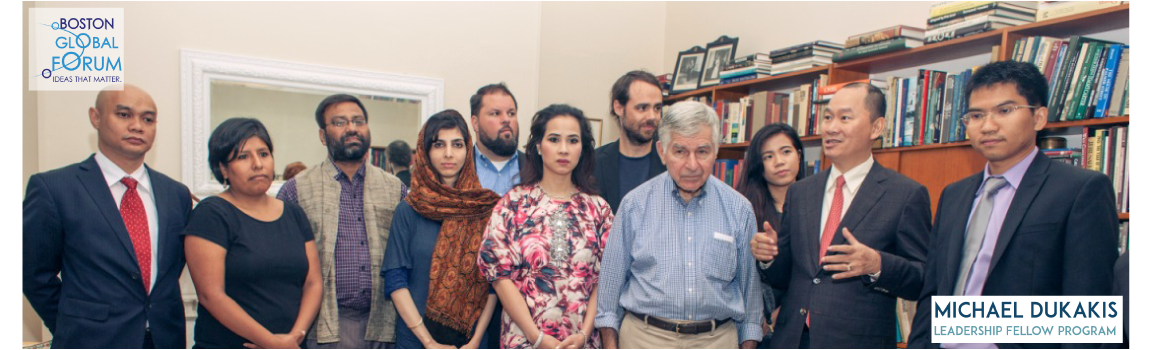
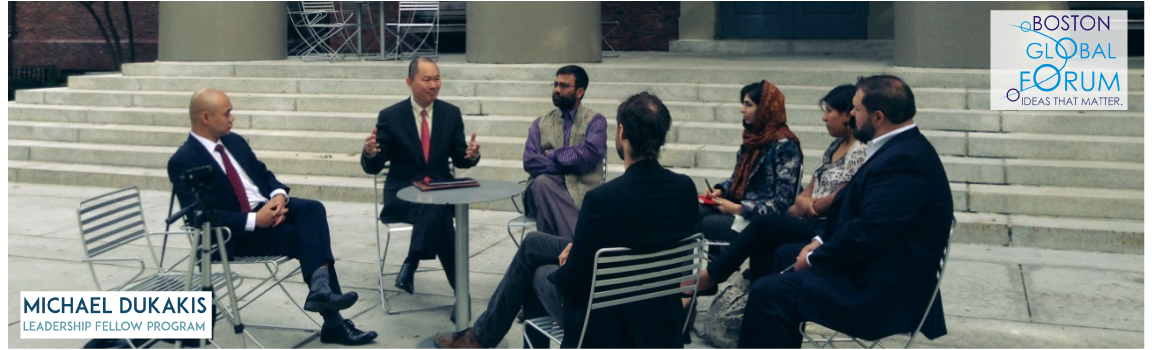
– Name Michael Dukakis Leadership Fellows (for US, EU, South America countries) and Shinzo Abe Leadership Fellows (for Asia and Africa countries) to lead and manage programs, projects, plans, initiatives.

– Found the Global Enlightenment Club, an organization of Global Enlightenment Business Leaders, officially announce on December 12, 2022, website: Enlight.club

– Connect and collaborate with partners, alliances to organize events.

– Collaborate with MIT-Global System for Sustainable Development (GSSD) as the knowledge hub serving as platform for managing all data, knowledge, and information.

  1. High Level Events:

Set up high level meeting of BGF leaders, contributors, and leaders of partners, alliances of BGF with governments, congress of 4 pillars (US, European Alliance, Japan, India), and the United Nations, and big tech, big companies, top universities to discuss about 4 issues in part I.

Topics: Global Enlightenment Economy models, pilot projects, role and operation of Global Alliance for Digital Governance in control, supervise and manage risks, Global Enlightenment Education, Misinformation, Disinformation, Global Digital Compact, AIIA.

  1. Mass and distinguished events

Organize Mass Events “Global Enlightenment Events” to encourage people and society have perception and support to create an Age of Global Enlightenment:

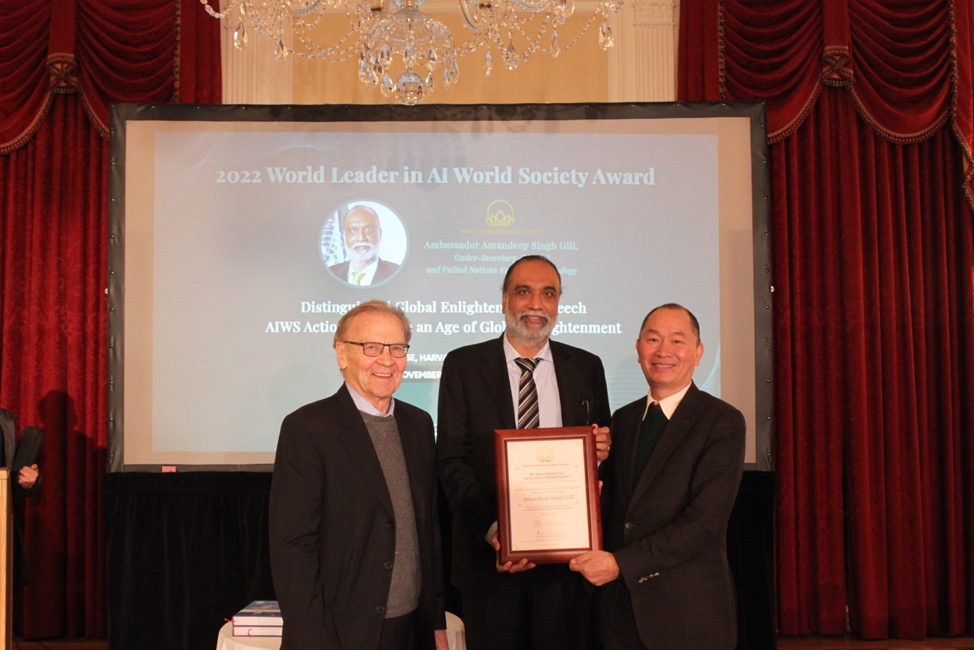
World Leader in AIWS Award and Distinguished Global Enlightenment Speech annually

Global Enlightenment Baseball Games with Red Sox at Fenway Park: 2023 Global Enlightenment Baseball Game to celebrate 90th birthday of Governor Michael Dukakis

Then expend to football games in Massachusetts, and soccer games in Europe: Global Enlightenment Football Games, Global Enlightenment Soccer Games.

Global Enlightenment Concert with Boston Symphony Orchestra at Boston Symphony Hall: 2023 Global Enlightenment Concert to celebrate 90th birthday of Governor Michael Dukakis

Then to expand to symphony, philharmonic orchestras in Europe.

Global Enlightenment for Peace at Vatican 20/9/2023

Global Enlightenment for Global Digital Compact at Hollywood

Global Enlightenment Education with MIT Open Learning

Global Enlightenment Knowledge with MIT Global System for Sustainable Development

Global Enlightenment Economy at MIT Connection Science

Global Enlightenment Economy at Stanford Digital Economy Lab

Global Enlightenment for Digital Trust at Shorenstein Center, Harvard Kennedy School

Global Enlightenment for CyberPolitics and Global Order at MIT

Global Enlightenment Products, Services with Global Enlightenment Club

The book 2023: Actions to create an Age of Global Enlightenment
 

Digital Government Is No Longer An Option, It Is An Imperative

A review of the United Nations recently released 2022 E-Government Survey shows progress, surprises, and opportunity for governments across the globe in their shift to the digitization of services. Covid-19 has accelerated the need for governments to become more and more digitally accessible for their citizens as an increasing percentage of people have become more digitally savvy. Meeting your customers (in this case, your citizens) where they are, instead of forcing them to do things your way, is always the wise way to do business. But, moving the enormous bureaucratic icebergs that are governments is complicated, messy, and sometimes near impossible.

As governments worldwide are looking to streamline the delivery of services through mobile, cloud, automation, and digitalization processes, what will the future of person-to-government interaction look like? Will our relationships with our governmental entities become “better”? Or, will the archaic technologies that governments have invested in previously become a hindrance to actual progress?

By embracing the need for digital governance, these countries are poised to continue to lead the world well into the 21st century and beyond. By better serving their citizens, they will have a healthier, more informed, and more engaged citizenry, leading to a stronger society within their borders.

The original article was published at Forbes.

The Boston Global Forum (BGF), in collaboration with the United Nations Centennial Initiative, released a major work entitled Remaking the World – Toward an Age of Global Enlightenment.   More than twenty distinguished leaders, scholars, analysts, and thinkers put forth unprecedented approaches to the challenges before us. These include President of the European Commission Ursula von der Leyen, Governor Michael Dukakis, Father of Internet Vint Cerf, Former Secretary of Defense Ash Carter, Harvard University Professors Joseph Nye and Thomas Patterson, MIT Professors Nazli Choucri and Alex ‘Sandy’ Pentland, and Vice President of European Parliament Eva Kaili.  The BGF introduced core concepts shaping pathbreaking international initiatives, notably, the Social Contract for the AI Age, an AI International Accord, the Global Alliance for Digital Governance, the AI World Society (AIWS) Ecosystem, and AIWS City.

The USA AI Blueprint Bill Of Rights Advances AI Governance

The United States of America White House: The Office of Science & Technology Policy recently released its Blueprint for an AI Bill of Rights, and provided recommendations that developers, businesses, users, and lawmakers can follow to reduce AI’s potential harms to humans, and to our society at large.

AI is being used in so many positive ways, however, until we advance our legal systems, audit systems, procurement systems and our educational systems – we will continue to put at risk our evolution in our more intelligent world.

The Blueprint for an AI Bill of Rights recognizes that law enforcement activities require a balancing of equities, for example, between the protection of sensitive law enforcement information and the principle of notice; as such, notice may not be appropriate, or may need to be adjusted to protect sources, methods, and other law enforcement equities.

Five AI principles are identified to guide the design, use, and deployment of automated systems to protect the American public in the age of artificial intelligence. The Blueprint for an AI Bill of Rights is a guide for a society that protects all people from these threats—and uses technologies in ways that reinforce our highest values. The Blueprint for an AI Bill of Rights includes a Foreword, the five principles, notes on Applying the Blueprint for an AI Bill of Rights, and From Principles to Practice that gives concrete steps that can be taken by many kinds of organizations—from governments at all levels to companies of all sizes—to uphold these values.

The original article was posted at Forbes.

The Boston Global Forum (BGF), in collaboration with the United Nations Centennial Initiative, released a major work entitled Remaking the World – Toward an Age of Global Enlightenment.   More than twenty distinguished leaders, scholars, analysts, and thinkers put forth unprecedented approaches to the challenges before us. These include President of the European Commission Ursula von der Leyen, Governor Michael Dukakis, Father of Internet Vint Cerf, Former Secretary of Defense Ash Carter, Harvard University Professors Joseph Nye and Thomas Patterson, MIT Professors Nazli Choucri and Alex ‘Sandy’ Pentland, and Vice President of European Parliament Eva Kaili.  The BGF introduced core concepts shaping pathbreaking international initiatives, notably, the Social Contract for the AI Age, an AI International Accord, the Global Alliance for Digital Governance, the AI World Society (AIWS) Ecosystem, and AIWS City.