LETTER FROM GOVERNOR MICHAEL DUKAKIS FOR AI WORLD SOCIETY SUMMIT

Boston, May 28, 2019

Dear friends,

In a world that is being buffeted on every side by technological innovations, political transitions and social turmoil, there is one thing most people can readily agree on about: The coming revolution of Artificial Intelligence holds both enormous promise and great potential peril.

The real world applications of AI will bring revolutionary changes and will have profound effects on the future of humanity. The changes will bring challenges to societal norms and economic models that we have relied on for decades. And we would be wise to prepare for all that will mean.

A century and a half ago, the industrial revolution brought with its great benefits that freed millions from back breaking toil and lifted our standard of living. But the industrial revolution also brought wrenching economic dislocation, new problems and new risks. And so, it will surely be with the coming AI revolution. Innovations now in the pipeline will bring economic dislocations and other risks that may well threaten peace and security around the globe. Our world as we know it could end, not with a bang, but rather with the click-click-click of a cyber attack.

In the past, when technological innovations led to the creation of terrible new weapons, it was only after they were used in warfare that the world came together to craft agreements, sign conventions, and work in union to prohibit their future use.

Technological innovation has now produced the threat of large-scale Cyber warfare. So, let’s do things differently this time. Let’s come together before these revolutionary weapons are used in acts of war between nation states. Let’s act now to develop global standards, International laws, societal norms, and binding conventions before the coming revolution sets loose terrible new destructive forces.

Our national governments have been slow to act. And International bodies such as the United Nations have yet to effectively address the problem. That is why the Boston Global Forum is calling for civilian organizations, non-profits, NGOs, and leaders, thinkers, scholars of every view and variety around the world, to join hands in an effort to build the Artificial Intelligence World Society.

And it is why we invite you now, to join in this important work, before the malware starts flying. We ask for your help and insights. We ask you to point us toward the breakthrough solutions that will help insure that the world gets all the best from applied artificial intelligence, while minimizing the threats and dangers.

We hope to make the AI World Society Summit a place where the brightest minds on the planet can work together, to find the innovative solutions that will help us build a brighter future. We ask you to join us, and we ask for your insights.

Here is our email address to send us your thoughts:
[email protected]

Here is our “snail mail” address to send us your correspondence:
67 Mount Vernon street, Unit F, Beacon Hill, Boston, MA 02108, USA

Here is a link where you can sign up to get our newsletter:

We look forward to hearing your ideas.


Sincerely.

Governor Michael Dukakis, Chairman and Co-founder of the Boston Global Forum

Nguyen Anh Tuan, CEO and Co-founder of the Boston Global Forum
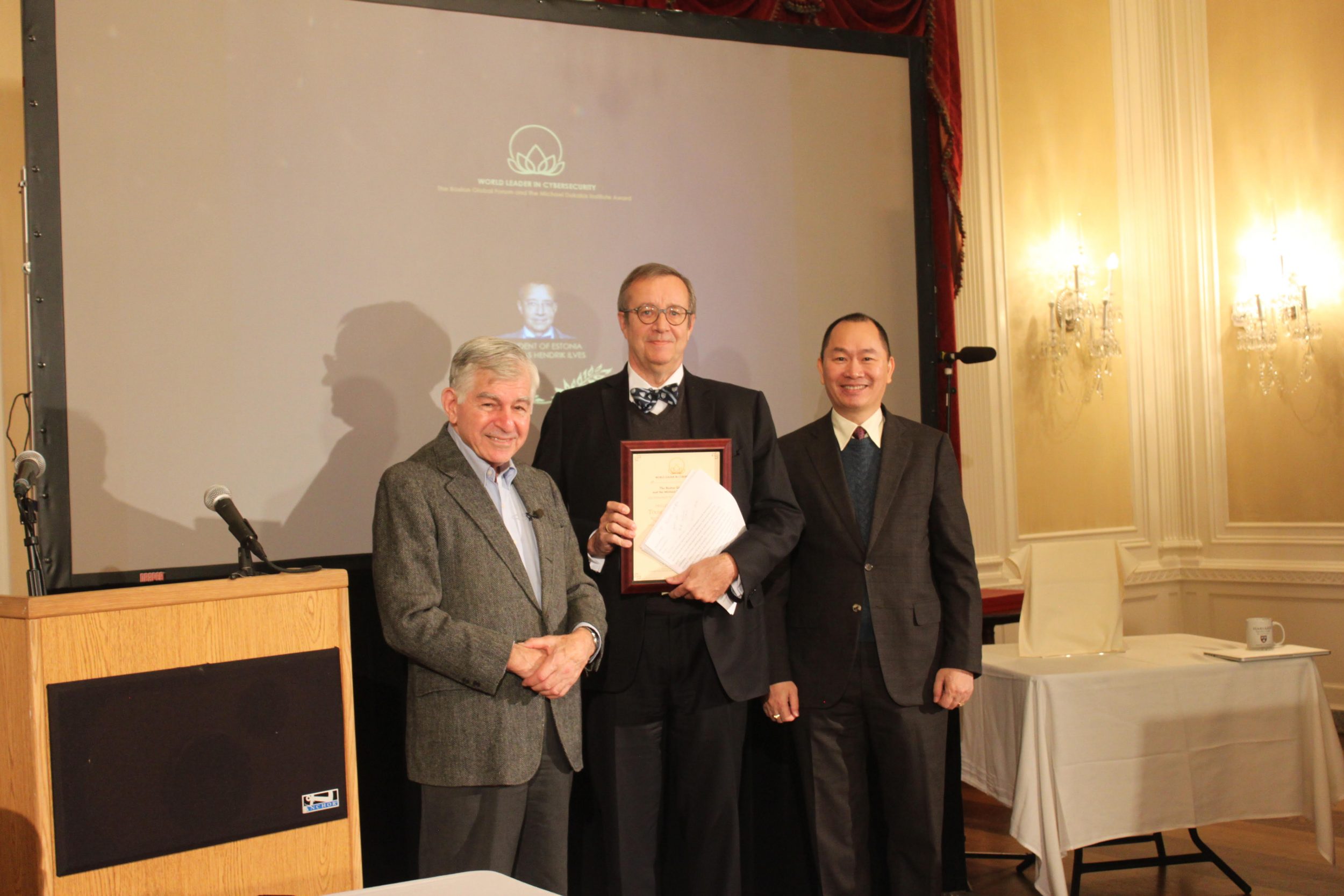
Governor Michael Dukakis and Mr. Nguyen Anh Tuan awarded Estonian President Toomas Hendrik Ives “ World Leader in Peace and Cybersecurity “ at Global Cybersecurity Day December 12, 2017 at Harvard University

AI World Government Conference

AI World Government provides a comprehensive three-day forum to educate and inform public sector agencies on the strategic and tactical benefits of deploying AI and cognitive technologies. With AI technology at the forefront of our everyday lives, data-driven government services are now possible from federal, state, and local agencies. This has led to the rapid rise in availability and use of intelligent automation solutions. AI World Government gathers leaders from across government, technology innovation, business and research to present the state of the practice and state of the technology to assist the public sector in leveraging advanced intelligent technologies to enhance government services. Special focus is given to the challenges, solutions, and opportunities that lie in the agency mission, and how agencies can prepare to deploy intelligent automation to address their goals.

AI World Government Conference, June 24-26, 2019, Washington DC

Boston Global Forum is the Strategic Alliance Host of AI World Government. Professor Thomas Patterson, Harvard University, Board Member of Boston Global Forum, will present AI World Society – G7 Summit Initiative including AI-Government and AI-Citizen in the morning June 24, 2019 at the event.

Professor Neil Gershenfeld and Designing Reality

Over the past fifty years, two digital revolutions—in computing and communication—have transformed our world. They have led to unprecedented productivity, generated enormous wealth, and fundamentally altered everyday life. But these revolutions left a great many people behind: today, half of the planet is not connected to the Internet, inequality is on the rise, and issues around privacy, security and civility emerge daily. With more foresight, we could have avoided many of these pitfalls.

We now have another chance. Neil Gershenfeld, Alan Gershenfeld, and Joel Cutcher-Gershenfeld foresee a third and even greater digital revolution in fabrication. The third digital revolution is about much more than 3D printers and hobbyist makers; it’s about the convergence of the digital and physical worlds. Drawing on the history of digitization and exploring the frontiers of research, Designing Reality outlines a vision for a future radically transformed by digital fabrication that takes us from community fab labs to personal fabrication to replicators right out of Star Trek that will allow anyone to make (almost) anything.

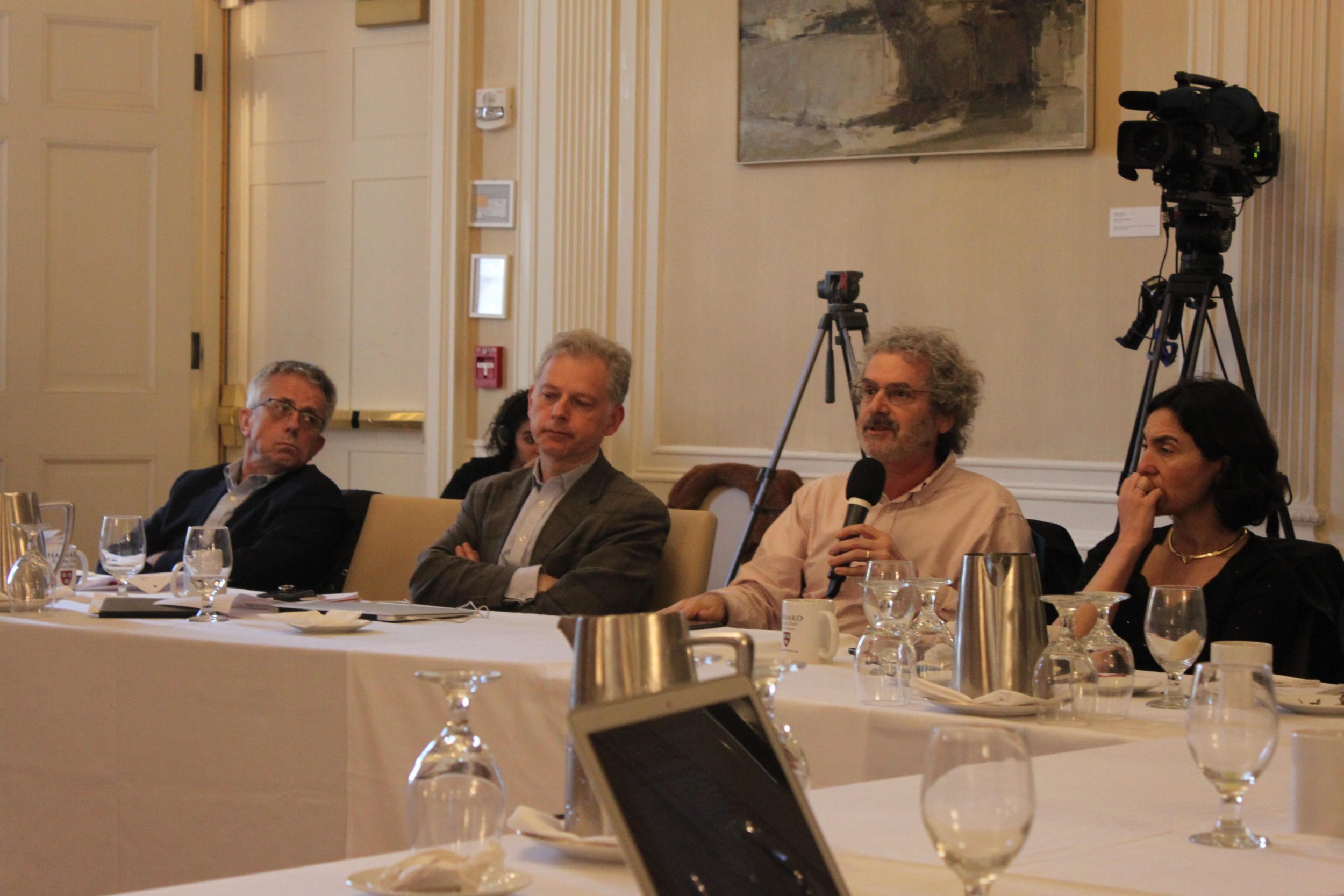
Professor Neil Gershenfeld speaks at AI World Society – G7 Summit Conference at Loeb House, Harvard University, April 25, 2019.

Accelerating digital fabrication capabilities could enable self-sufficient local communities and global sustainability. But it could also reinforce existing inequality and create new, destabilizing ‘fab’ divides. We can—and must—proactively shape our societies so digital fabrication will benefit everyone, rather than just the fortunate few. The first two digital revolutions caught us flatfooted. We can do better this time.

Designing Reality is your guide to not just surviving but thriving in the third digital revolution.

Prof. Neil Gershenfeld is the Director of MIT’s Center for Bits and Atoms, where his unique laboratory is breaking down boundaries between the digital and physical worlds, from pioneering quantum computing to digital fabrication to the Internet of Things. Technology from his lab has been seen and used in settings including New York’s Museum of Modern Art and rural Indian villages, the White House and the World Economic Forum, inner-city community centers and automobile safety systems, Las Vegas shows and Sami herds. He is the author of numerous technical publications, patents, and books including Designing RealityFabWhen Things Start To ThinkThe Nature of Mathematical Modeling, and The Physics of Information Technology, and has been featured in media such as The New York Times, The EconomistNPRCNN, and PBS. He is a Fellow of the American Physical Society, has been named one of Scientific American’s 50 leaders in science and technology, as one of 40 Modern-Day Leonardos by the Museum of Science and Industry, one of Popular Mechanic’s 25 Makers, has been selected as a CNN/Time/Fortune Principal Voice, and by Prospect/Foreign Policy as one of the top 100 public intellectuals. He’s been called the intellectual father of the maker movement, founding a growing global network of over one thousand fab labs that provide widespread access to prototype tools for personal fabrication, directing the Fab Academy for distributed research and education in the principles and practices of digital fabrication, and chairing the Fab Foundation.

Professor Neil Gershenfeld is a keynote speaker at AI World Society Summit 2019. The full video of his talk can be found here.

From Sensing to Sensemaking: Converging Big Data with Plant AI

As process industries across the world become more connected, networked, and integrated, there has been a consistent surge in the volume of data generated across the manufacturing value chain. The high-fidelity data that is generated by sensors and other wireless devices, however, currently yields inadequate insights for value creation. This makes a case for digitalizing plant operations in a way that meticulously leverages the plant’s digitized sensor data.

Converging Big Data with Plant Artificial Intelligence

Muthuraman “Ram” Ramasamy, Automation & IIoT Industry Director at Frost & Sullivan said “The industry understands the imperatives of digital, but the challenge resides in the ‘how’ of digital. This will require customers to partner with accomplished domain experts who can not only help structure a digital roadmap but also have strong AI application capabilities over plant data and comprehensive expertise over a manufacturing value chain.”

Yokogawa‘s Synaptic Business Automation — Converging Intelligent Sensing with Plant AI, will assist plant in unpacking the value levers of digital transformation, understanding the power of melding sensing with plant artificial intelligence (AI), and evaluating high-potential application areas. AI technology could provide intelligent sensing and advanced analytics for a smart manufacturing plant. This AI application will substantially supports to the human labor for more efficient operation and better productivity, which has been identified and highlighted by AI Ethics report from Michael Dukakis Institute for Leadership and Innovation (MDI).

MIT and U.S. Air Force sign agreement to launch AI Accelerator

MIT and the U.S. Air Force have signed an agreement to launch a new program designed to make fundamental advances in artificial intelligence (AI) that could improve Air Force operations while also addressing broader societal needs.

The effort, known as the MIT-Air Force AI Accelerator, will leverage the expertise and resources of MIT and the Air Force to conduct fundamental research directed at enabling rapid prototyping, scaling, and application of AI algorithms and systems. The AI Accelerator research program will aim to develop new algorithms and systems to assist complex decision-making that might help the Air Force, for example, better focus its maintenance efforts — an expensive and critical part of its aircraft operations. The Air Force plans to invest approximately $15 million per year as it builds upon its five-decade relationship with MIT.

The collaboration is expected to support at least 10 MIT research projects addressing challenges that are important to both the Air Force and society more broadly, such as disaster response and medical readiness. The interdisciplinary collaboration and application of AI technology for a better society and human well-being is also highly promoted and supported by AI World Society (AIWS) and Michael Dukakis Institute for Leadership and Innovation (MDI).

People + AI Research (PAIR)

The PAIR project is an initiative of Google to research about AI where human input plays an early role in the learning process of an AI system. According to its website, PAIR is “interested in the full spectrum of human interaction with machine intelligence, from supporting engineers to understanding everyday experiences with AI.”

PAIR provides a guidebook to help build human-centered AI products, which should focus on five aspects:

  • User needs + defining success: identify user needs, find AI opportunities, and design your reward function
  • Mental models: introduce users to the AI system and set expectations for system-change over time
  • Feedback + control: design feedback and control mechanisms to improve your AI and the user experience
  • Data collection + evaluation: decide what data are required to meet your user needs, source data, and tune your AI
  • Explainability + Trust: explain the AI system and decide if/when/how to show model confidence
  • Errors + graceful failure: identify and diagnose AI and context errors and communicate the way forward.

This people-centric approach is fundamentally different from the conventional data-centric approach of machine learning. “Advancing the state of the art in machine learning means thinking beyond narrowly-defined objective functions. It requires weaving user needs and societal values into the design and evaluation of these systems”, said Fernanda Viegas, a Senior Staff Research Scientist on the PAIR team.

Jess Hozbrook, a PAIR lead and one of the creators of the People + AI Guidebook, compares today’s AI with the early days of designing products for personal computing, web, and mobile. “You experiment, your product looks really cool, and then you stumble by building an experience that doesn’t address a real human need or aspiration. We’re reminding people of what we know works, which is to put people first and work from there… If you start with people then any exploration, product design, or research you do will have a fruitful path.”

Putting people first in AI development will change the way we develop AI products. AI designers can harness and humanize AI’s vast potential.

AI World Society (AIWS) is a 7-layer model, in which Ethics is in Layer 2, and create AIWS Ethics Index.

THE FUTURE OF AI AND HOW THE DIGITAL WORLD RELATES TO THE PHYSICAL WORLD – PROF. GERSHENFELD’S TALK AT AIWS SUMMIT 2019

The field of AI research was founded more than 50 years ago. In June of 1956, a few dozen scientists from all around the country gathered for a meeting on the campus of Dartmouth College. What they were talking about was how to build a machine that could think.

Many years later, in 2009, some of the pioneers of the field, joined by later generations of thinkers, were gearing up for a massive “do-over” of the whole idea. The new project was called the Mind Machine Project (MMP). Prof. Neil Gershenfeld, Director of MIT’s Center for Bits and Atoms, is one of the leaders of MMP. One of the project’s goals was to create intelligent machines — “whatever that means,” he recalled.

On May 15, 2019, at MIT’s Center for Bits and Atoms, Prof. Gershenfeld gave a keynote talk at the AI World Society Summit 2019 about the future of AI and how the digital world relates to the physical world – the boundary between them.

“It appears that we are in an AI revolution, but it is really important to be aware that we’re now in its fifth boom-and-bust cycle,” said Gershenfeld. The boom and bust cycle refers to the alternating phases of economic growth and decline. What he meant is that, “there are cycles where AI is going to solve all the problems and where AI is going to fail, and we have been through five of those”. What is different today, he explained, is thanks to the advances in computing technology, the computers have caught up to the capability of the brain in terms of the number of operations that can be performed.

Gershenfeld talked about two of the fathers of Computing, Alan Turing and John Von Neumann, emphasizing that Turing’s final study was about how genes give rise to form and Von Neumann’s final study was about self-replicating machines, how a machine can communicate its computation for its own construction. “Literally, the mother of all AI problems is the revolution of AI itself, how intelligence creates intelligence,” said Gershenfeld.

He considered finding representations being the heart of AI. “How to search data has not really changed. What AI algorithms do is to represent where is an interesting place to search. In the same sense, evolution searches over programs that create lives by finding the beautiful representation for the evolutionary search.”

He focused his talk on where we would be ahead of the scaling curve of AI. “We are really living through the third digital revolution”. The first two were digital computing and digital communication; in a nutshell, by digitalization, we can really perform reliable operations using imperfect devices.

The third digital revolution extends this insight into fabrication. He proposed that, with digital fabrication, we can digitalize not just the description of a design but also the materials that it is made from, in the same way that living systems are assembled from a small set of amino acids. A problem with today’s AI, he said, is that AI does not have a “body”, and with digital fabrication, we are getting closer to real AI.

Digital fabrication is challenging fundamental assumptions about the nature of work, money and government. It is a significant breakthrough and will have a big impact on shaping the future of AI. The full video of Professor Gershenfeld’s talk can be found here.