
Expert Warns UN’s Role in AI Regulation Could Lead to Safety Overreach

A recent article published on Fox News highlights concerns from experts regarding the United Nations’ involvement in artificial intelligence (AI) regulation. The expert warns that the UN’s approach could potentially lead to overregulation, stifling innovation and hindering the development of AI technologies.

The core of the concern revolves around the balance between ensuring safety and promoting innovation. Overly stringent regulations may impede technological advancements and limit the benefits that AI can bring to society. On the other hand, insufficient regulation could lead to unethical uses of AI or unintended consequences.

The Boston Global Forum (BGF) has been a pioneer in AI governance since 2017 through its AI World Society (AIWS) Initiative. The AIWS initiative advocates for a balanced approach to AI governance that promotes innovation while ensuring ethical standards and societal benefits.

The concerns raised about the UN’s role in AI regulation underscore the need for ongoing discussions about the future of AI governance. Balancing innovation with safety is a complex challenge that requires input from various stakeholders.

The US will hold a safety summit in November to better coordinate global regulation efforts.

We invite you to share your thoughts and insights on this critical issue. Please send your perspectives to [email protected].

Your contributions will help shape meaningful discussions and inform strategies that aim to harness the potential of AI for the betterment of society.

For more information on BGF’s efforts in AI governance and to explore the AI World Society Initiative, please visit our publication: AIWS: Pioneering AI Governance and New Democracy.
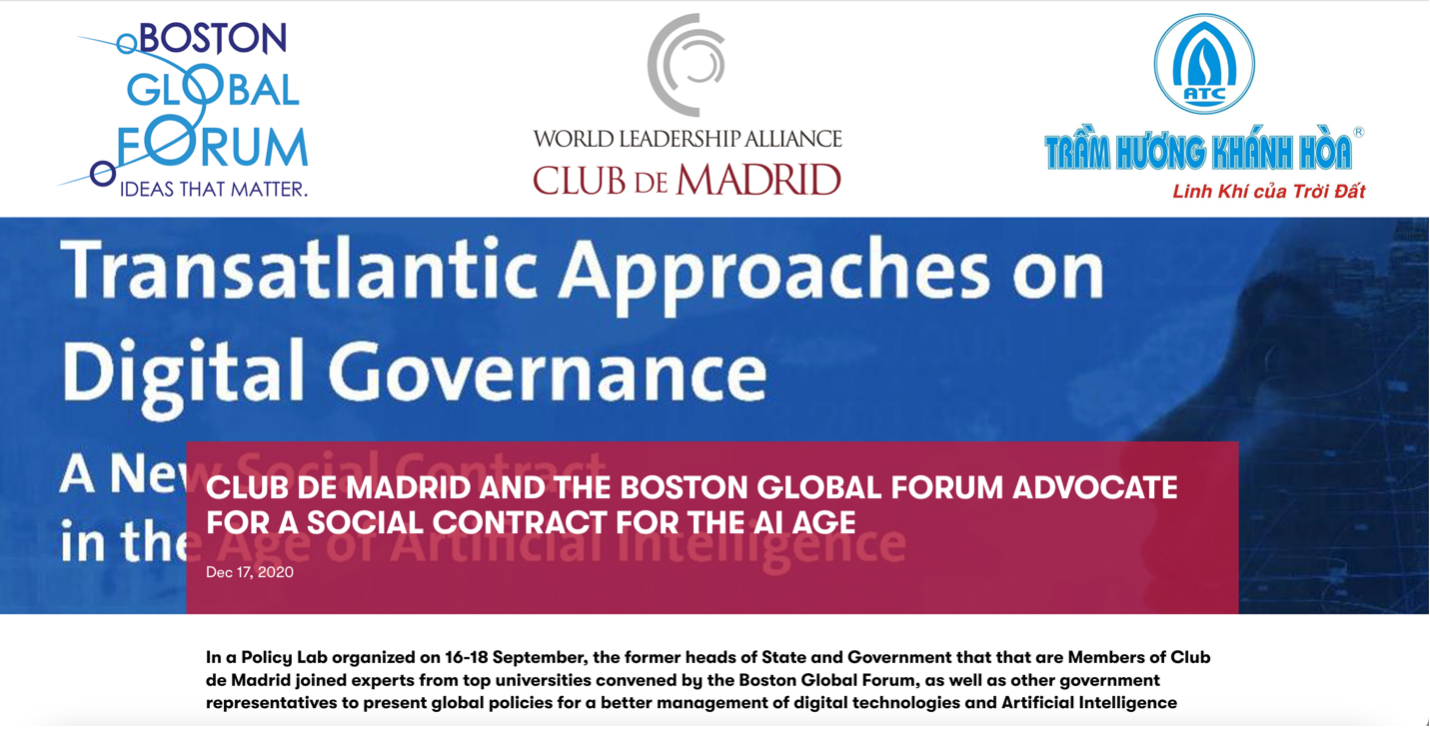

An AI script editor could help decide what films get made in Hollywood

An AI script editor could help decide what films get made in Hollywood. Callaia provides analysis and feedback on scripts in seconds. But, as AI models are trained to be, it might be too nice to be truly useful.

On September 24, 2024, it launched a new tool called Callaia, which amateur writers and professional script readers alike can use to analyze scripts at $79 each. Using AI, it takes Callaia less than a minute to write its own coverage, which includes a synopsis, a list of comparable films, grades for areas like dialogue and originality, and actor recommendations. It also makes a recommendation on whether or not the film should be financed, giving it a rating of “pass,” “consider,” “recommend,” or “strongly recommend.” Though the foundation of the tool is built with ChatGPT’s API, the team had to coach the model on script-specific tasks like evaluating genres and writing a movie’s logline, which summarize the story in a sentence.

“It helps people understand the script very quickly,” says Tobias Queisser, Cinelytic’s cofounder and CEO, who also had a career as a film producer. “You can look at more stories and more scripts, and not eliminate them based on factors that are detrimental to the business of finding great content.”

The idea is that Callaia will give studios a more analytical way to predict how a script may perform on the screen before spending on marketing or production. But, the company says, it’s also meant to ease the bottleneck that script readers create in the filmmaking process. With such a deluge to sort through, many scripts can make it to decision-makers only if they have a recognizable name attached. An AI-driven tool would democratize the script selection process and allow better scripts and writers to be discovered, Queisser says.

https://www.technologyreview.com/2024/09/24/1104356/an-ai-script-editor-could-help-decide-what-films-get-made-in-hollywood/


AI-powered art puts ‘digital environmentalism’ on display at UN Headquarters

A groundbreaking art installation at UN Headquarters by renowned media artist Refik Anadol leverages artificial intelligence to raise awareness of the beauty and fragility of the world’s coral reefs, and the urgent need to address the climate crisis.
Abstract shapes in green, orange and white flow into and out of each other in an endless, never-repeating pattern, combined with ambient music that induces a hypnotizing effect on those who stare at it a little too long (like this writer).

It’s pretty hard for delegates at High-Level Week and the Summit of the Future to miss Large Nature Model: Coral. The artwork covers a whole section of wall in the ground floor corridor of the UN Headquarters Conference building, facing the Japanese Peace Garden.

As well as drawing the eye, however, the artist behind the piece is subtly drawing attention to two of the major global issues under discussion at the UN during the busiest week of the year: the climate crisis and the impact of artificial intelligence.

AI was used to gather together millions of photos of coral reefs, many of which are endangered by rising ocean temperatures. The effect on the viewer is both mesmerizing and, given the context, poignant: coral reef ecosystems are among the most vulnerable ecosystems on the planet to climate change.

These undersea cities, which support 25 per cent of marine life, could virtually disappear by the end of this century.

“I hope that Large Nature Model: Coral inspires people to see how technology can foster deeper connections with our planet and empower us to work together toward a more sustainable world,” said Mr. Anadol at the launch of the installation.

He was joined by Vilas Dhar, the President of the Patrick J McGovern Foundation – a philanthropic organization dedicated to advancing artificial intelligence and data science solutions for all – and Melissa Fleming, the UN Under Secretary-General for Global Communications, whose department jointly organized the exhibition.

https://news.un.org/en/story/2024/09/1154636

OpenAI releases o1 model with human-like reasoning

OpenAI is releasing a new artificial intelligence model known internally as “Strawberry” that can perform some human-like reasoning tasks, as it looks to stay at the top of a crowded market of rivals.

The new model, called o1, is designed to spend more time computing the answer before responding to user queries, the company said in a blog post Thursday. With the model, OpenAI’s tools should be able to solve multi-step problems, including complicated math and coding questions.

“As an early model, it doesn’t yet have many of the features that make ChatGPT useful, like browsing the web for information and uploading files and images,” the company said. “But for complex reasoning tasks this is a significant advancement and represents a new level of AI capability. Given this, we are resetting the counter back to 1 and naming this series OpenAI o1.”

A preview version of the model will be available through OpenAI’s popular chatbot, ChatGPT, to paid Plus and Team users on Thursday. Bloomberg previously reported the company could release the new model as soon as this week.

The model’s release comes as San Francisco-based OpenAI is looking to raise billions in funding and faces heightened competition in the race to develop ever more sophisticated artificial intelligence systems. OpenAI isn’t the only company working on such capabilities; competitors Anthropic and Google have also touted “reasoning” skills  with their advanced AI models.

In its blog post, OpenAI gave examples of the AI model’s responses to questions on topics including coding, English, and math, and asked it to solve a simple crossword puzzle. In a series of posts on X, Noam Brown, a research scientist at OpenAI, said the company is releasing the model in preview now in part to get a sense for how people use it, and where it needs to be improved.

https://fortune.com/2024/09/12/openai-new-ai-model-strawberry-o1-chatgpt/

Building AI World Society in Vietnam: A New Democracy with AI

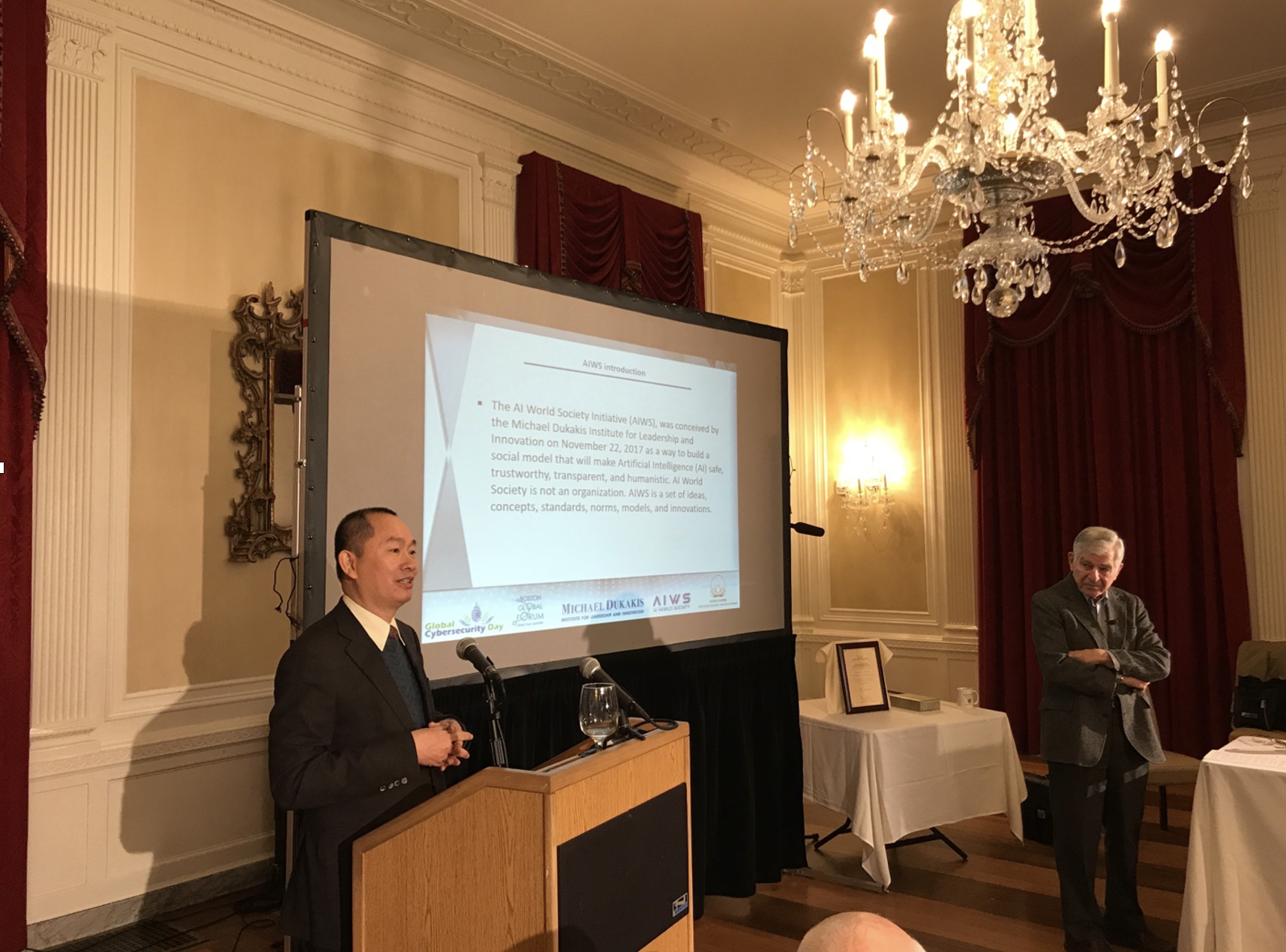
On Vietnam National Day, September 2, 2024, Boston Global Forum (BGF) CEO Nguyen Anh Tuan authored an article for the special edition of Tuoi Tre Newspaper, highlighting how Vietnam could apply the Artificial Intelligence World Society (AIWS) model to shape its future.
AIWS is envisioned as a transformative system that integrates AI across politics, society, economics, business, culture, and education. The concept emphasizes a governance system that is efficient, equitable, and encourages honesty, responsibility, and kindness. This vision is complemented by the Boston Areti AI (BAI), a Virtuous AI assistant that aids leaders in making compassionate, optimal decisions for peace and security.

Nguyen Anh Tuan’s article calls for Vietnam to lead the way in creating a society where AI can help citizens maximize their potential and participate in a more just, sustainable world, fostering national development in alignment with global progress.

https://tuoitre.vn/y-tuong-xay-dung-xa-hoi-tri-tue-nhan-tao-o-viet-nam-20240829112251499.htm

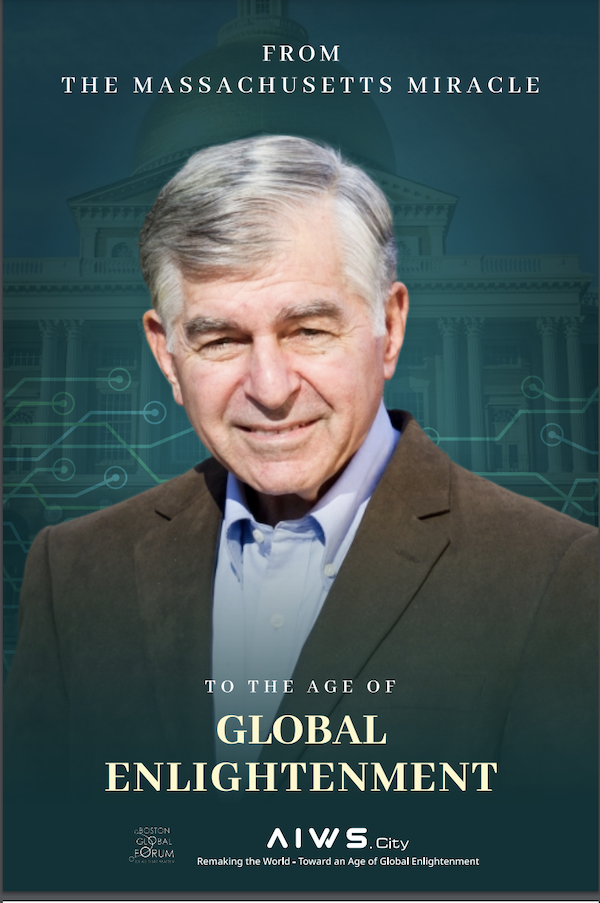
From the Massachusetts Miracle to the Age of Global Enlightenment

Michael (Stanley) Dukakis (born November 3, 1933, in Brookline, Massachusetts, U.S.) is an esteemed American politician. He received a bachelor’s degree in political science from Swarthmore College in 1955 and a law degree from Harvard Law School in 1960. He served in the U.S. Army in Korea from 1955 to 1957. In 1963, he entered the Massachusetts House of Representatives and served eight consecutive years. He was also associated with the Boston firm of Hill and Barlow from 1960 to 1974.

From 1975 to 1979 and again from 1983 to 1991, Michael Dukakis served three terms as Governor of Massachusetts. During his tenure, he reside over a period that would later be recognized as the “Massachusetts Miracle,” an economic revival that not only recovered the state’s economy but also set a standard for progress and innovation. Governor Dukakis’ adept technocratic skills, coupled with a pragmatic approach and a keen understanding of societal fundamentals, were instrumental in formulating policies and reforms that underpin the current dynamic and forward-thinking Massachusetts. He was the Democratic Party’s nominee for president in 1988 running against the Republican nominee, incumbent Vice President George H. W. Bush.

After his political career, Governor Dukakis took on the role of distinguished professor at Northeastern University and UCLA, dedicating himself to public service through education. His academic roles provided a platform for inspiring and guiding the next generation of leaders. Through lectures rich with the wisdom gleaned from a lifetime of experience, he instilled in his students the values of integrity, responsibility, and civic engagement.

However, Governor Dukakis’ influence extended far beyond the lecture halls. In his later years, he co-founded and chaired the Boston Global Forum (December 12, 2012), the Michael Dukakis Institute for Leadership and Innovation, and the AI World Society Initiative.

Download a copy of From the Massachusetts Miracle to the Age of Global Enlightenment here

How to Govern AI in An age of Global Tension

HOW TO GOVERN AI IN AN AGE OF GLOBAL TENSION

Boston Global Forum Special Report, The Rīga Conference 2023

Contributors: Krishnashree Achuthan, David Bray, Ramu Damodaran, Michael Dukakis, Thomas Kehler, Yasuhide Nakayama, Minh Nguyen, Quynh Nguyen, Tuan Anh Nguyen, Zaneta Ozolina, Thomas Patterson, Alex Pentland

Please download Bostonglobal Forum special report – Riga Conference 2023 “How to Govern AI in An age of Global Tension” are here

The Shinzo Abe Initiative 2nd Conference – Japan’s Prominence in the New Age of Global Enlightenment

The Shinzo Abe Initiative 2nd Conference
Japan’s Prominence in the New Age of Global Enlightenment

Tokyo, April 5th, 2023

Contributors: Nazli Choucri, Michael Dukakis, Tuan Anh Nguyen, Quynh Nham, Thomas Patterson, Alex Pentland, Shyamal Sharma, David Silbersweig

The Boston Global Forum Shinzo Abe Initiative

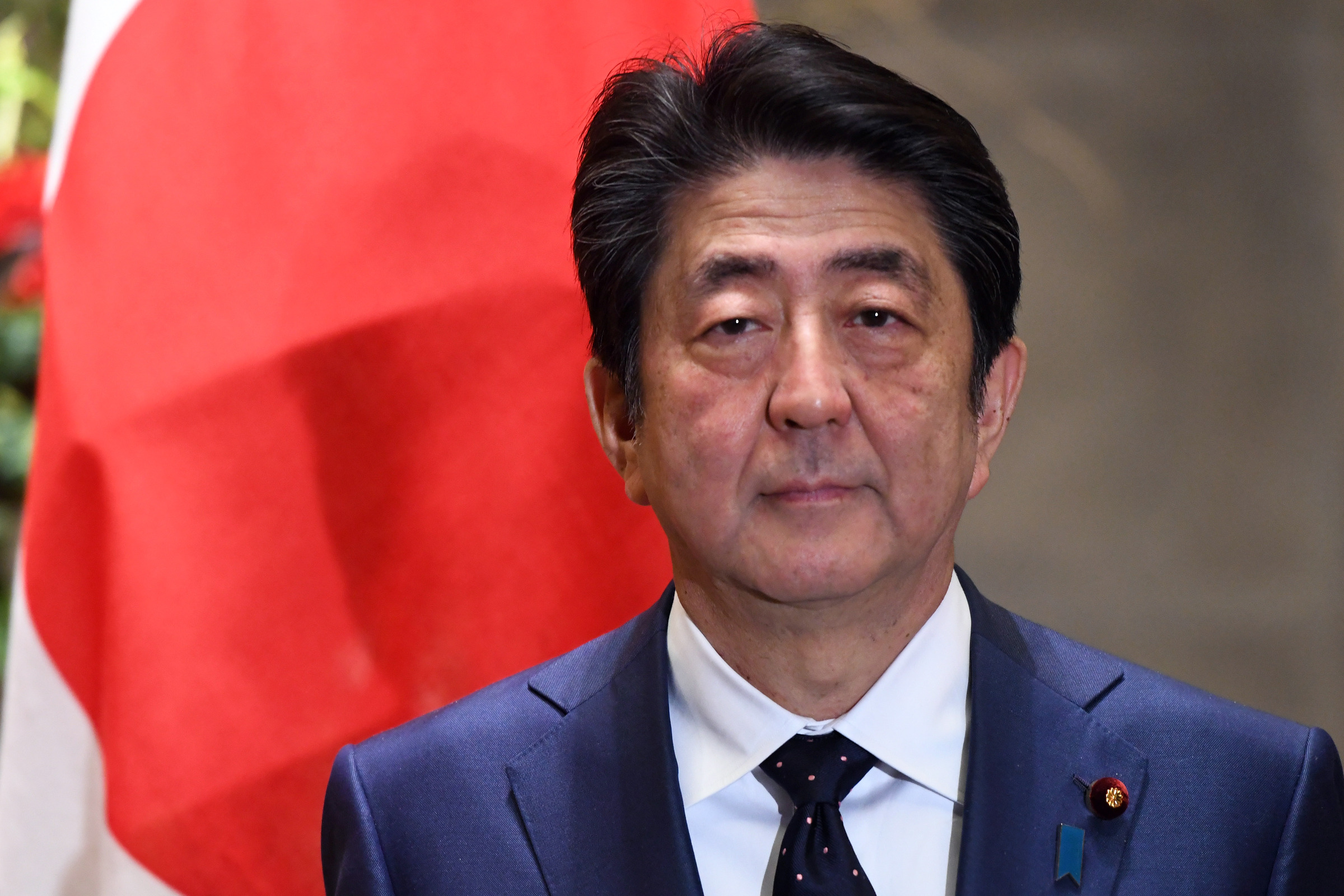
In 2015, the Boston Global Forum (BGF) honored Prime Minister Shinzo Abe with the “World Leader for Peace and Security Award.” This award was given in recognition of Prime Minister Abe’s contributions to promoting peace, security, and economic development in Japan and around the world. Prime Minister Abe’s leadership and vision helped to bolster the Japanese economy, strengthen international partnerships, and promote a more secure and peaceful world for all.

Prime Minister Abe was a distinguished contributor to the book Remaking the World – Toward an Age of Global Enlightenment, which was published in 2021 by the Boston Global Forum and the United Nations Academic Impact. The book presents a vision of the future based on the deep integration of applied Artificial Intelligence (AI) in all aspects of politics, economy, education, and society.

On July 10, 2022, the Boston Global Forum founded the Shinzo Abe Initiative for Peace and Security to recognize his legacy and continue his work on global peace and security through engaging world leaders, scholars, thinkers, and innovators on these topics with special attention to promoting Japan’s economic growth and innovation.

In January 2023, the BGF announced former State Minister for Foreign Affairs BGF. Yasuhide Nakayama as the coordinator of the Shinzo Abe Initiative and a distinguished contributor to the BGF.

Please download The Shinzo Abe Initiative 2nd Conference – Japan’s Prominence in the New Age of Global Enlightenment are here