“Dr. Google” had its issues. Can ChatGPT Health do better?

For years, the first response to new symptoms was “Dr. Google.” Now many people ask LLMs instead—and OpenAI says 230 million users submit health-related questions to ChatGPT each week. That surge is the backdrop for ChatGPT Health, a new product experience meant to help people navigate medical information more safely than general web searching—while emphasizing it is not a replacement for a doctor.

The core question is whether AI’s risks—misinterpretation, overconfidence, and harmful self-treatment—can be mitigated enough to deliver a net benefit. ChatGPT Health’s promise is clearer guidance, better context, and stronger guardrails than the “link soup” of search, potentially reducing the anxiety spiral that “Dr. Google” became known for.

AIWS Healthcare perspective: This trend strengthens the case for the AIWS Healthcare Model, which is designed for 24/7 life-course care (prevention → prediction → early intervention → recovery) and expands “health” to include physical, mental, emotional, behavioral, and social well-being. AIWS emphasizes an “Angel” AI companion that is kind, non-judgmental, and escalation-to-human by design, plus ethics/consent governance—moving from “AI answers” to continuous, trustworthy care support.

Please see full here:

https://www.technologyreview.com/2026/01/22/1131692/dr-google-had-its-issues-can-chatgpt-health-do-better/?utm_source=the_download&utm_medium=email&utm_campaign=the_download.unpaid.engagement&utm_term=&utm_content=*%7CDATE:m-d-Y%7C&mc_cid=4798e0462f&mc_eid=be5202f3c7

The Next AI Revolution Could Start with “World Models”

A new Scientific American analysis argues that today’s generative AI still struggles with a basic weakness: it does not maintain a stable, continuously updated understanding of the world across space and time—so it can produce inconsistencies (a dog’s collar vanishes; a loveseat turns into a sofa). “World models” aim to change that by giving AI an internal, evolving map of reality—often described as 4D modeling (3D + time)—so systems can stay consistent, remember what just happened, and plan what should happen next. (Scientific American)

The article highlights early research using world-model approaches to improve video generation and enable more reliable augmented reality, where virtual objects must stay anchored and obey occlusion rules (e.g., digital objects disappearing behind real ones). It also notes major implications for robotics and autonomous vehicles, where a learned world model could help machines anticipate outcomes and navigate safely. (Scientific American)

Beyond applications, the piece frames world models as a potential prerequisite for more general intelligence: large language models may encode broad “conceptual” knowledge, but they typically lack real-time physical updating and spatiotemporal memory—capabilities researchers argue are essential for AI that can act coherently in the real world. (Scientific American)

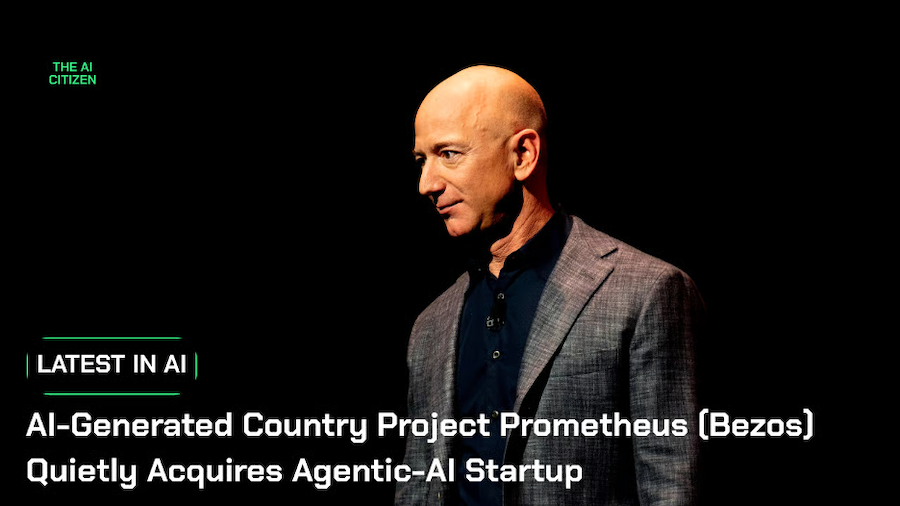
General Agents’ Ace: Real-Time “Computer Pilot” and the Next Frontier of Action AI

General Agents has introduced Ace, a real-time “computer pilot” designed to operate across everyday software interfaces the way a human would—seeing the screen, navigating menus, and executing multi-step tasks directly through the user interface rather than relying only on APIs. This approach signals a major shift from “chat-based assistance” to autonomous action on the digital desktop—where speed, reliability, and safety become decisive. (SiliconANGLE)

In reporting on the agentic-computing race, WIRED highlighted Ace’s standout advantage: extremely low latency. Harsha Abegunasekara, CEO of a competing startup, credited General Agents with “cracking” speed—calling Ace “light speed” and noting rivals had not matched it despite months of work. (WIRED)

For BGF–AIWS, Ace illustrates both promise and urgency. “Action AI” can dramatically accelerate productivity—reducing friction in administration, operations, and service delivery. But as agents gain the power to do, not just suggest, governance must evolve: audit logs, per missioning, abuse prevention, transparency, and human responsibility must be designed in from day one.

This is where AIWS principles matter: an AIWS Angel should not merely act fast—it should act ethically, explainable, and in service of human dignity. Ace is a glimpse of the near future; AIWS is the blueprint for ensuring that future remains trustworthy.

https://www.wired.com/story/jeff-bezos-new-ai-company-acquired-agentic-computing-startup/

Crypto Markets in 2025: Bitcoin Volatility and the Rise of Private Litigation

In 2025, Bitcoin’s journey underscored the growing tension between innovation, risk, and governance in the digital asset world — a lesson with direct resonance for the AI Age.

After reaching a record peak of around $126,000 in October, Bitcoin’s price slid nearly 30% by early December, reflecting familiar market dynamics of rapid rallies followed by sharp corrections. Drivers of the rally included institutional ETF inflows, supply contraction from the halving event, and favorable macroeconomic conditions, while rising U.S. Treasury yields and substantial ETF outflows — including a notable $2.7 billion redemption from BlackRock’s IBIT ETF — applied downward pressure.

Amid this price turbulence, a key theme emerged in 2025: private litigation has stepped in where regulatory enforcement receded. Under the U.S. administration’s lighter enforcement posture, investors increasingly turned to class actions and civil suits against crypto projects — notably alleging misrepresentation and unregistered securities issues in cases involving companies like Unicoin and Gemini. Litigation around influencer marketing and promotional claims also rose sharply, highlighting the need for stronger disclosures and corporate governance.

In contrast to traditional markets, where public enforcement often sets norms, the crypto ecosystem saw private legal action become a central mechanism shaping behavior and accountability. Looking ahead to 2026, analysts expect the market to stabilize structurally rather than soar, as litigation risk and compliance frameworks increasingly define competitive advantage.

AIWS Insights: Governance, Trust, and Digital Futures

For the AI World Society (AIWS) community, these developments carry several lessons:

  • Volatility in digital ecosystems — whether in financial assets or intelligent systems — underscores the importance of robust governance frameworks that balance innovation with stability and public trust.
  • Legal and ethical accountability cannot be an afterthought; where public regulation is slow or uneven, civil mechanisms and standards help fill gaps and protect stakeholders, echoing the principles in the AIWS Digital Asset Standards Initiative (DASI).
  • As AI and digital asset technologies converge, responsible deployment and clear transparency are essential to ensure technologies serve societal good rather than exacerbate risk or enable misinformation.

In a world where both AI systems and digital markets evolve rapidly, the interplay of risk, accountability, and human-centered governance will shape not just economic outcomes but the broader trust that underpins digital civilization.

https://www.reuters.com/legal/legalindustry/bitcoin-2025-volatility-rise-private-litigation–pracin-2025-12-24/

Mark Kennedy on the Four Arenas of the US-China Tech Race

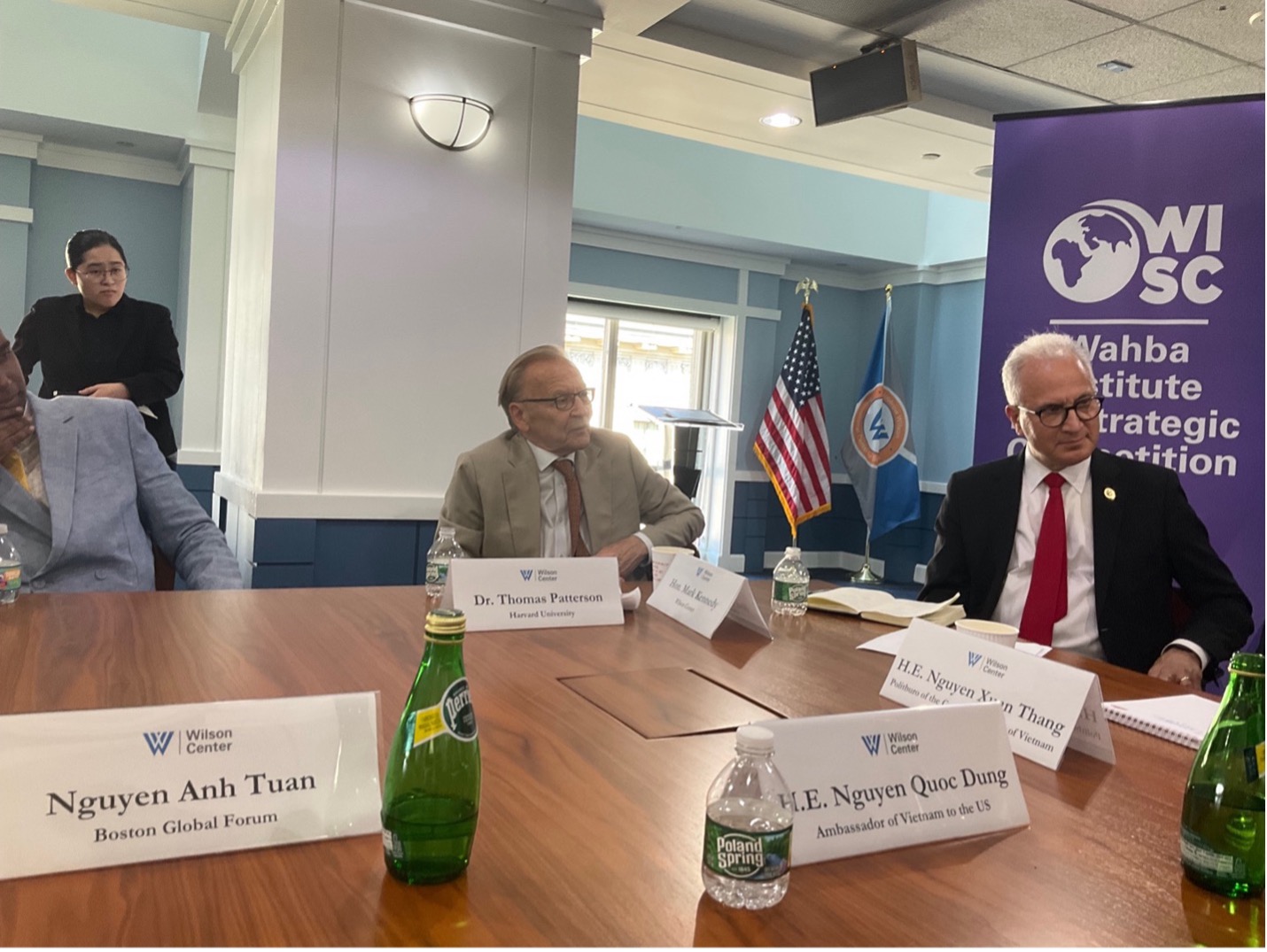
This brief summarizes the assessment of the US-China tech race provided by Mark Kennedy, Founding Director of the Wahba Initiative for Strategic Competition at NYU and member of the Boston Global Forum (BGF) Board of Thinkers, as featured in the Goldman Sachs Top of Mind report (Issue 144, December 2025).

The “Central Switchboard” of Rivalry

Kennedy characterizes technology not merely as a component of the US-China rivalry, but as its “central switchboard”. He argues that whoever controls the routing of technology, data, and computing power will dictate terms across military, economic, and informational domains. He suggests that the geopolitical implications of this contest are currently underappreciated.

The Four Arenas of the Tech Race

Kennedy identifies four distinct “arenas” where the competition is unfolding:

  1. Technological Innovation:The United States leads in most advanced technologies, including semiconductors, AI frameworks, cloud infrastructure, and quantum computing. It also maintains a superior ability to attract global talent.
  2. Practical Application:China leads in the deployment and adoption of technology. For example, China’s robotics deployment in manufacturing is twelve times greater than that of the US when adjusted for income. It is also more proactive in testing and deploying physical AI, such as uncrewed taxis and drone deliveries.
  3. Global Installations (“Digital Plumbing”):China dominates this arena, particularly in the Global South, where it has outpaced the West in building essential digital infrastructure and networks.
  4. Technological Self-Sufficiency:China is making significant strides toward independence through its “dual circulation” strategy. It is actively reducing reliance on Western technology while increasing Western dependence on Chinese supply chains for batteries and critical minerals.

Key Findings and Outlook

  • Effectiveness of Export Controls:Kennedy asserts that US export controls have not been “especially significant” in stopping China. Instead, they have accelerated China’s planned transition toward domestic semiconductor technology.
  • Current Standing:While the US leads in developing the technology itself, China is rapidly closing the gap or leading in infrastructure, application, and self-sufficiency.
  • The Future Result:Kennedy envisions a world where neither side is the outright victor. He predicts a bifurcated outcome where the US may continue to lead in developing the most advanced technologies, while China leads in global installations.

Professor Paul Triolo and others in the report echo Kennedy’s concerns, noting that China’s vast engineering talent and resources make it a formidable contender for eventual technological self-sufficiency.

Invitation to Explore a Profound Partnership: Artificial Intelligence and Divine Intelligence

Dear Distinguished Leaders, Scholars, and Thinkers,

In an era where artificial intelligence is reshaping every dimension of human existence—from governance and creativity to ethics and spirituality—we stand at a pivotal crossroads. The rapid advancement of AI invites us not only to ask what technology can achieve, but how it might align with the deepest sources of wisdom, meaning, and transcendence that humanity has long attributed to Divine Intelligence.

Can AI serve as a bridge to greater understanding of the divine? Might it amplify compassion, justice, and peace—or risk diminishing the sacred essence of human consciousness? How can we ensure that the tools we create reflect not merely human ingenuity, but the eternal values of love, truth, and harmony that many traditions associate with the Divine?

The Boston Global Forum (BGF) – AI World Society (AIWS) Family invites you to join a thoughtful, interdisciplinary exploration of the partnership between Artificial Intelligence and Divine Intelligence. This dialogue seeks to unite leading minds from technology, philosophy, theology, ethics, and global leadership to examine how AI can be guided by spiritual wisdom, fostering a future where innovation serves the highest aspirations of humanity. Outcome of this discussion will contribute to America at 250 – A Beacon for the AI Age, envisioning the United States as a global leader in human-centered AI governance.

We warmly welcome your insights, reflections, and contributions to this vital conversation. Please share your thoughts, essays, or proposals by emailing [email protected].

Together, let us illuminate a path toward an AI Age that honors both the brilliance of human creation and the sacred mystery that inspires it.

With respect and anticipation,

Governor Michael Dukakis

Co-Founder and Chair Boston Global Forum

Former Governor of Massachusetts

1988 Democratic Nominee for President of the United States

Nguyen Anh Tuan

Co-Founder, Co-Chair, and CEO Boston Global Forum

Creator, AI World Society (AIWS)

Boston Global Forum Releases Landmark Governance Framework

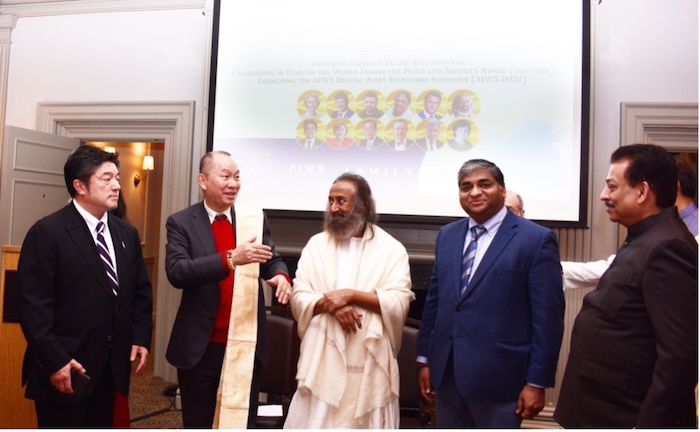
AIWS Digital Asset Standards Initiative (AIWS-DASI)
A Blueprint for Ethical, Human-Centered Digital Civilization in the AI Age

Boston, Massachusetts — December 8, 2025 — The Boston Global Forum (BGF) today announced the release of the AIWS Digital Asset Standards Initiative (AIWS-DASI) Official Governance Whitepaper, a groundbreaking framework establishing global ethical, technical, cultural, and civilizational standards for digital assets in the AI Age.

Developed under the leadership of Nguyen Anh Tuan, Global Governance Architect, Co-Founder, Co-Chair, and CEO of the Boston Global Forum, and Creator of the AI World Society (AIWS), the whitepaper provides the first comprehensive model for ensuring that digital assets—whether created by humans, AI systems, or human–AI collaboration—serve peace, human dignity, cultural advancement, and democratic values.

A foreword by Governor Michael Dukakis, Co-Founder and Chair of BGF, underscores the global significance of this initiative:

“AIWS-DASI establishes the ethical and civilizational foundation for digital assets in the AI Age. It is essential not only for America’s 250th anniversary, but for the entire global community.”

A New Global Standard for Digital Assets

The AIWS-DASI Whitepaper defines a three-pillar governance framework:

1. Standards – Ethical and Technical Integrity

Ensuring trust, transparency, cybersecurity, and human accountability through mechanisms such as:

  • Proof-of-Ethics (PoE) Protocol
  • Blockchain provenance requirements
  • AI transparency documentation
  • No-exploitation and human rights safeguards

2. Quality – Intrinsic and Societal Value

Assets must demonstrate meaningful cultural, intellectual, or social contribution, evaluated using the AIWS Quality Index (AQI).

3. Values – Human-Centered and Civilizational Impact

All AIWS-certified assets must advance:

  • Human dignity
  • Cultural preservation
  • Social harmony
  • Peace and global cooperation

Establishment of the AIWS Digital Asset Standards Board (ADASB)

The whitepaper formally launches the ADASB, a global governance body composed of leaders in:

  • AI ethics
  • Blockchain and cybersecurity
  • Economics and finance
  • Culture and the arts
  • Peace, diplomacy, and human rights

The ADASB will certify assets, conduct audits, enforce compliance, and maintain the AIWS Global Ledger of Esteemed Digital Assets.

A Milestone for America at 250 – A Beacon for the AI Age

AIWS-DASI is a core pillar of the Boston Global Forum’s flagship initiative America at 250 – A Beacon for the AI Age, and will support new models of democratic governance, including AIWS Government 24/7.

Global Deployment Roadmap (2025–2028)

The whitepaper outlines a four-phase plan leading to international adoption:

  • Phase 1 (2025–2026): Standardization and ADASB formation
  • Phase 2 (2026–2027): Integration with the U.S., Japan, and EU
  • Phase 3 (2027–2028): Multilateral recognition through OECD, UNESCO, and G7
  • Phase 4 (2028): Launch of the AIWS Global Ledger

Download the Whitepaper

The AIWS-DASI Whitepaper is available at: https://bostonglobalforum.org/publication/digital-asset-standards-initiative-aiws-dasi/

About the Boston Global Forum

The Boston Global Forum (BGF) is a global think tank dedicated to peace, security, and enlightenment in the AI Age. BGF created the AI World Society (AIWS) and leads pioneering initiatives in AI governance, digital civilization, and global cultural innovation.

Media Contact

Boston Global Forum
Email: [email protected]
Website: https://bostonglobalforum.org

 

Q.ANT Launches NPU 2.0 – World’s First Commercially Available Photonic Native Processing Unit for AI

In Stuttgart, Germany, November 18, 2025, German photonic computing pioneer Q.ANT has officially launched the NPU 2.0, the second generation of its light-based Native Processing Unit and the first photonic processor available for commercial order worldwide.The NPU 2.0 executes nonlinear mathematical operations directly in the optical domain, delivering up to 50× higher compute performance and 30× better energy efficiency than conventional electronic NPUs and GPUs on AI and HPC workloads. Packaged as the turnkey Native Processing Server (NPS 2), the 19-inch rack system integrates seamlessly via PCIe with existing x86 servers and is fully programmable in C/C++, Python, and the company’s Q.ANT Photonic Algorithm Library (Q.PAL).At Supercomputing 2025 in St. Louis, Q.ANT demonstrated the platform running the AIWS (AI World Society) model – the 7-layer framework for ethical AI governance and next-generation democracy – achieving record-breaking scores in energy-efficient inference and training on vision-language-action models aligned with principles of fairness, transparency, and societal benefit. Key highlights:

Up to 50× performance and 30× energy efficiency vs leading electronic accelerators on AIWS-aligned workloads

Native optical nonlinearities eliminate the need for electronic matrix multiplications in critical layers

Immediate availability for order; first customer shipments in H1 2026

With the NPU 2.0, Q.ANT becomes the first company to bring fully programmable photonic computing out of the lab and into production data centers, marking a major milestone in the transition from electronic to light-based AI acceleration that supports global ethical AI initiatives like the AI World Society model.

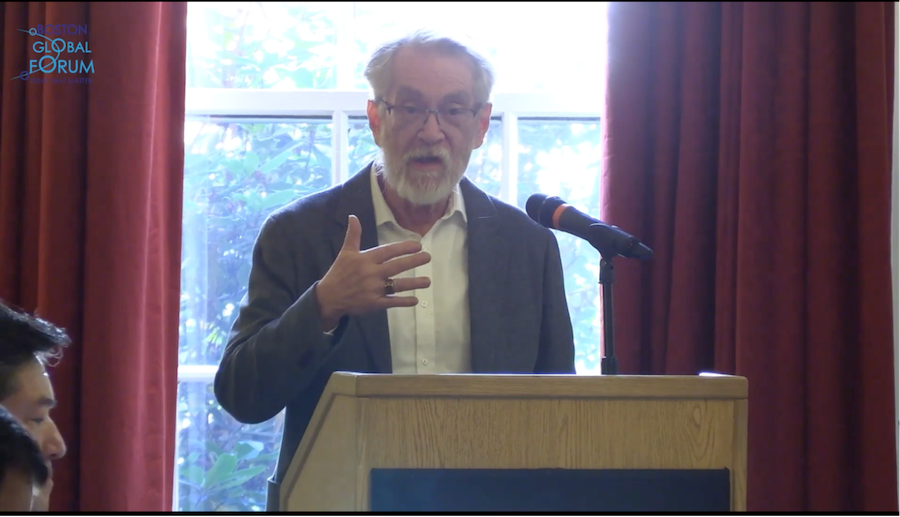
Shared Wisdom: Alex Pentland’s Message to the AIWS-DASI Conference

AIWS Digital Asset Standards Initiative (AIWS-DASI)
Harvard University – Loeb House, November 4, 2025

1. AI Must Extend Law and Ethics — Not Just Maximize Productivity

In his remarks, Professor Alex “Sandy” Pentland emphasized that AI development should not focus solely on efficiency or replacing human labor. Instead, AI must:

  • Extend and reinforce legal and ethical principles
  • Improve overall societal performance, not just economic output
  • Support human coordination and trust

This aligns closely with the foundations of AIWS and its mission of building ethical, human-centered AI governance.

2. AI as a Mediator: Enhancing Human Collaboration

Pentland presented an AI system his team built that is already used by cities and schools. Its core functions:

  • Listens to group conversations
  • Summarizes perspectives fairly
  • Highlights alignment and differences
  • Helps people find common ground
  • Does not contribute opinions or facts, only facilitates

The results are remarkable:

  • Groups reach agreement twice as effectively
  • Discussions become more inclusive, faster, and less conflict-driven

This demonstrates that AI can empower human dialogue, not replace it — reinforcing AIWS principles of AI as a “trusted assistant” to society.

3. Real Impact: Washington D.C. Participation Project

In Washington D.C., the team used AI mediation to involve residents who normally lack time to engage in civic processes. The findings surprised city officials:

Citizens overwhelmingly said they want:

A Personal AI Agent to Navigate Government Complexity

Such an AI would help citizens:

  • Understand rules and procedures
  • Access services fairly
  • Engage government on equal footing

This insight aligns with AIWS Government 24/7, where AI helps citizens—not bureaucracies—be more empowered.

4. The Future: AI with a Legal “Duty of Loyalty”

Pentland underlined a critical principle:

Personal AI must have a fiduciary duty to its user.

This means:

  • AI must serve your interests, not corporate or government interests
  • AI must respect privacy, autonomy, and ethics
  • AI providers must be legally accountable

He is working with:

  • Stanford Law School
  • Consumer Reports
  • Legal and policy bodies in California

to create industry-wide standards for legally loyal AI agents. This complements AIWS-DASI’s vision of trusted AI and ethical digital assets.

5. Open, Public Infrastructure for AI Empowerment

Pentland stressed:

  • All code and research are open-source
  • The system is provided as a public service
  • AI infrastructure must be transparent and accessible

This directly supports AIWS-DASI’s commitment to openness, integrity, and public benefit.

6. Book Shared Wisdom — A Vision for AI and Society

His new book, released November 11, explores:

  • AI-enabled collective intelligence
  • Implications for governance, bureaucracy, and law
  • How AI can strengthen democratic processes

This thinking aligns deeply with BGF and AIWS’s mission to build a civilization of shared wisdom, peace, and human dignity in the AI Age.

Overall Message

In his remarks at the AIWS-DASI Conference at Harvard Loeb House, Alex Pentland presented a compelling vision:

AI should be a mediator, a loyal representative, and an enabler of societal harmony — not a force for control or replacement.

His approach reinforces the AIWS belief that:

  • AI must serve human values
  • Trust and law must guide digital transformation
  • AI can strengthen democracy, collaboration, and human creativity

These ideas provide a powerful intellectual foundation for AIWS-DASI and the broader mission of the Boston Global Forum.

Please see Sandy’s video here: