Building Trust in the Agentic AI Era

San Francisco, March 23–26, 2026 — At RSAC 2026, one of the most important messages was clear: in the age of agentic AI, trust has become a security imperative. As AI systems gain the ability to plan, decide, and act, organizations must answer four urgent questions: How do we see what AI agents are doing? How do we govern them? How do we reduce risk before they act? And who is accountable when they cause harm? RSAC’s own preview identified Agentic AI and governance as defining themes of the conference, while its Day 1 recap highlighted Microsoft Security’s keynote, “Building Trust in the Agentic AI Era.”

The discussion at RSAC 2026 showed that trust can no longer remain an abstract aspiration. In the Agentic AI Era, trust must be built through visibility and observability, governance frameworks, preventive risk controls, and accountability by design. This is why the emerging global focus on agentic AI resonates strongly with the vision of AIWS Trust Architecture and AIWS Trust Infrastructure: moving from principles to real mechanisms for trust in the AI Age.

https://bostonglobalforum.org/reports/aiws-trust-architecture-for-the-ai-age-trust-standards-trust-infrastructure-and-the-trusted-order/

After AI Agents, the Next Wave Is Robots

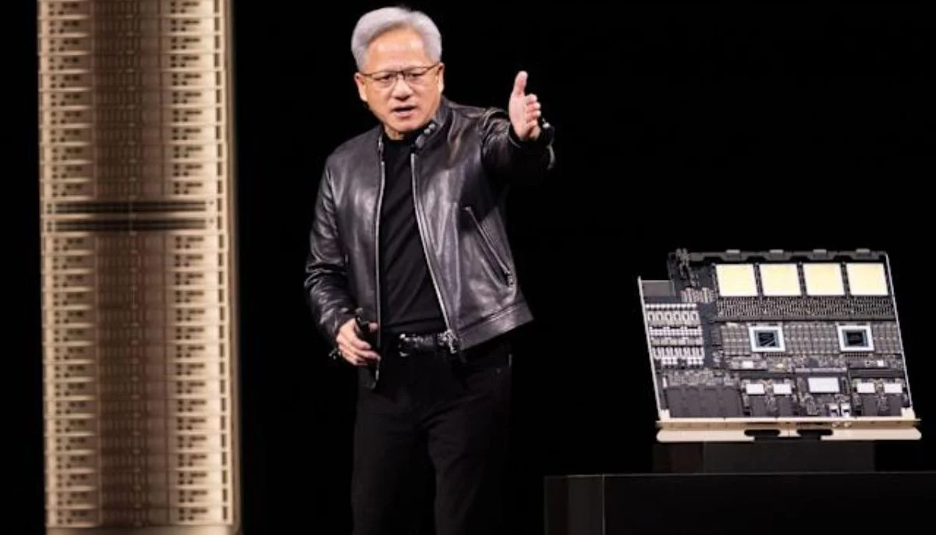
Jensen Huang’s GTC 2026 message was clear: AI is moving from digital action to physical action, and inference chips are becoming the engines of that shift.

At NVIDIA GTC 2026, Jensen Huang signaled a major transition in the AI era. NVIDIA’s own recap emphasized breakthroughs in agentic AI, inference, and physical AI, while Reuters described the recent progression of the field from chatbots, to reasoning systems, to autonomous agents. The next frontier is increasingly clear: robots. (NVIDIA)

The reason is simple. Robots need more than intelligence in theory. They need to perceive, reason, and act in real time in the physical world. That is why Huang declared that “the inference inflection has arrived.” The center of gravity is shifting from training giant models to running them efficiently, continuously, and with low latency. (AP News)

This shift is already becoming real in industry. NVIDIA announced new physical AI tools at GTC, including Cosmos 3, aimed at accelerating generalized robot intelligence. Reuters also reported that Skild AI and NVIDIA are deploying a general-purpose robotic “brain” on Foxconn assembly lines in Houston — an early commercial use of generalized physical AI. (NVIDIA Newsroom)

The larger lesson is that the next AI race will not be won by models alone. It will be won by those who can combine inference, robotics, data, simulation, and real-world deployment. After AI agents, the next great wave is not only smarter software. It is AI that can act in the world.

As AI moves into robots and physical systems, the central question becomes trust. Can these systems be relied upon, audited, governed, and aligned with human values? That is why the next era will need not only better chips and models, but also AIWS Trust Architecture and AIWS Trust Order — to ensure that physical AI serves human dignity, democracy, safety, and progress.

How AIWS Trust Architecture Will Shape Futures

In the Age of Artificial Intelligence, the future will not be shaped only by the power of technology, but by the degree to which people, institutions, and nations can trust it.

That is why AIWS Trust Architecture matters. It offers a new way of thinking about AI governance: not as a narrow issue of regulation or ethics alone, but as a full architecture of standards, infrastructure, measurement, and trusted cooperation.

AIWS Trust Architecture can shape the future in several important ways.

First, it can help build trustworthy AI systems. By advancing AIWS Trust Standards, it creates practical expectations for safety, transparency, accountability, resilience, and human dignity. This means AI can be governed not only by ambition, but by responsibility.

Second, it can help build trusted institutions. Through AIWS Trust Infrastructure, trust becomes something operational — supported by monitoring, redress, emergency response, civic safeguards, and continuous learning. In this way, AIWS helps institutions become more credible, more resilient, and more worthy of public confidence.

Third, it can help shape trusted public life. In an era of deepfakes, synthetic media, and information disorder, AIWS Trust Architecture recognizes that democracy cannot survive without trust in information. Its emphasis on trusted civic information, provenance, and deepfake defense makes it highly relevant to the future of democratic resilience.

Fourth, it can help shape trusted international cooperation. Through the idea of the AIWS Trusted Order, the framework points toward a world in which trust is not only domestic, but also international — linking systems, institutions, and partners through shared standards and mutual confidence.

Finally, AIWS Trust Architecture can shape the future because it understands that trust is not only technical. It is also human, cultural, educational, and civilizational. A trustworthy future depends not only on stronger systems, but on stronger memory, stronger knowledge, stronger institutions, and stronger moral imagination.

In that sense, AIWS Trust Architecture is more than a governance framework. It is an effort to help shape the trust architecture of the future.

In the AI Age, those who shape trust will help shape the world.

Please download the AIWS Trust Architecture White Paper here

How AI Can Spot Your Next Billion-Dollar Idea

Artificial intelligence is increasingly being used to identify new business opportunities and technological breakthroughs. By analyzing large datasets and detecting patterns invisible to humans, AI tools can help entrepreneurs and investors discover emerging trends and high-potential innovations earlier than ever before. As AI systems continue to evolve, they are expected to play a growing role in shaping the future of entrepreneurship, research, and global economic development.

Read more: https://d3.harvard.edu/how-ai-can-spot-your-next-billion-dollar-idea/

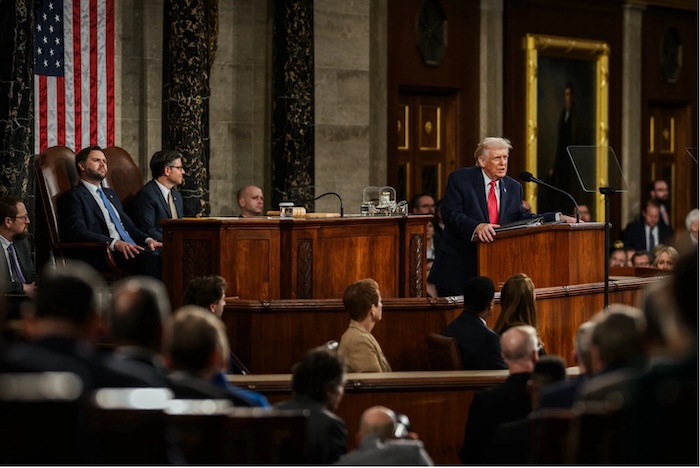
AI in the State of the Union: We Need Both “Infrastructure Pledges” and “Trust Infrastructure Laws”

The AI references in the State of the Union underscore a practical truth: AI is becoming infrastructure for all infrastructure—tied to data centers, electricity, supply chains, and the ability to deploy capabilities at national scale. This focus is realistic. To lead in the AI Age, a country must build AI infrastructure: compute, power, networks, data capacity, and talent—because these determine speed, innovation, and competitiveness.

But speed alone is not enough. As AI increasingly shapes economies, societies, security, and public confidence, we must build a second pillar alongside physical infrastructure: trust infrastructure, anchored in Trust Infrastructure Laws. This is central to the AI World Society (AIWS) framework: creating standards and verification mechanisms so AI can be deployed as fast and as effectively as possible, while remaining safe, transparent, accountable, and grounded in human dignity.

The key lesson is not to choose one over the other. We need both “Infrastructure Pledges” and “Trust Infrastructure Laws.”

  • “Infrastructure pledges” can mobilize investment, accelerate deployment, and expand capability.
  • “Trust infrastructure laws” provide the guardrails that protect citizens’ rights, reduce systemic risk, and preserve democratic legitimacy.

Under the AIWS principle, the optimal balance is: open, enabling conditions that build the foundation for the fastest and most effective AI applications—guided by humanity’s highest values. That requires governance that accelerates innovation while ensuring accountability: transparent scope of deployment, auditability and traceability, risk evaluations and incident reporting, privacy and data protections, and independent oversight for high-stakes uses.

In the AI Age, national strength will be measured by two capabilities: the ability to build infrastructure that accelerates progress, and the ability to build trust infrastructure that protects values. When both pillars stand together, AI can truly become a force for prosperity, peace, and human-centered development.

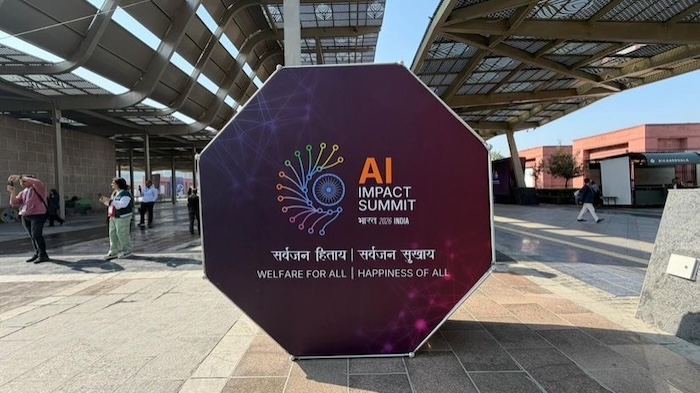
AI Impact Summit India 2026: From “AI Capability” to “AI Impact”

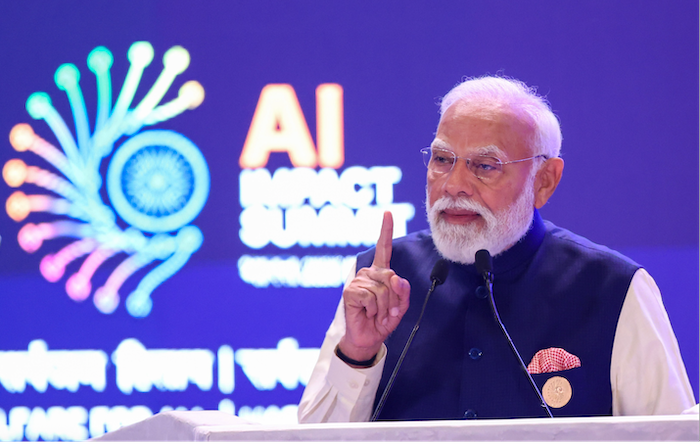
The AI Impact Summit India 2026 marked a visible turning point in the global AI conversation: the world is moving beyond celebrating capability toward demanding measurable impact—in health, education, productivity, public services, and human security. As AI becomes embedded in the operating systems of society, the decisive question is no longer “How powerful is the model?” but “Can institutions and citizens trust the outcomes—and correct them when they fail?”

India’s convening role at this summit is especially significant. It reflects the emergence of a new center of gravity for the AI era: large democracies that must deliver innovation at scale while protecting inclusion, rights, and social stability. The Summit’s message is clear: AI’s legitimacy will be earned not through promises, but through governance that works in real life.

BGF Announcement: AIWS Impact Components in Boston and Nha Trang

Against this backdrop, the Boston Global Forum (BGF) announced two “AIWS Impact” components, designed to be demonstrated, piloted, and scaled through Boston and Nha Trang as living laboratories of democratic innovation:

  1. AIWS Trust Rating
  2. AIWS Trust Infrastructure

Together, they operationalize a simple principle for the AI age: trust must be measurable, comparable, and enforceable—so that AI markets can grow without sacrificing safety, rights, or democratic legitimacy.

AIWS Trust Rating

Concept

AIWS Trust Rating is a public, evidence-based rating system that answers the first question citizens, regulators, and institutions now ask:
“Can we trust this AI system in real conditions, for this specific use?”

It shifts evaluation from marketing claims and benchmark scores to accountability performance. Like safety ratings in transportation or reliability standards in critical infrastructure, AIWS Trust Rating provides a shared language that makes risk legible and governance actionable.

Principles

  • Evidence over claims: ratings depend on documented testing, audits, monitoring results, and incident history.
  • Use-case specificity: trust is rated by domain (health, education, finance, public services), not by hype.
  • Continuous updating: ratings evolve as models change, data drifts, or new risks emerge.
  • Comparability across borders: a common scale supports procurement, investment, and cooperation.
  • Human rights by design: privacy, fairness, transparency, and accountability are treated as baseline requirements.

What it measures (core dimensions)

Safety and robustness; transparency and documentation; fairness and bias controls; privacy and data governance; auditability and traceability; human oversight; incident response readiness; and redress capacity.

The purpose is not to slow innovation. The purpose is to make trustworthy innovation faster—by giving institutions a credible way to choose systems that meet the standards of democratic society.

AIWS Trust Infrastructure

Concept

If AIWS Trust Rating makes trust visible, AIWS Trust Infrastructure makes trust operational. It is a full-stack framework that turns AI governance from aspirational ethics into day-to-day institutional practice—across vendors, sectors, and jurisdictions.

AIWS Trust Infrastructure treats trust as a form of public-interest infrastructure: built into the lifecycle of AI from design to deployment, from monitoring to incident response, from remedy to learning. In the AI age, trust cannot be an afterthought; it must be engineered.

Principles

  • Trust as infrastructure: embedded like safety engineering in aviation and medicine.
  • End-to-end accountability: design → deployment → monitoring → incident response → remedy.
  • Audit-ready by default: logs, documentation, and evaluation artifacts are continuously produced and preserved.
  • Interoperable governance: supports cross-institution adoption and trusted AI markets.
  • Redress is mandatory: when harm occurs, systems must enable correction, compensation pathways, and prevention of recurrence.

Core components (the infrastructure layer)

  • Standards and governance controls: clear roles, thresholds, approvals, and risk responsibilities.
  • Evaluation and monitoring: pre-deployment testing plus continuous real-world monitoring.
  • Traceability: model/data lineage, versioning, audit logs, and decision records.
  • Incident reporting and response: classification, escalation, rollback/patch protocols.
  • Remedy playbooks: standard corrective actions and accountability steps.
  • Institutional enforcement mechanisms, including the AIWS Tribunal as a credible pathway for mediation/arbitration and public-interest accountability opinions.

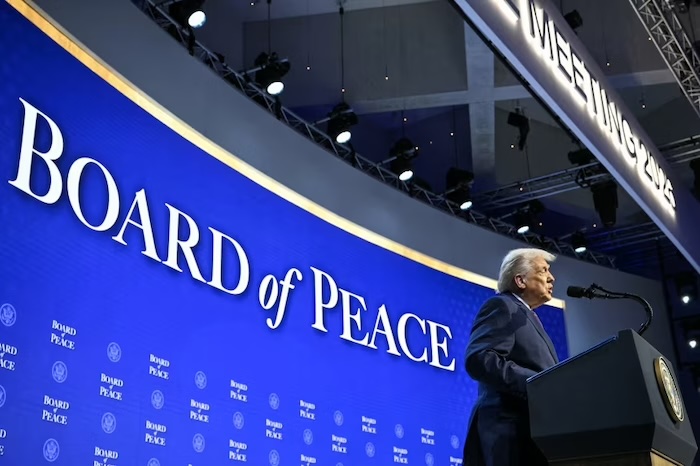
Expectations for the Board of Peace Meeting – February 19, 2026, Washington, DC

As the Board of Peace—a U.S.-led international initiative launched by President Donald Trump and described by U.S. officials as operating within a UN Security Council–backed framework—convenes its first formal leaders’ meeting on Thursday, February 19, 2026, in Washington, global attention will focus on Gaza’s postwar future. The meeting is expected to be chaired by President Trump and to draw more than 20 participating countries, including regional Middle East partners and a number of emerging nations. Israeli Foreign Minister Gideon Sa’ar is confirmed to attend, while Prime Minister Benjamin Netanyahu is reported to be participating remotely or not attending in person.

The gathering is scheduled to take place at the former U.S. Institute of Peace building—reported in recent coverage as renamed by the administration, though aspects of the change have been described as contested and unresolved in court.

Key expectations and focus areas

  • Reconstruction funding announcements: President Trump is expected to unveil a multi-billion-dollar Gaza reconstruction plan and press members for additional pledges, as part of the post-ceasefire implementation track.
  • International stabilization force:S. officials have said plans will be presented for a UN-authorized International Stabilization Force intended to help secure Gaza during a transitional period. Key open questions include troop contributors, command arrangements, rules of engagement, and alignment with Israeli security requirements.
  • Governance and security roadmap: Delegations are expected to discuss transitional governance mechanisms, humanitarian access and logistics, reconstruction sequencing, and longer-term political parameters—including how demilitarization goals and Palestinian self-determination are addressed in practice.
  • Regional dynamics and legitimacy tests: Participation by Arab and Muslim member states is widely viewed as contingent on credible progress in Gaza and Palestinian rights, while some governments remain cautious about how this mechanism relates to existing UN processes and traditional multilateral diplomacy.

This convening is a major test of whether the Board can translate high-level political sponsorship into durable security arrangements, effective reconstruction delivery, and a credible diplomatic pathway for Gaza’s future.

The Boston Global Forum will monitor developments closely and provide updates in subsequent editions.


Strategic Milestone 2026: Japan’s Double-Pillar Security & the AIWS Vision

In early February 2026, Japan secured the two most critical components of the AI Age: the raw minerals and the high-end processing power. Within the AI World Society (AIWS) framework, these are seen not just as economic assets, but as the foundational infrastructure required to build a “Human-in-Command” digital society.

1. Resource Sovereignty: Deep-Sea Rare Earth Retrieval

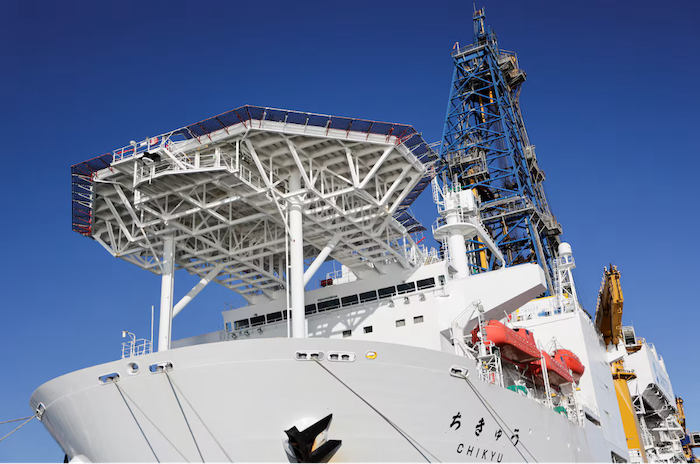
On February 2, 2026, the Japanese vessel Chikyu successfully lifted rare-earth-rich mud from 6,000 meters deep near Minamitori Island.

  • The AIWS Connection: AIWS emphasizes Technology Sovereignty. By securing 16 million tonnes of rare earths, Japan ensures that the magnets and components required for AI servers, robotics, and the AIWS Healthcare infrastructure are no longer vulnerable to geopolitical export bans.
  • Strategic Impact: This world-first achievement provides the “Physical Foundation” for the AIWS Ecosystem, ensuring that ethical AI development is backed by a stable and independent supply chain.

2. Computational Power: TSMC’s $17 Billion 3nm Upgrade

Simultaneously, Japan and TSMC announced an upgrade to the new Kumamoto facility to produce 3-nanometer (3nm) chips, the most advanced in the world.

  • Empowering the AIWS Angel: The AIWS Angel model—designed to serve as a lifelong healthcare and security companion—requires massive, efficient decentralized computing. These 3nm chips provide the energy-efficient “brain power” needed for such advanced AI assistants to operate in real-time.
  • Infrastructure for Governance: Under the AIWS Model, the 3nm production line acts as the “Engine Room” for a new Social Contract, where advanced hardware enables the transparent, high-speed data processing required for pluralistic and inclusive governance.

3. Strategic Synthesis: The AIWS Triad

By aligning these two breakthroughs with the AIWS Framework, Japan is essentially completing a “Strategic Triad” for the 21st century:

  1. Upstream (The Ocean): Rare Earths (The Material Layer).
  2. Downstream (TSMC): 3nm Semiconductors (The Infrastructure Layer).
  3. Governance (AIWS): The Ethical & Social Framework (The Intelligence Layer).

A Beacon for the AI Century

As we celebrate the “America at 250” initiative, Japan’s moves offer a blueprint for other nations. It demonstrates that a secure society is built by combining Deep-Sea Resource Discovery with Cutting-Edge Manufacturing, all governed by the AI World Society (AIWS) principles of peace, security, and human dignity.

https://www.reuters.com/science/japan-retrieves-rare-earth-mud-deep-seabed-test-mission-2026-02-02/

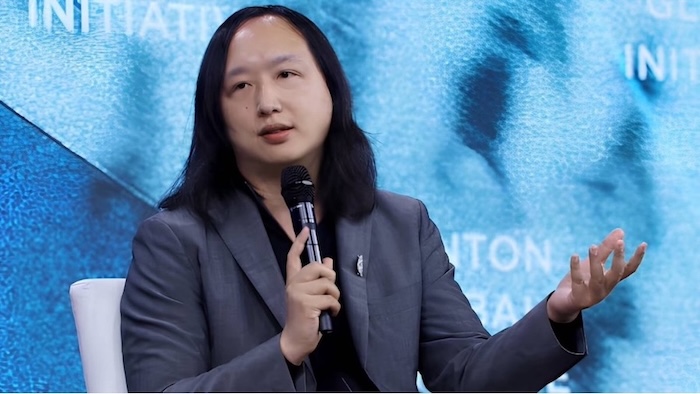
Want to solve deepfakes? Ask citizens what to do — with Audrey Tang’s civic-tech lens

As deepfakes become cheaper, faster, and more convincing, the familiar playbook—better detection, stricter platform rules, tougher laws—looks increasingly insufficient. A Financial Times–style argument gaining traction is that deepfakes are ultimately a democratic governance problem, not only a technical one.

The central proposition is simple: ask citizens what trade-offs they want. Through citizen assemblies, public consultations, and transparent rulemaking, democracies can define what counts as harmful manipulation, what must be labeled, which uses are legitimate (satire, art, accessibility), and what penalties apply for fraud, election interference, or non-consensual deepfake abuse. This approach also builds legitimacy for hard choices—such as watermarking standards, identity verification in high-risk contexts, fast-track takedowns during elections, and liability rules that apply across platforms.

This citizen-first approach echoes the “democracy-as-technology” mindset advanced by Audrey Tang (the 2025 World Leader in AIWS Award recipient): legitimacy comes from participation, transparency, and accountable public systems—not just from better algorithms. In practice, that means pairing technical defenses (provenance, labeling, detection) with durable civic infrastructure that helps society decide what to protect, what to allow, and who is responsible when synthetic media causes harm.