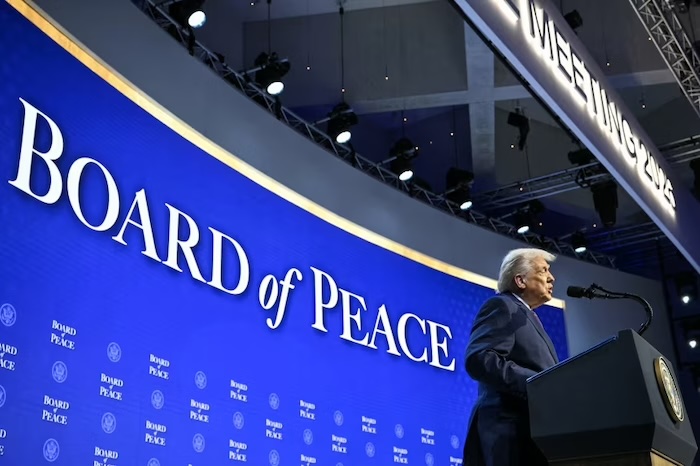


As the Board of Peace—a U.S.-led international initiative launched by President Donald Trump and described by U.S. officials as operating within a UN Security Council–backed framework—convenes its first formal leaders’ meeting on Thursday, February 19, 2026, in Washington, global attention will focus on Gaza’s postwar future. The meeting is expected to be chaired by President Trump and to draw more than 20 participating countries, including regional Middle East partners and a number of emerging nations. Israeli Foreign Minister Gideon Sa’ar is confirmed to attend, while Prime Minister Benjamin Netanyahu is reported to be participating remotely or not attending in person.
The gathering is scheduled to take place at the former U.S. Institute of Peace building—reported in recent coverage as renamed by the administration, though aspects of the change have been described as contested and unresolved in court.
Key expectations and focus areas
- Reconstruction funding announcements: President Trump is expected to unveil a multi-billion-dollar Gaza reconstruction plan and press members for additional pledges, as part of the post-ceasefire implementation track.
- International stabilization force:S. officials have said plans will be presented for a UN-authorized International Stabilization Force intended to help secure Gaza during a transitional period. Key open questions include troop contributors, command arrangements, rules of engagement, and alignment with Israeli security requirements.
- Governance and security roadmap: Delegations are expected to discuss transitional governance mechanisms, humanitarian access and logistics, reconstruction sequencing, and longer-term political parameters—including how demilitarization goals and Palestinian self-determination are addressed in practice.
- Regional dynamics and legitimacy tests: Participation by Arab and Muslim member states is widely viewed as contingent on credible progress in Gaza and Palestinian rights, while some governments remain cautious about how this mechanism relates to existing UN processes and traditional multilateral diplomacy.
This convening is a major test of whether the Board can translate high-level political sponsorship into durable security arrangements, effective reconstruction delivery, and a credible diplomatic pathway for Gaza’s future.
The Boston Global Forum will monitor developments closely and provide updates in subsequent editions.